

Quilt vs. Duvet: An Expert Guide to Choosing Your Perfect Bedding
Creating the perfect bed is an art, but the language of luxury bedding can often feel like a puzzle. The timeless debate of quilt vs duvet lies at the heart of this confusion, leaving many to wonder which is the superior choice for their sleep sanctuary. At King of Cotton, we believe that achieving the serene comfort of a five-star hotel suite should be an effortless indulgence, not a source of uncertainty. When you invest in the finest materials, you deserve absolute confidence in your decision.
This expert guide is designed to demystify the world of premium bedding. We will explore the distinct characteristics of each-from their construction and warmth to their styling potential and care requirements. By the end, you will not only understand the fundamental differences but will also feel empowered to select the perfect centrepiece for your bed, making a wise investment in seasons of unparalleled comfort and elegance. Your journey to a truly rejuvenating, hotel-quality sleep experience starts here.
What is a Duvet? The Heart of Modern Hotel-Style Bedding
A duvet is the cornerstone of contemporary, hotel-style luxury, offering sublime comfort in a simple, elegant package. At its core, a duvet is a soft, flat bag filled with an insulating material, designed to be used as an insert within a protective duvet cover. This two-part system is a key differentiator in the ongoing quilt vs duvet discussion. While we will later explore in depth what is a quilt?, the duvet's primary purpose is to provide exceptional warmth without the cumbersome weight of multiple traditional blankets and sheets.
To better understand this concept, watch this helpful video:
The Duvet Insert: Understanding Fillings and Tog Ratings
The soul of the duvet is its insert, where the choice of filling dictates the sleeping experience. For unparalleled lightweight warmth and a cloud-like feel, natural fillings like premium goose down or feathers are the finest choice. Alternatively, modern synthetic microfibre fillings offer a superb hypoallergenic option, delivering exceptional comfort and softness for a rejuvenating night's sleep. In the UK, a duvet's warmth is measured by its 'tog' rating. Choosing the correct tog is essential for year-round comfort:
- 4.5 Tog: Ideal for summer months or for those who naturally sleep warm.
- 10.5 Tog: A versatile all-seasons option, perfect for most of the year in the UK.
- 13.5+ Tog: Designed for the coldest winter nights, providing ultimate cosy warmth.
The Essential Duvet Cover: The Key to Style and Hygiene
The duvet cover is far more than a simple protective layer; it is the key to personalising your sleep sanctuary. As the visible element of your bedding, the cover can be changed effortlessly with the seasons or as your interior design evolves, instantly refreshing the look and feel of your bedroom. Beyond aesthetics, the duvet cover is fundamental to hygiene. It can be easily removed and laundered weekly along with your sheets, keeping your duvet insert fresh and clean. For a truly indulgent experience, a cover crafted from the finest Egyptian cotton provides a smooth, breathable, and exquisitely soft surface against your skin.
What is a Quilt? A Timeless and Decorative Bed Covering
A quilt is a timeless piece of bedding, celebrated for its rich history, craftsmanship, and decorative elegance. In the classic quilt vs duvet comparison, the most significant difference is construction. A quilt is a single, complete textile made from three distinct layers that are stitched together. This structure results in a covering that is typically thinner and less lofty than a duvet, offering a light yet comforting weight that is perfect for creating a polished and inviting bedroom sanctuary.
The Anatomy of a Quilt: Layers, Stitching, and Style
The essence of a true quilt lies in its unique three-layer anatomy. This structure is comprised of:
- The Top Layer: A decorative fabric, which can range from traditional patchwork designs to modern, single-piece whole-cloth styles.
- The Wadding: A thin inner layer of filling, often made from premium cotton or wool, that provides gentle warmth.
- The Backing: A solid piece of fabric that forms the bottom layer.
These layers are fused by the "quilting" process-an intricate pattern of stitching that is both functional and artistic. This stitching prevents the wadding from shifting and creates the quilt's signature textured finish. This integrated design, a key point in any Quilt vs. Comforter vs. Duvet analysis, means the style is woven directly into the product itself, unlike a duvet which relies on a separate cover.
How to Use a Quilt in Your Bedroom
The versatility of a quilt is one of its greatest assets in creating a luxurious bedroom. During warmer spring and summer months, it serves as the ideal standalone bed covering, providing just the right amount of comfort without causing overheating. As temperatures drop, a quilt becomes the perfect layering piece. Drape it over one of our finest duvets to introduce an extra layer of warmth and sophisticated texture, achieving a look worthy of a five-star hotel. It can also be used purely for decoration, folded neatly as a bed runner or draped over a chair to add a final touch of elegance. As it is not encased in a cover, a quilt is typically paired with a top sheet to maintain its freshness between washes.
Head-to-Head Comparison: Key Differences at a Glance
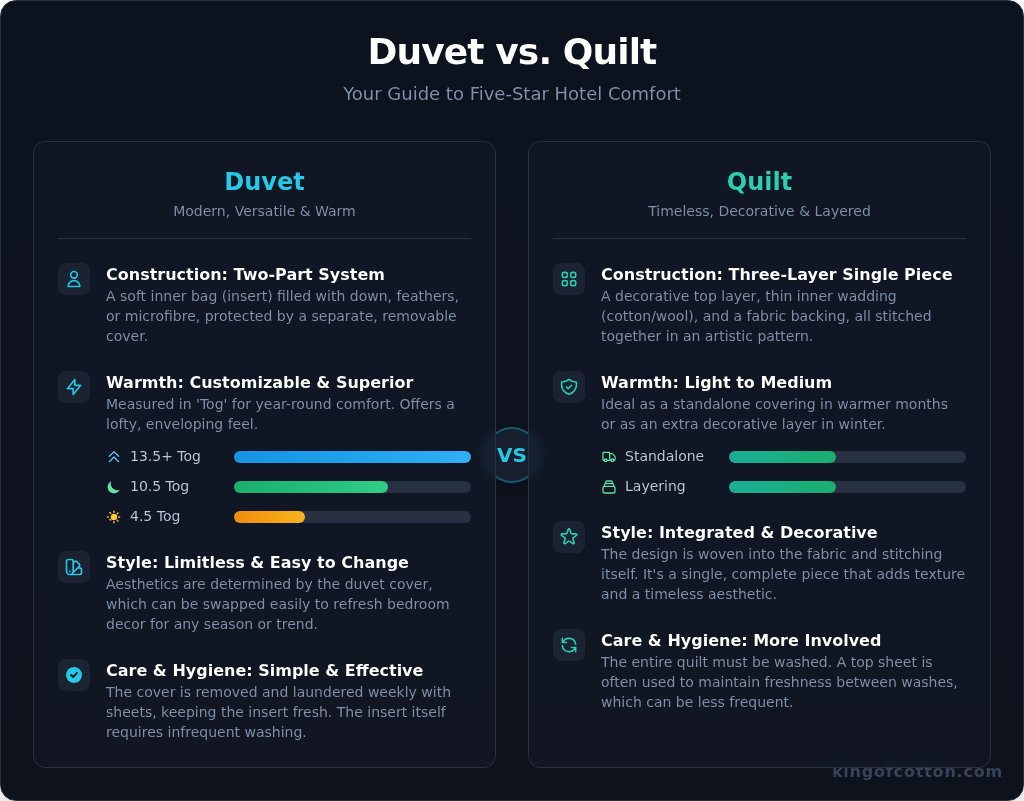
Choosing your ideal bedding often comes down to a direct comparison of quilt vs duvet. While both promise a comfortable night's sleep, they serve distinct functions in creating a serene and luxurious bedroom sanctuary. To simplify your decision, we've broken down their core differences.
Warmth & Feel: Fluffy vs. Flat
A duvet’s primary purpose is to provide warmth. Its generous filling creates a lofty, cloud-like cocoon that traps air effectively, delivering exceptional insulation. With a range of tog ratings to choose from, you can select the perfect level of warmth for any season. In contrast, a quilt is significantly thinner and denser, offering lighter warmth that is often ideal for summer nights or as an elegant layer over a duvet in winter.
Aesthetics & Versatility: Changeable vs. Integrated
Here, the duvet system truly shines for the modern home. Its style is not defined by the insert, but by its cover. This offers unparalleled freedom to refresh your bedroom’s entire aesthetic with minimal effort and expense. A quilt, with its stitched pattern and integrated design, is a stylistic statement in itself. As noted in the Sleep Foundation's guide to quilts and duvets, this makes it a beautiful centrepiece for a traditional or rustic look, but less adaptable than its counterpart.
Care & Maintenance: Simple vs. Cumbersome
For practicality and hygiene, the duvet is the undisputed winner. Simply remove the duvet cover and launder it with your weekly bed linen to maintain a fresh and clean sleeping environment. The duvet insert itself rarely needs cleaning. A quilt, however, requires the entire item to be washed at once-a cumbersome task that often necessitates a trip to the launderette, making it a less convenient option for everyday use.
How to Choose: Are You Team Quilt or Team Duvet?
Now that we’ve explored the definitions, the real decision begins. The great quilt vs duvet debate ultimately comes down to your personal preferences for comfort, style, and practicality. Your climate, your sleep habits, and your interior design vision all play a part in creating your perfect sleep sanctuary. Let this guide help you discover which bedding is your ideal match.
Choose a Duvet If You...
- Crave a plush, enveloping feel. Nothing compares to the lofty, cloud-like embrace of a high-quality duvet, recreating that five-star hotel experience in your own bedroom.
- Enjoy frequently updating your decor. A simple change of a duvet cover can instantly transform the entire look and feel of your room, offering limitless style possibilities.
- Prioritise easy, regular washing. For optimal hygiene, you can simply remove the duvet cover and wash it with your weekly linens, keeping your bed fresh and inviting.
- Want tailored warmth for every season. With a range of tog ratings available, from light summer options to cosy winter weights, you can customise your comfort level all year round.
Choose a Quilt If You...
- Prefer a lighter, less restrictive covering. Quilts offer gentle warmth without the weight and volume of a duvet, making them ideal for those who feel too confined by heavier bedding.
- Love a classic, layered, or farmhouse aesthetic. The intricate stitching and traditional patterns of a quilt add texture, character, and a touch of heritage to your bedroom.
- Live in a warm climate or need a summer layer. A quilt is often the perfect single layer for balmy nights, providing just enough coverage without causing you to overheat.
- Plan to use it as a decorative accent. A quilt looks beautiful folded at the foot of a bed over a duvet, or draped over a chair, adding a final, elegant touch.
The King of Cotton Recommendation for Ultimate Luxury
While the choice is deeply personal, for the ultimate combination of luxurious comfort, versatility, and impeccable hygiene, we recommend the duvet and cover system. This is the standard trusted by the world's finest hotels for a reason: it delivers an unparalleled sleep experience. The true magic lies in pairing a premium, ethically sourced duvet with the sublime softness of a pure Egyptian cotton cover.
This pairing creates a haven of elegance and comfort that is both easy to maintain and exquisitely rejuvenating. Ready to elevate your sleep? Explore our collection of luxurious duvets and find your perfect match.
The Final Word: Choosing Your Ultimate Comfort
Ultimately, the quilt vs duvet debate is a personal one, revolving around your desired aesthetic, climate, and sleep preferences. A quilt offers a single, beautifully crafted layer that provides lightweight warmth and a timeless, decorative finish. In contrast, a duvet, with its plush insert and versatile cover system, delivers unparalleled, customisable comfort and the clean, inviting look of a luxury hotel bed.
As specialists in fine Egyptian Cotton and suppliers to the finest homes and hotels for over 25 years, we have seen firsthand how the right bedding can elevate a room from simple to sanctuary. If your goal is to recreate that indulgent, cloud-like feeling of five-star luxury each night, a premium duvet is an unparalleled choice for its enveloping softness and warmth. We invite you to discover the hotel-quality comfort of our premium duvets.
Whatever you choose, investing in high-quality bedding is an investment in your own rest and rejuvenation. Your perfect night's sleep awaits.
Frequently Asked Questions
Can you put a duvet cover on a quilt or comforter?
While a duvet cover is designed specifically for a duvet insert, it can sometimes be used with a comforter of a similar size. However, the fit may not be perfect as comforters can be thicker and lack corner ties, leading to shifting. Using a cover on a quilt is less common, as it would conceal the quilt's decorative stitching and texture. For a truly seamless and luxurious appearance, we recommend pairing our duvet covers with their corresponding duvet inserts.
What is a comforter, and how is it different from a quilt and a duvet?
A comforter is a single piece of bedding, stitched through to secure its plush, synthetic filling. Unlike a duvet, which is an insert requiring a separate cover, a comforter is a standalone item. It differs from a quilt by being significantly thicker and loftier. A quilt is a thinner, three-layered piece prized for its decorative stitching and moderate warmth, whereas a comforter’s primary function is to provide substantial, cosy insulation during colder nights.
Which is better for hot sleepers, a quilt or a duvet?
When considering the quilt vs duvet debate for hot sleepers, a quilt is generally the superior choice. Its thinner construction and breathable cotton layers allow for better air circulation, preventing overheating for a more restorative sleep. While many duvets offer significant warmth, those prone to sleeping warm can still achieve exceptional comfort by selecting a duvet with a very low tog rating (e.g., 2.5 or 4.5 tog) or one filled with naturally breathable materials like silk.
Do you need a top sheet with a duvet?
Traditionally, a top sheet is not used with a duvet. The duvet cover itself is designed to serve as the top layer against your skin, simplifying bed-making and creating the streamlined, elegant look favoured in European homes and luxury hotels. While it ultimately comes down to personal preference, forgoing the top sheet allows you to fully appreciate the softness and premium feel of your duvet cover. The cover can then be easily removed and laundered, just like a sheet.
How do I choose the right size duvet for my bed?
For a standard fit, simply match your duvet size to your mattress size-for instance, a King size duvet for a King bed. However, to achieve a truly opulent, hotel-style drape, we recommend selecting a duvet one size larger than your bed. Using a Super King duvet on a King bed, for example, provides generous overhang, eliminates drafts, and creates a sumptuously inviting appearance. Always confirm the specific measurements to ensure a perfect pairing with your duvet cover.
What is the difference between a quilt and a bedspread?
The key difference is in their function, weight, and construction. A quilt is a three-layered bed covering with internal wadding, featuring decorative stitching that provides both texture and moderate warmth. In contrast, a bedspread is a single, lightweight layer intended primarily for decorative purposes. It is often generously sized to drape to the floor, covering the entire bed and pillows to create a formal, tailored finish for your bedroom sanctuary.