

Is Linen a Good Material for Bedding? Pros, Cons and How It Compares
What if the bedding that looks effortlessly relaxed is also the bedding you find too creased or textured? If you’re wondering, is linen a good material for bedding, the answer depends on the feel and finish you prefer. New linen can feel crisp or slightly rough, then soften with washing, while cotton can offer a smoother, more familiar feel from the first night.
Linen’s breathable feel and gently rumpled finish appeal to sleepers who enjoy a relaxed bed. But it creases readily, and its texture may not suit anyone who prefers a smooth, hotel-crisp look. Those trade-offs can make the difference between bedding you love and a set that doesn’t feel quite right.
This guide explains how linen feels, what to consider about temperature and care, and how it compares with cotton. You’ll find practical ways to judge whether linen suits your bedroom and routine. If cotton’s familiar softness sounds more appealing, King of Cotton’s bed linen offers a classic alternative to consider.
Key Takeaways
- Is linen a good material for bedding? It can be, if you enjoy a textured feel and relaxed appearance.
- Linen is made from flax fibres, and its weave, weight and your room conditions all influence how it feels.
- Compare linen and cotton by touch, finish and care expectations to find bedding that suits your preferences.
- Before choosing, consider the care label, your drying space and how much ironing you’re happy to do.
- If you prefer a smoother, crisper finish, cotton bed linen offers a classic alternative.
Is Linen a Good Material for Bedding? Start With What It Is
Yes, linen can work well for bedding, but whether it’s right for you depends on the feel you enjoy, the look you want in your bedroom and the care routine you’re comfortable with. A fabric’s general characteristics can guide your choice, but they can’t guarantee that every sleeper will find it comfortable. Sensitivity to texture and preference for a smooth or relaxed finish matter too.
Linen bedding is made from flax fibres and is known for its textured, naturally irregular character, while cotton bedding is made from cotton-plant fibres and is often chosen for its familiar smoothness. The fibre is only the starting point. How it is spun into yarn, woven and finished also affects the final fabric.
What makes linen different from other bedding fabrics?
Linen comes from the flax plant, rather than the cotton plant. The word “fibre” describes the material itself; fibres are spun into yarn, and yarns are woven or knitted to create fabric. These stages shape the finished cloth, so the label “linen” tells you its source, not exactly how it will feel or look. Linen - Wikipedia offers further background on linen as a textile and its uses.
Linen’s surface can look gently uneven, with natural variation in the threads. That relaxed appearance is part of its appeal, not a flaw to be corrected. Compared with fabric made for a particularly even, smooth finish, linen’s texture is more visible and tactile. The amount of variation differs between fabrics, so check the description and look closely at the specific bedding you’re considering.
What does linen bedding feel like at first?
Against the skin, linen is often more textured than smooth cotton, but not every linen sheet feels rough and not every cotton sheet feels the same. Hand-feel varies with yarn, weave and finishing. Two fabrics made from the same fibre can feel noticeably different, so fibre content alone can’t tell you exactly what the first night will feel like.
If you can handle a fabric before choosing, notice its surface and whether it feels comfortable against your hand. Think about the sensation you prefer next to your skin, rather than relying only on words such as “soft” or “luxurious”, which can mean different things to different people.
The same approach helps when comparing linen with cotton. Cotton’s classic finish may feel more familiar, while linen’s appeal often lies in its distinctive texture and relaxed appearance. Neither is automatically the better bedding material; each offers a different sensory experience. If you’re drawn to cotton’s familiar finish, explore cotton bed linen as a reference point for that preference.
So, is linen a good material for bedding? It can be, especially if you like fabric with visible character, but the answer is personal. Consider the fabric itself: its surface, construction and finish all contribute to the experience. This gives you a more useful starting point than choosing by material name alone, before weighing linen’s breathability and care needs against your everyday routine.
How Linen Bedding Feels: Breathability, Temperature and Everyday Comfort
Linen’s texture is only one part of the sleep experience. The weave and weight of the fabric, the temperature of your room, your duvet and your own preferences all influence how a bed feels. Linen’s material characteristics can support airflow, but they can’t guarantee a particular temperature or comfort level for every sleeper. A breathable fabric may feel pleasant in one bedroom and less comfortable in another.
Can linen bedding feel cool in warm weather?
A breathable construction may allow air to move through and around the sheet, which some sleepers appreciate in warmer conditions. But the sheet isn’t working alone. A warm room, a heavier duvet or your tendency to feel hot at night can shape the experience just as much. Linen shouldn’t be treated as a promise that you’ll stay cool or avoid overheating.
For a balanced comparison of how the fabrics can differ, see Linen vs Cotton Bedding. Treat general descriptions as a starting point, then consider the bedding and conditions you actually sleep with.
Does linen bedding feel comfortable in cooler months?
Linen may suit use across seasons, but it isn’t a substitute for choosing the right duvet and layers. In cooler weather, your room temperature, duvet warmth and preference for extra layers all affect comfort. A sheet’s fibre alone can’t tell you whether the complete bed will feel warm enough.
Appearance and touch matter in every season. Linen’s relaxed, lived-in character may feel inviting if you like a softly rumpled bed. If you prefer a crisp, freshly made look and a smoother surface, that finish may feel more comfortable to you, whatever the weather.
Think about the whole setup rather than expecting one fabric to manage every condition. For example, the same linen sheet may feel different beneath a light duvet on a warm night than under a thicker duvet in a cooler room. Fabric weight and weave also affect drape and feel, so “linen” alone doesn’t describe the whole experience.
- Room conditions: Consider whether your bedroom tends to feel warm or cool.
- Bedding layers: Include your duvet and any extra blankets in the decision.
- Personal comfort: Notice whether you prefer a textured, relaxed feel or a smoother finish.
These factors help answer the practical question, is linen a good material for bedding, without relying on a blanket claim about temperature. If cotton’s familiar, classic feel appeals more, explore cotton bed linen as an alternative. The best choice is the one that feels right in your bedroom and routine, not simply the one described as suitable for every season.
Linen vs Cotton Bedding: Choose by Feel, Appearance and Care
Choosing between linen and cotton is less about finding a universal winner and more about deciding which fabric’s qualities suit you. Compare the surface you enjoy against your skin, the look you want your bed to have and the care instructions you’re happy to follow. Construction and finishing matter too, as explored in this luxury bed linen buying guide.
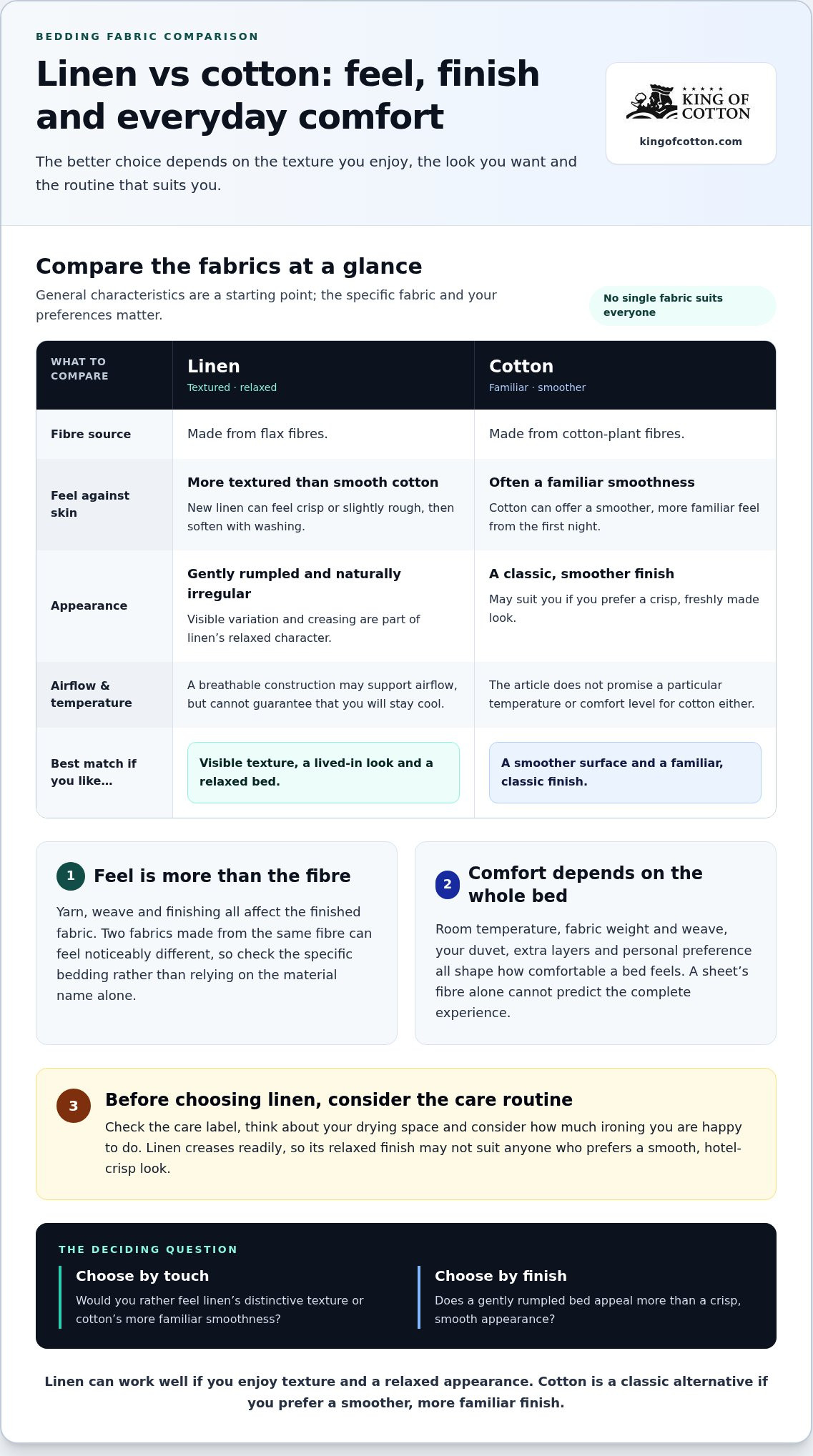
| Factor | Linen | Cotton |
|---|---|---|
| Texture | Often more textured, with variation between fabrics. | Can feel smooth and familiar, depending on construction and finish. |
| Visual finish | Relaxed and naturally irregular in appearance. | Can look smooth and crisp, or have a different character depending on the weave. |
| Care expectations | Follow the specific care-label instructions; creasing may be part of the look. | Care also varies by fabric, so follow its care label rather than assuming all cotton is alike. |
| May suit sleepers who prefer | A more textured feel and informal bed styling. | A smoother, classic finish and a more familiar feel. |
Use the table as a guide, not a guarantee. Fibre is only one part of a finished sheet: yarn, weave, fabric weight and finishing can all influence its feel and appearance. Quality and construction vary within both linen and cotton, so two sets made from the same fibre may not feel identical. Compare the particular fabric and its care label rather than relying on the material name alone.
Who is most likely to enjoy linen bedding?
Linen may appeal if you like a relaxed, textured surface and a bed that looks less formal than a sharply pressed finish. Its breathable feel may also suit people who value airflow around their bedding, though it can’t promise a particular sleep temperature. If you prefer an even surface or dislike visible creasing, linen’s natural character may not be for you.
When might cotton bedding be the better fit?
Cotton may be the natural choice if you favour a smooth, crisp and familiar finish. It isn’t one uniform fabric: percale and sateen are different constructions, each with its own character. If that classic cotton feel matches your preferences, browse the cotton bed linen collection.
Make the decision by ranking what matters most: touch, appearance or care routine. If softness and a polished look take priority, cotton may be the better fit; if texture and an informal finish appeal, linen may be worth considering. For anyone asking, is linen a good material for bedding, the most useful answer is grounded in personal preference, not a claim that one fibre is superior for every sleeper.
How to Decide Whether Linen Bedding Fits Your Routine
A fabric can appeal in theory but feel wrong in your bedroom or prove inconvenient to care for. To decide whether linen belongs in your everyday bedding, start with the sensations and appearance you enjoy, then work through the practical details. This helps separate personal preference from broad claims that one material is best for everyone.
Use this simple decision process:
- Start with touch. Consider whether you enjoy a textured surface or would rather have a smoother feel against your skin. If possible, handle a fabric sample before choosing.
- Picture the made bed. Decide whether you like a softly rumpled, relaxed finish or prefer bedding that looks crisp and even. Linen’s natural creasing may be part of its appeal, or something you’d rather avoid.
- Check the fabric details. Read descriptions for texture, drape, weave and finish instead of relying on the fibre name alone. These details help you compare fabrics more meaningfully.
- Consider your routine. Read the care label and check whether the washing and drying instructions suit your household, available drying space and usual laundry habits.
- Decide how you feel about ironing. If you want a smooth, pressed finish, consider whether you’re willing to iron. If a relaxed look suits you, visible creasing may not be a concern.
Which bedding details should you assess before choosing?
Look at how the fabric might feel and drape, as well as the finish you want across the whole bed. Consider how a new sheet will sit alongside your existing duvet cover and pillowcases. If matching pieces matter to you, compare their fabric descriptions and stated sizes. These practical details help you choose for your own bedroom, rather than treating linen or cotton as objectively superior.
What should you expect from linen bedding care?
Care instructions can vary between products, even when they share the same fibre. Follow the individual care label for washing and drying, and factor those directions into your regular laundry routine. Linen’s relaxed, creased finish may suit someone who doesn’t expect a freshly ironed look every day. If a smooth, pressed bed is important to you, consider whether the ironing it may involve fits your routine.
There’s no need to make the decision based on material name alone. A fabric’s construction, finish and care instructions all affect whether it works for your preferences and home. So, is linen a good material for bedding? It may be if its texture and relaxed appearance appeal and its care needs feel manageable. If your priorities point towards cotton’s smoother, classic finish, explore cotton bed linen as an alternative for your bedroom.
Make Your Bedding Choice: Linen’s Appeal and Cotton’s Classic Comfort
Linen can be a considered choice if you enjoy a textured feel, a naturally relaxed appearance and bedding that doesn’t need to look sharply pressed. Its care requirements and distinctive finish may not suit every routine, though. Cotton offers another option, particularly if you prefer a smoother, more familiar surface and a crisp, classic look. Neither material is the automatic winner; the right one is the fabric you’ll enjoy living with.
A quick final checklist for choosing linen
Before settling on linen, use these questions to bring the decision back to your own bedroom and preferences:
- Does the fabric’s texture feel appealing to you, rather than distracting?
- Do you like a softly rumpled bed, or do you prefer a sharply pressed finish?
- Have you considered the particular fabric description and construction, not just the word “linen”?
- Do the product’s care instructions fit your washing routine, drying space and expectations around ironing?
If the relaxed surface and lived-in look sound inviting, linen may be a good match. If smoothness and a pristine finish are priorities, compare alternatives before deciding. Checking the care label in advance can also help you avoid choosing bedding whose upkeep doesn’t suit your household.
Explore cotton bedding for a smoother, classic finish
Cotton is a considered alternative, not a consolation prize. Its familiar finish may suit sleepers who like a more polished bed, and different cotton constructions offer their own feel and appearance. The details still matter: compare the fabric description and care instructions of the particular bedding you’re considering rather than assuming all cotton feels the same.
King of Cotton supplies premium cotton bed linen to private customers and hospitality businesses, including homes and hotels. If your preference leans towards a classic cotton finish, explore the cotton bed linen range. UK mainland delivery costs £3.95 at minimum, with Free Mainland Delivery on Orders Over £100*.
Ultimately, is linen a good material for bedding? It can be if its texture, relaxed appearance and care needs feel right for you. If you’d rather settle into a smoother, crisper finish, cotton may be the more natural fit. Make your choice based on the fabric you’ll enjoy night after night.
Choose the Feel You’ll Look Forward to
The best bedding choice is the one that feels right in your own bedroom, not the one that promises to suit everyone. If you’re still asking, is linen a good material for bedding, use your preferred texture, bed style and care routine as your guide. A considered choice can make getting into bed feel like a small, everyday pleasure.
If a smoother, more classic finish sounds closer to your ideal, discover premium cotton bed linen from King of Cotton, a trusted brand for 25+ years and Rated Excellent on Trustpilot. Explore premium cotton bed linen and choose a finish that feels right for your bedroom.
Frequently Asked Questions
Does linen bedding get softer over time?
It often becomes more supple with repeated washing and use, although the change depends on the fabric’s weave and finish. Don’t expect every set to soften at the same pace or reach the same feel. If the initial texture seems unfamiliar, give it a little time before deciding whether it suits you. Always follow the care label, as unsuitable washing can affect the fabric.
Is linen bedding suitable for sensitive skin?
Linen may suit some people with sensitive skin, but a natural fibre isn’t automatically irritation-free. The fabric’s surface, finishing and your own sensitivities all matter. If you react to certain textures, try touching a sample against your skin before choosing a full set. If you have a known skin condition or persistent irritation, seek personalised advice from a healthcare professional rather than relying on a fabric label.
Does linen bedding shrink after washing?
Linen can shrink if it’s washed or dried in a way that doesn’t suit the particular fabric. The amount, if any, depends on how the bedding was made and its care instructions, so there isn’t one rule for every set. Check the label before the first wash and follow it closely. Don’t assume a routine suitable for other sheets will also suit linen.
Do linen sheets need ironing?
No, ironing isn’t essential if you’re happy with a naturally relaxed finish. If you prefer a smoother appearance, check the care label to see whether ironing is suitable and follow its directions. You might press only the visible top edge of a sheet, rather than aiming for a perfectly smooth finish throughout. That small adjustment can give the bed a neater look without changing your whole routine.
How often should linen bedding be washed?
For everyday use, washing sheets about once a week is a practical starting point; adjust for your household, personal preference and how the bed is used. You may want to wash them sooner after illness, heavy perspiration or a spill. Check the product’s care label whenever you’re unsure about the wash routine, and make sure bedding is fully dry before storing it or putting it away.
Is linen bedding worth considering if I prefer a crisp bed?
It can still be worth considering, but be realistic about the look you want. Linen’s relaxed finish may not deliver the sharply smooth appearance you associate with a freshly pressed bed, even if you iron it according to its care label. If a crisp look is a daily priority, compare the fabric finish before buying. The right choice is the one you’ll feel content seeing and sleeping in regularly.