

Is 1000 Thread Count Bedding Better? The Truth About Luxury Linens
If you have ever spent over £150 on a set of linens only to find them stiff, heavy, or uncomfortably hot, you have likely fallen victim to the textile industry's most successful marketing tactic. We all want that crisp, cool feeling of a five-star hotel suite, and for years, consumers were told that a higher number always equals better sleep. Many shoppers naturally ask, is 1000 thread count bedding better, assuming the density guarantees a more premium experience. However, a high number alone doesn't ensure quality; in fact, it often signals "thread count inflation" where manufacturers use multi-ply yarns to artificially boost figures.
You deserve a haven of elegance and comfort that lasts for years, not just until the first wash. We will help you discover whether a 1000 thread count truly signifies superior quality or if it is a clever myth designed to justify a higher price tag. You'll learn the technical difference between 400 and 1000 TC, how to identify genuine Egyptian cotton, and the secrets to replicating a 5-star hotel sleep experience in your own home. By the end of this guide, you will have the expert knowledge needed to choose luxury linens that feel as indulgent as they look.
Key Takeaways
- Learn the truth about thread count and how to distinguish between genuine 5-star quality and clever marketing tactics designed to inflate numbers.
- Discover the critical difference between single-ply and multi-ply yarns to ensure your luxury linens are crafted from the finest long-staple cotton.
- Understand whether is 1000 thread count bedding better for your personal sleep temperature by comparing its substantial weight and insulation to lighter alternatives.
- Identify the perfect seasonal choice for your home and why a genuine 1000TC collection is the ultimate investment for comfort during colder UK months.
Understanding Thread Count: Why 1000 TC is the Benchmark for Luxury
Thread count is often the first thing people look at when upgrading their bedroom. Technically, it refers to the total number of horizontal (weft) and vertical (warp) threads woven into a single square inch of fabric. When shoppers ask, is 1000 thread count bedding better than standard options, they're often looking for that elusive five-star hotel experience at home. To get a deeper technical perspective on these metrics, you can read more about What is Thread Count? and how it applies to modern textiles.
The number 1000 has become a psychological benchmark in the premium linen market. It represents a level of density that feels substantial and indulgent. For many, it's the ultimate symbol of status and comfort, suggesting a product that hasn't cut corners. However, it's vital to remember that thread count is primarily a measure of fabric density. It tells you how tightly the threads are packed, but it doesn't always reflect the underlying quality of the cotton fibres themselves.
To better understand this concept, watch this helpful video:
The History of the 1000 Thread Count Trend
The obsession with high-density fabrics didn't start in the domestic aisle. High thread counts were once the exclusive domain of elite 5-star hotel suites in cities like London and Paris. Over the last 20 years, advancements in weaving technology and air-jet looms have allowed manufacturers to create much finer yarns. These thinner threads make it possible to fit more of them into a square inch without the fabric becoming stiff. In the context of luxury, thread count is a measure of density rather than a guarantee of fibre quality. At King of Cotton, we've spent over 25 years refining our luxurious bed linen to ensure that these high numbers translate into genuine durability and a refined finish for the UK market.
Expectation vs. Reality: What 1000TC Actually Feels Like
When you choose a 1000 TC set, the tactile experience is noticeably different from a standard 200 or 400 count sheet. It feels heavier, more substantial, and has a distinct "drape" that follows the contours of your body. This is why many people wonder, is 1000 thread count bedding better for a cold night; the answer is often yes, as the tight weave retains warmth effectively. Most 1000 TC linens use a sateen weave, which gives the fabric a silky sheen and a smooth, buttery touch. It's the specific "hotel feel" that consumers try to replicate, providing a sense of opulence that lighter, crisper percale weaves don't always offer. If you prefer a bedding set that feels like a protective, silky cocoon, the high-density sateen is the gold standard.
The Secret to Genuine 1000 Thread Count: Single-Ply vs. Multi-Ply
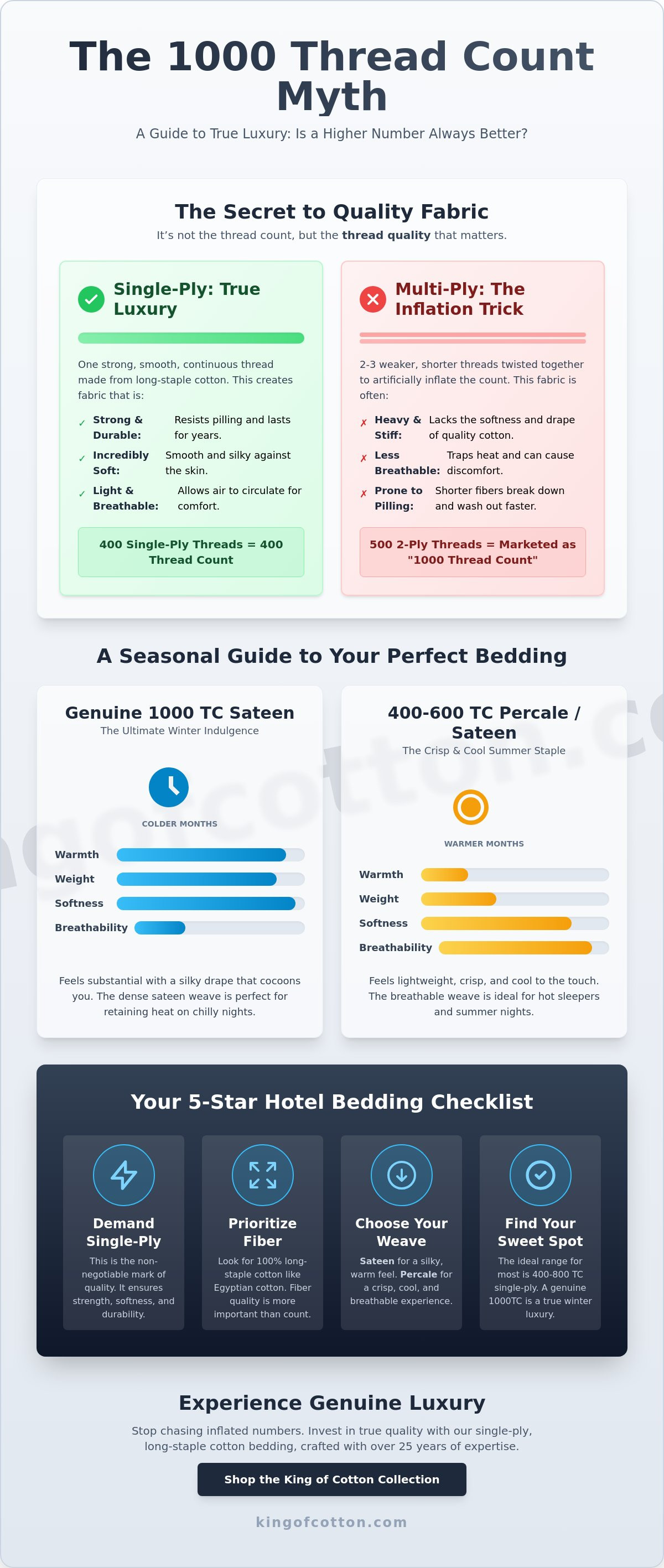
To understand why some sheets feel like silk while others feel like heavy canvas, you've got to look at the ply. Single-ply bedding uses one long, continuous thread of high-quality cotton. Multi-ply bedding, however, twists two or three weaker threads together to create a single strand. This is a common tactic used by manufacturers to artificially inflate the numbers on the packaging. When brands use 2-ply or 3-ply yarns, they often double or triple the count. A 500-thread count fabric made with 2-ply yarn is frequently marketed as 1000TC. This deception makes it difficult to determine is 1000 thread count bedding better than a lower count based on the label alone.
The reality is that The Truth About Thread Count reveals that higher numbers don't guarantee softness or durability. Genuine 1000TC single-ply cotton is rare. It requires the finest, strongest raw materials to spin a thread thin enough to fit 1000 of them into a square inch. This single-ply construction is the only version that maintains true luxury standards. It's breathable, exceptionally soft, and develops a beautiful drape over time. Multi-ply versions simply cannot match this performance because the twisted threads are bulky and prone to fraying.
How to Spot "Thread Count Inflation"
Price is your most reliable guide. If you see 1000TC bedding at a price point below £60 or £70, it's almost certainly a multi-ply product. High-quality single-ply yarn is expensive to produce and requires specialised looms. A 400TC single-ply sheet is superior to a 1000TC multi-ply sheet because it offers better breathability and a smoother surface. Multi-ply threads create a coarser, heavier fabric that traps heat. This added weight makes the bedding feel stiff rather than supple. These inflated counts are also more likely to pill within the first 12 months of use, as the short, twisted fibres begin to break and tangle.
The Importance of Long-Staple Egyptian Cotton
The length of the cotton fibre, known as the staple, is far more important than the digit on the packaging. Long-staple cotton allows for the creation of incredibly fine, strong threads that don't snap or pill. When fibres are long, there are fewer "ends" exposed on the surface of the fabric, which results in a smoother finish. This is a core principle we explain in our Egyptian cotton bedding guide. Using long-staple fibres ensures the bedding remains durable even after hundreds of washes.
Cheaper sets use short-staple cotton. These fibres are weak and must be twisted together (multi-ply) to gain enough strength to be woven. This results in a rough texture that irritates the skin. For those seeking a genuine five-star hotel experience, investing in high-quality materials is essential. You can browse our luxurious bed linen collections to find authentic, long-staple options that prioritise comfort over inflated marketing figures.
Comparing 1000 TC to Lower Thread Counts: Weight vs. Breathability
When considering is 1000 thread count bedding better, you must weigh the luxury of density against the necessity of airflow. Thread count refers to the number of horizontal and vertical threads in a square inch of fabric. A standard 200TC or 400TC sheet is lightweight and airy, making it a reliable choice for the British summer. As you move toward 600TC and 1000TC, the fabric becomes significantly heavier and more opaque. This weight creates a draped, substantial feeling that many associate with high-end luxury, but it comes with a physical trade-off.
The increased density of a 1000TC weave naturally restricts breathability. Because the threads are packed so tightly, heat from the body can become trapped under the covers. If you're a "hot sleeper," you might find that a lower count is actually more comfortable. Most luxury five-star hotels don't use 1000TC for this exact reason. Instead, they opt for a "sweet spot" between 300TC and 600TC. This range provides a silky, premium hand-feel while ensuring guests stay cool and comfortable throughout the night. It's the balance that defines true quality bed linen.
Percale vs. Sateen: The Weave Factor
The way those threads are woven is just as important as the count itself. Most 1000TC sets use a sateen weave, which follows a four-over-one-under pattern. This structure exposes more of the cotton yarn's surface, creating a lustrous, silky finish that feels incredibly soft against the skin. If you prefer the "hotel crisp" feel, you're likely looking for a percale weave. Percale is a traditional one-over-one-under pattern. It's typically found in counts between 200 and 400 because the tighter 1000TC density doesn't suit this breathable, matte style.
Durability and Maintenance Over Time
High thread counts aren't always more durable than their mid-range counterparts. In fact, 1000TC fabrics can be more delicate because they use exceptionally fine yarns to fit so many threads into a single inch. These fine fibres can be prone to pilling if they aren't genuine long-staple cotton. Professional hotel linen suppliers often favour 400TC or 600TC because these weights withstand industrial laundering best. They maintain their structural integrity through 100+ wash cycles while staying supple. While a 1000TC set feels heavy-duty, it requires gentle care and specific drying settings to prevent the fabric from becoming stiff or brittle over time.
Is 1000 Thread Count Bedding Better for You? A Seasonal Guide
Choosing the right linens involves more than just looking at a number. You must first evaluate your personal sleep temperature. If you find yourself kicking off the covers at 2 AM, a high density weave might not be your best ally. However, for those who constantly feel the chill during a British winter, 1000TC offers a level of thermal insulation that lower counts cannot match. It's a choice that depends heavily on your environment and your body's natural heat regulation.
The weight of the fabric, often exceeding 200 grams per square metre, dictates the "drape" of the linen. 1000TC bedding is significantly heavier than standard linens, causing it to hug the contours of your body. This creates a cocoon-like sensation that many find incredibly comforting. It's the ultimate choice for those who enjoy the feeling of a heavy, protective duvet that stays in place throughout the night.
When deciding is 1000 thread count bedding better for your home, look at your bedroom's ambient temperature. In the UK, where many older homes can feel draughty when temperatures drop below 5°C, the density of a 1000TC sheet acts as an extra layer of protection. The tight weave prevents cold air from circulating near the skin. This makes it a sustainable choice; you might find yourself turning down the central heating at night because your bed is naturally warmer.
The Best Thread Count for Hot Sleepers
Hot sleepers often ask: is 1000 thread count bedding better for my night sweats? The answer is usually no. For those who overheat, a 200 to 400 thread count percale weave is often superior. These lower-density weaves allow for maximum airflow. They let your skin breathe and help heat escape rather than trapping it against your body. Percale is crisp and matte, making it the standard for luxury hotels in warmer climates.
Creating a Year-Round Bedding Rotation
Smart sleepers don't stick to one set of sheets all year. They adapt to the seasons by mixing and matching counts. You might choose 200TC percale for the humid summer months and switch to 1000TC sateen when the frost arrives. You can find versatile options in our bed linen collections to suit every season.
Even if you use lighter sheets during the summer, 1000TC pillowcases are a brilliant year-round luxury. The tight weave creates a surface so smooth it reduces friction on your hair and skin. This provides genuine anti-ageing benefits and prevents "sleep creases" regardless of the temperature in the room.
Explore our luxury bed linen to find your perfect seasonal match.
Experience 5-Star Luxury with King of Cotton’s 1000TC Collection
King of Cotton has spent more than 25 years as a trusted supplier to the world's most prestigious hotels and private residences. When discerning sleepers ask, is 1000 thread count bedding better, the answer lies in the integrity of the weave. Our collection isn't about inflated marketing numbers. It's about the tangible weight, the cooling touch, and the silk-like finish that only genuine master-craftsmanship provides. We bring the exact same quality found in elite five-star suites directly to your home.
Why Our 1000 Thread Count is Different
We source only the finest long-staple Giza and Egyptian cotton fibres. These materials are famous for their strength and natural lustre. While many retailers use multi-ply yarns to artificially double or triple their numbers, we use honest, single-ply construction. This prevents the pilling and breathability issues common in low-quality "high count" sets. Our rigorous quality control ensures that every square inch meets our exacting standards. If you want to feel the fabric before you buy, visit our stores and delivery page to find a location for a personal consultation.
The finishing touches define our 1000TC range. Every duvet cover and pillowcase features meticulous details like hemstitching and deep sateen borders. These aren't just aesthetic choices; they reflect a commitment to durability. These linens are designed to last for decades if cared for correctly. We recommend a gentle wash at 40°C and avoiding high-heat drying to preserve the natural oils of the cotton fibres. Over time, the fabric won't thin out. Instead, it actually becomes softer and more supple with every single wash.
Complete the Look: From Sheets to Bathrobes
A refined bedroom is only half of the story. To create a true sanctuary, you should coordinate your 1000TC sheets with our high-GSM towels and heavy-weight cotton robes. We provide the same textures used in the world's leading spas to ensure your morning routine feels just as indulgent as your sleep. If you're unsure which weight is right for your home, our luxury bath towels guide offers expert advice on matching your linens to your lifestyle.
Investing in your sleep is the ultimate form of self-care. When you choose King of Cotton, you're choosing a brand with a 25-year heritage of excellence and a "Excellent" rating on Trustpilot. Don't settle for "thread count inflation" when you can have the genuine article. Experience the peak of bedroom elegance today.
Transform Your Bedroom Into a Five-Star Retreat
Deciding if is 1000 thread count bedding better for your home comes down to the integrity of the weave. You've discovered that true luxury isn't about inflated numbers, it's about the superior feel of single-ply Egyptian cotton. While lower counts offer lightness, a genuine 1000TC fabric provides that substantial, opulent weight found in the world's most exclusive suites. It's an investment in durability and a smoother finish that only improves with every wash.
King of Cotton has been a trusted supplier to the world’s finest hotels for over 25 years. We're specialists in genuine single-ply Egyptian cotton, ensuring you never have to settle for multi-ply shortcuts. Our commitment to quality has earned us an Excellent rating on Trustpilot from thousands of satisfied sleepers across the UK. You don't have to check into a boutique hotel to enjoy this level of refinement; you can bring that same comfort to your own mattress today.
Elevate your sleep with our genuine 1000 Thread Count Bedding and feel the difference that decades of expertise can make. You'll wake up feeling refreshed and truly restored.
Frequently Asked Questions
Is 1000 thread count bedding worth the extra cost?
Yes, 1000 thread count bedding is worth the investment for those who desire a dense, heavy, and exceptionally durable fabric that lasts for years. While these sets often cost 40% more than 400 thread count options, the price reflects the use of finer yarns and a more complex weaving process. This results in a substantial, heirloom-quality feel that maintains its opulence even after 50 or more laundry cycles in a domestic machine.
Does 1000 thread count mean the sheets are softer?
Not necessarily, because softness depends more on the quality of the raw cotton fibre than the thread count alone. A 1000 thread count sheet made with multi-ply yarns can feel stiff or heavy compared to a 400 thread count single-ply long-staple cotton sheet. To ensure your bedding is truly soft, you should look for 100% Giza or Egyptian cotton. These premium materials provide a silk-like texture that improves with every wash.
Are 1000 thread count sheets too hot for summer?
They can be, as the dense weave of a 1000 thread count fabric reduces breathability compared to lower counts. Because there are more threads packed into every square inch, air doesn't circulate as freely through the material. This makes them ideal for the UK's colder months or for sleepers who prefer a warmer, cocoon-like environment. If you're a hot sleeper, a 200 to 400 thread count percale might be a better choice for July and August.
What is the difference between 800 and 1000 thread count?
The primary difference lies in the weight and the hand-feel of the fabric, with 1000 thread count offering a noticeably thicker, more substantial drape. While both are considered high-end, 1000 thread count bedding is the peak of luxury for those who enjoy a heavy, sateen finish. When asking is 1000 thread count bedding better, it often comes down to personal preference for that specific, weighty sensation found in the world's most prestigious hotel suites.
Do 1000 thread count sheets pill easily?
High-quality 1000 thread count sheets don't pill if they're made from long-staple or extra-long-staple cotton fibres. Pilling occurs when short fibres break and tangle into small balls on the surface. Because 1000 thread count requires very fine threads, reputable manufacturers use superior cotton grades that resist this wear. Cheaper versions using multi-ply threads to inflate the count are 3 times more likely to pill and lose their smooth texture after a few months.
How do I know if my 1000 thread count sheets are genuine Egyptian cotton?
Look for the Cotton Egypt Association gold seal or a verified manufacturer's guarantee of 100% Egyptian cotton. Genuine Egyptian cotton is grown specifically in the Nile Delta, where the climate produces fibres reaching lengths of 30mm or more. This length allows for the fine, strong yarns needed for high thread counts. Be wary of "Egyptian quality" labels, which often mask inferior blends that won't deliver the lasting luxury you expect for your home.
What thread count do 5-star hotels actually use?
Most 5-star hotels typically use between 300 and 600 thread count for their standard rooms because it balances luxury with industrial laundering durability. However, many elite establishments and boutique hotels opt for 800 or 1000 thread count in their top-tier suites to provide a more indulgent experience. Whether is 1000 thread count bedding better for your bedroom depends on if you want to replicate that specific, heavy-weight opulence found in the world's finest residences.
Can you get 1000 thread count in a percale weave?
It's extremely rare to find genuine 1000 thread count in a percale weave, as the one-over, one-under structure becomes too dense to breathe at that level. Most 1000 thread count linens use a sateen weave, which allows more threads to be packed closely together while maintaining a smooth surface. Percale usually peaks at 400 or 500 thread count to preserve its signature crisp, matte finish and high level of airflow for the sleeper during the night.