

How to Style a Bed with a Runner: The Professional Designer’s Guide
The difference between a bed that is simply made and one that is truly designed often rests on a single, expertly placed piece of fabric. For over 25 years, we have seen how even the finest 800-thread-count Egyptian cotton can look surprisingly flat without the right finishing touches. You've likely felt that same frustration when your bedroom feels unfinished despite your best efforts. Mastering how to style a bed with a runner is the professional secret to bridging that gap between a standard room and a five-star hotel haven.
It's natural to feel unsure about coordinating textures or choosing the correct dimensions for UK King and Super King beds. This guide promises to help you master professional styling techniques, giving you the confidence to mix patterns and materials like a seasoned interior designer. We'll explore how to create a sanctuary of elegance, covering everything from seasonal layering and colour coordination to the practical benefits of protecting your premium linens from daily wear.
Key Takeaways
- Understand the dual purpose of a bed runner as both a sophisticated decorative accent and a practical protector for your premium bed linen.
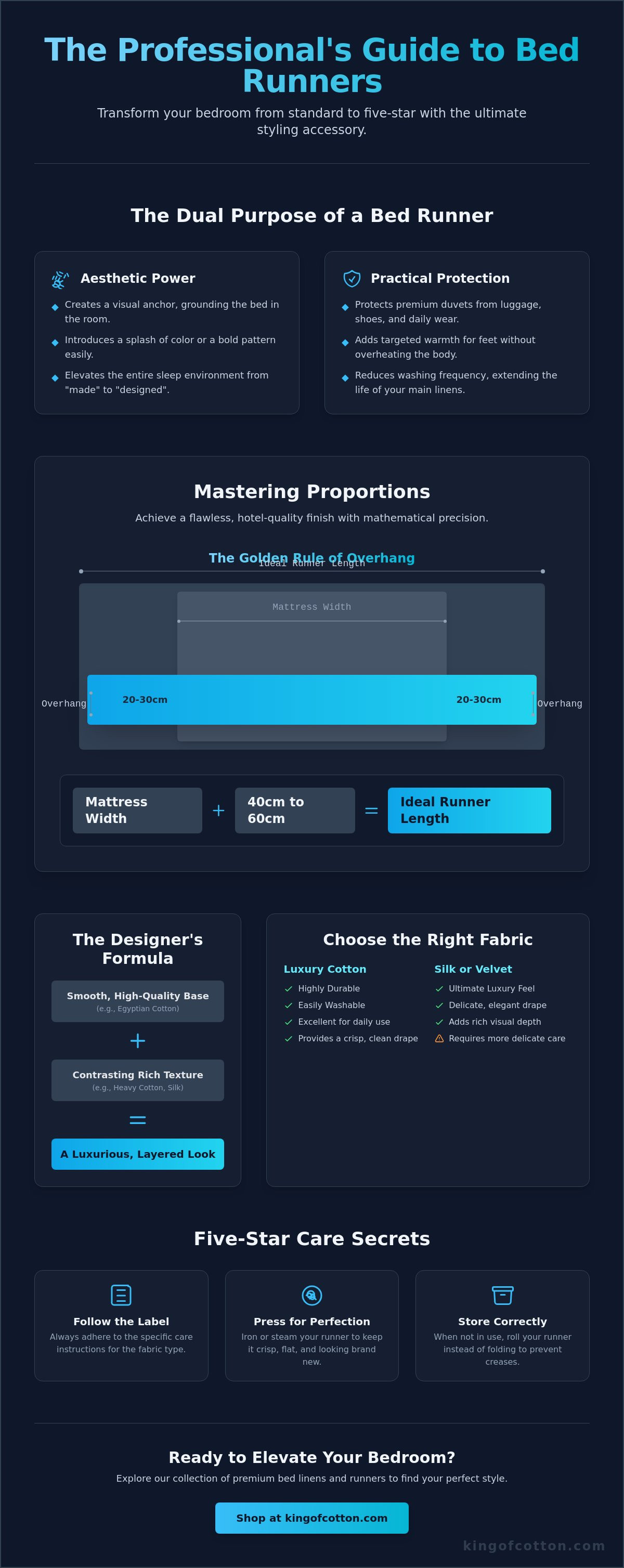
- Learn the "Golden Rule" of proportions to achieve a professional finish, ensuring an ideal 20cm to 30cm overhang on each side of the bed.
- Discover the designer’s formula for how to style a bed with a runner by contrasting rich textures with a smooth, high-quality Egyptian cotton base.
- Identify the best materials for your lifestyle, choosing between the delicate drape of silk and the durable, washable elegance of luxury cotton.
- Master the care and pressing secrets used by five-star hotels to keep your decorative layers crisp, flat, and looking brand new.
What is a Bed Runner? Understanding its Decorative and Functional Purpose
A bed runner is a narrow, decorative panel of fabric designed to lie horizontally across the foot of a bed. While it might appear to be a simple accessory, it's a sophisticated tool used by the world's leading interior designers to complete a room's aesthetic. Historically, the layering of textiles was a sign of status and meticulous housekeeping. Today, this tradition continues in the finest hotels from London to Dubai, where a runner is a non-negotiable element of a professionally dressed bed. It bridges the gap between the functional necessity of sleep and the art of interior styling.
In the professional hospitality sector, the presence of a runner signals that a room is prepared to the highest standard. It provides a final layer of texture that elevates the entire sleep environment. For a comprehensive overview of bedding and its various components, it's clear that the runner serves as the finishing touch that ties disparate elements together. It's the difference between a bed that looks "made" and a bed that looks "designed."
To better understand how these textiles are manipulated in a professional setting, watch this helpful video:
The Aesthetic Power of Visual Anchoring
A runner acts as a visual anchor for your furniture. When you use crisp, all-white bed linen, the bed can sometimes appear as a vast, featureless space. Adding a runner creates a defined focal point that grounds the bed within the room's wider design scheme. It's a clever way to introduce a splash of colour or a bold pattern without the commitment or cost of a full duvet set. Learning how to style a bed with a runner allows you to update your bedroom's palette seasonally with very little effort.
Practical Benefits You Shouldn’t Ignore
Beyond the visual appeal, runners serve vital protective functions that many homeowners overlook. Consider these practical advantages:
- The Suitcase Rule: Runners protect your expensive duvet covers from dirt and scuffs when guests place luggage or sit at the foot of the bed with shoes on.
- Targeted Warmth: They provide an extra layer of insulation for the feet on chilly nights without causing the rest of your body to overheat.
- Maintenance: By taking the brunt of daily wear and tear, a runner reduces the frequency with which you need to wash the main duvet, extending the life of your premium linens.
Understanding how to style a bed with a runner is as much about smart home maintenance as it is about creating a five-star look. It's a small investment that yields significant returns in both style and fabric longevity.
Mastering Proportions: A Definitive UK Bed Runner Sizing Guide
Achieving a five-star hotel aesthetic requires more than just a beautiful fabric; it demands mathematical precision. The professional designer's "Golden Rule" for bed runners is an overhang of 20cm to 30cm on each side of the mattress. This specific drop ensures the fabric drapes elegantly without looking short or touching the floor. When you're learning how to style a bed with a runner, you must first consult the dimensions for UK bed sizes to identify your exact mattress width. Simply add 40cm to 60cm to that width to find your ideal runner length.
Bed height also dictates the width of the runner. A standard mattress sits around 25cm deep, but modern luxury mattresses often exceed 30cm. If you have a high-profile bed, a narrow runner will look like a misplaced ribbon. You'll need a wider piece to maintain visual balance. Before you commit to a purchase, understanding textile labeling is essential for identifying the weight and fiber content of the fabric. Natural fibers like heavy cotton or linen provide a better "hang" than lightweight synthetics, which tend to slip or bunch during the night.
Standard Sizes for Single and Double Beds
For single beds (90cm wide), scale is the most important factor. A runner that's too wide will swallow the bed. Stick to a narrower width of 50cm to 60cm. This adds a pop of color or texture without making the bed look cluttered. On a standard double bed (135cm wide), balance is achieved by placing the runner exactly one-third of the way up from the foot of the bed. This placement creates a symmetrical foundation that anchors the rest of your luxurious bed linen. If the runner is 200cm long, it will provide a perfect 32.5cm drop on each side, hiding the mattress edges while showing off the bed frame.
Sizing for King and Super King Beds
King and Super King beds require substantial visual weight to avoid looking sparse. A King size runner should be at least 220cm long to account for the 150cm mattress width and the necessary side drops. For a 180cm Super King, you'll need a runner that reaches 240cm. On these larger scales, the fabric choice is just as important as the dimensions. Heavy jacquard or quilted fabrics work best here. These materials have the "heft" required to stay flat across a large surface area. When considering how to style a bed with a runner on a larger scale, remember that thicker fabrics provide a more structured, architectural look that defines the room's focal point. Using a flimsy fabric on a Super King bed often results in a messy appearance that lacks the crisp finish of a professional installation.
The Designer’s Formula: How to Style a Bed Runner Like a Pro
Creating a bed that looks like it belongs in a five-star boutique hotel requires a methodical approach. It isn't just about throwing a piece of fabric across the mattress; it's about building layers that communicate luxury and intention. If you're wondering how to style a bed with a runner, the process begins with the foundation. You must start with high-quality Egyptian cotton bedding. This material offers a crisp, smooth base that allows the runner to sit perfectly without bunching or slipping.
The second step involves a deliberate selection of texture. Designers rarely pair smooth runners with smooth sheets. Instead, they create interest through contrast. If your duvet cover is a sleek sateen, choose a runner with a heavy waffle weave or a quilted finish. This tactile variety adds immediate depth. This expert advice on bed styling suggests that layering different weights of fabric is essential for a bed that feels both inviting and professionally curated.
Coordination is your third step. Your runner should act as a visual bridge, linking to at least one other element in the room, such as your curtains, a velvet armchair, or even a specific shade in a piece of wall art. Finally, apply the finishing layer with a precise cushion arrangement. The runner provides the "anchor" at the foot of the bed, but the cushions provide the height and comfort at the top.
Coordinating with Cushions and Throws
Professional stylists often use the "Rule of Three" to ensure a cohesive look. This involves matching your runner to exactly two decorative cushions placed at the front of your pillow stack. This creates a visual triangle that pulls the entire design together. When learning how to style a bed with a runner using patterns, it's best to pair a solid-coloured runner with patterned pillows to avoid a cluttered appearance. For a truly maximalist luxury look, don't be afraid to layer a soft throw diagonally over one corner of your runner. It adds a sense of effortless indulgence found in the world's finest suites.
Colour Theory for the Bedroom
The palette you choose dictates the entire mood of the space. For a serene, spa-like atmosphere, stick to monochromatic looks. Use different shades of the same colour, such as slate, dove, and charcoal, to create a sophisticated gradient. If you prefer high-contrast styling, place a deep navy or charcoal runner over crisp white luxury bedding. This creates a sharp, modern aesthetic that feels incredibly clean. You can also rotate your runners based on seasonal palettes; transition from airy pastels and linens in the summer to deep, moody jewel tones like emerald or burgundy during the British winter to keep the room feeling fresh.
Material Selection: Choosing the Right Fabric for Your Lifestyle
The fabric you choose dictates the "drape" and the longevity of your bedscape. A runner isn't just a strip of cloth; it's a structural element that needs enough weight to stay in place. While purely decorative silk runners offer a high-shine finish, they often slip off the bed and require professional dry cleaning. For most UK households, durable, washable cotton is the superior choice. It provides a crisp look that survives the rigours of daily life while remaining soft to the touch.
When you're mastering how to style a bed with a runner, look for pieces that meet hotel-quality standards. These specifications are designed for products that endure 100 or more industrial wash cycles without fraying or losing their shape. High-quality finishes often include a heavier GSM (grams per square metre) or a textured reverse side. This added substance ensures the runner "grips" the duvet cover, preventing it from sliding onto the floor during the night.
Cotton vs. Synthetic Blends
100% cotton runners are the gold standard for breathability. They're ideal for year-round use because they don't trap heat, which is essential for maintaining a comfortable sleeping temperature. You'll find that King of Cotton’s commitment to premium natural fibres ensures a tactile experience that feels consistently luxurious. For high-traffic guest rooms or holiday rentals, synthetic blends have their place. They offer enhanced stain resistance and don't wrinkle as easily as pure linen. However, for the ultimate master suite, nothing beats the weight and heritage of fine Egyptian cotton.
Texture and Weave Options
The weave of your runner changes the entire mood of the room. Jacquard and Matelassé options are perfect for adding architectural depth. These woven patterns create a 3D effect that catches the light, making even a neutral palette look sophisticated. If you prefer a more formal, elegant bedroom, sateen finishes provide a subtle sheen that reflects light beautifully. For those seeking a relaxed, spa-like atmosphere, waffle weaves are the secret. They provide a chunky, tactile contrast to smooth percale sheets, creating a bed that looks invitingly plush. You can browse our premium bed linen collection to find the perfect texture for your home.
Caring for Your Bed Runner to Ensure Lasting Elegance
Maintaining the crisp, five-star appearance of your bedding requires more than just initial placement. While you've learned how to style a bed with a runner to create a sophisticated focal point, keeping that fabric looking pristine is what separates a professional finish from an amateur one. Decorative layers don't require the same frequent laundering as base sheets, so a "less is more" approach is vital for longevity. Over-handling these items can lead to premature wear, stripping away the premium feel that high-quality cotton provides.
Washing and Maintenance Tips
Don't over-wash your decorative accents. Frequent machine cycles can degrade fine fibres and dull the rich colours of premium fabrics. Always consult the care label before cleaning. Most high-quality cotton runners benefit from a gentle wash at 30 or 40 degrees Celsius. For small marks or dust, spot cleaning with a damp cloth and a drop of mild detergent is often enough. This preserves the structural integrity of the weave and keeps the piece looking new. Using a non-biological detergent is a professional secret for maintaining colour vibrancy over several years of use. It's a simple step that protects your investment in luxury linens.
Professional Pressing Techniques
The secret to the flat, sharp look found in the world's finest hotels is high-quality steam. Iron your runner while it's still slightly damp to erase stubborn fold lines with ease. Use a heavy steam setting and move the iron in long, fluid motions. Lay the runner completely flat on a large table or the bed itself immediately after pressing to ensure a perfectly symmetrical look. This prevents new wrinkles from forming as the fabric cools. Once you've mastered the maintenance of your textiles, explore the full bedroom collection to find your perfect match and elevate your sleep space.
To prevent creases when the runner isn't in use, roll the fabric around a cardboard tube instead of folding it. Folds create deep lines that ruin the silhouette of a well-made bed. When considering how to style a bed with a runner, the condition of the material is just as important as the colour or pattern. Experts suggest replacing decorative runners every 18 to 24 months. Even with meticulous care, fabrics eventually lose their original lustre and snap. A fresh runner is the most cost-effective way to update your room's palette and keep the aesthetic feeling modern and rejuvenated.
Elevate Your Sleep Space with Professional Artistry
Mastering how to style a bed with a runner transforms a simple bedroom into a refined sanctuary. By focusing on precise UK sizing and selecting high-quality materials, you create a look that's both functional and visually striking. The best designs always balance texture with proportion. This ensures your bed remains the elegant focal point of the room without overwhelming the space.
King of Cotton brings more than 25 years of luxury linen expertise directly to your home. We're proud suppliers to the world’s finest hotels. Our Excellent rating on Trustpilot reflects our dedication to premium craftsmanship and exceptional service. You don't have to settle for anything less than five-star comfort when crafting your personal haven. Our collection offers the same durability and sophistication found in the global hospitality industry.
Shop the King of Cotton Bed Runner Collection
Take these professional tips and start layering your way to a more sophisticated, rejuvenating night's sleep today.
Frequently Asked Questions
Is a bed runner actually necessary for a home bedroom?
A bed runner isn't strictly necessary for sleep, but it's essential for achieving the polished, five-star hotel aesthetic found in 90% of luxury UK homes. It provides a practical layer of protection for your duvet against suitcases or pets. This simple addition transforms a plain bed into a curated sanctuary, reflecting the 25 years of expertise we bring to the world of fine linens.
How do I stop my bed runner from slipping off the bed?
You can stop a bed runner from slipping by choosing heavier fabrics like 400gsm velvet or high-quality quilted cotton. If your runner is made of silk or sateen, place a small strip of non-slip rug padding underneath the fabric to provide extra grip. Many professional stylists also tuck the ends of the runner tightly under the mattress to ensure it stays perfectly aligned throughout the night.
Can I use a bed runner on a sofa instead of a bed?
You can certainly use a bed runner on a sofa to protect the upholstery or add a splash of colour to your living room. These versatile pieces function beautifully as "bench scarves" or narrow throws for the back of a settee. Understanding how to style a bed with a runner allows you to apply those same design principles to your lounge, creating a cohesive look across your entire home.
How many cushions should I use with a bed runner?
You should typically use 3 to 5 decorative cushions to balance the visual weight of a bed runner on a standard UK King size bed. We recommend placing two large 60cm square cushions at the back, followed by two smaller 40cm cushions and a central boudoir pillow. This tiered arrangement creates a sense of depth and luxury that complements the horizontal line of the runner at the foot.
Should the bed runner match the curtains?
Your bed runner doesn't need to be an identical match to your curtains, but it should exist within the same tonal family to ensure a harmonious design. Professional interior designers often use a "rule of three," where the runner shares a specific hue with the window treatments and at least one decorative cushion. This creates a curated, sophisticated environment rather than a flat, dated showroom appearance.
What is the difference between a bed runner and a bed scarf?
The primary difference lies in the weight and construction of the fabric, though the terms are often used interchangeably in the UK. A bed runner is usually a structured, lined piece of decorative material designed to lie flat across the bed. A bed scarf is typically lighter and unlined, intended to be draped more fluidly or casually over the corners of the mattress for a relaxed feel.
How often should I wash my bed runner?
You should wash your bed runner every 30 days if it's used primarily for decoration in a guest room. If you have pets or frequently sit on the end of the bed, we recommend a weekly wash at 40 degrees to maintain hygiene and fabric integrity. Regular laundering ensures your bedroom remains a rejuvenating haven, free from the dust and allergens that can accumulate on top of the duvet.
Do bed runners work with patterned duvet covers?
Bed runners work exceptionally well with patterned duvet covers when you choose a solid, textured fabric to ground the overall look. Learning how to style a bed with a runner over a busy print allows you to break up the visual noise, giving the eye a place to rest. This technique is used by 85% of professional decorators to make bold patterns feel more intentional and less overwhelming.