

B&B welcome pack ideas for personal touches and local tips
What makes a welcome pack feel personal rather than like a standard checklist? The best B&B welcome pack ideas start with a warm greeting, then add details suited to each guest, from a note for a special occasion to treats that reflect the local area. You can tailor the contents and presentation without making every pack complicated.
A few well-chosen touches can help guests settle in: clear property information, practical local tips and recommendations they can use during their stay. This guide explores ways to tailor welcome packs for couples, families and different guest preferences, share helpful information about nearby places, shape offers for different stays, and decide whether extras should be complimentary or charged for. You’ll also find ways to balance a polished welcome with practical comforts, so the pack feels thoughtful, useful and right for your B&B.
Key Takeaways
- Personalise the welcome with a thoughtful note or treat that suits the occasion and the guests staying.
- Make local recommendations easy to use by pairing clear directions with practical visitor information.
- Shape welcome offers around the stay, while considering dietary needs and useful comfort essentials.
- Help guests get their bearings with maps and straightforward local travel information.
- Decide whether extras belong in the nightly rate or should be offered separately, and make the arrangement clear.
1. Personalising welcome hampers for couples, families and guests celebrating special occasions
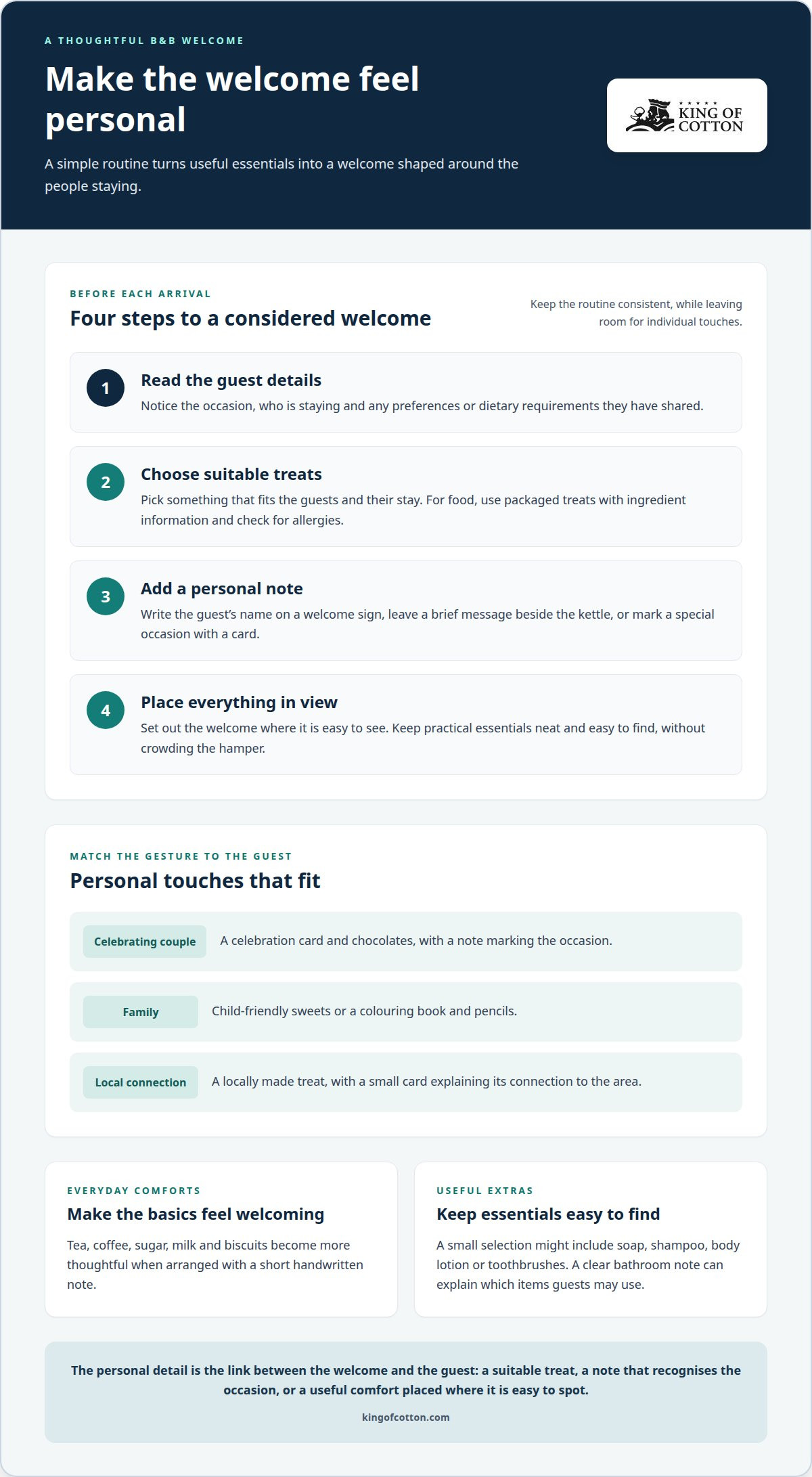
How can B&Bs personalise welcome packs for special occasions or dietary needs? Start with details guests share, then choose suitable treats, a short message or a practical extra. For a couple celebrating an anniversary, add a celebration card and chocolates; for a family, offer child-friendly sweets or colouring books. Ask about dietary requirements and allergies before choosing food, and use packaged treats with ingredient information.
A personal welcome doesn’t need an elaborate hamper. Write each guest’s name on a welcome sign, or leave a brief note beside the kettle wishing them a lovely stay. For friends arriving together, a shared message can feel warmer than a formal printed card. A handwritten note beside tea, coffee, sugar, milk and biscuits turns familiar essentials into a thoughtful first welcome.
Match the contents to the occasion and the place. Guests staying in a cottage for a birthday might find a card and a small locally made treat. A family visiting during the school holidays could appreciate colouring books and sweets, while a couple might prefer chocolates and a note marking their celebration. Seasonal treats can connect the pack to the time of their stay.
Include practical personal-care items for guests who have forgotten something. A small selection might contain soap, shampoo, body lotion or toothbrushes, placed where guests can find them easily. In the bathroom, a clear note can explain which items are available to use. Keep the arrangement neat, so useful essentials complement the room rather than crowding the welcome hamper.
Low-cost gestures often come from paying attention, not making extra purchases. Leave a book you think a guest would enjoy, with a note inviting them to read it during their stay. For a family, set out a colouring book and pencils; for someone arriving after a long journey, make the tea and coffee easy to spot. A seasonal greeting or named sign adds a personal touch without changing the whole pack.
For a special occasion, choose one gift that suits the guests instead of filling the basket with unrelated items. A celebration card, chocolates for a couple or a locally made snack can make the welcome feel thoughtful. If guests have mentioned a preference, reflect it in the gift and note. The personal detail is the link between the gift and the reason for their visit.
Before each arrival, follow a simple routine: read the guest details, select suitable treats, add a note, then place everything where it’s easy to see. This keeps each welcome consistent while leaving room for individual touches. A thoughtful sign, a favourite book or a suitable snack can help guests feel expected from the moment they arrive.
2. Local contacts, services and visitor recommendations
A local welcome pack can help guests decide what to do, where to eat and how to get there. Pair a printed map with a short list of nearby places, adding a useful note beside each recommendation. For a restaurant, include its name, address, phone number and website so guests can find the details without searching through several leaflets.
Make the list personal rather than exhaustive. Choose a café for breakfast, a restaurant for dinner and an attraction suited to the stay. A family might value a nearby park or museum, while guests visiting for a quiet weekend may prefer a scenic walk. Add a sentence explaining why you recommend each place, such as its distinctive menu or a pleasant route.
Regional food gifts offer a simple introduction to local producers and flavours. Choose a locally made snack or treat, then add a small card explaining its connection to the area. In London, a themed pack could include English breakfast tea, biscuits and homemade jam. Chocolate or another non-perishable snack can sit beside the kettle for guests arriving after a day’s travel.
Keep food presentation practical. Put wrapped treats in a small basket or on a tray, separate from property instructions and tourist leaflets. A note can identify the maker or explain the flavour, making the gift more meaningful. If guests have dietary requirements, choose packaged products with ingredient and allergen details to help them make an informed choice.
Organise visitor information in one easy-to-find folder. Include a local map, attraction brochures and your own notes on walking routes, transport stops or useful services. A short welcome letter on the kitchen table can point guests to these details instead of repeating everything in the hamper. Add opening information only when it’s relevant to the guest’s planned visit.
Useful contacts can include nearby restaurants, taxis, pharmacies and other everyday services. List each business name and address, then add a phone number where guests may need to call. Keep recommendations current by replacing outdated leaflets and removing businesses that have moved. A concise list is easier to use than a crowded directory.
Finish with a clear route from the accommodation to one suggested attraction. Mark the starting point on the map, write the destination name beside it and add a brief direction, such as “turn left at the village shop”. Putting the map, local tips and treats together creates a thoughtful introduction to the neighbourhood. A separate note can point guests to practical room details, such as where to find shampoo.
3. Different welcome offers for different guest tiers
Build guest tiers around clear differences in the stay, not simply a larger basket. A standard welcome might include useful household basics, while a higher-tier booking could add early check-in, late checkout or a guidebook. Explain each offer before arrival, so guests understand what comes with their booking and what they can choose as an extra.
For a simple arrival basket, combine a few practical items with a local treat. Biscuits, jam or butter can suit a self-catering stay, while a small snack may be more useful for guests arriving late. A beautiful reusable basket or box keeps the presentation polished. Match its contents to the holiday, the property and the length of the stay.
Are there UK food labelling or allergen rules for welcome-pack items? Packaged food can provide ingredient and allergen details, so keep that information with each item. Ask about dietary requirements before selecting food, and choose options that suit the guest’s needs rather than making assumptions.
For dietary preferences, put the guest’s stated needs at the centre of the offer. If someone avoids a particular ingredient, select a suitable packaged treat and leave its product information beside it. A plainly labelled non-food alternative can also make the basket useful without relying on a food choice. Don’t describe an item as suitable for a diet unless its information supports that claim.
Differentiate a premium welcome through convenience as well as treats. You could suggest a locally made snack, a printed guidebook or an extra item in the basket. Early arrival or a later departure may suit guests with travel plans, while a simple map can help visitors planning their first outing. Keep each option distinct and describe it accurately.
Toiletries can serve two purposes: essentials for use during the stay, and selected items guests may take home. Place soap, shampoo or body lotion in a clearly marked area, then state which items are gifts and which remain for the next guests. This avoids confusion and helps visitors who have forgotten basics settle in comfortably.
Useful household items can also make thoughtful tier benefits. A universal power adapter, phone charger, hair dryer or umbrella can be available to borrow, with a short note explaining where to return it. For a family, a hot water bottle or soft throw may add comfort; for a guest on a wet holiday, an umbrella is practical.
Choose the offer by considering the booking, guest needs and what will genuinely be used. A modest basket with suitable treats and clear information can feel more personal than a larger collection of unrelated items. Keep the contents consistent within each tier, then add one relevant detail for the individual stay.
4. Transit cards, maps and local travel information
Make it easy for guests to plan their first journey after arrival. Leave a local map beside a short guide to nearby bus stops, railway stations or taxi pick-up points. Mark the accommodation clearly, then identify useful destinations such as the town centre, a local attraction or the nearest station. A simple route note can make the map easier to use.
If your B&B is near a metro or light-rail line, consider leaving guests a prepaid transit card with enough credit to get started. Place it beside a brief note naming the nearest stop and explaining where the service can take them. For guests travelling without a car, this practical extra can help them start exploring without first working out how to pay.
A printed map works well alongside digital directions, but don’t assume every guest will have mobile data. Include the property’s Wi-Fi name and password in the welcome information, with a clear note showing where to find the network details. A welcome text can also point guests to local attractions and explain how to access the property after arrival.
Keep essential property instructions together in a welcome booklet. Include security details, rubbish collection arrangements and clear directions for using appliances such as the oven or heating controls. A short instruction beside an unfamiliar appliance can prevent confusion. For an Airbnb-style holiday let, make this information easy to find without requiring guests to search through messages.
House rules belong in the same practical guide and should be written in plain language. Explain where guests should leave rubbish, which entrance to use and how to secure the property when they leave. If there’s a shared hallway or locked gate, describe the steps clearly. Add information about extras, such as borrowed equipment, where guests will look for it.
A welcome text can introduce these details before guests set off. Keep it focused: include the arrival instructions, the Wi-Fi details or where to find them, and a pointer to the local map. If the message mentions a bottle of water or a selection of tea waiting in the room, make sure the welcome pack matches. Consistent details reduce uncertainty.
Arrange the printed information where guests naturally pause, such as the kitchen table or entrance. Put the map, booklet and transit card together, then keep appliance instructions near the relevant controls. This layout helps guests find what they need, whether they’re looking for a route to an attraction, the rubbish collection point or the Wi-Fi password.
5. Should you charge for welcome basket goodies?
Work out the cost per guest by adding the basket’s contents and presentation materials, then dividing by the number of guests it serves. Whether to include that cost in the nightly rate or charge separately depends on the pack’s contents, your booking structure and how clearly guests see the offer before arrival.
For a couple, a small basket might hold biscuits and a local treat; families may value child-friendly snacks. At a dog-friendly property, add dog treats or a chew, keeping them separate from food intended for people. Match the contents to the booking rather than giving every guest an identical selection.
Charging separately can suit optional extras, such as a larger hamper or a special-occasion gift. If guests must pay extra, state what the basket includes and its charge before they book or confirm their stay. Alternatively, include a modest welcome in the nightly rate and reserve upgrades for guests who choose them. This is a personal preference, not a universal pricing guide.
Review supplies after each changeover. Note which items guests used, which remained untouched and whether anything was damaged or wasted. If biscuits regularly remain, replace them with a more useful snack; if guests ask for a particular item, consider whether it suits the property and future stays. Keep dietary information with packaged food and avoid adding items guests can’t readily identify.
Presentation can be simple and polished. A reusable wicker basket or box keeps items together and can be used again. Arrange treats with labels visible, then place a short card on top explaining what’s complimentary and what’s an optional extra. For a family, keep dog treats apart from children’s snacks; for a couple, group a celebration card with the chosen gift.
For a lower-waste pack, choose products with less packaging, avoid unnecessary single-use wrapping and use a basket or box guests can reuse. Add a note explaining where recycling facilities are in the property, so guests know how to sort packaging. A locally made snack in minimal packaging can combine a regional touch with less waste.
Set a review routine: check stock, presentation and guest feedback after each changeover. This helps keep the offer relevant and control waste without removing useful basics. A clear description, a thoughtful basket and a fair choice between included items and paid extras make the arrangement straightforward for guests.
King of Cotton
King of Cotton helps B&B hosts create a more considered welcome with quality essentials for guest rooms and bathrooms. When refreshing a room or preparing it for guests, choose from bed linen, towels, bathrobes and gowns, duvets and pillows to complement the practical details in your welcome pack. These comforts support the stay beyond treats and local tips, giving guests a calm, comfortable place to return to after exploring.
For hospitality settings, high-quality cotton products can bring a refined, consistent feel to the guest experience. Consider which room and bathroom essentials best suit your accommodation and the welcome you want to create. Contact King of Cotton to discuss products for your B&B.
Make every arrival feel considered
Let your welcome pack reflect the character of your B&B rather than follow a formula. The best b&b welcome pack ideas feel thoughtful because they connect small details with comfort throughout the stay. Carry that same care into the room, where fresh bed linen, towels and bathrobes can complete a restful, well-prepared setting.
King of Cotton offers these hospitality essentials for guest accommodation. If you’re planning a refresh or refining the experience your rooms provide, contact King of Cotton about welcome packs and explore how quality textiles can complement your approach. A considered welcome can set the tone for a memorable stay.
Frequently Asked Questions
Should You Charge for Items in Your Forget Me Not Box?
Charge separately only if the box is an optional extra, and make that clear before guests book. If it contains essentials you advertise as part of the stay, include them in the accommodation offer instead. To decide, list the contents, packaging and preparation involved, then consider whether guests would value the box as an option. Keep complimentary basics distinct from paid gifts, so nobody mistakes an extra for an included item.
Should you charge for welcome basket goodies?
You can include a modest basket in the stay or offer a larger hamper for an additional charge. Base the choice on what the basket contains and how guests see the offer before booking. For example, keep everyday refreshments included, then describe a celebration hamper as optional. Review leftovers and guest comments after stays, so you can remove unwanted items and avoid charging for contents that bring little value.
Want to improve your guest experience?
Choose one part of the stay to improve, make a practical change and gather feedback. If guests struggle to find the heating controls, for example, add a clear instruction card beside the thermostat. If arrivals feel uncertain, clarify the entry steps in the message sent before arrival. Keep a simple record of recurring comments and changes made; this helps you focus on real guest needs instead of adding unnecessary extras.
What should I put in a holiday cottage welcome pack?
For a self-catering cottage, combine arrival refreshments with practical supplies guests may need right away. Tea, coffee, sugar, milk and biscuits are familiar options; bin bags and dishwasher tablets can help guests settle into the kitchen routine. A brief property guide can explain appliance instructions, rubbish arrangements and Wi-Fi access. If food supplies are included, choose packaged items with ingredient details and make the contents easy to identify.
What should a B&B welcome pack include?
Start with a welcome note and information guests can use without asking for help. Include the Wi-Fi details, breakfast arrangements, check-out instructions and the location of everyday essentials. A selection of tea and coffee can suit guests arriving at different times. Keep the written information concise, with one clear place for each detail, so visitors can quickly find the breakfast time or appliance instructions.
What local food and drink can B&Bs include in welcome packs?
Choose a locally made food item that introduces the area without making the pack difficult to store or serve. A small jar of regional honey or preserves, for example, can come with a card naming its maker and place of origin. Packaged products are practical because their ingredient information stays with the item. If offering alcohol, remember that the UK research for this article states hosts need the correct distribution licences, even when it’s free.
What are budget-friendly B&B welcome pack ideas?
Keep the welcome simple and let the personal detail do the work. A short note with guests’ names, a printed walking route or a useful tip about a nearby attraction can add character without filling a basket. Reuse a clean container and focus on items guests are likely to use. A consistent basic pack also makes it easier to restock supplies and reduce waste between bookings.
What welcome pack ideas work for families, couples and solo travellers?
Choose details to suit the purpose of each visit, rather than assuming every guest wants the same things. Families may appreciate a simple activity for a rainy afternoon; couples might value a quiet local recommendation, while solo travellers could benefit from clear directions to nearby transport and places to eat. A short message that recognises the type of stay can make standard essentials feel more thoughtfully prepared.