

Avoiding the Regret of Cheap Sheets: A Guide to Bedding Longevity and Luxury
The most expensive way to furnish your bedroom is often by choosing the lowest price tag on the shelf. While a £25 bedding set seems like a win for your wallet, the hidden costs appear within weeks as you wake up damp from non-breathable synthetic fibres or notice unsightly pilling after the first wash. We understand the frustration of watching linens lose their shape and soft feel, turning what should be a sanctuary into a source of discomfort. Avoiding the regret of cheap sheets starts with understanding that true luxury isn't a vanity; it's a practical investment in your daily well-being.
In this guide, you'll discover why budget bedding is a false economy and how to identify the genuine quality that delivers five-star hotel comfort for years. Drawing on over 25 years of experience supplying the world's finest homes, we'll show you how to spot superior materials like long-staple Egyptian cotton. You'll learn to look past high thread count gimmicks to find linens that remain crisp, cool, and perfectly fitted through hundreds of laundry cycles. We'll explore the technical differences between percale and sateen to ensure your next purchase provides the ultimate restorative sleep experience.
Key Takeaways
- Learn why budget bedding is often a false economy and how calculating the "Cost Per Sleep" helps you invest in lasting comfort rather than frequent replacements.
- Master the art of avoiding the regret of cheap sheets by deconstructing thread count myths and identifying the superior durability of single-ply yarns.
- Understand how high-quality natural fibres prevent common issues like pilling and night sweats, ensuring your bed remains a breathable haven of elegance.
- Uncover the "Hospitality Grade" secrets used by elite hotels to select linens that maintain their luxurious feel through years of industrial laundering.
- Gain practical expertise in evaluating fabric quality before you buy and learn the "Rule of Three" rotation method to triple the lifespan of your luxury bed linen.
The Hidden Cost of "Bargain" Bedding: Why Cheap Sheets Are a False Economy
Many shoppers fall victim to what experts call the "Regret Cycle." It's a predictable pattern where a £25 supermarket sheet set looks crisp and inviting under bright retail lights but loses its integrity after just three washes. These budget options often rely on heavy chemical finishes and silicone coatings to mimic softness. Once those chemicals wash away, you're left with the harsh reality of low-grade fibres. Avoiding the regret of cheap sheets starts with recognizing that a low price tag usually masks a much higher long-term cost.
To truly measure value, smart homeowners look at the "Cost Per Sleep" rather than the initial checkout price. A budget set costing £30 might survive 20 trips through the washing machine before pilling or thinning makes it uncomfortable. In contrast, a professional-grade set priced at £120 is designed to withstand 250 washes or more while actually improving in texture. When you spread that cost over five years of nightly use, the premium option becomes the more economical choice. It's the difference between a temporary purchase and a long-term investment in your well-being.
To better understand this concept, watch this helpful video:
The environmental toll of "disposable" bedding is equally significant. In the United Kingdom, thousands of tonnes of household textiles end up in landfills every year because they weren't built to last. Choosing high-quality linens is a powerful sustainable choice. By avoiding the regret of cheap sheets, you reduce your personal waste footprint. The world's finest homes and hotels don't accept anything less than materials that offer decade-long durability, and your bedroom deserves that same standard of excellence.
The Replacement Trap: Why You Spend More Over Time
The math of budget bedding rarely adds up. While a £30 set seems like a win, it often suffers from "invisible" failures like snapped elastic in the fitted sheets or significant thinning in the centre of the fabric. Professional-grade cotton sets use longer staples that resist breaking and pilling. By investing in quality once, you avoid the constant cycle of replacement, saving you both money and the frustration of deteriorating comfort. It's a shift from consumerism to true stewardship of your home environment.
The Psychological Toll of Poor Sleep Environment
Your bedding directly dictates your sleep architecture. Scratchy or "sticky" synthetic fabrics trap heat, which prevents your core temperature from dropping, a vital step for reaching deep REM sleep. A deep dive into understanding bed sheet materials reveals that natural, long-staple fibres provide the breathability necessary for rest. Creating a rejuvenating haven isn't just about luxury; it's about your mental health. The tactile experience of sliding into smooth, cool sheets at night significantly improves your mood and energy levels upon waking.
Decoding the Marketing Myths: Thread Count, "Cotton-Rich," and the Egyptian Trap
Thread count is the most manipulated metric in the textile industry. Many manufacturers artificially inflate these figures by twisting three or four inferior, thin threads together to create "multi-ply" yarn. They then count each individual strand as a separate thread. This deceptive practice turns a mediocre 250-thread-count sheet into a marketed 1,000-thread-count "luxury" item. Avoiding the regret of cheap sheets starts with understanding that a single-ply 200TC percale is far more durable and breathable than a 1,000TC multi-ply set that feels like heavy sandpaper after three washes. High-quality single-ply yarns don't need to be packed tightly to feel substantial; their strength comes from the quality of the raw fibre itself.
Labels are often designed to mislead. "Cotton-Rich" is a common red flag, usually signifying a blend containing up to 40% polyester. While this makes the fabric cheaper to produce, it traps heat and leads to a sweaty, uncomfortable night. You should also be wary of vague geographical claims. Before purchasing, use this checklist to scrutinize the small print:
- Confirm the material is 100% cotton, not a "blend."
- Look for "Single-Ply" or "Single-Insert" weaving.
- Check for "Long-Staple" or "Extra-Long Staple" (ELS) descriptors.
- Ensure the product meets international textile safety standards to guarantee it's free from harmful chemical residues.
The Truth About Egyptian Cotton
Genuine Egyptian cotton, particularly Giza varieties, remains the gold standard for global hospitality. However, a loophole allows manufacturers to use the "Egyptian Cotton" label if the cotton was grown in Egyptian soil, regardless of the seed quality. True luxury bed linen relies exclusively on long-staple fibres. These longer fibres create stronger, smoother yarns with fewer exposed ends. This is the only way to prevent pilling, those irritating bobbles that appear on cheap sets, and ensures a silk-like finish that improves with every wash.
Percale vs. Sateen: It is a Weave, Not a Quality
Choosing the wrong weave is a fast track to avoiding the regret of cheap sheets. Percale uses a "one over, one under" structure. It's crisp, matte, and cool to the touch; perfect for those who sleep hot. Sateen uses a "four over, one under" weave, resulting in a lustrous sheen and a heavier, silkier drape. If you prefer a cosy, weighted feel, sateen is ideal. If you buy sateen expecting the breathability of a crisp hotel sheet, you'll likely regret the purchase during a humid UK summer. You can explore these different textures in our professional-grade bed linen collection to find your perfect match.
The Physical Symptoms of Poor Quality: Pilling, Night Sweats, and Skin Irritation
The initial aesthetic of budget bedding quickly fades after the first few laundering cycles. Avoiding the regret of cheap sheets starts with understanding why certain fabrics fail. Pilling is the most common grievance. This occurs when short-staple cotton fibres break under friction, tangling into small, abrasive bobbles on the surface. While premium Egyptian cotton uses long-staple fibres that remain smooth, budget alternatives rely on weaker, shorter strands that inevitably degrade. Breathability is another casualty of low-cost production. Many budget brands treat their fabric with harsh chemical resins to create a temporary "wrinkle-free" sheen. These finishes often emit a distinct, plasticky smell out of the box and can trigger reactions in those with sensitive skin. According to Consumer Reports lab tests, material composition is the primary indicator of how well a sheet manages airflow and moisture. Low-grade cotton and synthetics lack the natural capillary action required to move heat away from the body, frequently resulting in interrupted sleep and night sweats.Why Synthetic Blends Are the Enemy of Comfort
Polyester and poly-cotton blends are frequently marketed as easy-care solutions, but they often lead to a "sticky" sensation during humid British summers. These synthetic fibres act as insulators rather than regulators. They trap body heat and moisture against the skin, making it impossible to create a rejuvenating sleep environment. Beyond the lack of comfort, synthetic bedding has a hidden environmental cost. Every wash cycle can release up to 700,000 microplastic fibres into the water system. Investing in 100% pure bed linen ensures a breathable haven while removing these plastic pollutants from your home.Structural Failures: Shrinkage and Misshapen Seams
Structural integrity is a hallmark of quality that cheap sheets cannot replicate. Budget options rarely undergo a pre-shrinking process. This means a standard double sheet can lose up to 10% of its dimensions after one 60°C wash. This leads to the "corner pop," where the fitted sheet refuses to stay secured to the mattress. Many modern UK mattresses now feature depths of 30cm or more, yet budget retailers often skip the "extra deep" tailoring required for a proper fit. Avoiding the regret of cheap sheets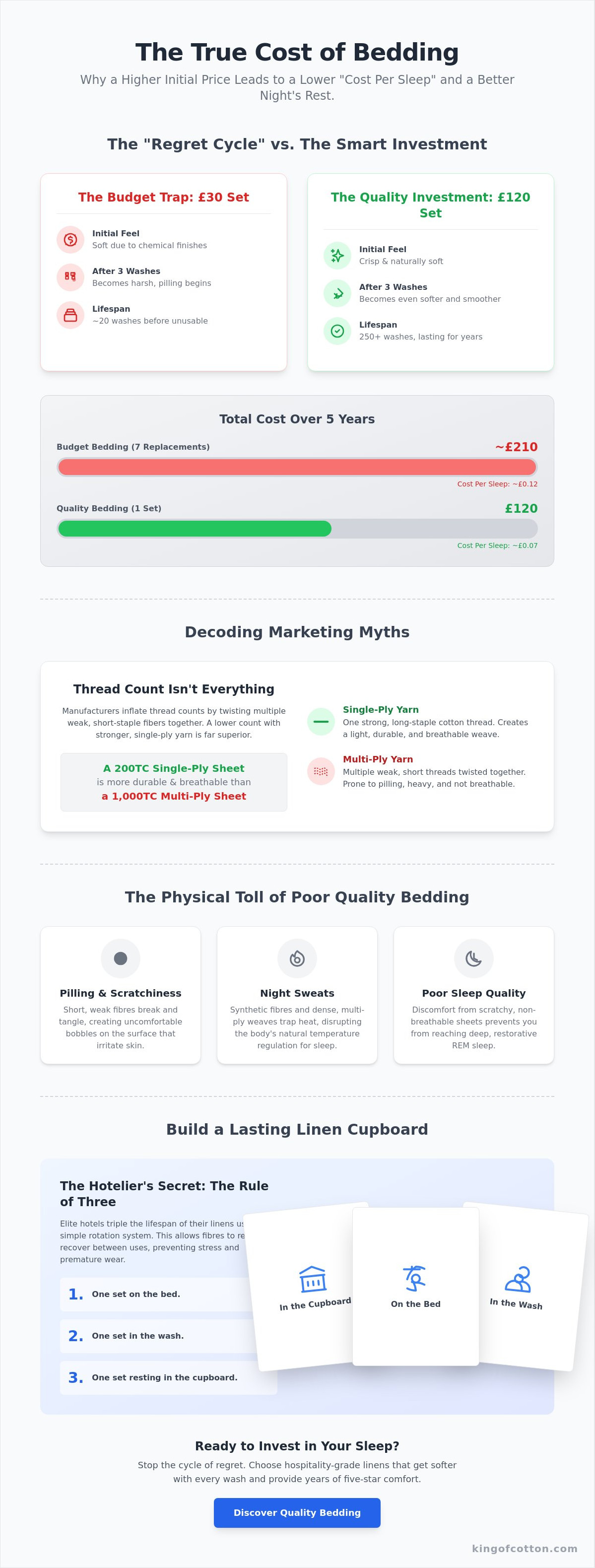
The Hotelier’s Secret: Why Professional Durability Outlasts High-Street "Luxury"
High-street retailers often use the word "luxury" as a marketing veneer for fabrics that won't survive a dozen laundry cycles. Professional hoteliers can't afford that risk. They rely on "Hospitality Grade" linens, which are engineered specifically for daily industrial laundering. This grade of fabric prioritises tensile strength, which measures how much pulling force a sheet can withstand, and bursting strength, which ensures the weave doesn't fail under pressure. By avoiding the regret of cheap sheets and choosing professional standards, you're investing in bedding that remains structural and beautiful for years.
King of Cotton translates these rigorous industrial specifications into their domestic bedding collections. One critical component is mercerisation. This process involves treating the cotton with a sodium hydroxide solution to swell the fibres. It increases the fabric's strength by up to 25% and significantly improves dye retention, ensuring your linens don't look dull after a few months of use. It's a technical upgrade that separates professional textiles from basic retail options.
The 500-Wash Test: A Different Standard of Excellence
Standard retail sheets often begin to pill or thin out after 40 washes. Professional linens are built to pass a 500-wash test while maintaining their signature "hand-feel." This is why a hotel linen supplier is the most reliable source for home quality. High-grade cotton handles whitening agents more effectively, which is the secret behind that elusive "crisp white sheet" look found in five-star suites. It doesn't grey or yellow because the base fibres are pure and robust enough to withstand high-temperature sanitisation.
The Importance of Finishing and Detailing
Quality isn't just about the thread; it's about how the fabric is finished. You should look for "Sanforized" cotton, a mechanical finishing process that limits residual shrinkage to less than 1%. This prevents the frustration of a duvet cover that no longer fits after the first wash. While thread count is a common metric, the weight of the fabric, measured in GSM (Grams per Square Metre), is equally vital. A weight of 120 to 150 GSM often indicates a more durable weave than a flimsy, high-thread-count alternative.
Details like Oxford borders and hand-guided embroidery aren't just for show. They represent a level of craftsmanship that helps in avoiding the regret of cheap sheets that fray at the seams. Robust button closures and reinforced stitching ensure the bedding remains functional through hundreds of changes. When you choose linens designed for the world's finest hotels, you're choosing a product that has already been tested to the extreme.
Experience the difference that 25 years of professional expertise makes. Upgrade your sleep with our hotel-grade collections today.
Building a Lifetime Linen Cupboard: How to Spot Value Before You Buy
Investing in high-quality materials is the most effective way of avoiding the regret of cheap sheets. You can evaluate the integrity of any fabric using two simple physical tests. First, perform the Light Test. Hold the sheet up against a bright window or a lamp. If the light passes through a loose, irregular grid, the weave is sparse and likely to lose its shape. A premium weave appears dense and uniform. Second, use the Rub Test. Vigorously rub two sections of the fabric together for thirty seconds. If any fine lint or "fuzz" appears on the surface, the manufacturer has used short-staple fibres that will pill and become scratchy within a few months.
To maximise your investment, follow the "Rule of Three." This strategy involves keeping one set on the bed, one in the laundry, and one resting in the linen cupboard. Rotating your sets in this manner prevents the fibres from being over-stressed by constant use and frequent washing, which can triple the lifespan of your bed linen. It's a simple habit that ensures your sanctuary remains consistently luxurious.
Proper maintenance is the final pillar of bedding longevity. Always wash cotton at 40°C or lower; excessive heat strips away the natural waxes that keep cotton soft. Use a mild liquid detergent and avoid fabric softeners, which actually coat and weaken high-quality fibres over time. While air drying is the gold standard for preserving fabric strength, you can use a tumble dryer on a low setting. Remove the sheets while they are slightly damp to prevent stubborn wrinkles and fibre brittleness.
What to Look for on the Label
Specific terminology is your best defence against marketing gimmicks. Look for "Single-ply" to ensure the thread count isn't artificially inflated with weak, twisted yarns. "Long-staple" or "Combed cotton" indicates that only the strongest, longest fibres were used, resulting in a smoother finish. Seek out "Oeko-Tex certified" labels to guarantee the fabric is free from harmful chemicals. Craftsmanship also serves as a hallmark of quality; "Made in Portugal" or "Italian-finished" products typically follow stricter quality controls. Before purchasing, check the delivery and returns policy to ensure you can inspect the quality at home risk-free.
The Ultimate Bedding Investment Strategy
Building a luxury linen collection is a marathon, not a sprint. Owning one exceptional 600-thread count Egyptian cotton set is far superior to owning three budget sets that trap heat and irritate the skin. You can create a versatile cupboard by mixing textures for different seasons. Choose a silky Sateen for warmth during the British winter and a crisp, matte Percale for breathability during the summer months. To truly understand these tactile differences, visit King of Cotton stores to feel the weight and finish of professional-grade fabrics. This transition from disposable bedding to a curated collection ensures you are avoiding the regret of cheap sheets and investing in decades of better sleep.
- Identify "Single-ply" and "Long-staple" on the product specifications.
- Check for European craftsmanship or heritage manufacturing.
- Verify the weight and "hand-feel" using the Rub Test.
- Establish a three-set rotation for every bed in the home.
- Switch to low-temperature washing and mild detergents.
Invest in a Lifetime of Restful Nights
Choosing bedding shouldn't be a gamble on a bargain shelf. When you prioritise genuine quality over high-street marketing myths like inflated thread counts, you're avoiding the regret of cheap sheets that pill after three washes or trap heat during the night. High-quality linen isn't just about a softer feel; it's a strategic investment in your daily well-being. By selecting professional-grade 100% Egyptian cotton, you secure a product designed to withstand hundreds of laundry cycles while maintaining its crisp, elegant finish.
King of Cotton has spent over 25 years perfecting this craft, serving as trusted suppliers to the world’s finest 5-star hotels. Our commitment to excellence is backed by an Excellent rating on Trustpilot, ensuring you receive the same durability and indulgence enjoyed by the most discerning global travellers. It's time to stop settling for disposable bedding and start building a linen cupboard that lasts for decades. Upgrade your sleep with our professional-grade Bed Linen Collection.
You deserve the serene confidence that comes with a perfectly made bed every single evening.
Frequently Asked Questions
Why do my sheets pill after only a few washes?
Sheets pill because they're made from short-staple cotton or synthetic blends where loose fibres break and tangle into small bobbles. Avoiding the regret of cheap sheets starts with choosing long-staple cotton, which is 30% stronger than standard varieties. These longer fibres stay smooth and intact through the wash. Low-quality sets often fail after just 3 to 5 laundry cycles, whereas premium Egyptian cotton remains smooth and pristine for several years of regular use.
Is a higher thread count always better for bed sheets?
No, a higher thread count is often a marketing gimmick used to hide poor quality material. Manufacturers frequently use multi-ply yarns to artificially inflate the count to 800 or 1,000. This results in heavy, stiff fabric that traps heat and lacks durability. A genuine 300 to 400 thread count made from single-ply, long-staple cotton provides a much more luxurious, breathable experience than a cheaply made 1,000-count set.
What is the best material for sheets if I get hot at night?
100% cotton percale is the superior choice for hot sleepers because its "one-over, one-under" weave promotes maximum airflow. This crisp fabric feels cool against the skin and helps regulate body temperature throughout the night. Research shows that natural cotton can absorb up to 27 times its weight in water, wicking away moisture far more effectively than polyester. For the ultimate cooling experience, look for a 200 or 400 thread count percale for your bedroom.
How can I tell if Egyptian cotton is genuine?
You can identify genuine Egyptian cotton by checking for the Cotton Egypt Association (CEA) gold seal on the packaging. Authentic Egyptian cotton must be grown in the Nile Delta to earn this distinction. Since a 2016 audit revealed that 90% of global "Egyptian cotton" was counterfeit, reputable suppliers now use DNA testing to verify the fibre's origin. Genuine sets will also feel heavier and more substantial than thin, cheap imitations found in budget shops.
Are cotton-polyester blends ever worth buying?
Cotton-polyester blends are only worth buying if you prioritise easy ironing over sleep quality and comfort. These 50/50 blends are durable and resist wrinkles, but they lack the breathability required for a restful night. Because polyester is a synthetic plastic, it traps heat and can cause night sweats. If you're avoiding the regret of cheap sheets, invest in 100% natural cotton to ensure your bedding remains comfortable and skin-friendly for over 50 wash cycles.
How long should a high-quality set of bed sheets actually last?
A high-quality set of bed sheets should last between 5 and 10 years when cared for correctly. Premium long-staple cotton is designed to withstand 500 or more laundry cycles without losing its structural integrity. In contrast, budget options often show significant thinning or tearing after just 30 washes. Investing in professional-grade linen ensures the fabric becomes softer over time rather than wearing out and becoming transparent, providing excellent long-term value for your home.
What does "single-ply" mean in bedding, and why does it matter?
Single-ply means the fabric is woven using individual, strong threads rather than multiple weak strands twisted together. This is only possible when using high-quality, long-staple cotton fibres. It matters because single-ply bedding is lighter, softer, and significantly more durable. Multi-ply yarns are often used in cheap sheets to create a thick, heavy feel that quickly pills and frays, leading to a much shorter lifespan for your bedding and a less comfortable sleep.
Can I fix scratchy sheets, or should I replace them?
You can attempt to soften scratchy sheets by washing them with half a cup of baking soda and a cup of white vinegar. While this method removes chemical residues, it won't fix the underlying issue of low-quality, short-staple fibres. If the sheets remain abrasive after three washes, the fabric's structural quality is the problem. In these cases, it's better to replace them with a long-staple cotton set that offers immediate, lasting softness and luxury.