

7 Telltale Signs You Need to Replace Your Duvet
Your bedroom should be a sanctuary, a place of serene comfort where each night promises deep, restorative sleep. But if you’ve noticed your slumber is less than peaceful, or your once-lofty duvet now feels flat and uninviting, it may be compromising the quality of your rest. These subtle shifts in comfort and hygiene are often the most important signs you need to replace your duvet, transforming your sleep haven into a source of nightly disappointment.
Determining the right moment for an upgrade can feel like guesswork. How long should a quality duvet truly last? Is it still as hygienic as it was on day one? In this guide, we remove the uncertainty. We will unveil the seven telltale signs that your duvet is past its best, empowering you to confidently invest in a replacement. Prepare to elevate your sleep experience and rediscover the unparalleled luxury of a fresh, perfectly plump duvet for a truly rejuvenating night’s sleep.
Key Takeaways
- Visual cues like lumpiness, thinning, or persistent stains are often the first indication that your duvet's internal structure has degraded and its performance is declining.
- Beyond its appearance, a noticeable loss of warmth and fluffiness are key signs you need to replace your duvet, as the filling is no longer providing optimal insulation for a comfortable night.
- For a truly hygienic sleep environment, it's essential to recognise that duvets accumulate unseen allergens like dust mites and bacteria over years of use, which can impact your rest and wellbeing.
- Understanding the expected lifespan of your duvet's filling, whether natural down or synthetic, empowers you to proactively plan for an upgrade and invest in continued sleep quality.
Visible Signs of Wear and Tear: What Your Eyes Are Telling You
The most immediate signs you need to replace your duvet are often the ones you can see. Over years of providing luxurious comfort, even the finest materials will begin to show their age. These visual cues are more than just cosmetic; they signal a fundamental breakdown in the duvet's structure and filling, compromising its ability to provide the even, rejuvenating warmth essential for a perfect night's sleep. Ignoring them can lead to discomfort, reduced insulation, and a less hygienic sleep haven. Take a moment during your next bedding change to inspect your duvet for these tell-tale signs.
Clumps, Lumps, and Cold Spots
A premium duvet should offer a consistently smooth and even layer of warmth. If you notice the filling has shifted into dense clumps, creating lumpy areas and corresponding empty, cold spots, its internal structure has degraded. This is a common issue in older duvets where repeated washing has caused the delicate filling to cluster together, preventing it from trapping air effectively and disrupting the seamless comfort you deserve.
Noticeable Stains and Discolouration
Persistent yellowing on your duvet is a clear indicator of moisture buildup from body oils and sweat over time. Beyond being unsightly, these stains can harbour bacteria, dust mites, and other allergens that are difficult to eliminate completely. While regular cleaning is essential, deep-set discolouration signals that the fabric and filling have absorbed impurities. Investing in a fresh, pristine duvet is the ultimate way to ensure your sleep environment remains clean, hygienic, and inviting.
Leaking Filling and Damaged Casing
Do you find small, wispy feathers or synthetic fibres on your bed sheets? This is one of the most definitive signs you need to replace your duvet. It means the outer shell, or casing, has been compromised. Over time, the fabric can thin, or the seams can weaken from the stress of use and washing. The casing, which is a critical component in understanding what is a duvet, is designed to keep the luxurious filling perfectly contained. Once it fails, the duvet can no longer provide consistent insulation and its lifespan has come to an end.
Loss of Performance: When Comfort and Warmth Fade
Beyond its visual appeal on your bed, a duvet's fundamental purpose is to provide a sanctuary of luxurious comfort and reliable insulation. Over years of nightly use, its filling-whether the finest Hungarian goose down or an advanced microfibre alternative-naturally compresses, shifts, and degrades. This gradual breakdown leads to a significant decline in performance, one of the most crucial signs you need to replace your duvet, as it directly compromises the quality of your rejuvenating sleep.
It's Gone Flat and Lost Its 'Loft'
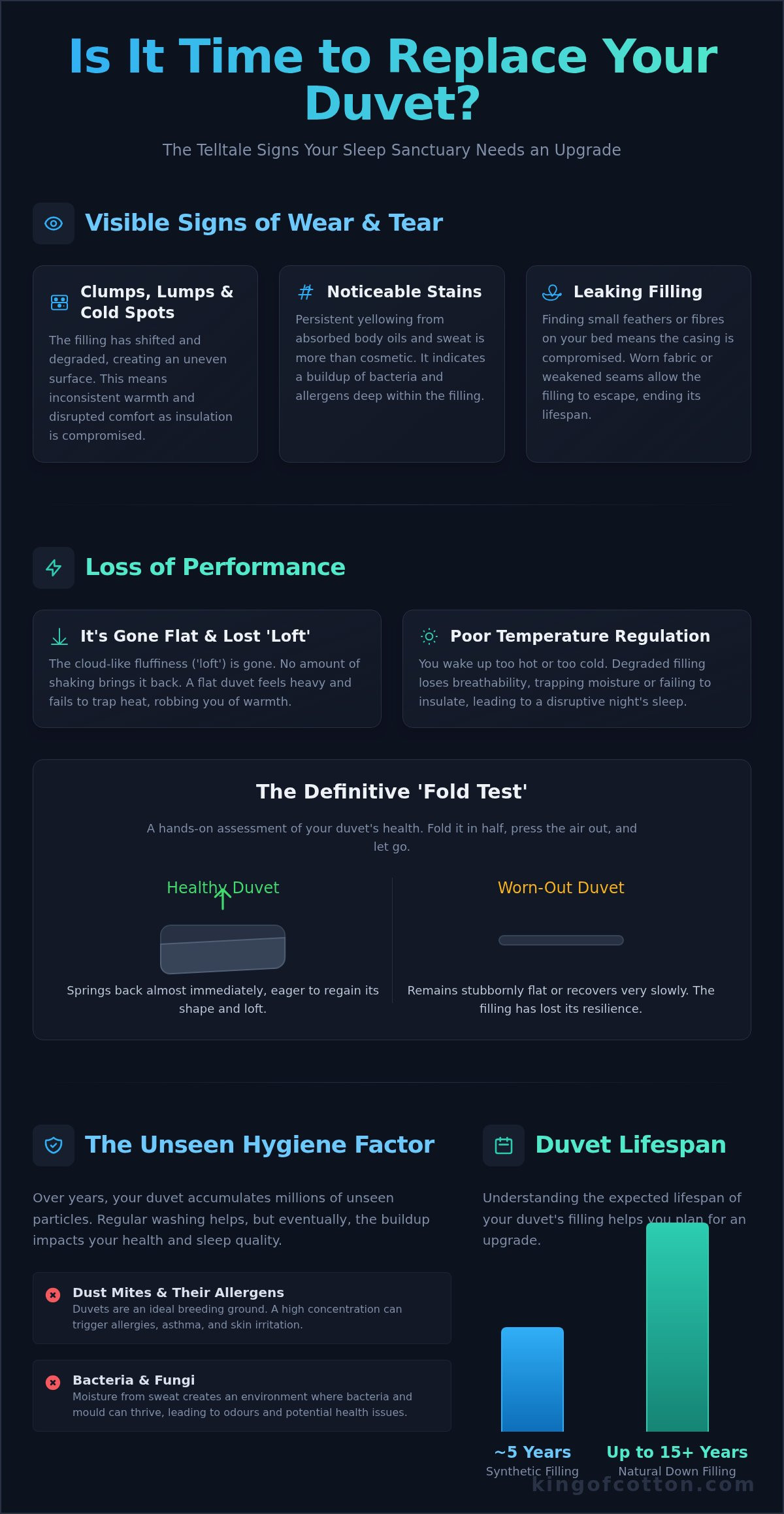
Remember the satisfyingly plump, cloud-like feeling of your new duvet? That essential quality is known as 'loft'. The loft, or fluffiness, is what creates thousands of tiny air pockets that trap your body heat, providing exceptional insulation. When a duvet has reached the end of its life, no amount of shaking will bring back that billowing volume. It will feel thin, limp, and disappointingly heavy. A flat duvet is simply a less effective insulator, robbing you of that essential warmth and the cocooning comfort you deserve on a chilly night.
You're Waking Up Too Hot or Too Cold
A premium duvet excels at regulating your body temperature, ensuring a stable and serene sleep environment. As the filling breaks down, it loses this critical ability. The material can clump together, creating frustrating cold spots that allow precious warmth to escape. Conversely, degraded fibres may lose their breathability, trapping heat and moisture against your body and causing you to wake up feeling clammy and overheated. This inconsistent performance not only disrupts your comfort but can also create a damp environment that is less hygienic. Poor breathability can contribute to conditions that aggravate issues like dust mite allergies, turning your bed into anything but a restful haven.
It Fails the Simple 'Fold Test'
For a definitive, hands-on assessment of your duvet's health, perform the simple 'fold test'. Lay your duvet on a flat surface, fold it in half, and then press down firmly to squeeze all the air out. Now, let go. A duvet with a healthy, resilient filling will spring back almost immediately, eager to regain its shape. If your duvet remains stubbornly flat and folded, or recovers very slowly, it's a clear indication that the filling has lost its structure and elasticity. This is one of the most telling signs you need to replace your duvet, as its ability to provide comfort is fundamentally compromised.
The Hygiene Factor: The Unseen Reasons for an Upgrade
While visible wear and tear are obvious indicators, what you can't see is often the most compelling reason for an upgrade. Over years of nightly use, your duvet becomes a reservoir for millions of shed skin cells, dust mites, and bacteria. While regular washing is essential, it cannot entirely reset the clock on an old duvet's hygiene. This internal build-up can directly impact your health and the quality of your sleep, making it one of the most important signs you need to replace your duvet.
You're Experiencing Increased Allergies
Do you frequently wake with a stuffy nose, persistent sneezing, or itchy, watery eyes? Your trusted duvet may be the culprit. Over time, it becomes a prime habitat for dust mites, which thrive in warm environments. It is their waste, not the mites themselves, that is a powerful and common allergen. As this accumulates deep within the filling, allergy symptoms can worsen. Investing in a new, high-quality hypoallergenic duvet can provide immediate relief and contribute to a more serene, rejuvenating night's sleep.
It Retains a Musty or Stale Odour
A tell-tale sign of a duvet past its prime is a faint but persistent stale odour that lingers even after a thorough wash. This scent is caused by years of absorbed moisture from perspiration, body oils, and bacteria that have become embedded deep within the filling. This indicates that the core materials are no longer truly clean, regardless of laundering. Embrace the simple luxury of slipping under a genuinely fresh, clean-scented duvet each night.
It's Impractical or Impossible to Wash Properly
As a duvet ages, its filling can become compacted and heavy, often making it too bulky to fit into a standard domestic washing machine. Furthermore, the internal structure may become too fragile to withstand the rigours of a proper cleaning cycle without clumping or damage. If you find yourself avoiding the task because it's simply too much hassle, you're not alone. These practical challenges are clear signs you need to replace your duvet, making a fresh start the most elegant and hygienic solution.
Understanding a Duvet's Natural Lifespan
Even the most luxurious, hotel-quality duvet is not designed to last forever. While meticulous care can certainly extend its life, every duvet has a natural expiry date. Understanding the typical lifespan of your duvet is not about adhering to a strict rule, but about knowing when to assess its performance to ensure you continue to enjoy the ultimate in comfort and hygiene.
Investing in the finest bedding is an investment in your wellbeing, and knowing when to refresh your duvet is a key part of maintaining a serene and rejuvenating sleep sanctuary.
Average Lifespan by Filling Type
The material nestled inside your duvet is the primary factor determining its longevity. The quality of the filling dictates how well it will retain its loft, warmth, and structure over years of use. As specialists in the finest bedding, we find the following guidelines to be a reliable measure:
- Synthetic Fillings (Hollowfibre, Microfibre): These are excellent for affordability and hypoallergenic properties, but the fibres can compress more quickly. Expect a typical lifespan of 2-5 years.
- Natural Fillings (Feather and Down): With their superior resilience and breathability, these duvets offer exceptional longevity. With proper care, they can last 5-10 years.
- High-Quality Down: A premium down duvet, such as one filled with Hungarian Goose Down, is a true long-term investment. Its superior cluster size and quality mean it can maintain its luxurious loft and performance for 10 years or more.
Always check the manufacturer’s recommendations, but these averages provide a dependable framework for planning.
How to Know When You've Reached the End
As a general rule, it is wise to consider replacing your duvet approximately every 5 years. This simple timeframe helps ensure your bed remains a hygienic and supremely comfortable haven. If you are noticing several of the other signs you need to replace your duvet mentioned in this article, it is a clear indication that its effective life has come to an end.
Think of a new duvet not as a mere replacement, but as a vital recommitment to your health. Restorative sleep is essential, and providing yourself with the finest, freshest materials is one of the most direct ways to enhance your quality of life each night.
Time for an Upgrade: Choosing and Caring for Your New Duvet
Once you've recognised the signs you need to replace your duvet, you have the perfect opportunity to transform your sleep experience. A new duvet is more than just a replacement; it's an investment in your comfort and well-being. Selecting a premium, high-quality duvet ensures years of rejuvenating rest, elevating your bedroom into a sanctuary of serene luxury.
How to Select Your Perfect Replacement
Choosing the right duvet is essential for achieving unparalleled comfort. Consider these key factors to find your ideal match:
- Tog Rating: In the UK, a 4.5 tog is ideal for summer, while a 13.5 tog offers exceptional warmth in winter. An all-seasons option provides versatile comfort year-round.
- Filling: Natural fillings like goose or duck down offer supreme softness and insulation. For those with sensitivities, high-quality synthetic microfibre options provide a luxurious, hypoallergenic alternative.
- Casing: A high thread count cotton casing is crucial. It ensures breathability, preventing overheating, and offers the durability needed to protect the fine filling within.
To find your perfect match, explore our collection of luxurious bedroom essentials and rediscover what a truly great night's sleep feels like.
Extending the Life of Your New Duvet
A superior duvet is a long-term investment in quality sleep. To protect it and maintain its loft and freshness, follow these simple care tips. Always encase your duvet in a high-quality, washable cover, as this provides the first line of defence against dirt and wear. Pairing it with the finest bed linen not only feels exquisite but also protects your investment. We also recommend you shake and air your duvet daily to help redistribute the filling and maintain its plush volume, and always follow the specific washing and drying instructions on the care label to ensure its longevity.
What to Do With Your Old Duvet
When it's time to part with your old duvet, consider sustainable options rather than sending it to a landfill. Many local councils in the UK offer textile recycling facilities that can process duvets. Alternatively, local animal shelters and rescue centres are often grateful for donations of old duvets and pillows for bedding. Some retailers also offer take-back schemes, so it's always worth checking before you dispose of it.
Elevate Your Sleep: The Final Word on Your Duvet
Your duvet is more than just a blanket; it's the centrepiece of your sanctuary for rest. From visible signs of wear and tear to a noticeable loss in warmth and loft, recognising the signs you need to replace your duvet is the first step toward reclaiming a truly rejuvenating night's sleep. An old duvet can compromise not just your comfort, but also your bedroom's hygiene and overall sense of tranquillity.
Investing in your rest is one of the finest decisions you can make for your well-being. With over 25 years of experience supplying the finest homes and hotels, King of Cotton understands the art of luxurious sleep. Our reputation as specialists in luxury linens is reflected in our 'Excellent' rating on Trustpilot. When you are ready to transform your bed into a haven of elegance, we invite you to explore our collection.
Ready for an upgrade? Discover hotel-quality duvets at King of Cotton.
Embrace the unparalleled comfort you deserve and wake up feeling refreshed each morning.
Frequently Asked Questions
How often should you ideally replace your duvet?
As a guideline, a premium quality duvet should be replaced every five years. While our duvets are crafted for longevity, the filling naturally compresses over time, losing its ability to trap air and provide warmth. Observing the key signs you need to replace your duvet, such as lumpiness or a loss of fluffiness, is more important than adhering to a strict timeline. Investing in a new duvet ensures you continue to experience that ultimate, rejuvenating comfort every night.
Can washing an old duvet make it as good as new?
While regular professional laundering is essential for hygiene, it cannot reverse the natural ageing of a duvet's filling. Washing removes allergens and revives the fabric, but it won't restore the 'loft' or insulating power of a duvet that has become flat or lumpy. If your duvet remains lifeless even after a thorough cleaning, it's a clear indication that its internal structure has degraded and it is time to invest in a replacement for optimal performance.
Is an expensive down duvet worth it compared to a synthetic one?
An investment in a premium down duvet is one in unparalleled comfort and longevity. Natural down offers superior insulation, breathability, and a lighter, more luxurious feel than most synthetic alternatives. While synthetic duvets can be an excellent choice for allergy sufferers, a high-quality down duvet, when properly cared for, will often outperform and outlast its synthetic counterparts, making it a worthwhile choice for those seeking the ultimate five-star hotel experience in their own bedroom.
My partner and I have different temperature needs. What should we do?
Navigating different temperature preferences is a common challenge. An elegant solution is our 'All Seasons' duvet, which consists of two separate duvets (e.g., a 4.5 tog and a 9.0 tog) that can be used individually or combined. Alternatively, consider the European approach of using two single duvets on a larger bed. This allows each partner to choose their ideal tog rating, ensuring a night of undisturbed, personalised comfort for both of you.
What is a 'tog' rating and how do I choose the right one?
The 'tog' rating is a measure of a duvet's thermal insulance, or how effectively it traps warm air; it is not an indicator of weight or quality. In the UK, a lower tog rating is ideal for warmer months (e.g., 2.5 - 4.5 for summer), while a higher rating provides more warmth for winter (13.5 or above). A 10.5 tog duvet is a popular, versatile choice for spring and autumn, creating a comfortable and serene sleep environment year-round.
Does a duvet protector extend the life of a duvet?
Absolutely. A high-quality duvet protector is an essential accessory for extending the life of your investment. It acts as a crucial barrier against moisture, body oils, and allergens, which can degrade the duvet's delicate filling over time. By keeping your duvet cleaner and more hygienic, a protector reduces the need for frequent laundering, which in turn helps preserve its structure and luxurious loft for years to come. It is a simple step to safeguard your comfort.