

Percale vs. Sateen Sheets: Which is The Definitive Choice for Hot Sleepers?
The promise of a restorative night's sleep can feel impossibly distant when you find yourself waking in a tangle of warm, stuffy sheets. You may have invested in the finest cottons, only to find they still trap unwanted heat. The truth is, the secret to a cooler, more serene slumber lies not just in the material, but in its weave. Understanding the fundamental difference in the percale vs sateen sheets for hot sleepers debate is the first step toward reclaiming your comfort and achieving truly rejuvenating rest.
In this guide, as specialists in the world’s finest bed linen, we will unravel the distinctions between the crisp, breathable feel of percale and the silky-smooth drape of sateen. We will provide the expert clarity you need to move beyond confusing terminology and select the definitive bed linen for a tranquil, sweat-free night. Prepare to transform your bed into a cool, elegant haven and invest confidently in the perfect sheets for your sleep style.
Key Takeaways
- Percale is the definitive choice for hot sleepers due to its crisp, grid-like weave that promotes exceptional airflow for a cooler, more refreshing rest.
- The choice in the percale vs sateen sheets for hot sleepers debate extends beyond temperature; it's about preferring percale's crisp, cool feel against sateen's silky, warmer drape.
- Re-evaluate the "high thread count" myth: For true cooling comfort, a lower to mid-range thread count often provides better breathability than denser, heat-trapping weaves.
- Create a complete cooling sleep system by understanding how your sheets work in harmony with other temperature-regulating bedding, from your duvet to your mattress protector.
The Verdict First: Why Percale is the Unrivalled Choice for Hot Sleepers
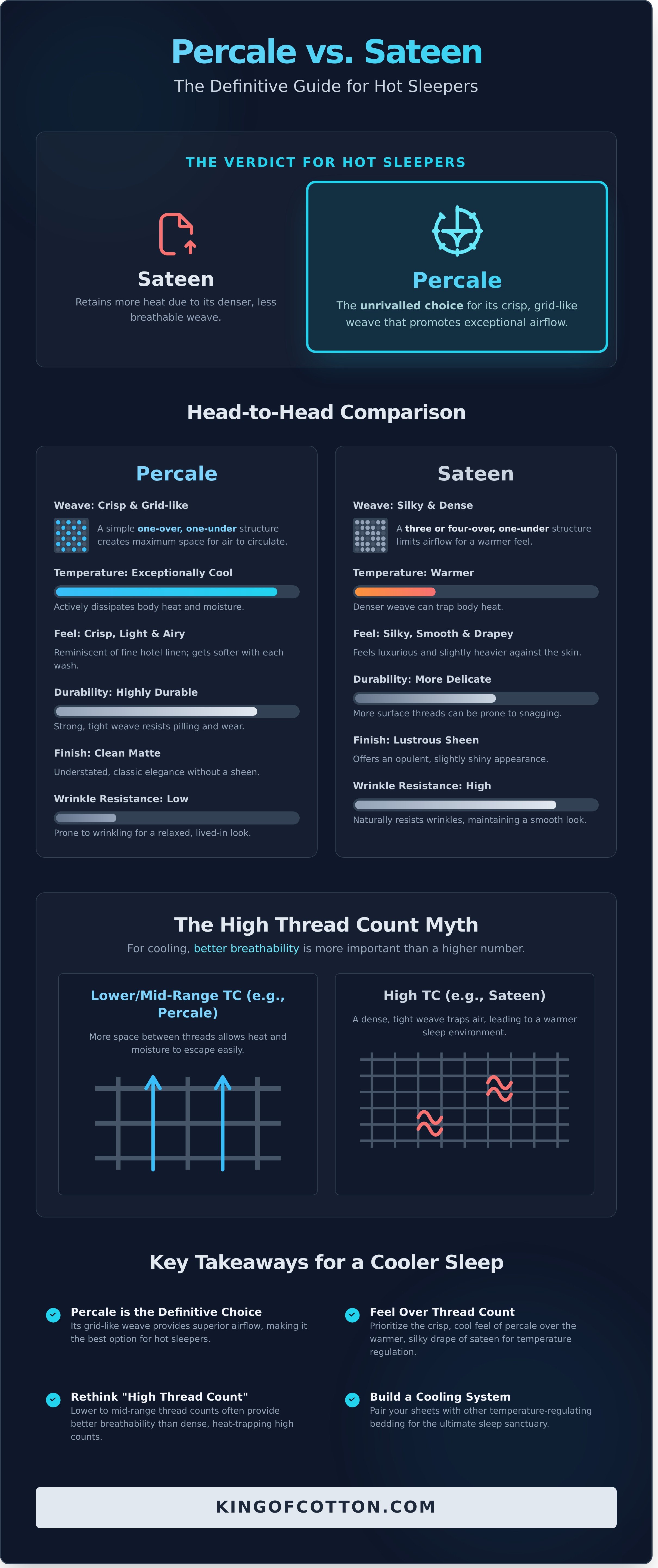
When seeking a rejuvenating night's sleep, temperature regulation is paramount. For those who sleep warm, the debate of percale vs sateen sheets for hot sleepers has a clear and definitive winner: percale. The secret lies in its unique construction. Percale's simple, grid-like weave allows air to circulate freely, a quality known as breathability. This prevents heat from becoming trapped against your skin, actively working to dissipate body heat and moisture throughout the night for uninterrupted comfort.
To better visualise the fundamental differences in these two luxurious fabrics, this short video offers an excellent overview:
Think of percale as the bedding equivalent of a crisp, light cotton shirt-perfect for a warm day. Sateen, in contrast, is more like a fine silk blouse; it drapes beautifully and feels incredibly smooth, but its denser structure retains more warmth. While sateen offers a different kind of indulgence that many sleepers adore, for a truly cool and refreshing sleep experience, percale remains the superior choice.
What is Percale? The Crisp, Cool Classic
Percale is defined by its straightforward one-yarn-over, one-yarn-under weave. This simple, tight structure creates a fine, matte-finish fabric that is exceptionally light and breathable. The tiny spaces within the weave act as pathways for air, ensuring heat does not accumulate. The result is a sheet that feels distinctly cool and crisp to the touch, reminiscent of the finest bedding found in five-star hotels, and it only grows softer with every wash.
What is Sateen? The Silky, Smooth Indulgence
Sateen achieves its signature silky feel and lustrous sheen through a more complex three or four-yarns-over, one-yarn-under weave. This technique exposes more thread surface, creating a fabric that is exceptionally smooth, drapes elegantly, and feels slightly heavier against the skin. While this dense structure imparts a sensation of opulent softness, it inherently limits airflow, making it better suited for cooler nights or sleepers who don't overheat.
A Deeper Dive: Comparing Percale vs. Sateen Head-to-Head
While both percale and sateen represent the pinnacle of cotton luxury, their distinct weave structures create vastly different sleep experiences. For those who sleep warm, understanding these nuances is the key to unlocking a truly rejuvenating night. When evaluating percale vs sateen sheets for hot sleepers, the choice becomes remarkably clear. Below is a direct comparison to guide your selection.
| Characteristic | Percale Sheets | Sateen Sheets |
|---|---|---|
| Temperature | Exceptionally breathable and cool to the touch. The superior choice for hot sleepers. | Warmer and less breathable due to a denser weave; can trap body heat. |
| Feel | Crisp, light, and airy, reminiscent of the finest hotel linen. | Silky, smooth, and drapey with a heavier feel against the skin. |
| Finish | A clean, classic matte finish that exudes understated elegance. | A lustrous, subtle sheen that offers a more opulent look. |
| Durability | Highly durable and strong. Becomes softer and more comfortable with each wash. | More delicate due to its weave; can be more prone to snagging over time. |
| Wrinkle-resistance | Prone to wrinkling for a relaxed, lived-in aesthetic. | Naturally more resistant to wrinkles, maintaining a smoother appearance. |
Temperature and Breathability: The Most Critical Factor
Percale’s classic one-thread-over, one-thread-under weave creates a light, grid-like structure that allows air to circulate with absolute freedom. This is the secret to its famously cool touch, actively preventing the 'stuffy' feeling and discomfort from night sweats. Conversely, sateen’s denser weave traps more air, creating an insulating effect that retains body heat. For pure temperature regulation, percale is the undisputed champion.
Feel and Texture: Crisp & Airy vs. Silky & Drapy
The signature feel of percale is its invigorating crispness, a quality beloved by the world's finest hotels. In premium cotton, 'crisp' means smooth and structured, not scratchy. It feels light and airy against the skin. Sateen offers a completely different tactile experience-it glides with a silky, buttery softness. However, its heavier drape means more fabric rests against the body, which can contribute to a warmer sensation compared to the weightless feel of percale.
Durability and Care: Which Weave Lasts Longer?
The tight, uniform weave of percale makes it an incredibly robust and resilient fabric. A true investment in comfort, these sheets are renowned for growing even softer and more inviting with every wash. Sateen’s longer floating yarns, which create its signature lustre, are slightly more exposed and can be more susceptible to snagging with improper care. To maximise the life of either weave, we recommend washing on a gentle cycle with a mild, high-quality detergent and line drying where possible.
Beyond the Weave: Do Thread Count and Material Matter for Cooling?
The discussion of percale vs sateen sheets for hot sleepers often centres on the signature feel of each weave. However, the secret to truly rejuvenating, cool sleep lies deeper-in the very threads that create the fabric. The thread count and, more importantly, the quality of the cotton fibre itself are the elements that separate good bed linen from the truly exceptional. Understanding their roles is key to creating your personal haven of comfort.
The Truth About Thread Count and Heat
In its simplest terms, thread count is the total number of threads woven vertically and horizontally into one square inch of fabric. While a higher number is often marketed as the pinnacle of luxury, this can be misleading for those seeking a cooler night's sleep. When the thread count climbs excessively high (e.g., 800+), the threads are packed so tightly together that they restrict airflow. This dense construction can trap body heat and moisture, working against your goal of staying cool and comfortable.
For optimal breathability and a luxurious feel, we recommend a 'sweet spot'. The ideal thread count for high-quality percale, for instance, is between 200 and 400. This range ensures the fabric is substantial enough to feel smooth and elegant, yet remains light and airy, allowing heat to dissipate naturally throughout the night. It's wise to be cautious of brands promoting excessively high counts, as these are sometimes achieved using thinner, weaker multi-ply threads that don't enhance the quality.
Why Long-Staple Cotton is Essential
The ultimate measure of quality is not the quantity of threads, but the calibre of the cotton itself. This is where long-staple cotton, with globally renowned Egyptian cotton as the premier choice, truly shines. 'Long-staple' refers to the length of the individual cotton fibres; longer fibres can be spun into finer, stronger, and more lustrous yarns.
This superior raw material is what unlocks the true potential of each weave.
- For percale, it allows for a crisp, hotel-style finish that is incredibly smooth, not coarse.
- For sateen, it enhances the signature silky drape while providing the strength to resist pilling and wear.
This inherent quality means your bed linen will not only feel exquisite from the first night but will also become progressively softer with every wash, promising lasting elegance and comfort. When deciding on percale vs sateen sheets for hot sleepers, investing in a foundation of the finest long-staple cotton makes all the difference.
Building Your Ultimate Cooling Sleep Sanctuary
Selecting the perfect sheets is the most crucial step in achieving a cool and restorative night's sleep. While the debate over percale vs sateen sheets for hot sleepers rightly points to percale as the superior choice, true thermal comfort comes from a complete, curated sleep system. Your bed linen is the foundation, but every layer contributes to creating a personal haven designed for deep, uninterrupted rest.
By considering how each element of your bedding works together, you can transform your bedroom into the ultimate retreat from the heat, ensuring you wake up feeling refreshed and rejuvenated every morning.
Choosing the Right Duvet and Pillows
The material covering you is just as important as the material you lie upon. For optimal temperature regulation, we recommend duvets and pillows with breathable, natural fillings such as Hungarian goose down, wool, or silk. Look for a duvet with a lower 'tog' rating-typically 4.5 or below-which is specifically designed for summer use or for those who naturally sleep warm. A breathable pillow is also essential, as it helps dissipate heat from your head and neck throughout the night. Explore our complete bedroom collection to find the perfect complements to your new sheets.
Don't Forget Your Mattress and Protector
A common mistake that traps unwanted heat is using a synthetic mattress protector. Many waterproof protectors are made from non-breathable materials that create a barrier, negating the cooling benefits of your sheets. Instead, opt for a protector made from 100% cotton to maintain airflow. It is also worth noting that certain mattresses, particularly those made from dense memory foam, are known to retain more heat. A breathable protector and crisp percale sheets can help mitigate this effect, providing a cooler surface for sleep.
The Final Verdict: Your Hot Sleeper Shopping List
To create a truly cool and luxurious sleep environment, here is your curated checklist for the finest night's rest:
- The Foundation: Choose high-quality Egyptian cotton percale sheets with a thread count between 200 and 400. Their crisp, matte finish offers unrivalled breathability.
- The Comfort Layer: Select a lightweight, natural-fill duvet with a low tog rating (4.5 or less) to provide comfort without trapping heat.
- The Finishing Touches: Complete your sanctuary with a breathable cotton mattress protector and pillows filled with natural, airy materials.
Ready to transform your sleep? Explore our curated luxury bed linen collection and discover the perfect percale sheets to begin building your ultimate cooling sanctuary tonight.
Embrace Cooler Nights with the Definitive Choice
The debate between percale vs sateen sheets for hot sleepers ultimately comes to a clear and refreshing conclusion. While the silky lustre of sateen is undeniably luxurious, its denser weave can trap heat, proving less than ideal for those who sleep warm. In contrast, percale’s signature crisp, one-over-one-under weave promotes superior airflow, actively wicking away heat and moisture. This exceptional breathability is the key to maintaining a cool, comfortable, and undisturbed night's sleep.
At King of Cotton, we have spent over 25 years perfecting the art of fine linen, becoming the trusted supplier to the world's finest 5-star hotels. Our experience confirms that for a truly restorative sleep, nothing rivals the cool-to-the-touch crispness of premium percale. It is this unwavering commitment to quality that has earned us an 'Excellent' rating on Trustpilot from thousands of satisfied customers.
It’s time to transform your bed into a cooling sanctuary. Shop our collection of cool and crisp Percale Bed Linen now and discover the five-star difference for yourself. A deeper, more refreshing sleep awaits.
Frequently Asked Questions
Does percale wrinkle more than sateen?
Yes, percale's signature crispness, a hallmark of five-star hotel bedding, comes from a tight plain weave that is more prone to wrinkling than sateen's silky drape. To maintain a smooth, elegant finish, we recommend removing your sheets from the tumble dryer promptly or pressing with a warm iron. This characteristic is a small trade-off for its unmatched cool and breathable feel, a quality cherished by those who sleep warm.
Will percale sheets feel scratchy or rough at first?
Finest quality percale, particularly when crafted from long-staple Egyptian cotton, should never feel scratchy. Instead, it possesses a distinctively crisp and cool hand-feel upon first use, which is the very texture that defines this luxury weave. With each laundering, the premium cotton fibres relax and soften beautifully, enhancing their comfort while retaining that refreshing crispness. It is an investment in sleep that truly improves with time.
Is sateen a good choice for winter if I'm a hot sleeper in summer?
Indeed, sateen can be a superb choice for winter, even for those who sleep warm. Its lustrous weave drapes more closely to the body, providing a cosier, more insulated feeling than airy percale. Yet, as it is woven from 100% premium cotton, it remains highly breathable, preventing overheating. This makes it an elegant and versatile option for year-round comfort, adapting from cooler nights to milder seasons with ease.
How do other fabrics like linen or bamboo compare for cooling?
When considering percale vs sateen sheets for hot sleepers, other natural fibres also perform well. Linen offers exceptional breathability with a relaxed, textural elegance, while bamboo provides a silky, moisture-wicking surface. However, for the classic, hotel-style experience of sleeping on a cool, crisp cloud, nothing quite compares to the superior airflow and refreshing touch of high-quality cotton percale. It remains the connoisseur's choice for a truly restorative night's sleep.
What is the best way to wash percale sheets to maintain their crispness?
To preserve the signature crispness of your percale linen, we advise a gentle care routine. Wash your sheets in cool or lukewarm water with a mild detergent, avoiding fabric softeners that can coat the natural fibres. For the best finish, line dry or tumble dry on a low heat setting. Remove them while still slightly damp and fold immediately or press with a warm iron to achieve that pristine, hotel-quality feel.
Can I mix and match percale and sateen bedding?
Absolutely. Layering different textures is a sophisticated way to create a bespoke sleep sanctuary. We often recommend pairing a crisp percale fitted sheet, which provides a cool base, with the silky-smooth drape of a sateen flat sheet and pillowcases. This combination offers the ultimate experience: the refreshing coolness of percale where it matters most, complemented by the luxurious, gentle touch of sateen against your skin for unparalleled comfort.