

How to style a warm, minimalist white bedroom
A warm, minimalist white bedroom needs restraint, not a bare or unfinished look. For minimalist bedding style ideas that feel inviting, layer a fitted sheet, a simple duvet cover and a lightweight throw. Subtle differences in texture add depth to a white palette. Keep the bed uncluttered with two or three compact cushions and one considered accent, such as a folded quilt or softly coloured throw.
White offers a calm starting point, but an all-white room can feel cool if every surface has the same smooth finish. Keep the clean lines of minimalist style while making the room softer and more restful with warm neutrals, tactile fabrics and thoughtful layering.
This guide shows you how to strike that balance, from choosing close shades of cream, beige and stone to using texture for quiet contrast. It also covers one-piece bedding and simple bed styling, helping you create a polished, comfortable look without unnecessary layers or visual clutter.
Key Takeaways
- Build a calm white bed with simple layers, then keep decorative cushions to a considered few.
- Bring warmth through contrasting fabric textures, such as smooth cotton, softly rumpled linen and a woven throw.
- Choose close shades of white, cream, beige or stone to create a cohesive palette with gentle depth.
- Use a single accent, natural material or warm-toned detail to soften the room without crowding it.
- For a pared-back finish, explore bed linen, duvets and pillows from King of Cotton.
1. How do you style a minimalist white bedroom?
Start with a fitted sheet, a simple duvet cover and one lightweight throw. This three-layer foundation gives the bed a composed silhouette without making it feel overworked. For a clean finish, smooth the duvet and fold the throw neatly across the foot of the bed. The best minimalist bedding style ideas give each layer a clear purpose: comfort, warmth or a restrained accent.
For a softer, more considered arrangement, fold a quilt over white linen bedding. Its hand-stitched texture adds warmth and character while keeping the bed uncluttered. Alternatively, place a warm-coloured throw across a white duvet for a quiet geometric accent. If you layer a lightweight coverlet over a duvet, smooth the duvet first so bumps do not show through.
Keep cushions deliberate. Two or three compact cushions add a finishing touch without crowding the bed. Arrange full pillows to meet the bed’s edges rather than leaving a visible gap. For a restful look, use two pillows per person, then remove any extras that disrupt the simple outline. A woven throw or quilt can provide texture, so there is no need to add more decorative layers.
Layered lighting helps make the bedroom welcoming after dark. Pair a ceiling light with a bedside lamp for general and reading light, then use a wall light to highlight artwork or a textured headboard. Keep furniture and lighting shapes simple, such as a pared-back bedside table with one lamp. This gives each detail room to contribute without competing with the bed.
White bedding need not match the walls exactly. Combine crisp white sheets with an ivory duvet cover, then add a soft cream or pale stone throw. These neighbouring shades create depth while preserving a calm palette. Linen, cotton and a quilted or woven layer bring contrast through texture rather than a bold pattern.
In a small bedroom, keep the arrangement compact and the floor visually clear. A dark duvet against pale walls can ground the room without making it feel crowded. Choose cushions that fit within the pillow line, and avoid a long throw that spills onto the floor. If the bed sits close to a window, keep nearby furniture low or, where possible, away from the light.
Let one feature give the room its personality. A folded quilt with visible stitching, a warm-toned throw or a softly textured coverlet can be enough. Repeat its shade in one bedside detail for cohesion, then leave the remaining surfaces quiet. This simple approach brings a sense of luxury to a minimalist bedroom and lets each carefully chosen layer feel at home.
2. Adding warmth and interest with fabric textures
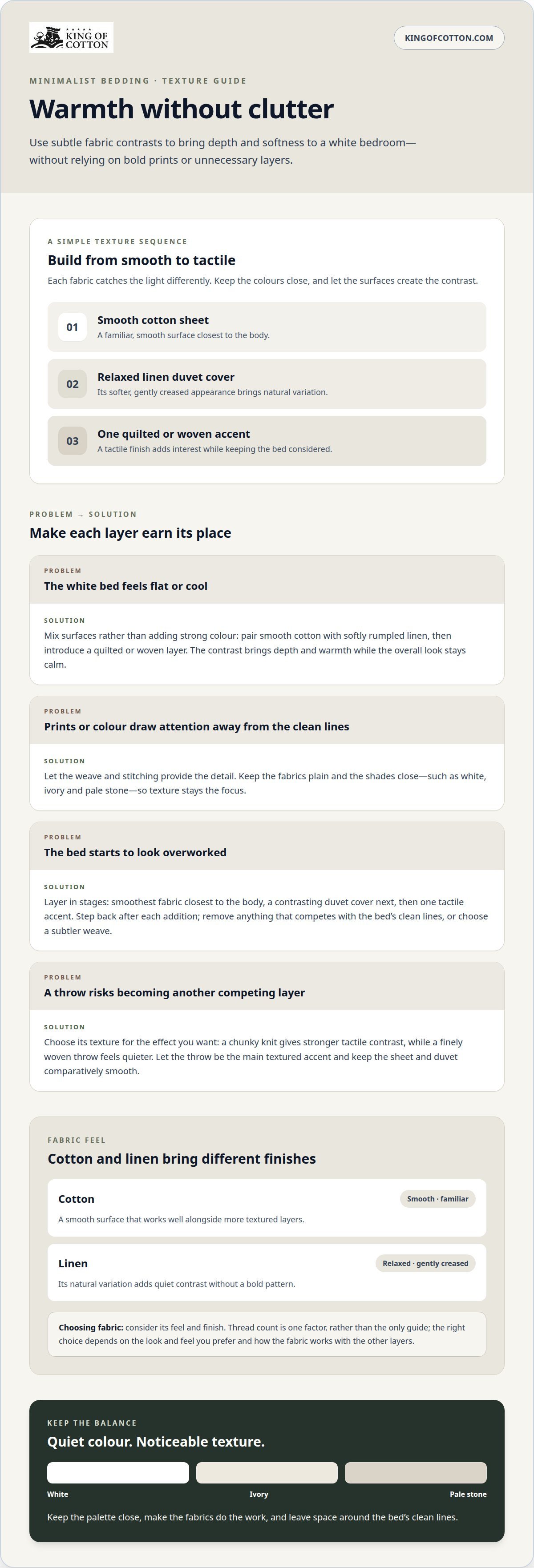
Texture gives a white bedroom depth without bold prints or a crowded colour scheme. Start with smooth cotton sheets, then introduce a linen duvet cover and a quilted or woven layer. Each fabric catches the light differently, creating subtle contrast across the bed. This restrained mix adds warmth and atmosphere while keeping the overall look calm.
Choose bedding fabric for its feel and finish, and consider thread count as one factor rather than the only guide. Cotton and linen both suit minimalist bedrooms: cotton offers a smooth, familiar surface, while linen has a more relaxed appearance. The right choice depends on the feel and look you prefer, as well as how the fabric works with the other layers.
Instead of a bold print, let the weave provide the detail. A plain cotton duvet cover can sit beside a linen pillowcase, whose gentle creasing creates natural variation. A quilt with understated stitching adds another layer of interest without introducing a competing motif. Keep colours close, such as white, ivory and pale stone, so texture remains the focus.
Simple designs can still feel richly layered. Pair a smooth sheet with a softly rumpled duvet cover, then add a woven throw with a more pronounced texture. The contrast between fine and coarse surfaces makes the bed feel considered, not overstyled. Leave linen folds un-ironed for an easy, lived-in finish; crisp cotton elsewhere keeps the arrangement deliberate.
A throw is an easy way to change the room’s texture without replacing all the bedding. Drape a chunky knit across the foot of the bed for tactile contrast, or choose a finely woven throw for a quieter effect. On a wooden floor, a textured rug can extend that softness beyond the bed. Linen curtains add another tactile layer while keeping the palette understated.
For a warm, cosy look, combine white cotton bedding with a quilted coverlet and a knitted or woven throw in a similar neutral shade. The different surfaces provide interest without relying on patterns or bright colours. Let the throw be the main textured accent, while the sheet and duvet remain comparatively smooth.
Build the arrangement in stages: place the smoothest fabric closest to the body, add a contrasting duvet cover, then finish with one tactile accent. Step back after each addition. If an element competes with the bed’s clean lines, remove it or choose a subtler weave. This approach creates warmth through materials, not excess.
3. Neutral colours for minimalist bedding
A neutral palette gives a minimalist bedroom a settled, cohesive finish. Start with one dominant shade, such as soft white, then choose close companions from cream, beige, stone or soft grey. White sheets and a stone duvet cover, for example, create tonal contrast without making the bed look busy. Related colours keep the room’s lines and materials visible.
Build the palette around the room’s fixed features. With cool-white walls, pale grey or chalky stone can sit comfortably alongside them. With warmer walls or timber details, cream, beige and natural shades create an easy transition. Hold fabric samples beside the wall and flooring in daylight, then choose the combination that looks balanced in the room.
Plain fabrics make small shifts in colour easier to see. Try an ivory pillowcase against a white duvet, or layer a beige coverlet over cream bedding. The difference should be noticeable but restrained. Strong patterns on every piece make colours compete; plain surfaces let a tonal palette feel deliberate and subtle variations stand out.
Warm neutrals soften a room without introducing a vivid accent. Beige, cream and warm natural tones feel gentler than a stark, uniform white. A pale stone duvet paired with cream cushions, for instance, adds depth while keeping the bed restful. Choose cushions from the same colour family, varying the shade rather than introducing several unrelated colours.
Texture also changes how a colour looks. Smooth white cotton can appear crisp, while woven beige fabric feels more tactile and relaxed. Use this contrast to define a close palette: keep the largest bedding pieces light, then introduce a deeper neutral in one smaller layer. The result feels layered without relying on a bold print.
A bolder colour can still work with minimalist bedding when it has a clear role. Use it on one accent cushion or throw, then repeat a hint of the shade in a small room detail. Muted terracotta against cream, for example, adds warmth without taking over the bed. If the accent catches the eye before the overall palette, reduce it or choose a softer tone.
To refine the finish, view the bed from the doorway and consider how each shade relates to the walls, floor and nearby furniture. Remove any colour that feels disconnected instead of adding another to compensate. A considered mix of white, cream and stone can feel quietly luxurious, while two or three close tones give the eye enough variation to appreciate the fabrics and their finish.
4. Practical ways to prevent a white bedroom feeling cold
White can feel inviting when it complements the room’s existing character. In a modern bedroom with a statement headboard or timber panelling, simple white bedding lets those architectural details add warmth. Choose a bedding tone that sits comfortably with the walls and flooring rather than creating a sharp contrast. This helps the bed feel part of the room, not a separate feature.
To make white bedding the focal point, keep the surrounding palette restrained. A white duvet and matching pillows can stand out against a pale stone wall, while a single accent throw adds subtle contrast. Choose its colour from an existing detail, such as a wooden bedside table or artwork. Repeating that shade once creates a connection without visual clutter.
Natural materials bring warmth to a neutral palette. Wood, linen and sheepskin provide different finishes, while woven or rattan furniture adds a more pronounced texture. For example, pair plain white bedding with a woven bedside detail and a linen curtain. Let one or two materials lead; combining every natural texture can make the bedroom feel busy rather than calm.
Coverlets suit traditional or formal bedrooms, where a neat, tailored bed complements the room’s character. Choose a quilt or matelassé coverlet and style it with a shorter drape, ending a few inches above the floor. This gives the bed a defined outline while keeping fabric off the floor. An overly long coverlet may present a trip hazard, so keep its edges clear of walking space.
Budget-friendly updates can start with what’s already in the room. Clear unnecessary belongings from bedside tables and open surfaces, keeping only useful or meaningful objects. If repainting is part of the plan, white walls create a clean backdrop; white bedding and a plant can complete the fresh, simple look. A mood board of favourite pictures also helps you bring colour and material choices together before making changes.
Consider the bed, mattress and surrounding furniture as one composition. If the room feels cool, identify whether the cause is a stark bedding contrast, bare timber or too many hard surfaces. Then adjust one element, such as adding a warm-toned throw or placing a textured rug beside the bed. This measured approach offers inspiration without replacing the whole room or adding unnecessary clutter.
Keep a balance between soft and structured details. A crisp white duvet can look beautifully composed beside a timber headboard, while a folded quilt softens a bed with straight, modern lines. Use the room’s architecture as your guide, then add warmth through one considered material or accent. The result stays minimal yet feels personal and welcoming.
5. One-piece bedding and minimalist bed styling
One-piece bedding creates a clean, uninterrupted surface, making it a strong choice for a pared-back bed. A coverlet can replace several visible layers, while sheets provide a comfortable foundation beneath it. Choose a simple finish that suits the room’s palette, then let the fabric’s texture add quiet interest. This approach works well when the headboard or architecture already provides visual detail.
For a tidy finish, centre the coverlet and smooth it evenly over the mattress. Fold the top edge beneath the pillows, tucking four to six inches under them for a clean line across the head of the bed and a secure fit. Let the coverlet fall evenly at the sides, adjusting the edges to suit the bed frame.
Keep the rest of the styling restrained. Two pillows per person provide a practical foundation, while a small number of matching decorative cushions can finish the look. Choose cushion covers in a similar shade to the coverlet, or add one subtle contrast, such as cream against white. Avoid accessories that hide the coverlet’s simple outline or make the bed feel crowded.
A single-piece arrangement can still feel considered. A quilted coverlet adds texture, while a plain cotton version gives a smoother, more tailored appearance. Match the colour to the walls for a quiet, blended effect, or choose a close neutral shade to define the bed. If the headboard is upholstered or patterned, plain bedding keeps its details visible.
Use the bed frame and surrounding furniture to guide the drape. A low, simple frame suits a close, streamlined finish; a more traditional frame can carry a slightly fuller fall. Keep fabric clear of walking space, particularly beside the bed. Smooth the bedding after making the bed, then step back to check the visual balance from the doorway.
One-piece bedding also makes daily styling simpler, with fewer separate pieces to arrange. Choose two or three well-made bedding sets in the same neutral palette rather than collecting unrelated designs. Rotate one accent cushion or throw when you want a small change, keeping the main surface calm and easy to remake.
For a streamlined bedroom, explore bed linen for a pared-back bed, then build the styling around a coverlet, smooth sheets and a considered pillow arrangement. The key is to let one well-chosen surface lead, with each additional piece serving a clear purpose.
King of Cotton
King of Cotton offers bed linen, duvets and pillows to help you create a warm, minimalist bedroom. Choose pieces that suit your preferred palette and style, whether you want a smooth, pared-back bed or a considered layer of texture. Explore the bedding collection to refresh your essentials and find a combination that complements your room.
For a cohesive finish, choose bedding tones that complement the colours and materials already in your bedroom. Explore King of Cotton’s bedding collection to find pieces that suit your needs.
Make your bedroom feel unmistakably yours
Let the finished room reflect how you want to begin and end each day. A carefully chosen fabric, softly layered lighting or a meaningful bedside object can make a white bedroom feel personal without disturbing its calm. Keep the pieces that support that atmosphere, and let the rest of the room breathe.
Use these minimalist bedding style ideas as a starting point, then make your final choices based on your room, preferences and how you use your bed. King of Cotton offers bed linen, towels, bathrobes and gowns, helping you carry a considered sense of comfort beyond the bedroom.
Contact King of Cotton for bedding advice and take the next step towards a bedroom that feels calm, comfortable and truly your own.
Frequently Asked Questions
How do you style a minimalist white bedroom?
Start with one visual anchor, such as a timber headboard, a sculptural bedside lamp or carefully framed artwork. Arrange the bed to feel balanced against that feature, then keep nearby furniture functional and easy to move around. A clear route from the doorway to the bed helps the room feel composed. Remove accessories that draw attention away from the main design.
Are there any tricks to styling a bed in this way?
Yes. Make the bed from the headboard down, smoothing the top layer before arranging the pillows so the surface looks even. Align pillowcases and duvet edges with the mattress instead of using extra cushions to disguise unevenness. For a more relaxed finish, leave a small natural crease in the bedding rather than pressing every fold flat. The result looks polished without feeling formal.
How can I keep a white bedroom looking uncluttered?
Give everyday belongings a defined place, such as a drawer for spare chargers or a tray for bedside essentials. Keep only regularly used items on the bedside surface, and store occasional accessories out of sight. In a compact room, choose furniture with a simple outline and avoid blocking the window with bulky pieces. Clear surfaces and an open view across the floor help preserve a calm appearance.
How do you make a white bedroom feel warm?
Look beyond bedding for warmth. A wood-framed mirror, woven basket or soft rug beside the bed can introduce natural variation without changing the white scheme. At night, use a bedside lamp for a softer pool of light than the ceiling fitting alone. If the floor has cool tones, a warmer wood or woven detail can balance the room’s overall look.
What does a minimalist design entail?
Minimalist design gives each object a clear purpose and leaves space around it. It favours simple forms, a restrained colour scheme and practical furniture over decorative excess. In a bedroom, that could mean a straightforward bed frame, a clear bedside table and artwork chosen for personal meaning. The aim is not to remove everything, but to make the remaining details intentional and easy to live with.
What kind of bedrooms does this bed styling trend suit?
This approach suits bedrooms where a calm, uncluttered feel is welcome, from a compact box room to a larger main bedroom. In a period home, simple bedding can balance decorative cornicing or an ornate fireplace. In a contemporary flat, it can echo clean architectural lines. Adapt the layering to the room: smaller spaces often benefit from fewer visible accessories and a clear floor area.
What are the key features of minimalist bedding style?
Look for a composed bed with few layers, a restrained colour palette and fabrics that add interest through texture rather than busy decoration. Bedding should suit the scale of the mattress and work with the room’s furniture. A single contrasting detail can create focus, while matching pillowcases or a neatly aligned duvet make the arrangement feel deliberate.
Which colours work best for minimalist bedding?
White, cream, beige, stone and soft grey create a quiet foundation. Choose shades that relate to the room’s walls and flooring: a warmer white can sit naturally with honey-toned wood, while soft grey may complement cooler finishes. For a stronger note, use one cushion or small accessory and keep the larger bedding surfaces neutral.