

How to Layer Blankets on a Bed for Warmth Without Adding Bulk
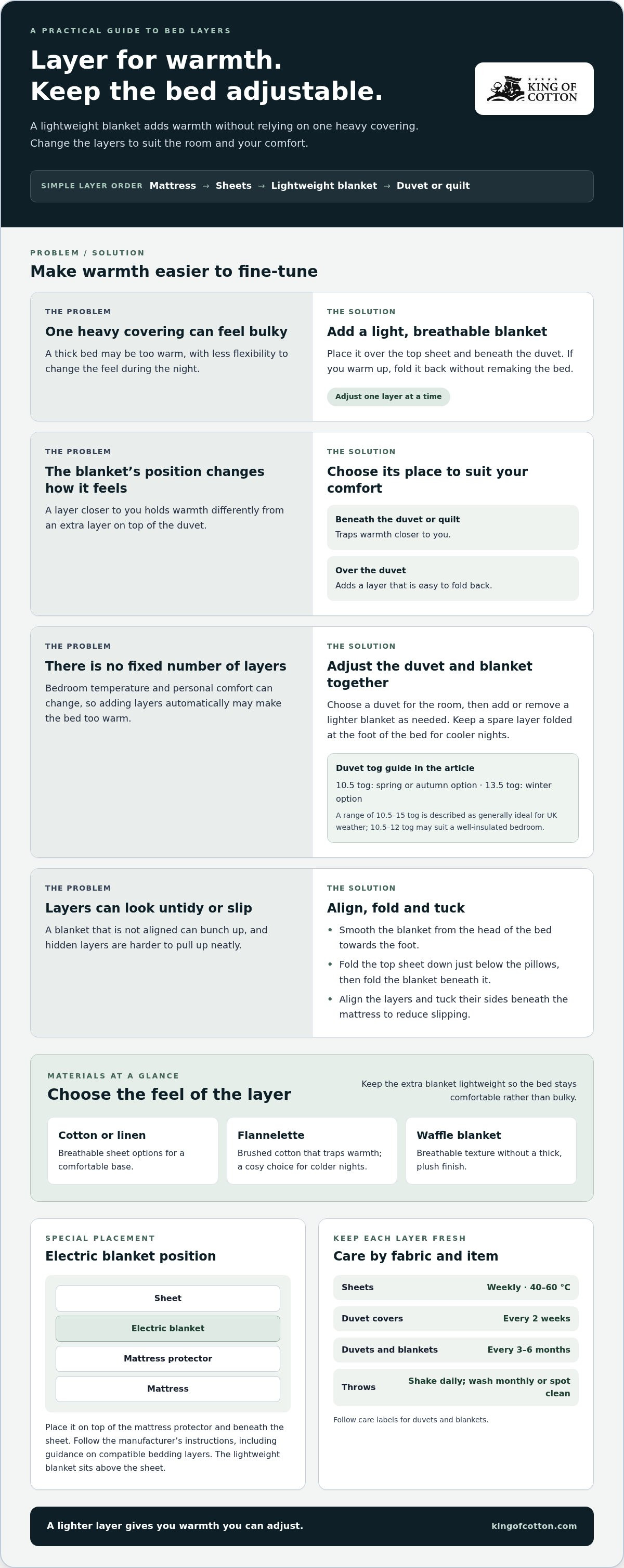
More bedding doesn’t have to mean a heavier bed. The simplest way to layer blankets on a bed for warmth is to keep your sheet and duvet, then add a lightweight, breathable blanket over the top sheet. It traps warmth and is easy to fold back if you get too warm. There’s no fixed number of layers that suits everyone, so adjust them to your bedroom temperature and comfort.
On a cold night, a thick, bulky bed can seem like the obvious answer, but lighter layers give you more flexibility. This guide explains why layering helps, where to place a lightweight blanket and how to choose a throw that works with your duvet. You’ll also find practical tips for arranging the layers to keep your bed warm and inviting without making it look bulky.
Key Takeaways
- Build warmth in adjustable layers rather than relying on one heavy covering, and change the arrangement to suit your comfort.
- Choose a duvet suited to the season: 10.5 tog is a spring or autumn option in the UK, while 13.5 tog is a winter option.
- For a soft, breathable feel, consider cotton or flannelette; a waffle blanket adds lighter texture, while a plush throw feels more cocooning.
- Choose a throw about the same width as your duvet, then drape it loosely across the foot of the bed for an easy extra layer.
Adding a lightweight blanket over the top sheet
For a light, adjustable layer, place a breathable blanket over the top sheet and beneath the duvet or quilt. If you warm up during the night, fold it back without having to remake the whole bed. The order is simple: start with the mattress, then add sheets, a blanket and the duvet.
- Choose breathable sheets for the base. Cotton or linen sheets create a comfortable layer between you and the mattress. Their breathable feel suits a bed that needs warmth without excessive weight. For a smoother base, browse cotton bed linen and select sheets that fit your mattress securely.
- Switch to flannelette when nights turn colder. Flannelette is woven cotton brushed on both sides. The brushing creates tiny fibres that trap warmth, making it a cosy winter choice compared with crisp cotton. Keep the blanket lightweight, so the brushed sheets and extra layer don’t make the bed feel overly bulky.
- Lay the blanket flat over the top sheet. Smooth it from the head of the bed towards the foot, aligning its edges with the sheets. A lightweight cotton blanket adds warmth and remains easy to remove. If you prefer a different feel, a breathable waffle blanket offers texture without a thick, plush finish.
- Try the layer between the sheet and quilt. For warmth closer to your body, place a thin blanket over the top sheet and beneath the quilt. This arrangement traps warmth between the bedding layers. If you’d rather adjust the blanket quickly, keep it over the sheet and under the duvet instead.
- Fold the sheet and blanket to show each layer. Fold the top sheet down just below the sleeping pillows, then fold the bed blanket down just below it. This creates a neat view of both fabrics and makes the blanket easy to pull up. To reduce slipping, align the layers before folding and tuck their sides beneath the mattress.
- Place an electric blanket in the correct position. The recommended arrangement is on top of the mattress protector and beneath the sheet. Use the electric blanket according to its manufacturer’s instructions, including any guidance on compatible bedding layers. Keep its position distinct from the lightweight blanket, which sits above the sheet.
- Care for each layer according to its fabric. Wash sheets weekly at 40-60 °C, and wash duvet covers every 2 weeks. Wash duvets and blankets every 3-6 months, following their care labels. Shake throws daily; wash them monthly or spot clean them. These routines help keep the different layers fresh without washing every item together.
Why Layer Your Bedding?
Layering lets you adjust warmth without relying on one heavy covering. A duvet, blanket and sheet each have a distinct place, so you can change the combination as bedroom temperature and comfort shift.
-
Choose a duvet as an adjustable warmth layer
Start with a duvet suited to your room, then add or remove a lighter blanket as needed. A duvet’s tog rating indicates its warmth, while its filling affects its feel and insulation. Down is lightweight and insulating; wool and feather are other natural options. Check that the duvet cover fits properly so the filling stays evenly distributed instead of bunching at the edges.
-
Position blankets around the duvet
Choose the blanket’s position based on how easily you want to adjust the warmth. A thin blanket beneath the duvet traps heat close to you; one on top works as an extra layer that’s easy to fold back. In a cold UK bedroom, combine sheets, a suitable winter duvet and a light blanket, then remove a layer if the bed feels too warm.
-
Match the duvet tog to the room.
For UK weather, a duvet rated between 10.5 and 15 tog is generally ideal. In a well-insulated bedroom, 10.5 to 12 tog may suit; 13.5 tog is a winter option, whilst 10.5 tog is associated with spring or autumn. These choices help you adjust the bed to the room rather than adding layers automatically.
-
Use a flexible duvet combination.
An all-season duvet has two lighter layers that can be combined in colder months and separated when it gets warmer. It offers a practical alternative to one very heavy duvet. If your existing duvet feels comfortable on mild nights, keep it as the base and add a thin blanket when the room cools.
-
Fold the duvet to reveal the layers.
Fold the duvet down once to show the blanket beneath. This reveals the layers and lets you pull up the blanket without lifting the duvet. Keep the fold even across the bed, then smooth the duvet cover so the edge looks neat rather than bulky.
-
Compare warmth by rating and construction.
Duvets are commonly labelled with tog ratings, whilst blanket warmth is usually judged by its material and thickness. Don’t assume a blanket’s warmth matches a duvet with the same number. Consider how each layer feels together, and explore bedroom bedding options when refining your duvet combination.
How many layers should I use on my bed in fall?
There’s no fixed number of layers for every autumn night. Adjust your bedding to the room’s temperature and your comfort, adding warmth only where the bed feels cool.
-
Adjust layers as temperatures change
Keep a blanket or throw folded at the foot of the bed, ready to pull up when the night turns colder. If the room feels mild at bedtime, start with your usual sheet and duvet, then add the spare layer only if needed. Changing one layer at a time helps you judge what makes the bed more comfortable without making it too warm.
-
Add a coverlet over the quilt
Lay a coverlet over the quilt when you want extra insulation without making the bed feel heavy. As a light finishing layer, it can suit autumn nights when a winter-weight arrangement feels excessive. Smooth it over the quilt, then fold it back at the foot if the temperature rises. In summer, a coverlet can also serve as a lightweight quilt.
-
Add a duvet and cover
Use a duvet inside its cover as the main warmth layer, then tailor the bed around it. In the UK, a 10.5 tog duvet is identified as a spring or autumn option. If you already use an all-season duvet, its two lighter layers can be combined as temperatures fall, then separated again when the room warms.
-
Change one layer before changing the whole bed.
If you wake feeling chilly, pull the throw at the foot of the bed over your legs first. If the bed still feels cool on subsequent nights, add a coverlet above the quilt or combine the lighter parts of an all-season duvet. This keeps the rest of your bedding in place and makes it easier to judge which adjustment suits your room.
-
Remove a layer when the bed feels too warm.
Fold the coverlet or throw back rather than replacing the duvet straight away. On a mild evening, for example, leave the sheet and duvet in place and keep the throw within reach. Pull it up again when the temperature drops. This simple routine adapts the bed to changing nights without requiring you to rearrange every layer.
Treat the spare blanket or throw as a flexible part of your setup, not a layer that has to stay on all night. Keep it at the foot of the bed, ready to pull up when the temperature drops. You can add warmth when needed while leaving the rest of your bedding undisturbed.
This approach offers a simple way to respond to a cooler spell without committing to a heavier arrangement. Use the extra covering only when the bed feels cool, and leave it folded back when you don’t need it.
Layering a lightweight bed blanket for warmth
A lightweight blanket adds an adaptable layer without turning the bed into a heavy stack. Place it between your sheet and duvet, then adjust its position to suit your bedroom and comfort.
-
Start with a thin blanket.
Choose a blanket that adds warmth without overwhelming your duvet. Several layers provide insulation by trapping air, according to the NHS. A thin cotton blanket can sit between the top sheet and duvet, leaving the duvet as the main covering. It’s also easy to fold back if you feel warmer during the night.
-
Choose the position that suits your sleep.
For warmth close to your body, place the lightweight blanket over the top sheet and underneath the duvet. If you want a layer that’s easier to remove, lay it over the duvet as a throw. For example, keep it across the foot of the bed and pull it up on colder nights. Either position adds flexibility without requiring a different duvet.
-
Match the fabric to your bedroom.
Choose breathable cotton or linen for a lighter feel. On colder nights, brushed cotton or flannelette sheets can feel warmer because brushing creates tiny fibres that trap warmth. Pairing these sheets with a lightweight blanket may suit you better than adding a thick, plush layer. Consider the whole bedding combination, not just the blanket fabric.
-
Adjust layers to avoid overheating.
Start with the blanket beneath the duvet, then fold it back if the bed feels too warm. Keep the duvet in place and change one layer at a time so you can judge the difference. A lightweight blanket is easy to remove or reposition. For a softer, cocoon-like feel, try a plush throw instead.
-
Finish with a considered fold.
Smooth the blanket across the bed, keeping its edges aligned with the duvet. Fold the duvet down once to reveal the layer beneath, or drape a throw loosely over the foot for a relaxed finish. A waffle blanket adds breathable texture, while a cotton bed blanket provides a simple, practical layer. Keep the arrangement easy to lift and adjust.
Which blanket materials provide the most warmth, such as wool, fleece or down?
- Match the material to the layer’s job. For warmth beneath you, use a wool underlay between the mattress and sheets. Wool adds insulation and helps regulate body temperature. For warmth above you, choose a blanket or duvet filling that feels comfortable with your other layers. Separating these jobs can keep you warm without relying on one bulky covering.
- Choose wool for insulating support. A wool underlay sits between the sleeper and mattress. Wool also helps regulate body temperature, making it useful when you want insulation without adding another heavy layer above the duvet. Keep the underlay beneath the sheets, then adjust the top bedding separately as the room gets warmer or cooler.
- Consider down for lightweight duvet warmth. Down filling is lightweight and insulating while allowing bedding to breathe. Feather and wool are other natural filling options for trapping warmth while remaining breathable. Compare how each feels with your existing sheets and duvet cover, then choose a combination that adds comfort without making the bed cumbersome.
- Try a down-alternative filling if you prefer not to use down. Down-alternative fill is an option for people who prefer bedding without down. Consider the complete bed arrangement, not just the filling: a lighter duvet can work alongside a blanket, while a warmer duvet may need fewer extra layers. Keep any added blanket easy to remove if the room gets warmer overnight.
- Select the sheet fabric for the surface feel you want. Flannel, sateen and jersey knit are warm fabric options for winter bedding. Flannelette, made from woven cotton yarn brushed on both sides, is described as insulating and breathable. Its brushed surface can add a cosy feel beneath a duvet. Pair it with a lighter blanket for extra warmth without a thick top layer.
- Judge the full combination before adding more. Place the chosen materials in order, from underlay and sheets to duvet and blanket. A breathable filling with a warm sheet fabric may already feel comfortable, so add another layer only if the bed still feels cool. Browse bedroom bedding options to explore materials for a considered, comfortable bed.
Product composition can make the choice more concrete. The Pure Indulgence 85/15 White Goose Down & Feather Quilt is filled with 85% white goose down and 15% white goose feather. The Pure Indulgence 95/5 Goose Down & Feather Quilt contains 95% white goose down and 5% white goose feather. These stated blends let you compare the proportions of down and feather when selecting a quilt, while keeping the decision focused on the filling rather than adding another layer by default. Consider them alongside the rest of the bed and choose the option that best fits the arrangement you want.
For wool, distinguish between a layer beneath you and coverings above you. A wool underlay adds an insulating layer between the sleeper and the mattress, and wool helps regulate body temperature. The Deluxe Australian Wool Super Warm Quilt is filled with 100% Australian wool, while the Classic Wool Blanket is made from Australian wool and is described as breathable and insulating. These options give wool a place both within a quilt and as a separate blanket. Choose between them according to whether you want wool in the quilt filling or an additional blanket layer.
King of Cotton: Bed Linen
King of Cotton offers bed linen and duvets to help you build a comfortable, considered bedding combination. Choose sheets for a breathable base and a duvet for the bed’s main warmth layer. Pairing these essentials with a lightweight blanket lets you tailor the feel without relying on one bulky covering.
Explore the bed linen range to compare options for your bedroom, then choose layers that suit your preferred feel and seasonal routine. Duvets and pillows can complete the arrangement, whether you’re refreshing the whole bed or adjusting one layer at a time.
Visit kingofcotton.com to explore the bedding range or contact King of Cotton.
Make your bed work for your evenings
A well-considered bed should feel inviting at bedtime and easy to adapt as your comfort changes. Once you know how to layer blankets on a bed for warmth, notice which fabrics and textures you enjoy most. Your preferences can guide your next bedding choice, whether you’re refreshing your bed linen or considering a new duvet.
King of Cotton offers bed linen alongside towels and bathrobes and gowns, bringing considered comfort to bedrooms and bathrooms. For guidance on choosing bedding that suits your preferred feel, contact King of Cotton for bedding advice. You can explore your options at your own pace and choose the pieces that make your bedroom feel more restful.
Start with the layer you’d most like to improve, then build a bed that feels distinctly yours. A little attention to comfort can make settling in each evening more inviting.
Frequently Asked Questions
How can I stay warm in bed without overheating?
Use a removable layer and adjust it rather than immediately adding a thick covering. For example, keep a lightweight blanket within reach and pull it over your legs if they feel cold. Breathable sleepwear, such as soft cotton pyjamas, allows airflow and can help reduce trapped heat. If you wake too warm, fold back the extra blanket first, leaving your main bedding undisturbed.
What is the best order for layering blankets on a bed for warmth?
Work upwards from the mattress: use a mattress protector, sheets, a lightweight blanket, then your duvet. Keep an additional throw folded at the foot of the bed for colder spells. If you use an electric blanket, place it over the mattress protector and beneath the sheet, following its manufacturer’s instructions. This order keeps the warming layer separate from the easy-to-remove throw, making each item simple to adjust.
How many blankets should you layer on a bed in winter?
There’s no single number of layers that suits every winter bedroom. Start with your regular duvet and add one light blanket; assess whether the bed feels comfortable before adding anything else. A cold room may call for an extra layer, while a well-insulated room may need fewer. Keep spare bedding folded nearby so you can respond to colder nights without making the bed permanently heavier.
How should you layer blankets to trap warm air without overheating?
Use several light layers rather than compressing thick bedding into one dense stack. According to the NHS, layers provide insulation by trapping air. Spread them evenly, since bunching can make the bed feel uneven. Start with a sheet, add a breathable blanket, then use your duvet. If you become too warm, fold back the blanket to reduce insulation without removing the duvet.