

High Thread Count Sheets: The Pros, Cons, and What Truly Matters for Luxury
Have you ever stood before a wall of bedding, mesmerised by a package promising ‘1000 thread count’ luxury, yet questioning if the higher price truly guarantees a better night’s sleep? For too long, this single number has been presented as the ultimate measure of quality, often leading to confusion and costly disappointment. To make a truly discerning choice for your home, it is essential to understand the real high thread count sheets pros and cons, as a higher number can sometimes result in linen that feels unexpectedly heavy or sleeps too warm.
As suppliers to the finest homes and hotels, we believe in empowering you with genuine expertise. In this guide, we will unravel the marketing myths and move beyond the numbers. We’ll explore what truly defines premium bed linen-from the quality of the cotton fibre to the artistry of the weave-equipping you with the knowledge to select sheets that deliver the sublime comfort and lasting elegance you deserve. Prepare to invest not just in bedding, but in creating your ultimate sleep sanctuary.
Key Takeaways
- Discover why thread count is often a misleading marketing number and what truly separates premium linen from the rest.
- Learn to identify the three essential hallmarks of hotel-quality sheets: the quality of the cotton fibre, the type of weave, and the final finish.
- By understanding the genuine high thread count sheets pros and cons, you can avoid common pitfalls and invest in bedding that truly lasts.
- Pinpoint the ideal thread count 'sweet spot' that offers the perfect balance of luxurious softness, breathability, and lasting value.
What is Thread Count? Debunking the Numbers Game
For decades, the conventional wisdom when shopping for bed linen has been simple: the higher the thread count, the more luxurious the sheets. While this number is often positioned as the ultimate measure of quality, linen experts and prestigious hotels understand a more nuanced truth. Thread count is a measure of fabric density, not an absolute guarantee of quality. In the complex discussion of high thread count sheets pros and cons, the single most important factor is the quality of the cotton fibre itself, not merely the quantity of threads.
To see this concept explained visually, watch this short guide:
The Simple Definition of Thread Count
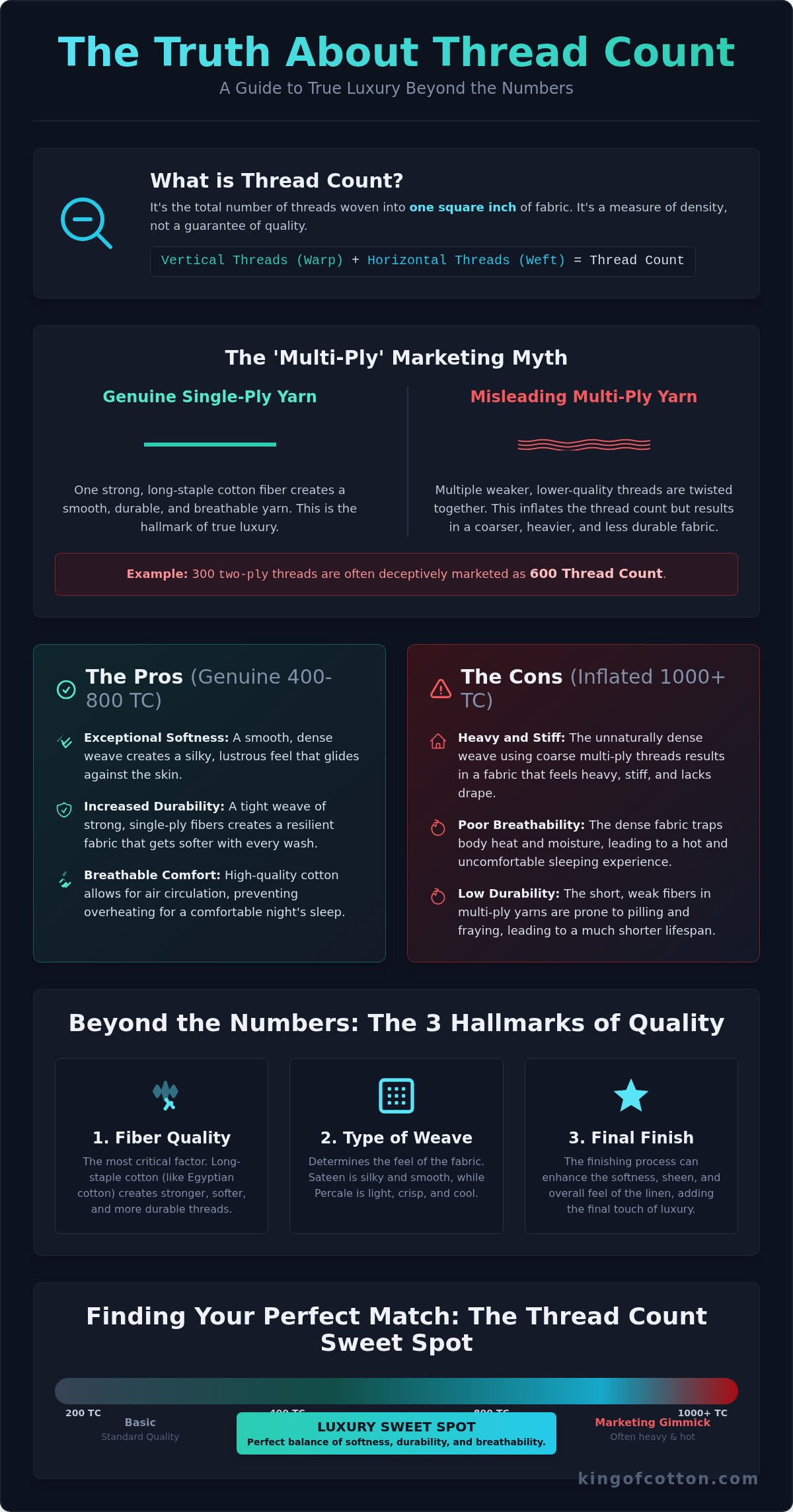
At its core, the definition for What is Thread Count? is straightforward. It is the total number of threads woven into one square inch of fabric, calculated by adding the vertical threads (the warp) and the horizontal threads (the weft). Think of it like the resolution of a digital photograph: a higher number of pixels can create a sharper image, just as a higher number of threads can create a denser fabric. However, just as the quality of the camera's sensor matters more than pixel count alone, the quality of the thread is paramount.
The 'Multi-Ply' Marketing Myth Explained
So, how are astronomical thread counts of 800, 1000, or even higher achieved? Often, it's through a marketing tactic involving 'multi-ply' yarns. Manufacturers can twist together several thinner, weaker, and lower-quality threads to create a single yarn. For example, they might weave 300 two-ply threads into a square inch and market the final product as '600 thread count'. This inflated number rarely translates to superior comfort. Instead, these sheets are often heavier, coarser, and far less durable than those made from superior single-ply yarns.
Why a 1000+ Thread Count Can Be a Red Flag
When you see a thread count exceeding 800, it should be viewed with a healthy dose of scepticism. It is physically challenging to fit more than a few hundred high-quality, long-staple cotton threads into a single square inch. A four-figure number almost invariably indicates that the manufacturer has used the multi-ply trick with incredibly fine, weak fibres. The result is not the blissfully soft and breathable experience you imagine, but a heavy, stiff, and dense fabric that traps heat. True luxury is found in the quality of the material, not in an artificially inflated number.
The Pros of High Thread Count Sheets (When Done Right)
When we discuss the benefits of a high thread count, it is crucial to focus on genuine, premium-quality linen. The true measure of luxury is not found in astronomically high numbers, but in the sweet spot between 400 and 800 thread count, crafted from the finest single-ply, long-staple cotton threads. In this range, a higher count genuinely enhances the fabric's finest qualities, transforming your bed into a sanctuary of comfort. These are the tangible benefits that define the five-star hotel experience and are the most important factors when weighing up the high thread count sheets pros and cons.
Exceptional Softness and a Silky Feel
One of the most immediate and rewarding benefits of a correctly woven high thread count sheet is its incredible softness. By weaving more superfine threads into each square inch of fabric, the surface becomes smoother, denser, and free from the slight roughness found in lesser linens. This creates a silky, lustrous hand-feel that glides against the skin. It’s that unmistakable feeling of slipping into a freshly made bed in a world-class hotel, an indulgence that is particularly pronounced in sateen weaves, where the dense structure enhances its signature sheen and drape.
Increased Durability and Longevity
A common misconception is that delicate-feeling sheets must be fragile. With authentic high thread count linen, the opposite is true. A dense weave of strong, long-staple fibres, such as those from Egyptian Cotton, creates an incredibly strong and resilient fabric. These sheets are engineered to withstand the rigours of frequent washing-a necessity for the finest hotels-and will often become even softer over time. When evaluating high thread count sheets pros and cons, this longevity is a major advantage over artificially inflated count sheets made with weaker, multi-ply threads, which can fray and thin after just a few washes.
A Denser, More Substantial Fabric
Finally, high-quality, high TC sheets possess a pleasing weight and substance that lower-count sheets simply cannot replicate. This density gives the fabric a beautiful, elegant drape and an opaque quality that looks impeccably neat and luxurious on the bed. The feeling is one of being enveloped in comfort, not just covered by a thin layer of fabric. This substantial feel contributes directly to a sense of enduring quality and deep, restorative sleep, making it a worthwhile investment in your daily well-being.
The Cons and Trade-offs of Very High Thread Count Sheets
While the allure of a four-figure thread count is strong, the most discerning bedding connoisseurs understand that the pursuit of the highest number can lead to surprising compromises. In the world of premium linens, more is not always better. A complete understanding of high thread count sheets pros and cons reveals that beyond a certain point, you begin to trade tangible comfort for a marketing number, encountering diminishing returns that affect both your sleep and your wallet.
Reduced Breathability and Overheating
The most significant drawback of excessively high thread counts (typically 1000 TC and above) is a loss of breathability. To achieve such a high number, threads must be woven incredibly tightly together. This dense construction severely restricts airflow, trapping body heat and moisture against your skin. For anyone who tends to sleep warm, this can lead to a stuffy, uncomfortable, and far from rejuvenating night's sleep-the very opposite of what luxury bedding should provide.
Potential for Stiffness and Weight
Contrary to expectation, cramming an excessive number of threads into a square inch can result in a fabric that feels stiff and heavy, rather than supple and soft. Instead of draping elegantly over you, these sheets can feel weighty and restrictive. While they may soften over many washes, their initial feel can be disappointing, lacking the light, airy quality that defines the finest hotel-style linens. The ultimate comfort lies in a fabric that moves with you, not one that weighs you down.
Significantly Higher Cost for Diminishing Returns
The price for sheets often increases exponentially as the thread count climbs above 600 or 800. A set of 1200 TC sheets can cost hundreds of pounds more than a premium 400 TC set, yet the perceived increase in quality is minimal, if not negative. This is the clearest example of diminishing returns. Rather than chasing the highest number, your investment is far better placed in superior materials. A 400 TC sheet made from the finest long-staple Egyptian cotton will offer a more luxurious feel, better durability, and superior comfort than a 1000 TC sheet made from inferior, short-staple cotton. True luxury is found in the quality of the fibre, not the quantity of the threads.
Beyond the Numbers: What Truly Defines Luxury Bed Linen
While the debate over high thread count sheets pros and cons often dominates the conversation, a high number alone does not guarantee a luxurious experience. At King of Cotton, we believe that true connoisseurs of comfort understand that the secret to exceptional bedding lies in a trinity of quality: the Fibre, the Weave, and the Finish. An expertly crafted 300 thread count sheet made from superior cotton will always outperform a 1000 thread count sheet woven from short, coarse fibres. Let us guide you through what truly matters.
The Unrivalled Importance of Fibre Quality
The foundation of all fine linen is the quality of the cotton itself. We specialise in long-staple and extra-long-staple cottons, such as authentic Egyptian cotton. These longer, finer fibres can be spun into stronger, smoother, and more uniform threads. This inherent quality results in sheets that are not only incredibly soft to the touch from the very first night but are also far more durable and resistant to pilling over time. This is the number one secret behind the world's most coveted bed linens.
The Impact of Weave: Percale vs. Sateen
How the threads are woven together dramatically affects the feel and character of the fabric. The two most classic weaves offer distinct experiences:
- Percale: Woven in a simple one-thread-over, one-thread-under grid pattern, percale is famed for its cool, crisp, and breathable feel. With a clean, matte finish, it is the perfect choice for those who prefer a lighter, hotel-style crispness against their skin.
- Sateen: This weave uses a one-thread-under, three or four-threads-over structure, which exposes more of the thread's surface. The result is a wonderfully silky, smooth fabric with a subtle, elegant sheen. Sateen drapes beautifully and has a slightly warmer, more sumptuous feel.
The Finishing Touches: How the Fabric is Processed
The final, invisible step that separates good linen from great is the finishing process. Techniques such as mercerisation treat the cotton fibres to increase their lustre, strength, and ability to absorb dye deeply and evenly. This meticulous final touch ensures your bedding not only looks beautiful but maintains its integrity and colour wash after wash. It’s this commitment to excellence at every stage that defines true luxury. To understand the tangible difference these elements make, we invite you to explore our expertly crafted bed linen collection and feel the quality for yourself.
Finding Your Perfect Match: The 'Sweet Spot' for Thread Count
Navigating the world of luxury linens can feel complex, but understanding the high thread count sheets pros and cons empowers you to make an informed choice. The truth is, the highest number isn’t always the superior option. Instead, the goal is to discover the ‘sweet spot’-that perfect intersection where premium materials, exceptional comfort, and lasting value meet. Ultimately, your personal preference for how your sheets feel against your skin is the most important factor in creating your ideal sleep sanctuary.
The Ideal Range for Luxury and Comfort: 300-600 TC
For the finest single-ply, long-staple cottons like Egyptian cotton, the gold standard is a thread count between 300 and 600. This range offers the ultimate balance of decadent softness, essential breathability, and the durability to ensure your investment lasts for years. It’s no coincidence that most of the world's finest luxury hotels dress their beds in linens within this exact thread count, providing a reliable benchmark for authentic, hotel-quality comfort at home.
A Quick Guide: Which Sheets Are Right for You?
Your ideal sheets depend on the sleep experience you desire. Use this simple guide to find your perfect match:
- For hot sleepers who love a crisp, cool feel: Choose a 200-400 TC Percale weave. Its simple, matte finish is exceptionally breathable and feels wonderfully fresh against the skin.
- For those who love a silky, smooth feel: A 300-600 TC Sateen weave is your perfect choice. Its lustrous finish drapes beautifully and offers a sumptuously soft, smooth-to-the-touch sensation.
- For the ultimate in balanced, breathable luxury: A 400 TC Egyptian Cotton Percale offers the best of both worlds-the unmatched softness of premium cotton with the light, airy structure of a percale weave.
Ready to elevate your sleep? Browse our full range of bedroom essentials to complete your sanctuary.
Beyond the Numbers: Your Path to Perfect Sleep
Ultimately, the quest for luxurious bedding isn't a numbers game. As we've explored, thread count is just one piece of a much larger puzzle. Understanding the true high thread count sheets pros and cons means looking beyond the label to appreciate what really creates an exceptional sleep experience: the quality of the cotton, the artistry of the weave, and the integrity of the finish. The 'sweet spot' for thread count often delivers sublime softness and breathability without the heaviness that can accompany inflated numbers.
Instead of chasing marketing figures, we invite you to experience genuine, time-honoured quality. For over 25 years, King of Cotton has been the trusted supplier to the UK's finest hotels, specialising in the unparalleled comfort of premium Egyptian Cotton. This dedication to excellence is why our customers consistently rate us 'Excellent' on Trustpilot. It’s time to stop counting threads and start enjoying a truly restorative night's sleep.
Ready to transform your bedroom into a five-star sanctuary? Discover our collection of hotel-quality bed linen and feel the difference that true craftsmanship makes every single night.
Frequently Asked Questions
Is a 1200 thread count sheet really better than a 400 thread count one?
Not necessarily. While it sounds impressive, a 1200 thread count is often achieved using thinner, lower-quality multi-ply threads twisted together. A premium 400 thread count sheet made from superior, single-ply long-staple cotton will feel softer, last longer, and breathe better. The quality of the cotton fibre is always a more crucial indicator of luxury and comfort than an inflated thread count number alone.
What is the best thread count for sheets if I get hot when I sleep?
For those who tend to sleep warm, breathability is paramount. We recommend choosing sheets in the 200-400 thread count range, specifically with a percale weave. This classic, crisp weave allows for maximum airflow, keeping you cool and comfortable. A 200 thread count Egyptian cotton percale, for instance, offers a light and airy feel, ensuring a rejuvenating sleep without trapping excess heat, which is one of the key points in the high thread count sheets pros and cons debate.
Do higher thread count sheets last longer?
Durability is more dependent on the quality of the cotton fibre and the weave than the thread count. A well-constructed 300 to 600 thread count sheet made from strong, long-staple cotton will offer an exceptional lifespan. Excessively high thread counts can sometimes indicate weaker, thinner threads, which may not withstand wear as well. For the ultimate balance of longevity and softness, focus on the origin of the cotton first.
How can I tell if sheets are good quality without just looking at the thread count?
Focus on three key factors: the fibre, the weave, and the ply. Look for long-staple or extra-long-staple cotton, such as genuine Egyptian cotton, which signifies stronger and softer fibres. Consider whether you prefer a crisp percale or a silky sateen weave. Finally, ensure the threads are single-ply, as this indicates a stronger, more durable yarn. A transparent supplier will always provide these essential details for their finest linens.
Are all Egyptian cotton sheets high thread count?
No, this is a common misconception. Egyptian cotton refers to the superior, extra-long-staple cotton grown in Egypt, renowned for its incredible softness and strength. This premium fibre can be woven into bed linen of various thread counts, from a beautifully crisp 200 thread count percale to a truly decadent 1000 thread count sateen. The mark of quality is the cotton itself, which provides a luxurious feel at any thread count.
What is the difference between Percale and Sateen weave?
The distinction is in the weaving technique. Percale features a simple one-thread-over, one-thread-under pattern, which results in a light, crisp fabric with a matte finish, reminiscent of the finest hotel bedding. Sateen uses a one-under, three or four-over pattern. This exposes more thread surface, creating a silkier, smoother feel with a subtle lustre. Sateen drapes beautifully and feels slightly warmer to the touch than the cool crispness of percale.