

Choosing Durable Linen for High Turnover Properties: The Professional Guide
Did you know that a 300-thread-count percale sheet can outlast much higher thread counts, surviving over 200 industrial laundry cycles while maintaining its crisp, luxurious feel? For many property owners, the frustration of pilling fabrics and thinning sheets is a constant drain on resources. You want to offer an indulgent guest experience, yet the reality of high replacement costs and scratchy bedding often undermines your vision of excellence. We understand that choosing durable linen for high turnover properties is not merely a purchase; it's a strategic investment in your brand's reputation for quality.
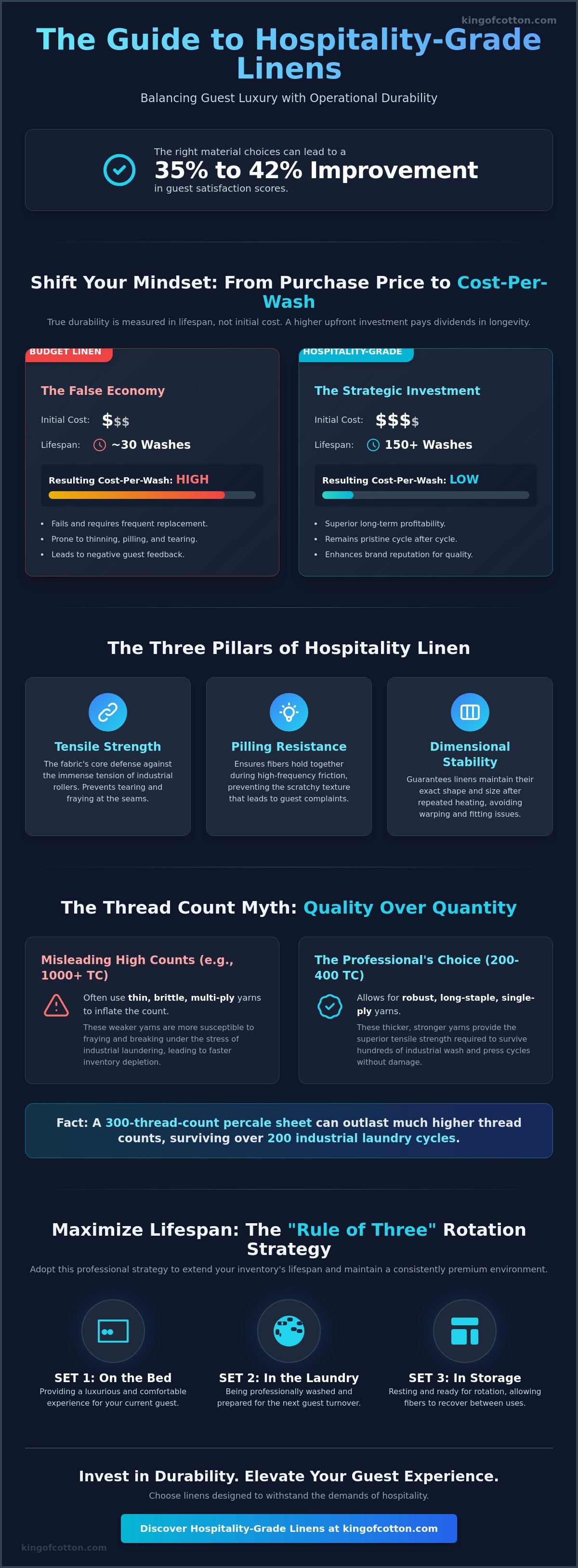
In this guide, you'll master the art of selecting hospitality-grade linens that perfectly balance guest luxury with the rigours of frequent industrial laundering. We'll reveal why true durability is a synergy of tensile strength and weave stability rather than just a number on a package. We'll also examine how the right material choices can lead to a 35% to 42% improvement in guest satisfaction scores while lowering your cost-per-use and streamlining your laundry operations.
Key Takeaways
- Shift your perspective from initial purchase price to the "Cost-Per-Wash" framework to ensure superior long-term profitability and asset longevity.
- Master the technical nuances of thread count and GSM when choosing durable linen for high turnover properties to ensure your inventory survives 100+ industrial cycles.
- Evaluate the performance benefits of material blends to significantly reduce energy costs and streamline your property's daily ironing requirements.
- Adopt the professional "Rule of Three" rotation strategy to extend the lifespan of your investment and maintain a consistently premium guest environment.
Defining Durability: The Cost-Per-Wash Framework
True durability in a professional setting is far removed from the gentle wear of a residential bedroom. While choosing durable linen for high turnover properties, the primary metric of success is the total number of industrial wash cycles a fabric survives before it begins to thin or lose its structural integrity. Professional hospitality demands a shift from viewing bedding as a simple purchase to understanding the strategic "Cost-per-Wash" framework. A higher upfront investment in premium bed linen pays dividends when the fabric remains pristine after 150 cycles, whereas budget alternatives often fail and require replacement after just thirty washes.
The disparity lies in the intensity of the environment. Domestic linens experience modest wear and tear from daily use. In contrast, commercial linens endure relentless chemical and thermal stress. High-temperature water and aggressive bleaching agents are necessary to maintain the hygiene standards guests expect; however, these processes can be devastating to inferior fibres. Guests equate true luxury with a specific sensory experience. They demand crispness and a brilliant white finish. Maintaining this level of freshness while respecting the Linen properties and durability of your inventory is essential for any prestigious property.
To gain a practical perspective on selecting the right inventory for your guests, watch this helpful video:
The Three Pillars of Hospitality Linen
To achieve a superior return on investment, your inventory must excel in three specific technical categories. Tensile strength is the fabric’s primary defence against the immense tension of industrial rollers. Without it, sheets will tear or fray at the seams. Pilling resistance is equally vital. It ensures the fibres hold together during high-frequency friction, preventing the scratchy texture that prompts negative guest feedback. Finally, dimensional stability ensures your linens maintain their exact shape and size. Repeated heating can cause lower-quality fabrics to warp, making them difficult for staff to fit and unsightly for the guest.
High Turnover vs. Residential Standards
Retail bedding is engineered for weekly use and gentle home laundering. In a professional short-term rental environment, those same fibres will disintegrate with alarming speed. Frequent bleaching and high-heat drying cycles strip away the natural oils of low-grade cotton, leading to rapid thinning and a worn appearance. We suggest establishing a strict baseline for your procurement process. Aim for high-tensile materials designed to withstand a minimum of 100 to 150 wash cycles. Choosing durable linen for high turnover properties isn't just a financial decision; it's a commitment to preserving the serene and sophisticated atmosphere that defines a world-class guest experience.
Technical Specifications: Thread Count, Weave, and Weight
Thread count is frequently marketed as the ultimate mark of luxury. In the commercial sector, this is often a misconception. When choosing durable linen for high turnover properties, chasing four-digit thread counts can actually lead to faster inventory depletion. High thread counts often rely on multi-ply yarns that are thinner and more brittle. By contrast, a thread count between 200 and 400 allows for the use of robust, long-staple single-ply yarns. These thicker yarns provide the tensile strength required to survive the mechanical stress of industrial extractors without fraying.
Professionals also consider the inherent characteristics of the raw material. When distinguishing linen from cotton, researchers highlight that linen's strength actually increases when wet, making it a formidable choice for industrial laundering. However, high-quality cotton remains the preferred choice for its softness and reliable performance when woven correctly. For high-occupancy rooms, you must strike a balance between fibre density and breathability. A fabric that is too dense will trap heat and lead to guest discomfort, while a fabric that is too thin will appear transparent and "cheap" after only a few washes.
Percale vs. Sateen: Which Survives the Laundry?
The weave of your bedding determines both its tactile feel and its commercial lifespan. Percale utilizes a "one-over, one-under" structure. This creates a matte, crisp finish that is exceptionally durable. It resists pilling and maintains its structural integrity despite frequent friction. Sateen, while initially silkier due to its "four-over, one-under" weave, is more vulnerable to snagging. The longer "floats" of yarn in a sateen weave are easily caught during the laundering process. For properties with high turnover, percale is the undisputed industry standard for longevity and a consistently fresh guest experience.
Understanding GSM for Bathroom Textiles
Towel longevity is measured by Grams per Square Metre (GSM). While a 900 GSM towel feels incredibly plush, it is often impractical for high-turnover properties because it takes too long to dry, increasing energy costs and operational delays. A 600 to 700 GSM towel provides the perfect equilibrium between a luxurious, heavy feel and efficient drying times. Look for "double-loop" construction, which prevents the loops from pulling and ensures the towel remains thick and absorbent for years. For a deeper dive into selecting the right weights, read our guide on How to Choose The Perfect Luxury Bath Towels.
Explore our range of hospitality-grade bed linen to see these technical specifications in practice and elevate your property's standards.
Performance Comparison: Pure Cotton vs. Linen Blends
Choosing durable linen for high turnover properties requires a sophisticated understanding of how different fibres react to industrial pressure. The decision often rests between the timeless elegance of 100% Egyptian cotton and the resilient, textured appeal of linen blends. Each material offers a distinct return on investment based on your property’s specific operational needs. While guests often associate the "crisp hotel feel" with high-quality cotton, the "relaxed luxury" of linen is increasingly popular in boutique coastal or rural retreats. Beyond aesthetics, you must consider the natural anti-bacterial properties of linen fibres, which provide an additional layer of hygiene in high-occupancy environments.
One critical variable often overlooked is the "Ironing Factor". Pure linen is notoriously prone to deep creasing. In a commercial setting, this translates to increased staff labour and higher energy costs for pressing. Adhering to professional Hotel linen handling guidelines ensures that your laundry operations remain efficient regardless of the material chosen. However, for most high-turnover properties, the goal is to achieve that five-star finish with the least amount of mechanical stress and manual intervention.
The Case for Egyptian Cotton
Extra-long staple fibres are the secret to the enduring strength of Egyptian cotton. These longer fibres are spun into finer, smoother yarns that resist fraying and pilling far better than standard cotton varieties. This is why 5-star establishments globally prioritise this material. It offers a prestigious reputation that guests immediately recognise and value. When evaluating your procurement strategy, you might ask: Egyptian Cotton Bedding: Is It Worth The Investment? For properties that define themselves through traditional luxury and absolute smoothness, the answer is a definitive yes. The initial outlay is offset by the fabric's ability to maintain its lustrous finish over hundreds of washes.
Linen-Cotton Blends: The Practical Middle Ground
A 50/50 linen-cotton blend offers a compelling solution for the modern host. This combination harnesses the "cool" feel and immense durability of linen while the cotton component significantly reduces wrinkling. Linen is unique because its strength actually increases when wet. This characteristic makes it exceptionally resilient during the most aggressive stages of the wash process. While linen-heavy fabrics may have a higher entry cost, their longevity often exceeds that of pure cotton. By choosing durable linen for high turnover properties in a blend format, you secure a product that stands up to heavy use while remaining manageable for your housekeeping team. Explore our professional bed linen collections to find the perfect balance for your property’s unique requirements.
Operational Checklist: Maximising Linen Lifespan
Maintaining a prestigious guest environment requires more than just the initial purchase. Even when choosing durable linen for high turnover properties, your operational protocols dictate the eventual return on investment. The cornerstone of professional management is the "Rule of Three". This rotation ensures that while one set is on the bed, another is being laundered and a third set remains in reserve. This cycle prevents fibre fatigue and allows for a more measured replacement schedule. It's a simple strategy that drastically reduces the physical stress placed on any single set of sheets.
Chemical management is equally vital. While it's tempting to use aggressive bleaching for that brilliant white finish, over-bleaching destroys the tensile strength of even the finest fabrics. Similarly, excessive fabric softeners can coat fibres and reduce absorbency in towels. Stick to the professional standard of 60°C for your wash cycles. This temperature provides the necessary thermal disinfection for hygiene without compromising the structural integrity of the long-staple cotton. Storage conditions also play a role. Linens stored in humid, unventilated cupboards can develop "linen rot" or unsightly yellowing. Ensure your storage areas are cool, dry, and well-ventilated to preserve the serene freshness your guests expect.
Industrial Laundering Best Practices
Allow your linens to "rest" for at least 24 hours between the laundry and the bed. This period allows the cotton fibres to re-hydrate and recover their natural elasticity. Avoid the common mistake of over-drying. Excessive heat in the dryer makes fibres brittle and prone to snapping, which leads to premature thinning and pilling. Conduct regular inventory audits to identify worn items before a guest has the chance to notice them. This proactive approach maintains your property's reputation for excellence.
Protecting Your Investment
High-quality mattress and pillow protectors are non-negotiable for professional properties. They act as a primary barrier, reducing the frequency of heavy wash cycles for the core inventory. Implementing immediate stain pre-treatment protocols also prevents the need for aggressive re-washing that can damage delicate weaves. For more insights into professional procurement, consult our Hotel Linen Suppliers: The Definitive Guide. Choosing durable linen for high turnover properties is a commitment to quality that requires consistent, expert care.
Refine your property's standards by investing in our professional bed linen designed for commercial resilience.
The King of Cotton Advantage for Professional Properties
Success in the hospitality sector is built upon the foundation of trust and consistent quality. At King of Cotton, we leverage decades of experience as "Suppliers to the Finest Hotels in the World" to provide you with more than just textiles. We offer a partnership rooted in expertise. When choosing durable linen for high turnover properties, you require a supplier that understands the intricate balance between aesthetic indulgence and commercial resilience. Our commitment to high-tensile, long-staple cotton ensures that your inventory remains a valuable asset rather than a recurring expense. This focus on material integrity is what allows our products to maintain their serene, sophisticated atmosphere despite the rigours of industrial processing.
Our bespoke corporate supply services are tailored to meet the needs of every host, from boutique short-term rentals to prestigious international hotel chains. We combine global delivery capabilities with deep, UK-based expertise to support the hospitality sector at every level. Whether you are sourcing bed linen, plush towels, or elegant bathrobes & gowns, our products are engineered to meet international standards of excellence. This authoritative approach to manufacturing means you can invest with confidence, knowing your guests will always experience the highest levels of comfort and refinement.
Curated Collections for High Turnover
We've meticulously designed our hospitality-grade Bed Linen collections to withstand the specific pressures of professional laundering. Each piece is a testament to superior craftsmanship and heritage. We prioritise ethical sourcing and third-party validation, ensuring that your procurement choices reflect modern standards of sustainability and safety. There's a profound serenity in choosing a partner that truly understands the hidden stresses of frequent turnover. Our collections allow you to maintain a premium guest experience without the constant worry of pilling, thinning, or loss of shape. By choosing durable linen for high turnover properties from our curated range, you're investing in a legacy of quality that guests will notice and appreciate.
Partnering with King of Cotton
Standardising your textile assets shouldn't be a complex task. We offer dedicated support for property managers and owners through our wholesale pricing and bulk order systems. This ensures you receive the best possible value for hospitality-grade hotel amenities and linens without compromising on the luxurious feel your brand demands. If you're looking to upgrade multiple locations, our expert consultation services can help you select a cohesive range of products that streamline your operations and delight your guests. It's time to elevate your property with textiles that speak of authority and understated elegance.
Request a professional quote for your property today and let us help you master the art of durable luxury.
Elevating Your Property with Enduring Luxury
Mastering the art of choosing durable linen for high turnover properties transforms your inventory from a recurring expense into a strategic brand asset. By focusing on the cost-per-wash framework and technical nuances like weave stability, you ensure your property maintains its prestigious reputation through every industrial cycle. We've spent over 30 years as suppliers to the finest homes and hotels in the world, refining the balance between serene comfort and commercial resilience. Our expertise is trusted by prestigious residential and commercial sectors globally to deliver excellence that lasts.
It's time to invest in materials that reflect your commitment to quality and guest satisfaction. When you prioritise high-tensile fabrics and professional rotation strategies, you create a seamless experience for both your staff and your guests. Upgrade your property with our hospitality-grade Bed Linen and provide your guests with the refined experience they deserve. Your journey toward operational efficiency and luxurious hospitality begins with the right foundation. We look forward to helping you define the future of your property’s comfort.
Frequently Asked Questions
What is the most durable material for high-turnover rental bedding?
Long-staple cotton in a percale weave is widely considered the most resilient choice for choosing durable linen for high turnover properties. Its superior tensile strength allows it to withstand the mechanical stress of industrial extractors while maintaining a crisp, premium feel. Linen-cotton blends also offer exceptional longevity because linen's structural integrity actually increases when wet, providing a practical solution for properties that require both durability and a relaxed, luxurious aesthetic.
Does a higher thread count mean the sheets will last longer?
A higher thread count does not equate to increased durability. In a commercial context, it often indicates the opposite. High thread counts frequently rely on thinner, multi-ply yarns that are more prone to snapping under industrial heat and chemical stress. A thread count between 200 and 400 is the professional "sweet spot". This range allows for the use of robust, single-ply yarns that provide the structural integrity needed for frequent laundering.
How often should I replace hotel-quality linens in a busy property?
Hotel-quality linens should generally be replaced after 100 to 200 successful industrial wash cycles. For a high-occupancy property, this typically translates to a lifespan of 12 to 24 months. Monitoring your inventory through a "Cost-per-Wash" framework helps you determine the exact moment the fabric loses its commercial value. If the material appears transparent when held to the light or loses its original lustre, it is time to invest in fresh stock.
Why do hotels prefer Percale weave over Sateen for durability?
Hotels prefer percale because its "one-over, one-under" weave is inherently more stable and resistant to snagging. Sateen's "four-over, one-under" structure creates longer surface yarns, known as floats, which are easily caught and damaged during the aggressive agitation of industrial machines. Percale's tighter, simpler grid ensures the fabric remains crisp and intact for a significantly higher number of cycles, making it the authoritative choice for high-turnover environments.
Can I use 100% linen for a short-term rental property?
You can use 100% linen, but you must be prepared for increased operational demands regarding ironing and pressing. While linen is incredibly durable and possesses natural anti-bacterial properties, its tendency to crease can increase staff labour costs. Many professional hosts find that a linen-cotton blend offers the same sophisticated, relaxed luxury look with much better wrinkle resistance and easier maintenance for high-turnover schedules.
How does industrial laundering affect the lifespan of cotton sheets?
Industrial laundering subjects cotton sheets to intense chemical and thermal stress that domestic machines don't replicate. High-temperature water and heavy-duty extraction cycles gradually strip the natural oils from cotton fibres, eventually making them brittle. To mitigate this, professionals use high-tensile, long-staple cotton and adhere to strict temperature controls, typically around 60°C. This balance ensures the necessary thermal disinfection for hygiene without prematurely destroying the fabric's structural integrity.
What is the "Rule of Three" in linen management?
The "Rule of Three" is a fundamental strategy where you maintain three complete sets of linen for every bed. One set is in use, one is being laundered, and the third is resting in storage. This rotation prevents any single set from being over-processed and allows the cotton fibres 24 hours to recover their natural elasticity. This simple operational protocol is essential when choosing durable linen for high turnover properties to maximise the lifespan of your investment.
How can I tell if my linen is reaching the end of its professional life?
You can identify when linen is reaching its end of life by checking for visible thinning, greyish discolouration, or a loss of its "crisp" texture. If the seams are beginning to fray or if pilling has become noticeable to the touch, the items no longer meet the standards of high-end professional hospitality. Conducting regular audits ensures you replace worn items before they prompt negative guest reviews regarding scratchy or worn bedding.