

Calculating ROI on Hotel Linens: The Financial Case for Premium Textiles
Could the very textiles you consider a recurring expense actually be your hotel's most resilient capital asset? For many UK hoteliers, the cycle of replacing frayed towels and pilling sheets feels like an unavoidable drain on the bottom line, particularly as commercial laundry costs continue to climb. However, calculating ROI on hotel linens requires looking far beyond the initial invoice to the long-term Cost-per-Wash. When you treat your textiles as a high-yield investment rather than a disposable commodity, the financial narrative shifts from constant loss to a measurable, sophisticated gain.
You likely agree that nothing tarnishes a premium brand's reputation faster than a guest review complaining of scratchy towels or thin, greyed sheets. It's an operational headache that directly impacts your Average Daily Rate and long-term guest retention. In this article, you'll master the precise metrics of hospitality procurement and learn how investing in premium linens generates returns through exceptional durability and guest loyalty. We'll explore how choosing textiles rated for up to 300 washes reduces operational waste and secures the five-star sleep reviews your establishment deserves.
Key Takeaways
- Master the transition from upfront purchase costs to a sophisticated lifecycle analysis by calculating ROI on hotel linens using the Cost-per-Wash formula.
- Identify the "Cheap Linen Trap" and learn how premium materials endure significantly more industrial wash cycles to protect your long-term capital.
- Leverage the "Sleep Quality" metric to drive guest loyalty and justify a higher Average Daily Rate through consistent five-star bedding reviews.
- Maximise operational efficiency with textiles designed for superior whiteness retention and reduced ironing time, lowering your total labour costs.
- Transform your linen inventory into a brand asset by exploring bespoke personalisation and guest-facing retail opportunities.
The ROI of Premium Hospitality Textiles: Beyond the Initial Purchase Price
In the sophisticated world of hospitality procurement, the initial invoice is often a distraction from the true financial picture. For your 2026 budget, shifting the perspective from a simple Capital Expenditure (CAPEX) to a value-added investment is essential for long-term profitability. When calculating ROI on hotel linens, you must account for the entire lifecycle of the asset rather than just the acquisition cost. This focus on maximizing asset value is a universal business principle; just as industrial firms sell tungsten carbide scrap to recover capital from used materials, hoteliers should treat their textiles as durable investments. Textile ROI is the strategic balance between initial purchase price, product longevity, and guest-driven revenue generation. Mastering the art of calculating ROI on hotel linens allows you to justify the shift toward premium procurement and move away from the cycle of constant replacement.
To better understand the mechanics of these financial projections, watch this helpful video guide on ROI modelling:
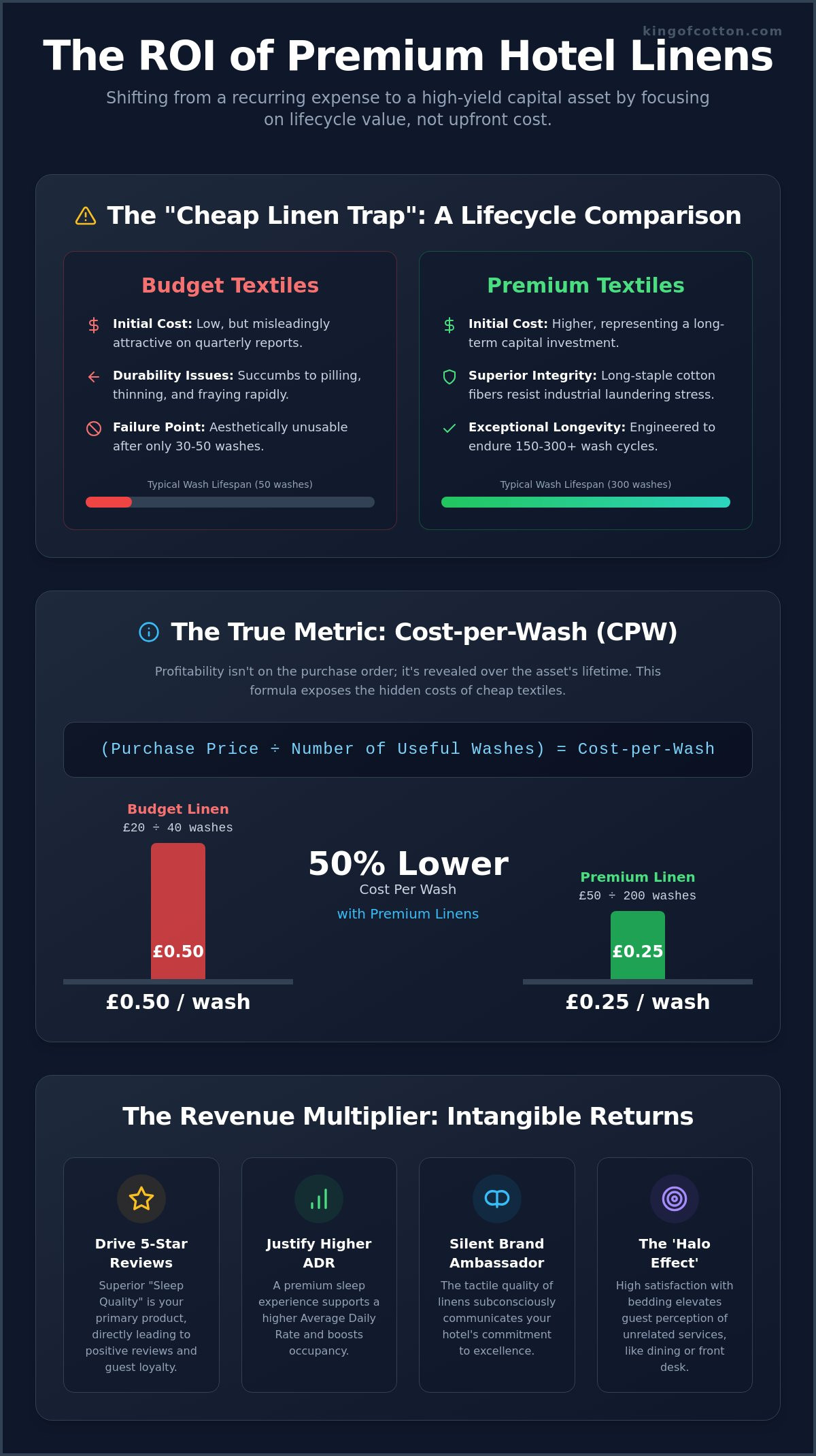
Many procurement managers inadvertently fall into the 'Cheap Linen Trap'. While a lower upfront price looks attractive on a quarterly spreadsheet, these budget textiles often lead to three times higher annual expenditure. Budget sheets typically withstand only 30 to 50 wash cycles before pilling, thinning, or fraying occurs. In contrast, premium bed linen engineered for the commercial sector can endure 150 to 300 washes. This durability drastically lowers the cost per use, proving that quality is the most effective hedge against inflation.
The Tangible vs. Intangible Return
The tangible returns of high-quality textiles are easily measured: reduced replacement frequency and a significant drop in laundering damage. Premium household linens designed for professional use maintain their structural integrity and brightness far longer than retail-grade alternatives. However, the intangible returns are equally potent. Your 'Sleep Experience' isn't just a service; it's your primary product. In an era of 'Instagrammable' room aesthetics, the crisp, opulent look of a perfectly dressed bed drives brand reputation and secures guest loyalty.
Textiles as a Silent Brand Ambassador
Guests subconsciously associate the tactile quality of towels and robes with the overall hygiene and service standards of your hotel. This creates a 'Halo Effect' where premium bedding leads to higher satisfaction scores in completely unrelated areas, such as front-desk service or dining. King of Cotton has built a heritage on this material expertise. We understand that the world’s finest hotels choose our products because they value long-term performance over a fleetingly low purchase price. Investing in superior craftsmanship ensures your textiles act as a silent, yet powerful, ambassador for your brand's commitment to excellence.
Longevity vs. Replacement: Calculating the Cost-per-Wash (CPW)
True profitability isn't found on the purchase order; it's found in the laundry room. When calculating ROI on hotel linens, the most revealing metric is the Cost-per-Wash (CPW). The formula is straightforward: (Purchase Price + Total Laundering Costs) divided by the Number of Useful Washes. By focusing on the total cost of ownership (TCO), hoteliers can see that a £50 premium sheet that endures 200 washes is fundamentally more economical than a £20 budget alternative that fails after 40. Budget textiles reach their "failure point" with alarming speed, succumbing to pilling, thinning, and the dreaded grey-out that signals the end of their aesthetic life.
Material Integrity and Tensile Strength
The secret to this longevity lies in material integrity. Long-staple cotton fibres possess a natural tensile strength that resists the aggressive mechanical action of commercial laundering and high-heat drying. While a high thread count is often used as a marketing hook, yarn quality is the true indicator of performance. A 300-thread-count premium sateen made from superior yarns will consistently outperform a 600-thread-count sheet made from inferior, short-staple fibres that break and pill under heat. You can explore our professional bed linen collections to find textiles specifically engineered for these high-durability environments.
The Financial Impact of Shrinkage and Distortion
Operational efficiency is another hidden cost of low-quality textiles. Budget linens frequently suffer from shrinkage and distortion, resulting in misshapen sheets that are difficult for housekeeping staff to fit. This increases "Room Turn Time", adding a silent labour cost to every guest stay. These distortions also lead to "discarded sets"; if a single pillowcase fails prematurely, the entire set's aesthetic harmony is lost. Mastering the variables involved in calculating ROI on hotel linens ensures your inventory remains a cohesive asset rather than a fragmented expense.
| Feature | Budget Poly-cotton | 100% Egyptian Cotton |
|---|---|---|
| Average Lifespan | 6-12 Months | 18-36 Months |
| Wash Cycle Rating | 30-50 Cycles | 150-300 Cycles |
| Visual Retention | Rapid Greying | Persistent Brightness |
| Tactile Experience | Rough/Pilled | Silky/Smooth |
To see how high-specification textiles can transform your bottom line, browse our full professional range.
The Revenue Multiplier: How 5-Star Reviews Drive ADR and Occupancy
While the previous sections focused on reducing expenditure through durability, the second half of the equation is revenue generation. In the luxury hospitality sector, your linens aren't just functional items; they're high-performance marketing tools. When calculating ROI on hotel linens, you must account for the "Sleep Quality" metric. This is measured by the frequency with which phrases like "most comfortable bed" or "heavenly sleep" appear in your guest feedback. There's a direct, measurable correlation between these satisfaction scores and your ability to command a higher Average Daily Rate (ADR). Guests don't just pay for a room; they pay for rejuvenation.
Superior comfort also plays a critical role in reducing your Guest Acquisition Cost (CAC). A guest who experiences the indulgence of premium textiles is significantly more likely to book directly for their next stay, bypassing high-commission Online Travel Agencies (OTAs). Repeat bookings are the most profitable revenue stream in any hotel's portfolio. To understand the specific materials that drive these returns, consult The Ultimate Guide to Buying Luxury Bed Linen for a deeper dive into textile selection.
Linen as a Marketing Asset
Your digital presence benefits immensely from material excellence. Explicitly listing "Egyptian Cotton Bedding" or "600gsm zero-twist towels" as a Unique Selling Point (USP) on your website and OTAs sets an immediate expectation of luxury. Beyond the copy, the visual ROI is undeniable. High-lustre sateen weaves catch the light in professional photography, creating an inviting, opulent atmosphere that converts browsers into bookers. Similarly, dressing your suites with plush bathrobes and high-GSM towels allows you to weave a "spa-like" narrative into your brand story, elevating the perceived value of every booking.
Social Proof and the TripAdvisor Algorithm
The financial impact of social proof is significant for UK hoteliers. Moving your aggregate rating from a 4.2 to a 4.7 on platforms like TripAdvisor can lead to a substantial increase in occupancy and pricing power. Conversely, "scratchy towels" or "thin sheets" act as high-impact negative keywords that trigger immediate hesitation in potential guests. By prioritising the tactile experience, you eliminate these friction points before they reach a review. You can view our premium bathroom range to see how professional-grade textiles can enhance your guest scores and protect your digital reputation.
Operational Efficiency: Laundering, Durability, and Housekeeping
Operational efficiency is the engine room of hotel profitability. While previous sections examined guest satisfaction and initial costs, the daily reality of textile management happens in the laundry and the guest room. Whiteness retention is a critical factor in calculating ROI on hotel linens. Premium cotton possesses a natural resistance to the "yellowing" effect caused by the accumulation of commercial chemicals and mineral deposits. When a sheet maintains its pristine, crisp brilliance for 150 washes instead of 50, you avoid the hidden cost of premature stock retirement due to aesthetic failure.
Labour remains the most significant operating expense for UK hotels, typically accounting for 40% to 60% of total operating expenses. High-quality weaves introduce the "Easy-Iron" factor, which significantly reduces the time required for finishing. Linens that respond well to industrial pressing allow laundry teams to process higher volumes with greater precision. This efficiency directly lowers your total Cost-per-Wash. Beyond the laundry, housekeeping morale improves when staff work with textiles that fit perfectly and drape effortlessly. You can find our professional products specifically designed to streamline these high-frequency operational tasks.
Withstanding the 2026 Commercial Laundry Environment
The 2026 commercial laundry environment is increasingly rigorous. Facilities often use high-alkali detergents and intensive mechanical action to meet modern hygiene standards. These processes act as a corrosive force on low-grade, short-staple cotton fibres, causing them to break and "lint" prematurely. King of Cotton textiles are engineered specifically for the hospitality wash cycle, using reinforced selvedges and superior yarn strength to withstand these stresses. Selecting the right partner is essential for navigating these technical requirements. For a broader perspective on selecting a partner, see our Hotel Linen Suppliers: The Definitive Guide.
Sustainability as a Financial Strategy
Modern procurement is no longer just about the bottom line; it's about reducing your "Carbon-per-Stay." Calculating ROI on hotel linens now includes the environmental impact of your replacement cycle, especially as the EU Directive on Green Claims and updated OEKO-TEX mandates require verifiable proof of sustainability. Long-lasting linens are the most sustainable choice because they stay out of landfills and require fewer resources for manufacturing and transport over time. Durability is the most effective and honest form of sustainability in the hospitality industry. Guest demand for eco-conscious luxury is rising, and providing textiles that reflect these values offers a clear return through brand alignment. To upgrade your operational standards with sustainable, high-performance textiles, view our professional bed linen collections today.
Strategic Procurement with King of Cotton: Elevating Your Brand Value
Strategic procurement transforms your textile inventory from a necessary expense into a powerful driver of brand equity. When you move beyond simply calculating ROI on hotel linens as a cost-saving exercise, you uncover new opportunities for revenue and guest engagement. Bespoke branding, for instance, allows you to personalise your linens with elegant embroidery, significantly increasing perceived value and ensuring your brand remains at the forefront of the guest's mind. This attention to detail fosters a sense of exclusivity that generic alternatives cannot replicate. It turns a standard room stay into a signature experience that guests remember and recommend.
The "Retail Bridge" represents an often-overlooked financial advantage in the UK hospitality market. Guests who experience a truly restorative night's sleep frequently enquire about the source of their bedding. By facilitating these purchases through a white-label or affiliate retail model, you turn a guest enquiry into a direct revenue stream. This secondary ROI effectively subsidises your high-end procurement, making the transition to premium materials even more financially compelling. Calculating ROI on hotel linens should also account for this potential for ancillary profit, which elevates the linen from a consumable to a profit centre.
Consistency is the hallmark of a professional partnership. King of Cotton ensures that your 2026 replacement stock matches the exact quality and specifications of your 2024 order. This continuity prevents the aesthetic fragmentation that occurs when suppliers shift their manufacturing standards or material sources. To begin your journey toward a more sophisticated procurement strategy, you can contact us for a professional quote and tailored analysis of your textile requirements.
The Hotel-to-Home Revenue Model
Facilitating the transition from a five-star stay to a five-star home environment is a powerful way to offset procurement costs. When guests ask to purchase the luxury experience they've just enjoyed, you're no longer just managing stock; you're managing a boutique retail opportunity. This model allows you to create an in-room experience that essentially pays for its own upgrades over time. To see the impact of our materials first-hand and understand the tactile quality your guests will love, you can experience our quality at our physical stores.
Expert Consultation for 5-Star Success
Achieving a perfect sleep environment requires more than just high thread counts; it requires a nuanced understanding of how material weight, weave, and breathability interact with your specific guest demographic. King of Cotton acts as a trusted partner for the world’s most prestigious establishments, providing the material expertise needed to tailor your inventory for maximum impact. Whether you require crisp percales for a summer boutique or heavy, opulent sateens for a city flagship, our consultants ensure your investment is secured. Browse our professional bedroom collections to secure your investment today.
Securing Your Hotel's Financial Future Through Textile Excellence
The transition from viewing linens as a consumable expense to a high-yield asset is a hallmark of sophisticated hospitality management. By mastering the metrics of Cost-per-Wash and understanding the profound impact of material integrity on guest satisfaction, you position your establishment for sustained growth. Calculating ROI on hotel linens reveals that premium textiles aren't just an indulgence; they're a strategic necessity that reduces replacement frequency and elevates your Average Daily Rate through superior social proof. To further protect this growth by ensuring your commercial accounts remain settled, you can discover Whole King Company Limited for professional debt recovery expertise.
As specialists in high-durability Egyptian cotton for over 30 years, King of Cotton remains the trusted partner for the world's finest hotels and prestigious boutique brands. We understand that every thread contributes to your bottom line and your brand's reputation. It's time to move beyond the cycle of constant replacement and invest in the enduring elegance your guests deserve.
Elevate your guest experience with King of Cotton’s professional range and secure a more profitable, luxurious future for your establishment.
Frequently Asked Questions
Does thread count really matter for hotel ROI?
Thread count serves as a baseline, but the quality of the raw material is the true driver of ROI. In a commercial setting, a high thread count made from short-staple fibres will pill and fray rapidly. Choosing a refined 300-thread-count sheet made from long-staple cotton ensures the fabric remains smooth and structurally sound through hundreds of industrial laundry cycles. This durability protects your capital investment far better than a higher "marketing" thread count.
What is the best thread count for high-traffic hotel bed sheets?
For high-traffic establishments, a thread count between 200 and 400 offers the most sophisticated balance of elegance and endurance. This range provides the silky tactile experience guests expect while allowing for optimal airflow during the drying process. Sheets within this specification are less prone to the structural damage caused by high-heat commercial dryers. It's the industry standard for global five-star brands that prioritise both guest comfort and operational longevity.
How do you calculate the "Cost-per-Wash" for hotel linens?
You determine this by adding the initial purchase price to the total projected laundering costs over the product's life, then dividing by the total number of successful wash cycles. When calculating ROI on hotel linens, this metric reveals that premium textiles often cost significantly less per use than budget alternatives. It shifts your focus from the upfront invoice to the long-term value, ensuring your procurement decisions support your hotel's overall profitability.
Is Egyptian cotton worth the investment for an Airbnb?
Investing in Egyptian cotton is a strategic move for premium Airbnb listings aiming for higher occupancy and elite status. Exceptional linens are one of the most cited factors in five-star reviews, which directly influences your search ranking and nightly pricing power. While the initial cost is higher, the increased durability means you won't need to replace sets as frequently. It transforms a simple bed into a memorable luxury experience that justifies a premium rate.
How often should a luxury hotel replace its bed linen?
Luxury hotels typically refresh their stock every 18 to 24 months to maintain impeccable standards. However, the exact timing depends on your PAR levels and the quality of the textile. Premium linens engineered for hospitality can often endure 150 to 300 washes before showing signs of aesthetic wear. Implementing a strict rotation policy ensures each set has time to rest, which significantly extends the functional life of your investment.
What GSM should hotel towels be to balance luxury and drying costs?
A range of 600 to 650 GSM is the ideal specification for balancing guest indulgence with operational efficiency. Towels in this weight category provide the opulent, heavy feel associated with high-end spas without requiring excessive drying time. Heavier towels, such as those exceeding 800 GSM, often lead to significantly higher energy bills and slower room turns. This mid-weight premium range ensures a luxurious tactile experience while keeping your utility costs manageable.
Can high-quality linen actually reduce my laundry bills?
High-quality textiles can indeed lower your operational expenses by reducing drying times and labour requirements. Superior long-staple cotton and specific weaves are designed to release moisture more efficiently in the dryer. Additionally, these premium fabrics often feature "easy-iron" properties, meaning your housekeeping or laundry staff spend less time on each piece. Over a 12-month period, these incremental savings in energy and man-hours contribute significantly to your hotel's net profit.
How does linen quality impact my Booking.com rating?
Linen quality is a primary driver of the "Comfort" score on Booking.com, which is a critical component of your overall rating. When calculating ROI on hotel linens, you must consider that a 0.5 increase in your aggregate score often allows for a measurable increase in your Average Daily Rate. Guests are increasingly vocal about bedding quality in their digital feedback. Providing a five-star sleep experience ensures your digital reputation remains a powerful asset for conversion.