

Best Bedding for Sensitive Skin UK: A Luxury Guide to Irritation-Free Sleep (2026)
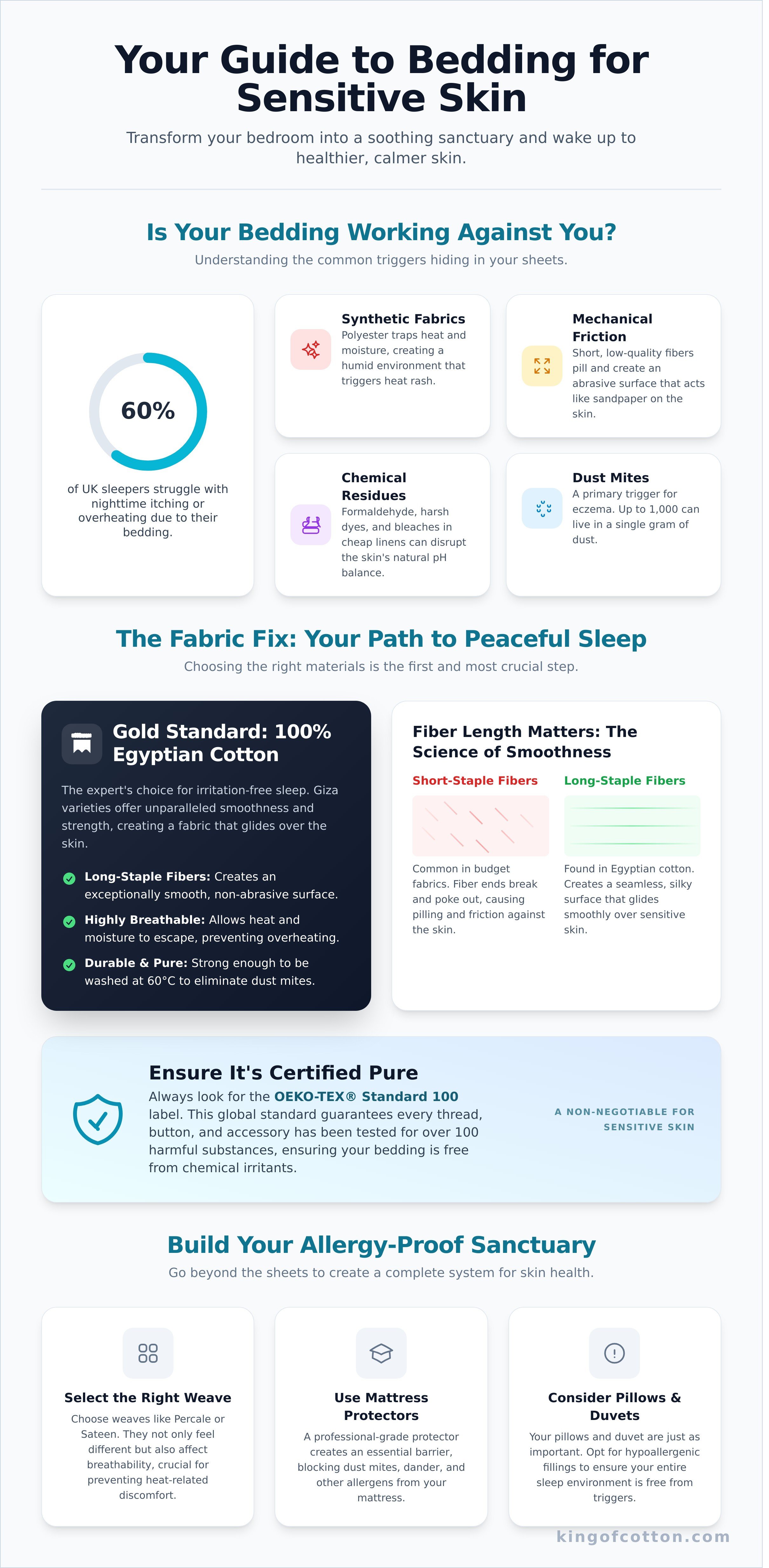
What if the very sheets you bought for comfort are actually the silent culprits behind your 3 AM skin flare-ups? For many, finding the best bedding for sensitive skin uk is a desperate search for relief that often ends in disappointment. Recent data suggests that over 60% of UK sleepers struggle with nighttime itching or overheating, yet they continue to use synthetic fabrics that aggravate the dermis. You deserve better than waking up with red, irritated skin or feeling the scratch of a low-quality weave after just three washes.
This principle of using certified, chemical-free textiles is especially important for the most delicate skin. It's why family-run specialists such as Cotton Baby Ltd. build their entire collection around GOTS-certified organic cotton, ensuring safety for even the youngest members of the household.
It's incredibly frustrating to invest in your sleep only to feel like your bed is working against you. We're here to change that by showing you how to transform your bedroom into a soothing sanctuary with expert-approved fabrics designed specifically for reactive skin. You'll discover how to achieve that coveted five-star hotel feel without the risk of a flare-up. This guide details the specific 2026 textile innovations, from long-staple Egyptian cotton to specialized hypoallergenic weaves, that guarantee a deeper and more restorative night's sleep.
Key Takeaways
- Learn why 100% Giza and Egyptian cottons are the ultimate choice for irritation-free sleep, offering the superior smoothness required for delicate skin.
- Understand how to select the perfect weave and thread count to ensure maximum breathability and prevent heat-related discomfort throughout the night.
- Discover how to identify the best bedding for sensitive skin uk to effectively manage common triggers like dust mites and friction-induced eczema.
- Explore how a complete bedding system, including professional-grade protectors, creates an essential barrier against allergens in your home.
- Find out how to bring five-star hotel luxury into your bedroom with expert-approved fabrics designed for long-lasting comfort and skin health.
Understanding Why Your Bedding Triggers Skin Sensitivity
Finding the best bedding for sensitive skin uk residents can trust involves more than just picking the softest fabric on the shelf. For the 15 million people in the UK currently living with a skin condition, the bed is often a place of discomfort rather than rest. True relief comes from materials that are breathable, friction-free, and processed with minimal chemical intervention. If your sheets feel scratchy or leave you waking up with a flare-up, the fabric's structural integrity and its ability to manage your body's microclimate are likely at fault.
To better understand how your choice of fabric impacts your dermatological health, watch this helpful video:
Cheap polycotton blends are a frequent culprit for nighttime itching and restless sleep. These fabrics combine polyester, a plastic-based derivative, with low-grade cotton fibers. Because polyester is essentially non-porous, it traps body heat and moisture directly against the skin. This creates a humid, warm environment that triggers heat rashes and encourages dust mite populations to flourish. In a typical UK bedroom, a single gram of dust can contain up to 1,000 dust mites. These microscopic pests are a primary trigger for eczema and various respiratory sensitivities, making moisture-wicking natural fibers a necessity rather than a luxury.
The Science of Skin Irritation in Bed
Mechanical irritation occurs when short-staple fibers break and protrude from the weave of the fabric. This is common in budget linens where pilling creates tiny, abrasive bobbles that act like sandpaper against the dermis throughout the night. High-quality bedding uses long-staple fibers to ensure a smooth, continuous surface that glides over the skin without snagging. Understanding Contact Dermatitis is essential for sensitive sleepers as it explains how physical friction or specific irritants can spark an immediate inflammatory response. Non-breathable fabrics exacerbate this by preventing sweat from evaporating; the resulting salt crystals left on the skin further aggravate dry or broken patches.
Chemical Residuals and OEKO-TEX Standards
Many mass-produced linens are treated with formaldehyde-based resins to achieve an "easy-iron" or "wrinkle-free" finish. These chemical residuals don't always wash out and can leach into the skin during eight hours of close contact. Harsh synthetic dyes and bleaching agents also disrupt the skin's natural pH balance, which is already delicate in those with eczema or psoriasis. To ensure your sleep environment is a genuine sanctuary, looking for the OEKO-TEX Standard 100 certification is vital. This global standard guarantees that every thread and button has been tested for over 100 harmful substances. Starting your journey with a certified luxury bed linen collection ensures that your bedding is as pure as it is comfortable, providing the best bedding for sensitive skin uk households require for long-term health.
The Best Fabrics for Sensitive Skin: Cotton, Linen, and Silk
Your choice of fabric acts as a 24-hour topical treatment for your body. For many, the best bedding for sensitive skin uk is defined by its ability to breathe and remain pH neutral. Synthetic blends often harbor common skin irritants in fabrics, such as formaldehyde finishes or static-heavy polyester. Natural 100% cotton remains the gold standard because it allows heat to escape, preventing the sweat-induced itching that often plagues eczema sufferers. It's a breathable, durable, and biodegradable choice that supports the skin's natural barrier rather than suffocating it.
Egyptian Cotton: The Expert’s Choice
Long-staple fibers are the secret to irritation-free sleep. Standard cotton uses short fibers that poke out of the weave. These microscopic "ends" create a prickly texture that triggers inflammation on contact. Egyptian cotton, particularly Giza varieties, features staples longer than 3.2cm. This creates a surface so smooth it feels almost liquid against the skin. Because these fibers are exceptionally strong, you can wash them at 60°C. This specific temperature is vital for killing 99% of house dust mites, a primary trigger for UK skin allergies. King of Cotton specializes in these high-grade materials, drawing on 25 years of heritage to supply the UK's finest homes with hotel-standard linens.
Linen and Bamboo: Natural Alternatives
Linen is naturally antibacterial and anti-static. It stays roughly 3 degrees cooler than cotton during humid UK summers, which is a relief for those with heat-sensitive hives or night sweats. Bamboo is another popular choice, wicking 40% more moisture than cotton. However, shoppers should be cautious. Most bamboo is processed into viscose using intensive chemicals that can linger in the weave. If you're prioritizing skin purity, organic linen or long-staple cotton usually offers a safer, chemical-free profile for reactive skin types.
Silk offers the lowest friction of any textile. It's excellent for preventing facial sleep creases and soothing raw, broken skin. The trade-off is maintenance. Silk often requires specialist detergents and delicate cool cycles. Cotton provides a more practical balance for daily life. It offers high breathability and durability while remaining easy to sterilize in a standard British washing machine. For those seeking the ultimate in dermatological comfort, exploring a high thread count cotton collection is a logical first step toward a better night's rest.
When selecting your next set, remember that the weave matters as much as the material. A percale weave offers a crisp, matte finish that's highly breathable, while a sateen weave provides a silkier feel with more weight. Both are excellent for sensitive skin, provided they're made from 100% natural fibers without synthetic fillers. Always check the label for "100% Cotton" to ensure you aren't bringing hidden polyesters into your bedroom sanctuary.
Weave and Thread Count: The Hidden Factors in Skin Irritation
Many shoppers believe a 1000 thread count is the gold standard for luxury. If you are searching for the best bedding for sensitive skin uk, this common assumption can lead to uncomfortable nights. High thread counts often result in a denser, heavier fabric. While this feels substantial, these tightly packed fibres can trap heat against your body. For a Brit dealing with eczema or prickly heat, trapped warmth is a primary trigger for itching and inflammation. Airflow is your skin's best friend; a sheet that doesn't breathe will eventually cause distress.
Percale vs. Sateen for Sensitivity
The way a fabric is woven changes how it physically interacts with your dermis. Percale uses a traditional one-over, one-under pattern. It's matte, crisp, and exceptionally breathable. If you are a "hot sleeper" whose skin reacts to perspiration, percale is a wise choice. It allows air to circulate freely, keeping the skin cool and dry throughout the night. It feels like a fresh, button-down shirt, providing a clean environment that doesn't cling to the body.
Sateen follows a different path, using a four-over, one-under structure. This creates a lustrous, silky surface with fewer "over-under" intersections. This lack of texture results in a smoother finish with significantly less friction. For those with active eczema flare-ups or highly reactive skin, sateen is often the superior option. Its slippery surface reduces the mechanical "drag" against broken or inflamed skin. Minimising this friction is vital when managing textile and chemical triggers that can worsen contact dermatitis. King of Cotton has spent 25 years refining these weaves to ensure they meet the standards of the world's finest five-star hotels.
The Sweet Spot for Thread Count
Expert consensus suggests the ideal range for skin health lies between 300 and 600 thread count. Within this window, the fabric remains soft to the touch while maintaining the porous structure needed for temperature regulation. When thread counts climb into the 800 to 1200 range, the "pores" of the fabric close up. This creates a barrier that prevents your skin from "breathing," often leading to night sweats that exacerbate skin conditions.
You should be wary of labels claiming 1000 or 1200 thread counts at suspiciously low prices. These products often use "inflated" counts. Manufacturers take three or four low-quality, thin yarns and twist them together to create a single "multi-ply" thread. They then multiply the count by the number of plies. A 1200 thread count sheet made this way is actually a 300 thread count sheet made with inferior, coarse yarn. These multi-ply threads have tiny, protruding fibre ends that can prickle and irritate sensitive skin. A genuine 400-thread-count single-ply Egyptian cotton sheet will always be smoother and more durable than a cheap 1000-count alternative. You can view all products to compare these professional-grade weave options and find the specific finish that suits your tactile preference.
- Percale: Best for those who need to stay cool and prefer a "crisp" hotel feel.
- Sateen: Best for those with very dry or broken skin who need a "silky" friction-free surface.
- 300-600 TC: The optimal range for balancing luxury with essential breathability.
Choosing the best bedding for sensitive skin uk requires looking beyond marketing numbers. Focus on the quality of the long-staple cotton and the integrity of the weave. By selecting a single-ply fabric within the sweet spot, you ensure your bed remains a haven of recovery rather than a source of irritation.
Beyond the Sheets: Pillows, Protectors, and Allergy-Proofing
Creating a sanctuary for reactive skin requires a holistic strategy that extends far beneath the visible surface of your bed. You're building a defensive perimeter against microscopic allergens that thrive in the core of your bedding. Without a total system approach, even the best bedding for sensitive skin uk cannot fully protect you from nocturnal flare-ups. A comprehensive setup ensures that every layer, from the mattress upwards, supports skin health and respiratory comfort.
Mattress and pillow protectors act as your primary shield. Dust mites are the leading cause of perennial allergic rhinitis and eczema irritations in the UK. These microscopic organisms feed on dead skin cells and colonize the interior of mattresses and pillows where they're shielded from light. A high-quality, breathable protector creates a physical barrier that prevents these allergens from escaping into your immediate sleeping environment. It's a non-negotiable step for anyone dealing with contact dermatitis or chronic sensitivity.
Hypoallergenic Duvets and Pillows
The choice between natural down and synthetic fills is often misunderstood. High-quality natural down is exceptionally breathable, which helps regulate temperature and prevent the sweat-induced itching associated with sensitive skin. However, it must be encased in "down-proof" casings. These covers feature a weave so tight that it prevents both the filling from escaping and dust mites from entering. If you prefer synthetic options, look for advanced microfibre clusters in the bedroom collection that mimic the loft of down without the risk of organic dust accumulation.
UK Care Guide for Sensitive Bedding
Laundry practices directly impact the long-term efficacy of your bedding. Washing your linens at 60°C is the scientifically recognized benchmark for eliminating 99.9% of dust mites and neutralising their allergens. Lower temperatures might refresh the fabric, but they often leave biological triggers intact. To ensure your skin remains calm, follow these specific steps:
- The Double Rinse: Use an extra rinse cycle to flush every trace of surfactant and detergent residue from the fibers. Soap buildup is a frequent hidden cause of "unexplained" skin irritation.
- Sanitize the Machine: Run a monthly service wash at 90°C to prevent biofilm and mould growth within the drum, which can transfer to your sheets.
- Avoid High Heat: Air-drying is superior for maintaining fiber integrity. High-heat tumbling can make cotton fibers brittle and scratchy, leading to micro-abrasions on the skin.
Air-drying in a well-ventilated indoor space or on a clear day outside keeps the fibers supple and smooth, which is essential for maintaining that signature hotel-style softness. If you must use a dryer, choose a low-heat setting and remove the items while they're still slightly damp to prevent over-drying.
Detergent selection is the final hurdle in your allergy-proofing routine. Fragrance-based dermatitis is a growing concern, with data from the British Skin Foundation suggesting that synthetic musks are top allergens for UK adults. Switch to "non-bio" liquids that are free from optical brighteners and enzymes. These proteins are designed to break down stains but can remain trapped in the weave, causing significant discomfort for those with eczema or psoriasis. By choosing fragrance-free, dermatologically tested formulas, you complete the circle of protection for your skin.
Investing in Hotel-Quality Sleep: Why King of Cotton Suits Sensitive Skin
King of Cotton has spent more than 25 years refining the standards of luxury sleep by supplying the world's most prestigious five-star hotels. This professional heritage isn't merely about aesthetic appeal; it's a rigorous commitment to durability and dermatological comfort. When a luxury hotel selects a fabric, that material must endure hundreds of high-temperature industrial washes while remaining exceptionally gentle against a guest's skin. We bring this exact professional standard directly to your bedroom. Our Exceptional Quality Guarantee means that every set of sheets we produce meets a benchmark that the world's most demanding housekeepers rely on every single day. You're not just purchasing linens; you're securing a product designed to maintain its structural integrity and softness for years.
Standard retail linens frequently rely on synthetic blends or temporary chemical coatings to achieve a soft feel on the shelf. These finishes often disappear after three or four washes, leaving behind a scratchy, abrasive texture that can wreak havoc on delicate complexions. King of Cotton avoids these shortcuts. By focusing on high-grade, long-staple cotton, our fabrics actually become more supple with every trip through the washing machine. The natural fibres align and smooth out over time, ensuring your bed remains a haven of elegance that supports your physical health rather than compromising it. For those seeking the best bedding for sensitive skin uk retailers provide, this long-term performance is a crucial factor in preventing the nightly friction that leads to irritation.
The Professional Hospitality Standard
Hotels prioritise 100% cotton because of its superior hygiene profile and natural breathability. Synthetic fabrics often trap heat and moisture, creating a breeding ground for allergens that irritate reactive skin. By choosing the same 100% cotton used in luxury suites, you ensure your sleeping environment remains cool and dry. If you prefer to experience these textures in person before buying, you can visit our UK stores to feel the difference between our crisp percale and silky sateen weaves. Seeing the fabric quality firsthand helps you understand why professional hospitality experts never settle for less.
Your Journey to Better Sleep Starts Here
Choosing the right fabric is a health decision as much as a style one. To find the best bedding for sensitive skin uk residents should look for high thread counts, natural fibres, and a proven track record of quality. Before you checkout, use this final checklist to ensure your bedroom is a safe space for your skin:
- Prioritise Natural Fibres: Stick to 100% cotton or bamboo to maximise airflow and moisture wicking.
- Check the Weave: Sateen is often better for very sensitive skin due to its smoother, flatter surface.
- Look for Longevity: Invest in quality over quantity; one set of high-grade linens is better for your skin than three sets of cheap, pilling fabric.
- Wash Before Use: Always wash new linens at 60°C to remove any dust or particles from the transit process.
Quality sleep is the foundation of physical recovery. Investing in premium linens reduces the nightly stress on your skin and allows your body to truly rest. You can explore our full luxurious bed linen collection today to start building your own sanctuary of comfort and health.
Transform Your Bedroom Into a Skin-Safe Sanctuary
Waking up without redness or irritation starts with the specific layers you choose for your bed. You've learned that long-staple Egyptian cotton and smooth sateen weaves significantly reduce the friction that triggers eczema or dermatitis. It's not just about the surface feel; it's about the chemical safety of the fibres. Choosing OEKO-TEX certified materials ensures your sheets are entirely free from the harsh irritants often found in mass-produced sets. When you combine these premium fabrics with specialist allergy-proof protectors, you create a protective barrier that keeps your skin calm for a full eight hours.
Finding the best bedding for sensitive skin uk residents can rely on means looking for professional-grade quality that lasts. King of Cotton has been the primary supplier to the world's finest hotels for over 25 years, bringing five-star standards into the home. Our reputation is built on an Excellent Trustpilot rating from thousands of customers who refuse to compromise on their sleep health. Don't settle for scratchy, low-tier linens that disrupt your nightly rest and aggravate your skin. It's time to invest in a sleep environment that respects your body's needs and provides the luxury you deserve.
Shop our Specialist Egyptian Cotton Bedding for Sensitive Skin
You deserve a restorative night of sleep that leaves your skin feeling refreshed and rejuvenated every single morning.
Frequently Asked Questions
Is Egyptian cotton good for eczema?
Authentic Egyptian cotton is an excellent choice for eczema sufferers because its long-staple fibers create a much smoother surface than standard cotton. This reduces the mechanical irritation and friction that often triggers flare-ups. Since it's 100% natural, it allows your skin to breathe and regulates temperature throughout the night. This prevents the overheating that 70% of eczema patients report as a primary trigger for nocturnal itching.
What thread count is best for sensitive skin?
A thread count between 300 and 400 is the ideal range for the best bedding for sensitive skin uk. While a 1000 thread count sounds luxurious, the extremely dense weave can trap heat and moisture, which often irritates delicate skin. A 300-count percale offers a crisp, breathable finish that stays cool. It provides the smooth texture required to prevent friction without sacrificing the airflow necessary for skin recovery.
How often should I wash my bedding if I have allergies?
You should wash your bed linen at least once every 7 days to manage allergen build-up effectively. Research shows that a typical mattress can house up to 10 million dust mites, and weekly washing significantly reduces their population. If your symptoms are severe, consider changing your pillowcases every 2 or 3 days. This prevents the accumulation of skin cells and oils that dust mites feed on, keeping your sleep environment hygienic.
Are synthetic "anti-allergy" sheets better than 100% cotton?
Natural 100% cotton is generally superior to synthetic "anti-allergy" options for skin sensitivity. Many synthetic fabrics use chemical finishes to achieve their properties, which can cause contact dermatitis in 1 in 5 sensitive individuals. Cotton is naturally hypoallergenic and moisture-wicking. While some synthetics claim to block mites, they often lack the breathability of fine cotton, leading to night sweats that exacerbate skin conditions like prickly heat.
What is the best temperature to wash bedding to kill dust mites in the UK?
To effectively kill 99.9% of house dust mites, you must wash your bedding at a temperature of 60°C. Lower temperatures like 30°C or 40°C might clean the fabric, but they leave allergens behind. Use a non-biological detergent to avoid the enzymes that frequently irritate sensitive skin. If you're using delicate fabrics like silk, a 48-hour stay in the freezer can also eliminate mites before you perform a cool wash.
Can silk pillowcases help with facial skin sensitivity?
Silk pillowcases significantly reduce friction on the face, which helps prevent inflammation and sleep creases. The smooth protein fibers of silk don't absorb moisture like other materials, meaning your facial serums and natural oils stay on your skin rather than soaking into the fabric. This is particularly beneficial for the 40% of adults who report facial redness or rosacea. It provides a cool, soothing surface that minimizes overnight irritation.
Do I need a mattress protector if I have sensitive skin?
A high-quality mattress protector is essential for creating a physical barrier between your skin and the allergens living within your mattress. It prevents dust mites, dead skin, and dander from migrating upwards through your sheets. Look for a breathable, waterproof cotton-terry protector that can be washed at 60°C. This simple addition can reduce allergen exposure by up to 90%, making it a vital component when selecting the best bedding for sensitive skin uk.
What is the difference between Percale and Sateen for itching?
Percale has a one-over, one-under weave that feels crisp and stays cool, making it ideal if heat triggers your itching. Sateen uses a four-over, one-under weave, resulting in a silkier, heavier feel that's gentler on very dry or raw skin. If you suffer from night sweats, choose percale for its superior airflow. If your skin is prone to snagging on textured fabrics, the smooth surface of a high-quality sateen is often more comfortable.