

Natural Fibres vs Synthetic Bedding: The Expert Guide to Better Sleep in 2026
You might spend eight hours in bed, but if your sheets are working against your biology, you aren't actually resting. The debate of natural fibres vs synthetic bedding is no longer just about price; it's about the physiological difference between a night of deep recovery and a night of restless overheating. It's a common frustration to invest in a bedroom sanctuary only to find yourself waking up damp from non-breathable fabrics or seeing your new linens lose their lustre after just a few washes. You've likely also felt the growing weight of environmental guilt over microplastics while simply trying to find a comfortable night's sleep.
We believe that true luxury is found in the details that promote wellness and serenity. You'll discover why the materials you sleep in matter more than the hours you spend in bed, and how to choose the perfect natural fibres for a 5-star sleep experience. This guide explores the superior craftsmanship of natural textiles, the science of biological climate control, and how to curate a bedroom that rivals the world's most prestigious hotel suites. We'll help you move beyond fleeting trends toward a refined, durable lifestyle that prioritizes your recovery and the planet's future.
Key Takeaways
- Master the science of biological temperature regulation and learn how specific materials facilitate the deep sleep cycles necessary for true daily rejuvenation.
- Discover why the world's most prestigious hotels exclusively select Egyptian Cotton and Linen for their unrivaled durability and sensory elegance.
- Understand the environmental and physical impact of natural fibres vs synthetic bedding to eliminate the "sweat-box" effect caused by petroleum-based polymers.
- Use our expert persona guide to select the ideal textile for your unique needs, whether you require moisture-wicking for heat or gentle textures for sensitive skin.
- Elevate your bedroom into a sanctuary of quiet luxury by investing in high-performance materials that are designed to last for years rather than months.
The Science of Rest: Why Material Choice Dictates Sleep Quality
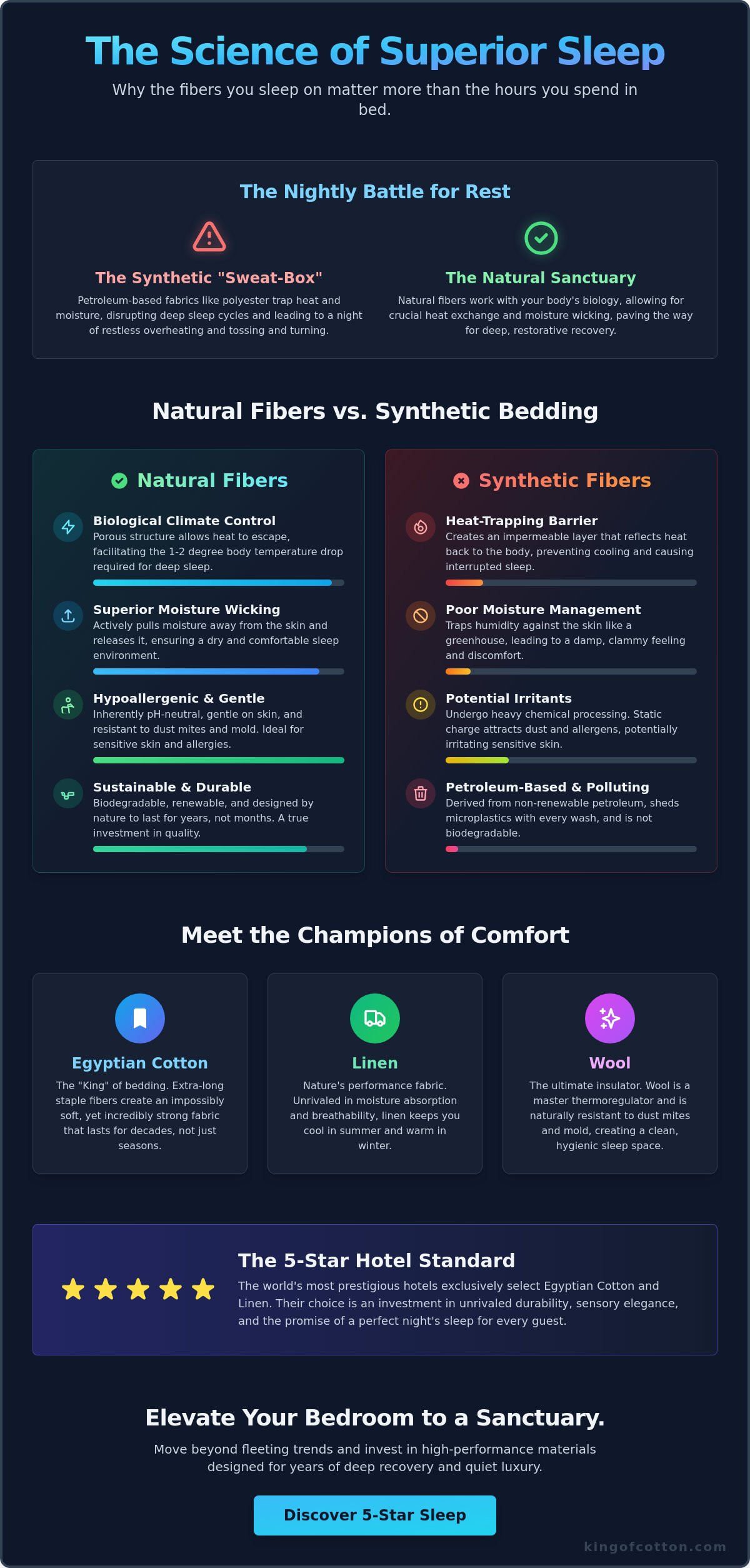
Sleep isn't just a passive state; it's an active recovery process governed by your circadian rhythm. When evaluating natural fibres vs synthetic bedding, the most critical factor is how the material interacts with your core body temperature. One of the primary triggers for deep, restorative sleep is a gradual decline in heat. When you analyze the properties of natural and synthetic fibers, you see that only natural options support this biological necessity. Synthetics, often derived from petroleum, create an impermeable barrier. This reflects heat back to the body and prevents the necessary cooling phase, which often leads to fragmented sleep patterns.
True comfort involves a delicate balance between breathability and insulation. High-quality bed linen made from natural sources excels at wicking. This is the process where moisture is pulled away from the skin and evaporated into the air. While synthetic bedding traps humidity like a greenhouse, natural materials ensure you remain dry and cool throughout the night. This sophisticated approach to sleep hygiene treats your bedding as a performance material rather than just a decorative element.
To visualize the physical differences between these materials and how they affect your rest, watch this helpful comparison:
Thermoregulation: Your Body’s Natural Nightly Reset
Your brain needs to signal a temperature drop of about one to two degrees to initiate the sleep cycle. Natural fibres like cotton and linen possess a porous structure that facilitates this vital heat exchange. In contrast, the debate of natural fibres vs synthetic bedding often highlights the "toss and turn" cycle. This occurs when polyester fabrics trap heat, causing your body to wake up in an attempt to cool down. By choosing breathable materials, you allow your body to complete its nightly reset without interruption. It's the difference between a shallow rest and the deep recovery found in professional hospitality settings.
Skin Health and Hypoallergenic Properties
Beyond temperature, the chemical composition of your sheets affects your skin's health. Natural fibres are inherently pH-neutral and gentle on the skin's barrier. This makes them the superior choice for those with eczema or high sensitivity. Synthetic alternatives often undergo heavy chemical processing and can harbor static, which attracts dust and allergens. Materials like wool and linen are naturally resistant to dust mites and mold. This provides a cleaner, more hygienic environment for your respiratory system. Investing in high-quality textiles ensures that your sanctuary remains as healthy as it is beautiful.
Exploring Natural Fibres: The Superiority of Cotton, Linen, and Wool
While the biological benefits of cooling are clear, the specific material you choose determines how that comfort feels against your skin. In the ongoing comparison of natural fibres vs synthetic bedding, three materials stand out for their heritage and performance. Cotton, linen, and wool aren't just traditional choices. They are engineered by nature to provide a level of indulgence and functionality that synthetic polymers cannot replicate. These materials offer a tactile experience that feels grounded, authentic, and undeniably premium.
Egyptian Cotton: The King of All Bedding Materials
Grown in the unique climate of the Nile Delta, Egyptian Cotton is celebrated for its extra-long staple fibres. These longer fibres allow for the creation of incredibly fine, strong yarns. This results in a fabric that is remarkably soft yet durable enough to last for decades. Many consumers mistakenly prioritize thread count above all else. However, a 400-thread-count sheet made from superior long-staple cotton will consistently outperform a 1000-thread-count sheet made from inferior, short-staple fibres that pill and fray. If you're curious about the long-term value, you can read more about Egyptian Cotton Bedding: Is It Worth The Investment? to see why it remains the gold standard for the world's finest residences.
The feel of your cotton sheets also depends on the specific weave used. Percale offers a classic, crisp feel with a matte finish. It's the perfect choice for those who prefer a cool, breathable surface that feels like a fresh hotel suite. Sateen uses a different structure to create a silky, lustrous sheen and a heavier drape. Both options provide the inherent benefits of natural breathability, unlike synthetic alternatives that often contribute to microfiber pollution from textiles.
Linen and Wool: Nature’s High-Performance Textiles
When comparing natural fibres vs synthetic bedding for specific climates, linen and wool emerge as high-performance solutions. Linen is perhaps the most durable natural fibre available. It is renowned for its unique ability to absorb up to 20% of its weight in moisture before even feeling damp. This makes it an exceptional choice for warm climates or those who tend to sleep hot. Its signature textured appearance adds a sophisticated, understated elegance to modern bedroom design.
Similarly, wool is a misunderstood masterpiece for temperature regulation. When used in duvets, wool acts as a smart insulator. It traps air to keep you warm in winter but remains highly breathable to prevent overheating in summer. These fibres work in harmony with your body rather than against it. Selecting the right foundation for your rest is an investment in your daily performance. You can explore our full range of masterfully crafted bed linen to find the perfect match for your unique sleep style.
The Synthetic Dilemma: Understanding Polyester and Microplastics
To truly appreciate the distinction between natural fibres vs synthetic bedding, one must look past the initial price tag and examine the molecular reality of the fabric. Synthetic bedding is almost exclusively composed of petroleum-based polymers, such as polyester, acrylic, and nylon. These materials are essentially extruded plastic. While they can be manufactured to feel soft to the touch in a showroom, they lack the complex biological architecture required to support human sleep. Choosing synthetics means wrapping yourself in a non-porous material that was never designed to interact with living skin.
The environmental cost is equally significant. Every time synthetic sheets are laundered, they shed thousands of microscopic plastic shards. These microplastics bypass filtration systems and enter the global water supply, contributing to a cycle of pollution that natural, biodegradable fibres simply do not create. When you invest in high-quality textiles, you aren't just choosing personal comfort; you're opting out of a cycle of environmental degradation that is becoming increasingly difficult to ignore.
Why Synthetics Lead to Night Sweats
The "sweat-box" effect is a frequent complaint among those using polyester sheets. This occurs because synthetic fibres lack a pore structure. Unlike the natural capillary action of cotton, which draws moisture into the centre of the fibre to keep the skin dry, plastic fibres are hydrophobic. They repel water. This forces perspiration to sit on the surface of the fabric, creating a clammy, humid microclimate between your body and the duvet. This trapped humidity prevents the skin from breathing, often leading to mid-night awakenings and a general sense of physical unease.
Durability vs. Degradation: The Long-Term Cost
Many consumers fall into the trap of the "False Economy." A synthetic sheet set might be inexpensive today, but its lifespan is remarkably short. Polyester fibres are prone to pilling, a process where the weak plastic threads break and entangle into uncomfortable "bobbles" on the surface. Once pilling begins, the fabric becomes abrasive and loses its aesthetic appeal. While a synthetic set may need replacing every 12 to 24 months, a refined investment in Luxury Bedding Collections crafted from long-staple cotton can easily exceed a decade of use.
When you calculate the cost-per-sleep, the argument for natural materials becomes undeniable. A set of high-performance natural sheets maintains its integrity, softness, and breathability through hundreds of industrial-grade wash cycles. This durability is why the world's most prestigious hotels never compromise on material quality. They understand that true value is found in longevity and the consistent delivery of a 5-star experience, night after night.
Natural vs Synthetic Bedding: A Practical Comparison for Every Sleeper
Selecting the right materials for your bedroom is a personal decision that directly impacts your health and daily performance. When we look at natural fibres vs synthetic bedding side-by-side, the performance gap is undeniable. The following comparison highlights how these materials function in a real-world environment, focusing on the factors that dictate your comfort.
| Feature | Natural Fibres | Synthetic Bedding |
|---|---|---|
| Breathability | Exceptional airflow and moisture wicking. | Non-porous; traps heat and humidity. |
| Softness | Improves and settles with every wash. | Can feel "plastic" or develop pilling. |
| Durability | High; often lasts 10 years or more. | Low; typically thins out in 1 to 2 years. |
| Eco-Impact | Renewable and fully biodegradable. | Releases microplastics into the water. |
While some manufacturers offer "easy-care" blends of cotton and polyester, we advise caution. These mixes might reduce wrinkling, but they compromise the breathability of the natural fibre. You're essentially diluting the benefits of cotton with the heat-trapping properties of plastic. For those who value a 5-star experience, pure natural materials are the only way to ensure your body isn't fighting against its own environment. The choice between natural fibres vs synthetic bedding is ultimately a choice between short-term savings and long-term vitality.
The Hot Sleeper’s Toolkit
If you find yourself waking up throughout the night due to heat, your fabric choice is your most powerful tool. Opt for a crisp Cotton Percale or Linen. These weaves allow for maximum airflow, preventing heat from building up around your body. It's a common mistake to think higher thread counts are always better; for hot sleepers, a lower thread count in a high-quality long-staple cotton is often more breathable. Don't forget the base layer. A cotton mattress protector is essential for ensuring heat doesn't get trapped in the mattress itself.
The Cold Sleeper’s Sanctuary
For those who struggle to stay warm, the goal is insulation without the "sweat-box" effect. Cotton Sateen is your ideal partner. Its denser weave and four-over-one structure create a heavier, silk-like feel that retains more warmth than percale. Pair your sheets with a high-tog wool or down duvet to create a cocoon of natural warmth. You can also layer your bed with runners and throws. This provides modular warmth that you can adjust throughout the night without sacrificing the luxury of natural materials.
Debunking the Maintenance Myth
There's a persistent myth that natural fibres are difficult to maintain. In reality, high-quality cotton and linen are incredibly resilient. They don't require delicate handling; they simply need the right environment. Avoid excessive heat and harsh chemicals that strip the natural oils from the fibres. With basic care, your natural bedding will actually become softer and more inviting with every wash. It's an investment that pays dividends in comfort for years to come. Upgrade your sleep foundation today by exploring our complete collection of luxury bedding.
Investing in Excellence: Bringing 5-Star Hotel Quality to Your Home
The reason you often experience your best night's sleep in a luxury hotel isn't merely the absence of daily stress. It's the rigorous standard of the textiles. In the professional hospitality sector, the debate of natural fibres vs synthetic bedding was settled decades ago. Prestigious hotels exclusively utilize high-grade natural materials because they are the only fibres capable of balancing extreme guest comfort with industrial-level durability. While a synthetic sheet might survive a few domestic washes, it would quickly fail under the demanding conditions of a 5-star laundry cycle.
We bring this same uncompromising mastery to your home. Our heritage is rooted in supplying the world's most discerning residential and commercial sectors globally. This means the linens you choose for your own bedroom have been engineered to meet international standards of excellence. Every thread is selected for its ability to maintain its structural integrity and sensory appeal through hundreds of washes. This level of craftsmanship ensures that your investment in natural fibres vs synthetic bedding results in a sleep environment that actually improves over time.
Professional hospitality standards prioritize four key performance metrics that synthetics simply cannot meet:
- Superior Moisture Management: Ensuring every guest stays dry and cool regardless of the season.
- High Tensile Strength: The ability to withstand high-temperature industrial laundering without thinning.
- Pilling Resistance: Maintaining a smooth, luxurious surface that never develops uncomfortable bobbles.
- Aesthetic Longevity: Natural cotton stays bright and crisp, whereas polyester tends to grey and trap odours.
The King of Cotton Standard
Our commitment to quality begins with ethically sourced, premium raw materials. We don't just sell bed linen; we provide a refined lifestyle upgrade. The expertise we've gained as leading Corporate & Hotel Supplies specialists is woven into every product we offer. This professional pedigree ensures that our retail collections possess the same weight, finish, and longevity as the linens found in the world's finest suites. For those who wish to experience this tactile superiority firsthand, we invite you to visit our London stores to feel the difference that genuine quality makes.
Simple Steps to Your Bedroom Upgrade
You don't need to overcomplicate your journey toward better sleep. If you aren't ready for a total room refresh, start with a high-quality set of pillowcases or a single flat sheet. These small changes allow you to experience the immediate cooling and softening benefits of premium cotton. We've made the process of transformation effortless. With reliable UK delivery, you can begin your transition to a more sophisticated sleep sanctuary within days. It's time to stop settling for the "sweat-box" of synthetics and embrace the restorative power of nature. Explore our full range of luxury bed linen and invest in the quality of your rest today.
Transform Your Sleep Into a Five-Star Experience
Your bedroom should be more than just a place to end the day; it should be a sanctuary designed for recovery and indulgence. The choice of natural fibres vs synthetic bedding is the most significant factor in achieving the deep, temperature-regulated rest your body requires. By prioritizing breathable, high-performance materials like Egyptian cotton and linen, you're investing in a foundation that supports your biology and respects the environment. These textiles don't just feel better; they last longer and provide a level of comfort that petroleum-based synthetics simply can't replicate.
With over 30 years of textile heritage, we remain dedicated to the mastery of material. Our expertly crafted Egyptian cotton and linen collections are the result of decades of experience as trusted suppliers to the world's most prestigious hotels. We invite you to bring that same level of international excellence into your own home. It's time to move beyond temporary solutions and embrace the lasting luxury of nature's finest materials. Discover the world's finest natural bed linen at King of Cotton and begin your journey toward a more refined, restorative nightly ritual.
Frequently Asked Questions
Are natural fibres better for night sweats than synthetic ones?
Yes, natural fibres are significantly more effective at managing night sweats due to their inherent porous structure. While synthetic materials trap moisture against the skin, natural textiles use capillary action to pull humidity away from the body and evaporate it into the air. This ensures you remain dry and comfortable throughout the night, preventing the clammy, humid microclimate often created by polyester fabrics.
Is 100% cotton better than a polyester-cotton blend?
Pure 100% cotton is the superior choice for anyone prioritizing sleep quality and skin health. When evaluating natural fibres vs synthetic bedding, blends are often marketed as "easy-care," but they introduce heat-trapping plastic into your sleep environment. Pure cotton offers unmatched breathability and a softness that actually improves with every wash, whereas blends tend to pill and lose their structural integrity much faster.
Why is natural bedding more expensive than synthetic?
The higher price reflects the superior quality of the raw materials and the artisanal craftsmanship involved in their production. Growing premium cotton or flax requires significantly more time and care than extruding plastic polymers in a factory. However, natural materials represent a better long-term investment. They offer a lower cost-per-sleep because they last for a decade or more, while cheaper synthetic options require frequent replacement.
Does natural bedding require special care or ironing?
Natural bedding is remarkably resilient and only requires standard laundering at moderate temperatures. While many prefer the crisp, ironed look of a 5-star hotel suite, it isn't a requirement for physical comfort. High-quality cotton and linen fibres naturally settle and soften after a few wash cycles. Avoiding harsh chemicals and excessive tumble drying will preserve the material's integrity and luxurious feel for many years.
Which natural fibre is the most durable for long-term use?
Linen is widely considered the most durable natural fibre, known to last for decades when cared for correctly. Extra-long staple Egyptian cotton is also exceptionally strong due to the length of its individual fibres, which prevents fraying and pilling. Both materials are engineered by nature to withstand the rigours of frequent use while maintaining their elegant appearance and professional-grade structural strength.
Can people with allergies use natural bedding?
Yes, natural materials are often the preferred choice for allergy sufferers and those with sensitive skin. Fibres like wool and linen are naturally resistant to dust mites, mould, and mildew. Because they are pH-neutral and free from the static charge found in synthetics, they don't attract the same volume of environmental allergens, ensuring a cleaner and more hygienic sleep sanctuary for your home.
What is the best natural fibre for a 'cool' feel in summer?
Linen and cotton percale are the gold standards for achieving a cool, fresh sensation during the summer months. Linen can absorb up to 20% of its weight in moisture before feeling damp, while the "one-over-one" weave of percale allows for maximum airflow. These materials are essential for maintaining the body's natural nightly cooling cycle and preventing restlessness during warmer temperatures.
How often should I replace my natural fibre bed sheets?
You should expect high-quality natural sheets to last between 10 and 15 years with proper care. This is a stark contrast in the natural fibres vs synthetic bedding debate, as polyester sheets often lose their softness and begin pilling within 18 months. When the fabric begins to thin significantly or no longer feels smooth against your skin, it's time to invest in a new set of premium linens.