

Cotton vs Polyester: The Definitive Guide to Choosing the Right Fabric
Choosing the perfect linens for your home is the first step towards creating a true haven of comfort and elegance. Yet, it’s easy to feel lost in the details. Why do some sheets feel blissfully soft and breathable, while others leave you feeling restless and overheated? The answer often lies in the enduring debate of cotton vs polyester. If you’ve ever felt confused by fabric blends or worried about investing in bedding that won’t deliver a rejuvenating night's sleep, you are in the right place.
As specialists in the world's finest fabrics, we believe this choice should be simple and satisfying. This definitive guide will unravel the key differences between these two textile giants, comparing everything from luxurious comfort and breathability to long-term durability and ease of care. Prepare to move beyond the marketing hype and gain the confidence to select the superior material for your bed linen and towels, ensuring every night is a five-star experience.
Key Takeaways
- Grasp the fundamental differences in comfort, durability, and maintenance to confidently select the ideal fabric for your home.
- The debate of cotton vs polyester ultimately comes down to key factors like breathability for comfort and fibre strength for longevity.
- Discover why one material overwhelmingly provides the superior softness and air circulation essential for a rejuvenating night's sleep.
- Learn which fabric offers the ultimate absorbency, a critical quality when selecting the finest towels and bathrobes.
What is Cotton? The Natural Standard for Comfort
For centuries, cotton has been the undisputed standard for luxurious home textiles. This remarkable natural fibre, harvested from the soft, fluffy bolls of the cotton plant, has built an enduring reputation for its unparalleled softness, breathability, and pure comfort. It is the classic choice for those seeking to create a haven of elegance and rejuvenation in their home, with premium varieties like Egyptian and Pima cotton representing the pinnacle of quality and refinement.
To visually explore the core differences between these two popular fabrics, this video offers a helpful overview:
In the essential cotton vs polyester debate, understanding the origin of each material is key. While cotton is a gift from nature, its main rival is a synthetic creation. To fully grasp the comparison, it's useful to first ask what is polyester and how its man-made structure differs from the organic composition of cotton. This fundamental difference is what dictates the unique feel and performance of each fabric.
Origins and Key Characteristics
Derived directly from the protective case around the seeds of the cotton plant, cotton fibres are almost pure cellulose. This natural composition gives the fabric its most beloved characteristics, making it a superior choice for items that touch your skin. Its primary traits include:
- Softness: Naturally soft and gentle, providing a smooth, comforting feel.
- Breathability: The fibres allow air to circulate freely, preventing overheating.
- Absorbency: Cotton can hold a significant amount of water, wicking moisture away from the body.
- Hypoallergenic: It is rarely the cause of skin irritation or allergies, making it ideal for sensitive skin.
Why Cotton is Prized in Bedding and Towels
These inherent qualities make cotton the ultimate material for bedding and towels. Its exceptional ability to absorb moisture helps keep you dry and comfortable throughout the night, while its breathability is crucial for regulating body temperature for a deeper, more restorative sleep. Furthermore, high-quality cotton possesses the unique benefit of becoming even softer and more inviting with each wash. It is, without question, the perfect material for every piece in a premium bedroom collection, from the crispest sheets to the plushest duvet covers.
What is Polyester? The Synthetic Performance Fibre
Where cotton is a celebrated natural fibre cultivated from the earth, polyester is its engineered counterpart-an entirely man-made, synthetic polymer. First developed in the 20th century, it revolutionised the textile industry, offering a highly durable and cost-effective alternative to traditional materials. It is a fabric born from science, designed specifically for performance, longevity, and ease of maintenance.
While it may not possess the inherent softness and superior breathability of the finest cottons, polyester's primary benefits are undeniable. It offers exceptional resilience against wear and tear, steadfastly resists wrinkles, and is remarkably simple to care for. In the enduring cotton vs polyester discussion, these attributes position polyester as a pragmatic choice, often favoured for applications where functionality is the ultimate priority over luxurious comfort.
Production and Core Properties
Polyester is derived from petroleum, a fossil fuel, through a complex chemical process that creates long, stable polymer chains. This industrial origin results in fibres that are fundamentally different from natural materials. They are inherently strong and hydrophobic, meaning they repel water rather than absorbing it. This unique molecular structure gives polyester its signature properties:
- Exceptional Durability: The strong fibres resist abrasion, ensuring the fabric maintains its integrity and shape through extensive use and washing.
- Crease and Shrink Resistance: Polyester's stability means it is not prone to the stretching, shrinking, or wrinkling common in many natural fibres.
- Moisture-Wicking Performance: Its hydrophobic nature allows it to pull moisture away from the skin to the fabric's surface, where it can evaporate quickly.
Common Applications for Polyester
The performance-driven qualities of polyester make it the premier fabric for modern sportswear and activewear, where its moisture-wicking capabilities are essential for comfort. Within the home, its impressive stain resistance and robust nature make it ideal for high-traffic items like upholstery, curtains, and carpets. Crucially, it is also frequently blended with cotton to create "polycotton" textiles, a hybrid designed to lend polyester's durability and wrinkle-free convenience to the softer feel of cotton.
Cotton vs. Polyester: A Head-to-Head Comparison
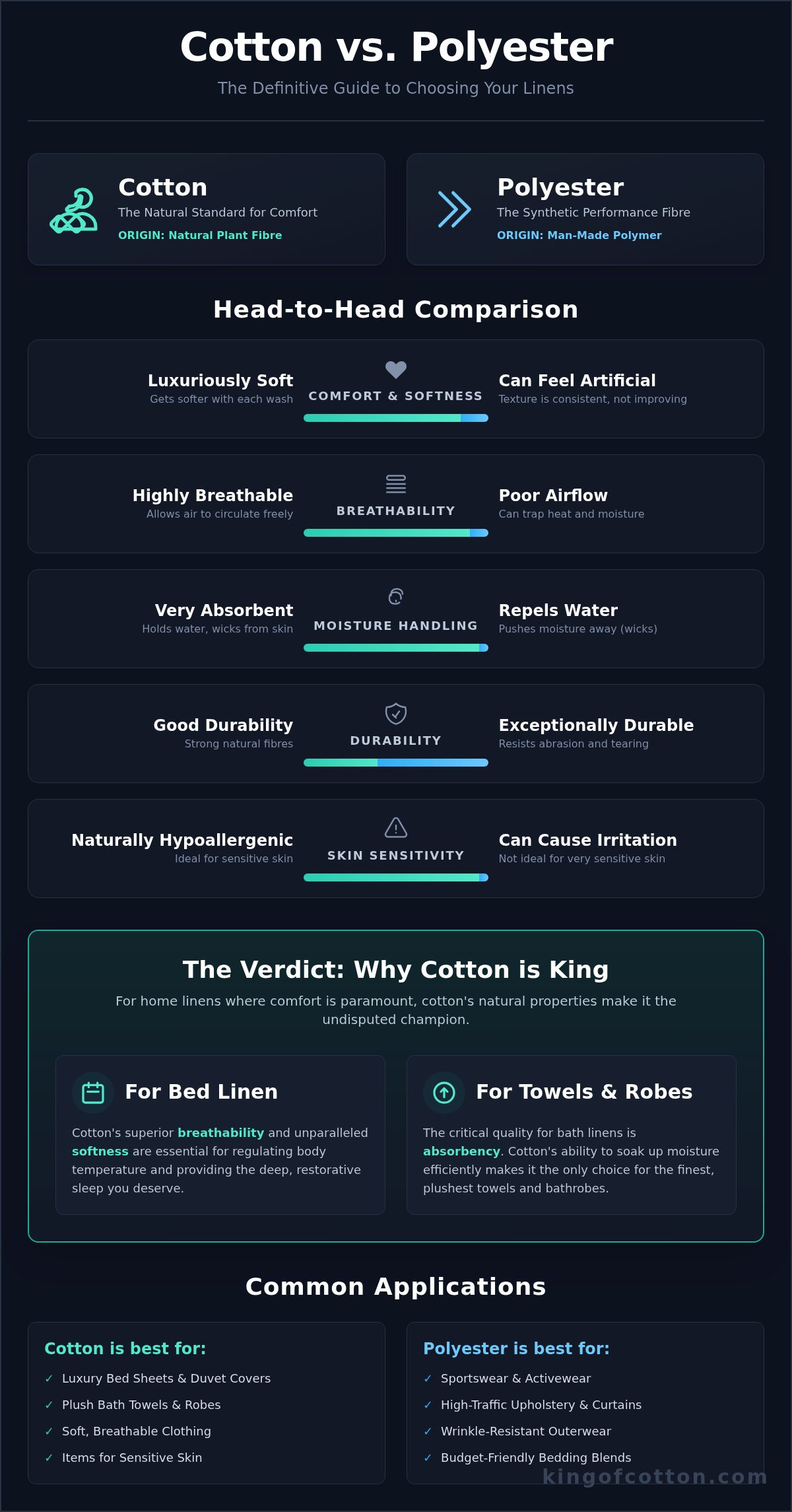
To make a truly informed decision in the cotton vs polyester debate, it is essential to compare their core qualities side-by-side. While personal preference plays a role, these objective differences in performance, feel, and sustainability will guide you towards the perfect bed linen for your home. This breakdown explores the key attributes that define each fabric.
| Attribute | Cotton | Polyester |
|---|---|---|
| Feel & Comfort | Naturally soft, crisp, and breathable. | Can feel slick, smooth, or slightly plasticky. |
| Breathability | Excellent; allows for superior air circulation. | Poor; traps heat and moisture. |
| Durability | Very durable, especially long-staple varieties. | Extremely durable and resistant to pilling. |
| Care Routine | Prone to wrinkling; can shrink if washed too hot. | Wrinkle-resistant and dries very quickly. |
| Sustainability | Biodegradable. Organic options are highly sustainable. | Not biodegradable; derived from fossil fuels. |
Feel, Comfort & Breathability
The tactile experience is paramount for a rejuvenating sleep. As a natural fibre, cotton is inherently soft and exceptionally breathable. It allows air to circulate freely around your body, wicking away moisture to ensure you remain cool and comfortable throughout the night. In contrast, polyester’s synthetic fibres do not breathe. This can trap heat and sweat against your skin, often leading to a clammy, restless feeling, especially for those who tend to sleep warm.
Durability & Longevity
Polyester is renowned for its resilience. The synthetic fibres are incredibly strong, resisting abrasion, stretching, and pilling far better than many other fabrics. High-quality cotton is also very durable, particularly long-staple varieties woven into tight percale or sateen. While robust, a notable drawback of polyester is its oleophilic nature, meaning it attracts and holds onto oils, which can make stains difficult to remove completely over time.
Care & Maintenance
For sheer convenience, polyester has a clear advantage. It is naturally wrinkle-resistant, dries in a fraction of the time as cotton, and rarely needs ironing to look smooth. Cotton is more susceptible to wrinkling after washing and can shrink if not cared for properly. However, following the care instructions for premium cotton linen is a simple task that preserves its luxurious softness and elegant appearance for years to come.
Environmental Impact & Sustainability
The origins of these fabrics are vastly different. Cotton is a plant-based, renewable resource that is fully biodegradable. For the most eco-conscious choice, organic cotton is grown without harmful pesticides and with more sustainable water management practices. Polyester, on the other hand, is a plastic derived from petroleum-a non-renewable fossil fuel. It is not biodegradable and releases microplastics into waterways with every wash, contributing to long-term pollution.
The Verdict for Bed Linen: Why Cotton is King
While polyester offers durability and a lower price point, when it comes to the intimate and essential experience of sleep, the choice is unequivocally clear. For a truly restorative night, the debate of cotton vs polyester ends with cotton’s natural superiority. Investing in your bed linen is an investment in your well-being, and 100% cotton is the only material that delivers the premium comfort your body needs to rest and rejuvenate.
The Science of Sleep Comfort
A good night's sleep is intrinsically linked to temperature regulation. Your body needs to cool down to initiate and maintain deep sleep, and your choice of bedding plays a crucial role. Cotton’s natural fibres are inherently breathable, allowing air to circulate freely and dissipate excess body heat. Furthermore, cotton is highly absorbent, wicking moisture away from your skin to prevent the clammy, uncomfortable feeling that synthetic materials like polyester can cause. This combination of breathability and moisture management makes cotton the scientifically superior choice for creating a stable and comfortable sleep environment.
The Hotel Standard of Luxury
As suppliers to the finest hotels in the world, we know the non-negotiable standard for luxury and guest satisfaction: 100% high-quality cotton. The crisp, cool, and inviting sensation you experience when slipping into a five-star hotel bed is a feeling that polyester simply cannot replicate. This choice is deliberate. Hoteliers invest in premium cotton for its unparalleled guest comfort, its elegant feel, and its long-term durability to withstand professional laundering. They understand that a perfect night’s sleep is the ultimate luxury, and it begins with the finest materials touching your skin. You can bring that same standard of excellence into your own home.
Explore our hotel-quality bed linen collections and experience the difference for yourself.
Choosing Fabrics for Your Bathroom: Towels & Robes
The principles of quality and comfort we've discussed for bed linen extend naturally to the bathroom, your personal sanctuary. However, the primary function shifts from breathability to absorbency, making the choice of fabric even more critical. When creating a spa-like experience at home, the textiles you choose to touch your skin after a warm bath or shower make all the difference in transforming a routine into a ritual.
Absorbency: The Most Critical Factor
This is where the debate of cotton vs polyester becomes decisively one-sided. Cotton is a naturally hydrophilic fibre, meaning it loves water. A high-quality cotton towel can absorb many times its own weight in moisture, efficiently wicking it away from your skin to leave you feeling dry and comfortable. In contrast, polyester is hydrophobic; it actively repels water. A polyester towel will merely push moisture around your body, leaving you feeling damp and clammy. For a product whose primary purpose is to dry you effectively, 100% cotton is the only truly functional and luxurious choice.
Softness and Luxury After a Bath
Beyond pure function lies the experience. There is little that compares to the indulgent feeling of enveloping yourself in a thick, plush cotton towel or a heavy waffle robe after a bath. The natural fibres offer a superior softness and a comforting weight that synthetic materials simply cannot replicate. The gentle texture is kind to your skin, while the high absorbency ensures you feel warm and dry almost instantly. Polyester, with its slick and non-absorbent feel, fails to provide this essential element of post-bathing comfort.
The verdict for bathroom textiles is clear. For unparalleled performance, supreme comfort, and the five-star hotel feeling in your own home, cotton is the undisputed champion. Elevate your daily routine from a necessity to a moment of pure rejuvenation. Browse our luxurious cotton bathroom essentials and feel the difference for yourself.
Cotton vs Polyester: The Verdict for a Luxurious Home
The enduring cotton vs polyester debate ultimately comes down to purpose. While polyester’s synthetic resilience has its place, for the intimate spaces of your home-the bedroom and bathroom-the choice is unequivocally clear. The natural breathability, superior softness, and timeless absorbency of cotton make it the undisputed champion for creating a sanctuary of genuine comfort and rejuvenation.
At King of Cotton, we have championed this belief for over 25 years. As specialists in fine Egyptian Cotton and proud suppliers to the finest homes and hotels, our commitment to quality is unwavering-a promise reflected in our 'Excellent' rating on Trustpilot. We invite you to experience the tangible difference that premium, natural fibres can make in your daily life.
Discover the unparalleled comfort of our finest cotton bed linen.
Invest in your comfort and transform your home into the haven you deserve.
Frequently Asked Questions
Is 100% cotton better than polyester for sheets?
For ultimate comfort and a luxurious sleep experience, 100% cotton is widely considered the superior choice. As a natural fibre, cotton is exceptionally breathable, soft, and absorbent, which helps regulate body temperature for a rejuvenating rest. While polyester offers durability and wrinkle resistance, it cannot match the premium, natural feel and superior comfort provided by high-quality cottons like Egyptian or Pima, which are the hallmark of five-star hotel bedding.
Do polyester sheets make you sweat at night?
Yes, polyester sheets can often lead to a warmer, less comfortable sleep. Because polyester is a synthetic, non-breathable plastic-based fibre, it tends to trap heat and moisture against your skin rather than wicking it away. This can result in night sweats and a clammy feeling. For those who tend to sleep warm, breathable natural fibres like cotton are a far more suitable choice to ensure a cool and dry night's rest.
Is a cotton-polyester blend a good compromise for bedding?
A cotton-polyester blend can be a practical choice for certain needs, offering a balance of features. It combines some of the softness and comfort of cotton with the durability, wrinkle resistance, and lower price point of polyester. This makes polycotton blends a popular option for busy households, children's bedding, or those on a strict budget. However, for those prioritising breathability and a truly luxurious feel, 100% cotton remains the unparalleled option.
How can you tell the difference between cotton and polyester fabric by touch?
You can often distinguish the two materials by their distinct feel. Pure cotton has a soft, natural, and slightly matte texture that feels breathable and cool against the skin. In contrast, polyester often feels smoother, silkier, and has a subtle sheen. It can feel less breathable and may even have a slightly plastic-like or slippery texture. High-quality cotton will feel substantial yet gentle, while polyester’s texture is more uniform and synthetic.
Which is more environmentally friendly, cotton or polyester?
The environmental debate of cotton vs polyester is complex. Conventional cotton farming requires significant water and pesticide use, though organic cotton offers a much more sustainable alternative. As a natural fibre, cotton is biodegradable. Polyester is derived from petroleum, a non-renewable resource, and is not biodegradable. However, it requires less water to produce and can be made from recycled plastics, reducing its initial footprint. Choosing organic cotton is often the most eco-conscious choice for natural bedding.
Why is polyester so much cheaper than high-quality cotton?
The price difference stems from the raw materials and production process. Polyester is a synthetic polymer mass-produced through a relatively inexpensive chemical process. In contrast, high-quality cotton, such as Egyptian cotton, is a natural crop that demands specific climates, extensive agricultural labour, and a careful harvesting and weaving process to produce its signature long-staple fibres. This intensive process and superior quality are reflected in its higher price, often starting from £50 and upwards for a premium set.