

Best Cotton for Bed Sheets: An Expert Guide to 5-Star Luxury
Why does that expensive set of linens you bought last month already feel like sandpaper against your skin? It is a common frustration to invest in what you believe is premium bedding, only to wake up clammy or find the fabric pilling after just three washes. You likely bought into the myth that a higher number always equals better quality, but the truth is that many 1,000-thread count sets are actually less durable than a well-crafted 300-thread count alternative.
We agree that your bedroom should be a haven of elegance and comfort, not a source of nighttime overheating. This guide reveals the best cotton for bed sheets based on our 25 years of experience as suppliers to the world's finest homes and hotels. You'll discover how to identify investment-grade materials that provide that elusive crisp and cool hotel feel every single night.
We will compare the breathability of percale against the silkiness of sateen and explain why long-staple Egyptian fibres are the gold standard for longevity. By the end, you'll have total clarity on the technical specifications required to transform your sleep into a true five-star experience.
Key Takeaways
- Learn why extra-long staple (ELS) fibres are the essential foundation for enduring softness and why they remain the industry gold standard for luxury.
- Understand the hierarchy of premium varieties, from Giza to Egyptian cotton, to ensure you are investing in the world’s most prestigious materials.
- Debunk the common thread count myth and discover how choosing between crisp percale and silky sateen weaves determines your ultimate tactile experience.
- Use our expert framework to identify the best cotton for bed sheets based on your personal sleep style and seasonal temperature preferences.
- Discover how to replicate a five-star hotel experience at home by applying professional hospitality standards and expertise to your own linen collection.
Understanding the Foundations: Why Fibre Length is the True Mark of Quality
Selecting the best cotton for bed sheets isn't just about the initial feel in a showroom. It's about how the material performs after fifty washes and years of use. The foundation of this performance is "staple length," the industry term for the length of the individual cotton fibres. Longer fibres are the primary driver of softness and strength in premium textiles. When fibres are longer, they create a more uniform surface that resists the wear and tear of daily life.
Different Cotton species, such as the Gossypium barbadense variety, produce the extra-long staples required for high-end manufacturing. Luxury hotels consistently choose these materials because they need a balance of extreme comfort and industrial-grade durability. With over 25 years of experience supplying the world's finest establishments, we've seen how fibre quality dictates the entire guest experience.
To better understand how these materials translate into a great night's sleep, watch this helpful video:
Short Staple vs. Long Staple Cotton
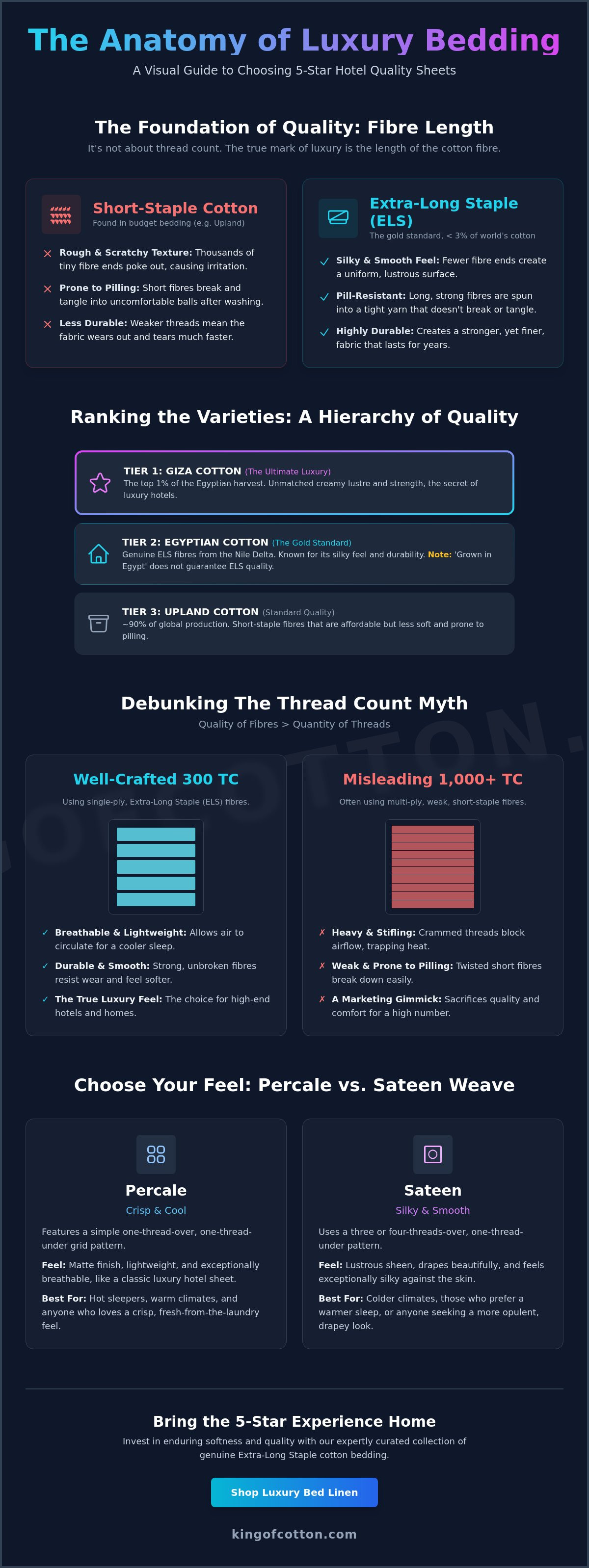
Short-staple cotton is the standard for budget bedding found in many high-street shops. It's cheaper to produce but results in a rougher texture. These short fibres have thousands of tiny ends that poke out of the weave, which causes the fabric to fray or feel scratchy against the skin. Long-staple cotton creates a much smoother, stronger yarn with far fewer exposed ends. Extra-Long Staple (ELS) cotton is even more exclusive, representing less than 3% of all cotton grown worldwide. This rarity makes it the gold standard for our luxurious bed linen collections, providing a level of softness that short-staple alternatives can't match.
The Science of Smoothness
The physics of cotton spinning is simple: longer fibres allow for finer spinning without sacrificing the integrity of the thread. This results in a fabric that is both thinner and stronger. Pilling is the result of short fibres breaking and tangling into small, uncomfortable balls on the fabric surface. By using long-staple varieties, you effectively eliminate the root cause of pilling. The tactile difference is immediate. Long-staple cotton feels silkier to the touch even before its first wash. It possesses a natural lustre that stays vibrant through years of laundering. This is why the best cotton for bed sheets always starts with the length of the fibre rather than the complexity of the weave.
Ranking the Varieties: From Egyptian to Giza Cotton
Choosing the best cotton for bed sheets requires understanding the hierarchy of fibre length. Most high-street retailers sell Upland cotton, which accounts for roughly 90% of global production. While affordable, Upland cotton has short fibres that can feel rough and pill after just a few washes. For true five-star comfort, you need Extra-Long Staple (ELS) varieties. These fibres are significantly longer and stronger, allowing for a finer, smoother weave that lasts for decades rather than months.
Egyptian Cotton: The Gold Standard
The Nile Delta provides a unique microclimate that produces the world's most famous ELS cotton. The constant humidity and nutrient-rich soil result in fibres that are exceptionally fine yet incredibly durable. However, shoppers should be wary of marketing traps. A "grown in Egypt" label doesn't guarantee quality; it only refers to the geographic location. Authentic Egyptian cotton must be ELS grade to provide that signature silky feel. You can learn more about identifying genuine quality in our guide: Egyptian Cotton Bedding: Is It Worth The Investment?
Giza Cotton: The Ultimate Luxury
Giza cotton represents the top 1% of the Egyptian harvest. Grades like Giza 45 and Giza 87 are the rarest in the world and serve as the secret weapon for the luxury hospitality sector. Giza fibres possess a unique "creamy" lustre and a tensile strength that ensures sheets remain pristine after hundreds of industrial launderings. It’s the primary choice for our most prestigious luxury bedding collections, offering a level of softness that standard cotton simply can't match.
Pima and Supima Cotton
Pima is the American and Peruvian answer to Egyptian luxury. While it shares the ELS characteristics, it often feels slightly softer and more "plush" compared to the traditional crispness of Egyptian varieties. If you see the "Supima" trademark, it means the cotton has been strictly verified for its cotton fiber quality and origin. This gives you peace of mind that you aren't buying a low-grade blend disguised as premium material.
Check labels carefully before making a purchase. A "100% Cotton" tag is better than a synthetic blend, but it doesn't tell the whole story. You should always look for the specific variety to ensure you're getting the best cotton for bed sheets. If you're looking to upgrade your sleep experience, exploring our full range of products is a great place to start.
- Upland Cotton: Common, short-staple, prone to pilling.
- Pima/Supima: High-quality, long-staple, very soft.
- Egyptian Cotton: The luxury standard, durable and crisp.
- Giza Cotton: The elite tier, rarest fibres, incredible lustre.
The Weave Factor: Percale vs. Sateen and the Thread Count Myth
Selecting the best cotton for bed sheets requires looking beyond the raw material itself. While the quality of the fibre is vital, the weave determines the physical sensation and performance of the fabric. The way threads interlace dictates whether your bedding feels crisp and cool or heavy and silky. Understanding these technical structures allows you to tailor your sleep environment to your personal temperature preferences and tactile desires.
Percale: The Crisp Hotel Experience
Percale employs a classic "one-under, one-over" weave structure. This balanced construction creates a durable, matte finish that's famously breathable. It's the primary choice for 5-star hotels in warmer climates because it allows air to circulate, preventing heat from becoming trapped. High-quality Percale is easily identified by the "snap" test; when you flick the fabric, it should produce a sharp, audible sound. This indicates a tight, precise weave that will remain cool against the skin throughout the night. For those seeking the best cotton for bed sheets with a fresh, laundered feel, Percale is the industry standard.
Sateen: The Lustrous, Silky Alternative
Sateen is crafted using a "four-over, one-under" pattern. By floating more yarn on the surface, this weave produces a lustrous sheen and a signature silky touch. Because more of the cotton fibre is exposed, Sateen feels naturally heavier and warmer than Percale. This makes it an excellent choice for the UK's colder months. While it offers immediate softness, the exposed threads mean Sateen can pill more easily if the cotton quality isn't premium. It's a weave designed for those who prioritise a draped, liquid-like feel over a structured, crisp one.
Busting the Thread Count Myth
The most persistent misconception in the bedding industry is that a higher thread count automatically signifies better quality. In reality, manufacturers often use "multi-ply" yarns to artificially inflate these numbers. They twist three or four thin, inferior fibres together and count them individually. This results in a heavy, scratchy sheet that lacks breathability.
- Single-Ply Excellence: A 300 to 400 thread count sheet made from single-ply, long-staple cotton is superior to a 1,000 thread count multi-ply alternative.
- Durability: Higher thread counts often lead to a denser fabric that traps sweat, whereas a moderate count with high-quality yarn ensures longevity.
- The Reality: Thread count is a measure of density, not a guarantee of quality.
When searching for the best cotton for bed sheets, focus on the "staple" length of the cotton and the integrity of the weave rather than chasing four-digit numbers. A well-constructed 400TC Egyptian Cotton sheet provides the perfect balance of softness, strength, and airflow that multi-ply "luxury" brands cannot replicate.
A Selection Guide: Matching Cotton to Your Sleep Style
Selecting the best cotton for bed sheets isn't just about aesthetics; it's a practical decision based on your body's physiology and the British climate. Your bedding acts as a microclimate for your skin. If you choose the wrong weave or weight, you risk disrupting your sleep cycle through overheating or chill. A smart approach involves rotating your linen with the seasons to ensure year-round comfort. For a deeper look at high-end options, you can browse our collection of premium bed linen to find your perfect match.
The Hot Sleeper’s Checklist
If you often wake up feeling overheated, breathability is your priority. A 200 to 400 thread count Percale is widely considered the best cotton for bed sheets for those who run hot. The tight, one-over-one-under weave allows air to flow freely, preventing heat from becoming trapped against your body. It's vital to stick to 100% natural cotton. Synthetic blends often act like a non-porous layer, which leads to night sweats and discomfort. Pure cotton naturally wicks moisture away, keeping you dry and cool until morning.
The Luxury Seeker’s Profile
For those who desire the weight and sheen of a five-star hotel suite, Giza or high-grade Egyptian Sateen is the definitive choice. These fabrics use a four-over-one weave pattern that creates a silky, lustrous surface and a heavier, more indulgent drape. A 600 to 800 thread count provides a substantial sensation that feels incredibly smooth against the skin. To complete this high-end experience, many homeowners pair their sateen sheets with luxury pillows and duvets to create a cohesive, opulent sleep environment that encourages total relaxation.
Low Maintenance vs. High Performance
UK winters require a different strategy to stay warm without relying solely on heavy heating. Brushed cotton, often called flannelette, is the ideal solution. The fabric's surface is gently agitated to raise the fibres, creating a soft, fuzzy texture that traps air and provides instant warmth. If your priority is a crisp look with minimal effort, high-quality polycotton blends offer excellent "easy-iron" properties. However, for those who value longevity, hotel-grade 100% cotton is designed to withstand 60-degree washes and frequent high-temperature laundering while maintaining its structural integrity over hundreds of cycles.
Ready to upgrade your bedroom with professional-grade materials? View our full range of luxury cotton sheets
The King of Cotton Standard: Bringing the Hotel Home
King of Cotton isn't just another household brand. We've spent more than 25 years perfecting the art of textile manufacturing for the global hospitality sector. This mastery allows us to bring professional-grade materials directly to your home. When you search for the best cotton for bed sheets, you're really looking for the intersection of durability and indulgence. Our "Exceptional Quality Guarantee" is our pledge that every product we sell meets the stringent requirements of five-star establishments. It means your investment is protected by decades of technical expertise and a commitment to sourcing only the finest long-staple fibres.
Supplier to the World’s Finest Hotels
Our heritage lies in supplying high-use, high-luxury environments where linen must perform under pressure. Professional-grade finishing is what sets our collections apart from standard high-street retail options. While typical bedding might feel soft in the shop, it often loses its structure after a few washes. Our cotton is engineered to withstand industrial laundering processes while becoming softer with every use. You can explore the technical requirements of these premium environments in our Hotel Linen Suppliers Guide. We apply these same rigorous standards to every duvet cover and pillowcase we produce for the domestic market.
Your Journey to a Better Night’s Sleep
Choosing the best cotton for bed sheets is the first step toward a transformative sleep experience. High-quality cotton, particularly our Egyptian and Giza varieties, is a genuine lifetime investment. With the right care, such as washing at 40°C and avoiding harsh bleaches, these linens can easily reach a 20-year lifespan. This longevity ensures that your initial spend pays for itself many times over. To finalise your decision, remember these key factors:
- Breathability: Percale weaves offer a matte finish that's ideal for "hot sleepers" in any season.
- Lustre: Sateen weaves provide a heavier drape and a subtle sheen for a warmer, more opulent feel.
- Purity: Genuine Giza cotton represents the pinnacle of textile science, offering unmatched strength and softness.
We invite you to transform your bedroom into a sanctuary of elegance. Every piece in our collection is designed to provide the same rejuvenating rest you expect from a luxury getaway. Experience the luxury of professional-grade bed linen today.
Experience the Refinement of Professional Grade Linen
Selecting the best cotton for bed sheets is an investment in your nightly well-being. You now understand that the secret to lasting softness lies in extra-long staple fibres and the heritage of authentic Giza cotton. Whether you prefer the cool, matte touch of a Percale weave or the indulgent drape of Sateen, the quality of the raw material remains the most critical factor. We've spent over 25 years perfecting these standards as dedicated specialists in fine Egyptian cotton. As suppliers to the finest homes and hotels for more than two decades, we've maintained an Excellent rating on Trustpilot by never compromising on authenticity. You don't have to check into a boutique suite to enjoy this level of comfort every evening. By choosing professional-grade materials, you're ensuring your sanctuary remains as elegant as it is restful. It's time to transform your bedroom into a haven of rejuvenation.
Shop our collection of professional-grade 100% Egyptian Cotton Bed Linen
Frequently Asked Questions
Is 1000 thread count cotton really the best for sheets?
No, a 1000 thread count isn't automatically superior; it's often a marketing tactic using multi-ply yarns. These sheets can feel stifling and heavy. For the best cotton for bed sheets, experts recommend a 300 to 600 thread count made from single-ply, long-staple fibres. This range offers the perfect balance of 5-star softness and essential breathability for a refreshing night's sleep.
What is the difference between Egyptian cotton and regular cotton?
Egyptian cotton is defined by its extra-long staple (ELS) fibres, which exceed 32mm in length. Standard Upland cotton uses shorter fibres, usually around 25mm. These longer fibres allow for thinner, stronger yarns that won't pill or fray easily. This results in a fabric that's significantly smoother and more durable than regular cotton. It's why the world's finest hotels exclusively use these premium materials.
Which cotton weave is better: Percale or Sateen?
The choice depends on your sleep style. Percale features a simple one-over, one-under weave that's crisp and cool, much like a freshly laundered shirt. Sateen uses a four-over, one-under pattern, creating a lustrous sheen and a silky feel. If you find yourself over-heating at night, percale's breathability is ideal. If you prefer a heavier, warmer drape, sateen is the more indulgent option.
What is Giza cotton and why is it so expensive?
Giza cotton is a rare, premium grade of Egyptian cotton grown in the Nile Delta. Varieties like Giza 45 account for less than 0.5% of the country's total annual cotton harvest. This rarity, combined with hand-picking methods that preserve fibre length, drives the cost. The result is an exceptionally fine yarn with high tensile strength, producing linens that feel like a second skin.
How can I tell if my "Egyptian cotton" sheets are authentic?
Check for the Cotton Egypt Association (CEA) gold seal to ensure your linens are genuine. A 2016 study found that nearly 90% of tested products labelled as Egyptian cotton were actually lower-grade blends. Authentic sheets will specify '100% extra-long staple cotton' on the label. They'll also feel heavier and more substantial than cheap alternatives, improving in softness with every wash cycle.
Does a higher thread count make sheets hotter?
Yes, a very high thread count can make your bed feel significantly warmer. When you pack more threads into a square inch, the weave becomes denser and air circulation decreases. This traps heat against your body. For a cooler experience in the UK climate, a 200 to 400 thread count percale is often better than a dense 1000 thread count sateen.
How long should a high-quality cotton bed sheet last?
Expect a set of premium Egyptian cotton sheets to last between 7 and 10 years. Standard cotton sheets typically begin to thin or pill after just 24 months of regular use. By investing in long-staple fibres and following a 40-degree wash routine, you can enjoy over 500 wash cycles without losing that signature hotel-quality feel. It's a long-term investment in your comfort.
What is the softest cotton for people with sensitive skin?
Organic Giza cotton is the most gentle choice for sensitive skin. It's cultivated without synthetic pesticides, which means fewer chemical residues remain in the fabric. The best cotton for bed sheets uses extra-long fibres that create a seamless, flat surface. This lack of short, broken fibres prevents the 'prickling' sensation often associated with lower-grade linens, providing a soothing, hypoallergenic environment.