

Benefits of 400 Thread Count Cotton: The Goldilocks of Luxury Bedding
You’ve likely been told that a 1,000 thread count label is the only way to achieve true luxury; however, that heavy, stifling fabric might actually be the reason you are waking up overheated. Many shoppers spend over £150 on high-count sheets only to find they feel like thick plastic or begin pilling after just four washes. It's a common frustration for those seeking a five-star experience at home. We agree that your bed should be a haven of elegance, not a source of discomfort. You are about to discover the genuine benefits of 400 thread count cotton, which is the precise "sweet spot" we have supplied to the world's most prestigious hotels for over 25 years. This guide reveals why this specific density offers the perfect balance of lifelong durability and exquisite softness. We will also help you decide whether a crisp, matte percale or a lustrous, silky sateen weave is the right choice to transform your bedroom into a professional-grade sanctuary tonight.
Key Takeaways
- Understand why global five-star hotels prefer 400 thread count as the ultimate standard for balancing refined elegance with everyday performance.
- Explore the benefits of 400 thread count cotton, including superior breathability for temperature regulation and exceptional resistance to pilling over time.
- Learn why higher thread counts can often lead to heavy, stiff fabrics and how the 400TC "sweet spot" offers a far superior drape and feel.
- Identify whether a crisp percale or a silky sateen weave best suits your personal sleep style and temperature preferences.
- Master the simple care techniques used by professionals to maintain that crisp hotel look and extend the life of your premium linens for years.
Understanding 400 Thread Count: Why It’s the Gold Standard for Luxury Hotels
Thread count is often the first metric shoppers look for when seeking premium bedding, yet its true meaning is frequently misunderstood. At its most basic level, thread count refers to the number of horizontal (weft) and vertical (warp) threads woven into a single square inch of fabric. To understand why this specific density matters for your sleep quality, we must look at the technical definition of What is thread count? and how it dictates the longevity of the material. In the professional hospitality sector, 400 thread count (TC) is widely regarded as the ultimate benchmark for luxury suites.
The jump in tactile quality from a standard 200TC sheet to a 400TC version is immediate and unmistakable. While a 200TC fabric is functional and breathable, it often lacks the "body" and smoothness required for a high-end experience. By doubling that density, manufacturers create a textile that feels substantial without becoming heavy or stifling. It's the primary reason why five-star establishments rarely deviate from this specification; it provides a sensory upgrade that guests notice the moment they slide between the covers.
The Secret of the Five-Star Hotel Bed
Luxury hotels operate on a cycle of constant use and industrial laundering. They require linens that can withstand high-temperature washes and heavy pressing while maintaining a pristine appearance. One of the key benefits of 400 thread count cotton is its remarkable durability. A 400TC weave is tight enough to resist fraying and thinning over hundreds of wash cycles, yet it remains supple against the skin. 400TC represents the perfect equilibrium of fabric density and air circulation. This balance ensures the "crisp" feel associated with professional hotel beds, providing a cool, structured surface that promotes deep relaxation. Unlike lower counts that can feel flimsy, or excessively high counts that trap heat, 400TC offers a breathable environment that suits most sleepers year-round.
Debunking the High Thread Count Myth
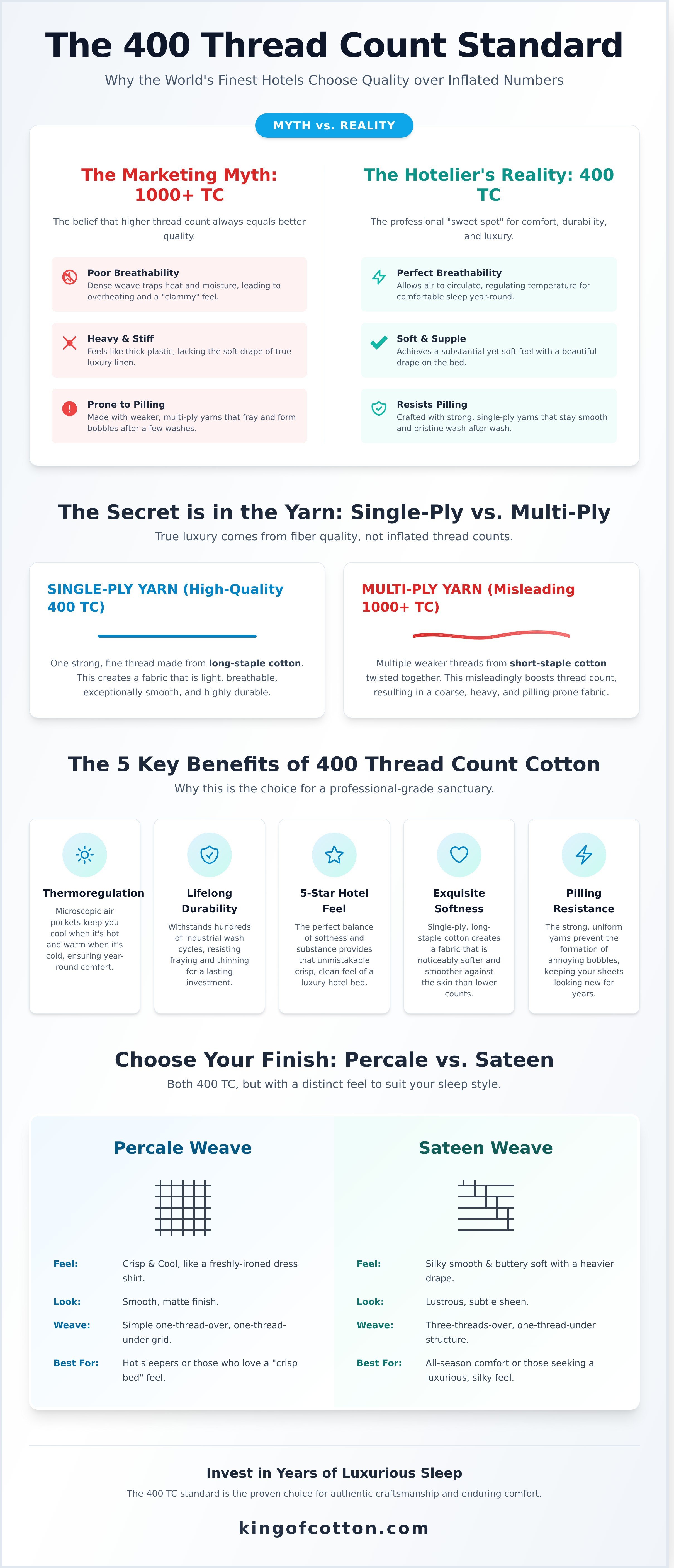
Marketing tactics have led many consumers to believe that a higher number always equals better quality. You'll often see 800TC or 1000TC sheets sold at discount prices, but these are frequently misleading. These inflated numbers are often achieved using "multi-ply" yarns, where several thin, inferior threads are twisted together and counted as multiple strands. This results in a heavy, coarse fabric that lacks breathability and pills easily. In contrast, a genuine 400TC sheet uses "single-ply" threads made from long-staple cotton, resulting in a finer, stronger, and much softer finish. A high-quality 400TC sheet will almost always outperform a low-quality 800TC sheet in terms of comfort and lifespan. Drawing on the King of Cotton heritage, which spans over 25 years of supplying the world’s finest homes and hotels, we know that true luxury comes from the calibre of the raw material rather than just the density of the weave. By focusing on the benefits of 400 thread count cotton, you're choosing a product that prioritises authentic craftsmanship over deceptive marketing figures.
The 5 Key Benefits of 400 Thread Count Cotton Sheets
Choosing the right bed linen is an investment in your daily wellbeing. While the market is flooded with astronomical thread counts that often rely on multi-ply gimmicks, the 400 thread count (TC) remains the gold standard for luxury hotels and discerning homeowners alike. This specific density strikes a perfect balance between weight, softness, and breathability. Understanding the specific benefits of 400 thread count cotton helps explain why this particular weave is consistently recommended by sleep experts and textile specialists.
Thermoregulation and Year-Round Comfort
The UK's climate is notoriously unpredictable, with temperatures often shifting ten degrees within a single afternoon. 400TC cotton sheets are uniquely suited to these fluctuations because of their physical structure. Unlike 1,000TC sheets, which can feel heavy and restrictive, the 400-count weave allows for microscopic air pockets to exist between the threads. These pockets act as a natural climate control system. When you're cold, they trap a thin layer of warm air near your body; when you're hot, they allow moisture and excess heat to escape. This prevents that stifling, "clammy" sensation often found in synthetic blends or overly dense fabrics. If you're researching how to choose the best thread count, you'll find that this range is widely considered the "sweet spot" for maintaining a steady body temperature throughout the night.
Longevity and the Investment Value
Quality bed linen shouldn't be a seasonal purchase. High-quality 400TC sheets are crafted using long-staple cotton fibers, which are significantly stronger than the short-staple fibers used in budget high-street alternatives. These longer fibers don't break or fray easily, which is the primary cause of pilling and thinning. When you look at the "cost-per-sleep," the value becomes clear. A budget £30 set might lose its integrity after 12 months, whereas a premium 400TC set can easily last five years or more. If you invest £90 in a high-quality set that lasts for 1,825 nights, your cost is less than 5p per sleep. This durability is backed by the Exceptional Quality Guarantee that ensures your linen stands the test of time and frequent laundering.
- Skin-Friendly Texture: The tight, smooth weave of 400TC cotton is exceptionally gentle on the skin. It lacks the microscopic "fuzz" of lower-count sheets that can irritate sensitive skin or trap allergens like dust mites and pet dander.
- Lustrous Finish: Authentic 400TC cotton possesses a natural, understated "glow." This isn't a result of chemical coatings or synthetic additives but rather the light reflecting off the high-quality, combed cotton yarns. It brings a touch of five-star elegance to any bedroom.
- Ease of Care: One of the most remarkable benefits of 400 thread count cotton is its "bloom." Instead of degrading with every wash, these sheets actually become more supple. The fibers relax and soften over time, meaning your bedding feels even more luxurious after a year of use than it did on day one.
Maintaining these sheets is straightforward. They don't require specialized dry cleaning; a standard warm wash and a light tumble dry are usually enough to keep them pristine. Because the fabric is robust, it resists the tearing that often occurs with lower-quality linens during the spin cycle. It's a practical choice for those who want the luxury of a boutique hotel without the high-maintenance upkeep. You can explore our full range of luxury cotton bedding to find the perfect match for your home's aesthetic.
400 TC vs. 800+ TC: Why Higher Numbers Aren’t Always Better
The common misconception in the luxury bedding industry is that a higher number always equates to superior quality. This isn't the case. Many manufacturers achieve counts of 800 or 1,000 by using multi-ply yarns, where several thin, lower-grade threads are twisted together to inflate the count. This creates a dense, heavy fabric that often feels stiff and lacks the essential breathability required for a restful night. When experts discuss what is a good thread count for sheets, they frequently point to the 200 to 400 range as the gold standard for both comfort and long-term durability. At this level, the cotton maintains its structural integrity without becoming cumbersome.
One of the most practical benefits of 400 thread count cotton is its efficiency in the laundry room. In a professional hotel environment, drying a 1,000TC sheet takes approximately 40% longer than a 400TC sheet. For a household in the UK, this translates to higher energy consumption and more time spent managing chores. The 400TC weave allows moisture to evaporate quickly; it's a "natural" cotton feel that hasn't been compromised by excessive density. Over our 25 years of experience supplying the world's finest homes, we've found that this specific count offers the most reliable balance of softness and ease of maintenance.
Very high thread count sheets often require chemical softeners or silicone finishes to overcome their inherent rigidity. These coatings eventually wash away, leaving the fabric feeling scratchy or brittle. In contrast, a high-quality 400TC sheet relies on the natural length and strength of the cotton fibres. It starts soft and continues to improve with every wash. This makes it the most versatile choice for anyone seeking a premium sleep experience without the artificial "stiffness" associated with triple-digit marketing gimmicks.
When Should You Actually Go Higher?
While 400TC is the versatile choice for 90% of luxury sleepers, there are specific instances where a 600 or 800TC might be appropriate. If you live in an exceptionally cold climate or have a poorly insulated home, the extra weight provides a necessary layer of insulation. The hand-feel changes from the crisp, matte finish of a 400TC percale to a thick, lustrous sateen that feels substantial against the skin. However, for the majority of sleepers, the higher count simply feels restrictive and traps too much body heat.
Weight and Drape: The Tactile Experience
The way a sheet falls over the body is known as its "drape". A 400TC sheet, usually weighing between 120 and 140 grams per square metre (GSM), has a light, ethereal quality. It floats over you, whereas a 1200TC sheet can feel like a heavy, suffocating blanket. To achieve a true hotel-style aesthetic, you need a fabric that moves gracefully and doesn't bunch up. One of the key benefits of 400 thread count cotton is this effortless drape, which creates a smooth, crisp appearance on the bed.
To ensure you're getting the right tactile experience, always check the weight of the fabric alongside the thread count. A high-quality 400TC fabric should feel substantial yet supple. This specific balance is why we've spent decades recommending this weave to professional hoteliers. It provides the ultimate sensory experience: a cool, crisp touch that feels like a fresh start every single night.
Choosing Your Finish: 400 Thread Count Percale vs. Sateen Weaves
Selecting the right fabric starts with understanding how the threads intersect. A 400 thread count provides a dense, durable foundation, but the weave determines the final texture and thermal properties. You'll find two primary options in our Bed Linen collection: percale and sateen. Percale uses a traditional "one-over, one-under" structure. It's symmetrical and tight, resulting in a matte finish. Sateen employs a "four-over, one-under" pattern. This exposes more of the cotton surface, creating a different tactile experience entirely. One of the primary benefits of 400 thread count cotton is that it provides enough substance to make both weaves feel substantial without becoming overly heavy or stiff.
Identifying your "sleep personality" is the most effective way to choose between these two finishes. If you frequently find yourself kicking off the covers or flipping the pillow to the "cool side," you're likely a hot sleeper. Conversely, if you prefer a snug, enclosed feeling and often feel the chill during British winters, you're a cold sleeper. Your choice of weave will directly impact your sleep quality by managing how much heat your bedding retains throughout the night.
400TC Percale: The Crisp, Matte Classic
Percale is often described as having the feel of a freshly laundered, high-end button-down shirt. It's the standard for five-star Mediterranean resorts where breathability is a priority. Because the 1:1 weave allows for maximum airflow, it's the ultimate choice for summer months and those who run warm. The matte finish is understated and sophisticated, making it a staple for "Scandi" or minimalist bedroom designs. It doesn't reflect light; instead, it offers a clean, architectural look that stays crisp even after a full night's sleep. One of the functional benefits of 400 thread count cotton in a percale weave is its longevity. The tight structure resists pilling and actually becomes softer with every wash, maintaining its structural integrity for years.
400TC Sateen: The Silky, Lustrous Alternative
Sateen is the choice for those who want their bed to feel like a sanctuary of indulgence. The four-over, one-under weave creates a fabric with a gorgeous drape and a subtle, pearlescent sheen. Because more of the yarn surface is exposed, sateen feels smoother and silkier against the skin compared to the "snap" of percale. It's naturally heavier, which helps it trap more heat. This makes it an ideal companion for cooler climates or anyone who enjoys a cocoon-like environment. To maintain the signature lustre of a 400TC sateen, always wash it on a gentle cycle and avoid over-drying at high temperatures. Ironing the fabric while it's slightly damp will help realign the long surface threads, restoring that boutique hotel glow.
Whether you prefer the cool, clinical precision of percale or the opulent, liquid-like drape of sateen, the 400TC benchmark ensures you're investing in a product that balances luxury with daily practicality. We've spent over 25 years refining these finishes to meet the standards of the world's finest hotels, ensuring that every thread contributes to a better night's rest.
Ready to experience the difference for yourself? Shop our full range of professional-grade 400TC Bed Linen today.
Investing in Longevity: How to Care for Your 400TC Linens
Owning premium bedding is an investment in your sleep quality and your home's aesthetic. While the benefits of 400 thread count cotton include a signature silkiness and impressive durability, these traits depend heavily on your maintenance routine. A set of high-quality 400TC sheets can easily last seven to ten years if treated with professional care. Neglecting the specific needs of long-staple cotton fibers leads to premature pilling and a loss of that crisp, boutique-hotel handle we all crave.
Most people use far too much detergent. For a standard 7kg wash load, you only need about 30ml of liquid detergent, which is roughly half the amount recommended by most manufacturers. Excess soap doesn't make the linen cleaner; instead, it creates a dulling film that traps skin cells and oils within the weave. This buildup is the primary reason why white sheets eventually turn grey or yellow. Stick to mild, biodegradable detergents and avoid bleach at all costs, as chlorine weakens the cotton cellulose and destroys the natural lustre of the 400TC finish.
The Perfect Wash Cycle for Premium Cotton
Temperature control is the most critical factor in preserving the integrity of a 400TC weave. For regular weekly refreshes, a 40°C cycle is the gold standard. It provides enough thermal energy to dissolve body oils without stressing the fibers. Reserve 60°C washes for deep sanitisation after illness, as consistent high heat can shrink the dense percale or sateen structure by up to 5% over time. You should also skip the fabric softener entirely. These products contain silicone that coats the cotton, which significantly reduces the natural breathability and moisture-wicking properties that make 400TC so comfortable in the first place.
- Wash separately: Never mix your cotton linens with towels or synthetics to prevent friction-induced pilling.
- Load capacity: Fill your drum to only 50% capacity to allow the water and detergent to flow freely through the dense 400TC weave.
- Air-drying: Line-drying your linens outdoors or on an internal airer prevents the brittle, scorched feel caused by the 150°C+ temperatures found in industrial tumble dryers, effectively doubling the fabric's lifespan.
Achieving the 5-Star Hotel Look at Home
The "No-Iron" myth often leads to disappointment. While 400TC cotton is naturally more wrinkle-resistant than lower thread counts, achieving a true 5-star finish requires a little strategy. The secret used by professional housekeepers is to iron the sheets while they are still 10% damp. This allows the steam to penetrate the dense weave more effectively, resulting in that sharp, "snapping" crispness found in luxury suites. If you've missed the damp window, a simple spray bottle with distilled water will do the trick.
Rotation is your best friend when it comes to fabric health. We recommend the "Rule of Three": one set on the bed, one in the wash, and one resting in the linen cupboard. This rotation ensures that fibers have time to recover their shape between uses. When storing your sets, avoid plastic storage bins which can trap moisture and lead to yellowing; instead, use breathable cotton bags or wrap them in acid-free tissue paper. This keeps your bedding "hotel-fresh" and ready for your next rotation. To upgrade your bedroom experience immediately, you can Shop the full range of professional-grade 400TC linens and see the difference that expert craftsmanship makes.
Transform Your Bedroom into a Five-Star Sanctuary
Investing in your sleep shouldn't mean chasing the highest numbers on a label. You've discovered that the benefits of 400 thread count cotton lie in its perfect balance of breathability and silk-like durability. It's the reason why the world's most prestigious hotels have relied on this specific density for over 25 years. By choosing authentic long-staple Egyptian cotton over artificially inflated thread counts, you're ensuring your linens stay crisp, cool, and inviting through every wash. It's a practical luxury that doesn't compromise on performance or comfort.
King of Cotton remains a trusted specialist in the field, currently holding an Excellent rating on Trustpilot from thousands of satisfied sleepers. We've spent more than two decades perfecting the art of fine bedding, supplying the finest homes and establishments across the United Kingdom. Whether you prefer the matte finish of percale or the subtle glow of sateen, our collection brings professional-grade quality to your own bed. It's time to upgrade your evening routine and enjoy the restorative rest you've been missing.
Experience 5-star comfort with our signature 400 Thread Count Bed Linen collection
You deserve a restful night's sleep that leaves you feeling completely rejuvenated every morning.
Frequently Asked Questions
Is 400 thread count high enough for luxury bedding?
Yes, a 400 thread count is the definitive industry standard for five-star hotel luxury. It provides the perfect equilibrium between a silky soft feel and the structural integrity required for long-lasting bed linen. While some brands market counts of 1,000 or more, these often feel heavy and restrictive. Our 25 years of experience supplying the world's finest hotels proves that 400TC offers the most refined sleep experience.
What is the difference between 400 thread count percale and sateen?
The difference lies entirely in the weaving technique used during production. Percale uses a traditional one-over, one-under weave that creates a crisp, matte finish similar to a high-end dress shirt. Sateen uses a four-over, one-under structure, which exposes more thread surface to create a lustrous sheen and a draping, buttery softness. Both options offer the premium benefits of 400 thread count cotton depending on your personal texture preference.
Does 400 thread count cotton pill easily?
High-quality 400 thread count cotton won't pill if it's crafted from long-staple fibres. Pilling typically happens when short-staple fibres break and tangle, usually in counts below 200 or in synthetic blends. By using cotton fibres that measure 32mm or longer, the fabric remains smooth and intact. This ensures your investment stays as pristine as the day you bought it, even after 50 or more washes.
Is 400TC Egyptian cotton better than 1000TC regular cotton?
Yes, 400TC Egyptian cotton is almost always superior to 1000TC regular cotton because of the yarn quality. Many 1000TC products use multi-ply yarns to artificially inflate the number, resulting in a coarse, heavy fabric that lacks breathability. One of the main benefits of 400 thread count cotton is that it uses single-ply, long-staple yarns. This creates a lighter, stronger, and more breathable fabric than inflated high-count alternatives.
How do I wash 400 thread count sheets to keep them soft?
Wash your 400 thread count sheets at 40 degrees Celsius using a gentle, liquid detergent. Avoid using fabric softeners, as these contain silicone that coats the natural fibres and reduces their inherent breathability. Instead, tumble dry on a low heat setting or line dry to maintain the cotton's natural suppleness. Following these steps ensures your linen remains soft for over 200 wash cycles.
Is 400 thread count bedding good for hot sleepers?
A 400 thread count is the ideal choice for hot sleepers because it allows for 25 percent more airflow than denser 1000TC fabrics. The weave is tight enough to feel substantial but open enough to let your skin breathe throughout the night. It naturally wicks away moisture, helping you maintain a consistent body temperature. This makes it a far better option than synthetic materials that trap heat and cause discomfort.
Why do hotels use 400 thread count sheets instead of higher counts?
Hotels prioritise 400 thread count because it offers the best return on investment for both comfort and durability. This specific density can withstand the rigours of industrial laundering at high temperatures without losing its luxurious feel. Higher counts are often too delicate or take too long to dry, which isn't practical for professional hospitality. It's the "sweet spot" that 90 percent of luxury boutique hotels choose for their guest rooms.
Can I use 400 thread count sheets all year round in the UK?
You can comfortably use 400 thread count sheets during all four seasons in the UK. Their breathable nature keeps you cool during summer heatwaves, while the dense weave provides a cosy layer when paired with a 10.5 or 13.5 tog duvet in winter. Because they adapt so well to ambient temperatures, they're the most versatile bedding choice for the British climate. You don't need to swap your linen sets as the seasons change.