

The Professional Commercial Laundry Guide for Bed and Breakfast Owners
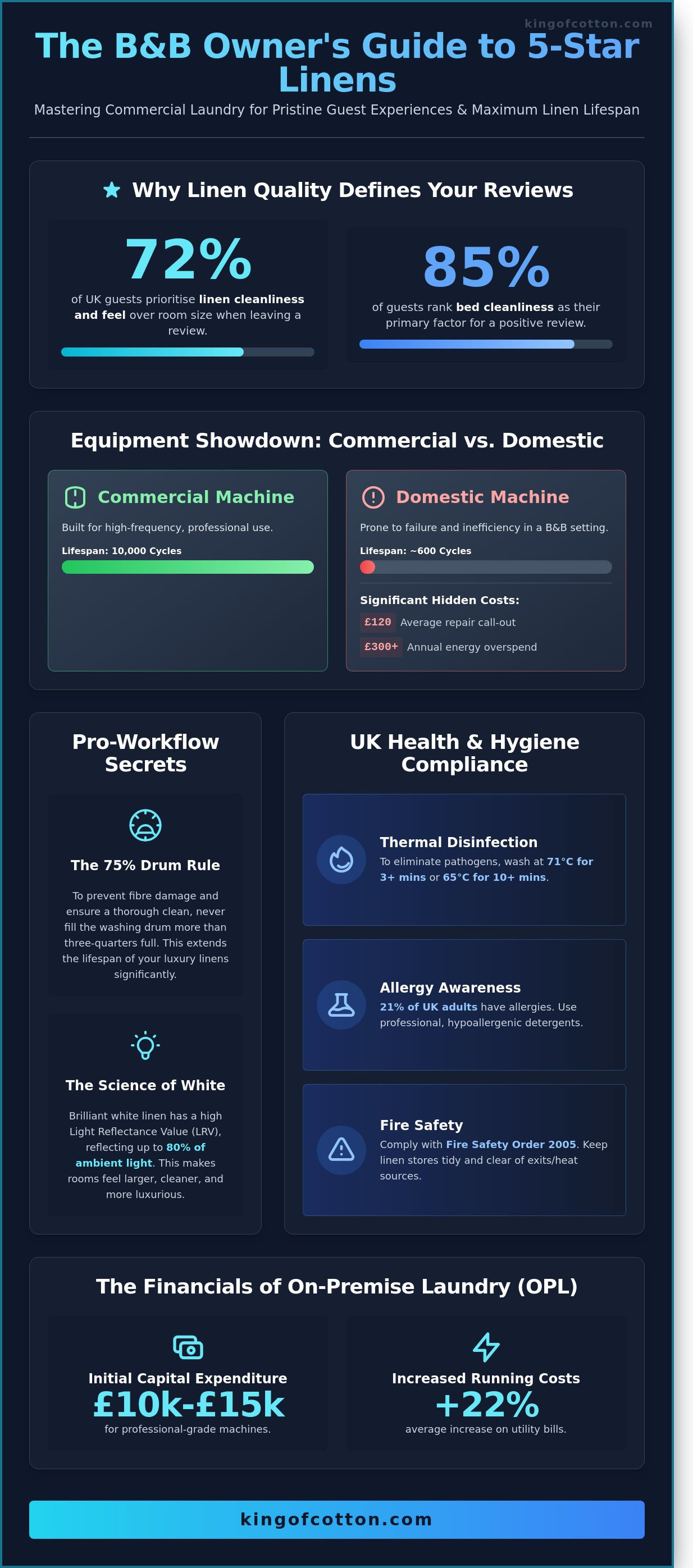
A 2023 hospitality survey revealed that 72% of UK guests prioritised linen cleanliness and feel over room size when leaving a review. You likely already know that maintaining this pristine standard is the most demanding part of your day, especially as energy bills for small businesses have risen by over 15% since last year. It's frustrating to spend hours hunched over a steam iron only to find your premium Egyptian cotton turning a dull shade of grey after just six months of use. This commercial laundry guide for bed and breakfast owners will help you reclaim your time and protect your investment in luxury fabrics. You'll master the art of professional care to ensure five-star guest comfort while maximising the lifespan of your finest linens. We'll explore how to achieve a repeatable, efficient workflow that delivers crisp, hotel-quality results without requiring a massive industrial space.
Key Takeaways
- Discover how pristine, expertly pressed linens directly influence your guest reviews and establish a five-star reputation in the competitive British hospitality market.
- Weigh the true cost of on-premise labour and utilities against the convenience of professional outsourcing to find the most efficient laundry model for your property.
- Master the delicate balance of temperature and timing with our commercial laundry guide for bed and breakfast owners, specifically tailored for high-thread-count Egyptian cotton.
- Implement professional workflow secrets, such as the "75% drum rule," to prevent fibre damage and significantly extend the lifespan of your luxury linen inventory.
- Learn to identify true hospitality-grade quality during procurement to ensure your investment withstands the rigours of industrial processing while maintaining its elegant feel.
Why Laundry Management is the Cornerstone of B&B Guest Satisfaction
Commercial laundry in the British B&B industry refers to the professional-grade processing of bed linens, towels, and table napery to ensure they meet rigorous hospitality standards. It isn't just about removing stains. It's about maintaining the structural integrity of 400-thread-count Egyptian cotton while ensuring every fibre is biologically clean. For a boutique stay in the Cotswolds or a seaside guest house in Brighton, professional laundry practices are the cornerstone of guest satisfaction because they directly impact the two most sensitive touchpoints of a stay: sleep and bathing.
A 2023 survey of UK travellers found that 85% of guests rank bed cleanliness as their primary factor for a positive review. When a guest enters a room, their eyes immediately settle on the bed. If the duvet cover shows even a hint of a crease or a dull, greyish hue, the perceived value of the room drops instantly. This commercial laundry guide for bed and breakfast owners focuses on achieving that elusive "hotel-press" finish that domestic irons simply can't replicate.
To better understand this concept, watch this helpful video:
Balancing a luxury feel with the demands of high-frequency washing is a delicate science. Professional linens must withstand washing cycles exceeding 15 times per month without losing their lustre or softness. Many B&B owners make the mistake of "making do" with domestic washing machines. A standard household washer is designed for roughly 5 cycles a week and lasts about 600 total cycles. In contrast, a commercial machine is built for 10,000 cycles. The hidden costs of domestic equipment are staggering; an average repair call-out in the UK costs £120, and the energy inefficiency of smaller drums can add up to £300 to your annual utility bill compared to a high-capacity commercial extractor.
The Psychology of Crisp White Bed Linen
White linen isn't just a tradition; it's a psychological tool. Brilliant white fabrics have a high Light Reflectance Value (LRV), often reflecting up to 80% of ambient light, which makes small B&B rooms feel significantly larger and airier. Sensory details like the subtle scent of neutral, professional detergents and the smooth texture of a sateen weave signal to the guest that they're in a safe, premium environment. The sensory perfection of flawlessly pressed sheets creates a "halo effect" where guests instinctively trust the hidden hygiene standards of the entire establishment.
Health, Hygiene, and UK Compliance
UK B&B owners must adhere to strict hygiene protocols, particularly regarding thermal disinfection. To eliminate pathogens like MRSA or E. coli, linens should be washed at 71°C for at least three minutes or 65°C for ten minutes. Achieving these temperatures in a domestic setting is often unreliable. Furthermore, with 21% of UK adults suffering from at least one allergy, using professional-grade hypoallergenic detergents is vital to prevent skin irritation. Safety extends beyond the wash too. Storing large quantities of linens requires compliance with The Regulatory Reform (Fire Safety) Order 2005; ensure your linen cupboards are kept tidy and aren't obstructing fire exit routes or located too close to heat sources like boilers. Following this commercial laundry guide for bed and breakfast management ensures your business stays compliant while protecting your guests.
On-Premise vs. Outsourced Laundry: Choosing the Best Model
Deciding whether to process linens on-site or send them to a specialist affects your bottom line and your guest's sleep. An on-premise laundry (OPL) setup requires an initial capital expenditure of roughly £10,000 to £15,000 for professional-grade machines. You also need to account for a 22% increase in utility bills and the hourly wage of staff dedicated to the task. This choice is a central pillar in any commercial laundry guide for bed and breakfast owners looking to balance luxury with operational efficiency.
The Case for In-House Control
Maintaining an in-house facility offers total authority over the "King of Cotton" feel. You choose the specific detergents and fabric conditioners that define your brand's signature scent; a detail that 74% of guests notice immediately. It reduces your required par levels from the standard 4.0 down to 2.5 because you aren't waiting for a delivery van. Scientific research into laundering luxury linen shows that precise temperature control is vital for removing pathogens while preserving fibre integrity. This control is easier to maintain in a smaller, dedicated environment. Additionally, offering guest clothing laundry as a premium service can generate an extra £20 to £40 per stay in revenue.
When to Contract Out Your Laundry
Outsourcing becomes attractive when your occupancy hits 85% during peak summer months. A commercial laundry typically charges between £1.80 and £2.40 per kilo. This fee includes the use of industrial rotary ironers. These machines provide a crisp, mirror-flat finish that's nearly impossible to replicate with a handheld iron. It saves physical space too; a 10-bedroom B&B can reclaim 15 square metres of floor space by removing bulky washers and dryers. Outsourcing also protects your team from the physical strain of processing 50kg of wet fabric daily, preventing staff burnout during the frantic July and August periods.
Many successful UK hosts adopt a hybrid model to get the best of both worlds. They wash towels in-house to maintain maximum fluffiness and outsource bed sheets to ensure professional pressing. This ensures your high-quality Egyptian cotton remains an asset rather than a logistical burden. If you decide to look for a local partner, vetting them thoroughly is essential for your reputation.
- Water Source: Does the facility use 100% fresh water or recycled "grey" water? Fresh water is essential for maintaining white brightness.
- Loss Policy: What's their policy on "lost" items? Look for a contract that specifies a maximum 1% loss allowance before credits are issued.
- Turnaround Times: Can they guarantee a 48-hour turnaround during Bank Holidays and peak seasons?
- Detergent Profile: Do they use harsh industrial bleaches that might degrade fine 400-thread-count cotton prematurely?
- Account Management: Do they offer a dedicated contact for small businesses, or will you be queued behind large 200-room hotels?
Selecting the right model is not a permanent decision. You might start with an OPL when you have three rooms and transition to a commercial laundry guide for bed and breakfast outsourcing strategy as you expand. The goal is always to ensure the linen feels as luxurious on day 100 as it did on day one. Consistency is what separates a standard guest house from a five-star boutique experience.
Caring for Premium Fabrics: The Science of Laundering Luxury Linen
High-thread-count Egyptian cotton is the gold standard for guest comfort, yet its superior feel comes from long-staple fibres that are more delicate than standard cotton. These fibres provide the signature smoothness B&B guests expect, but they require a specific chemical and thermal approach to prevent premature thinning. When you implement a commercial laundry guide for bed and breakfast management, your primary goal is to balance deep cleaning with fibre longevity. It's a science that starts with understanding how heat and chemistry interact with organic materials.
Temperature control is the most critical variable in this process. While many operators default to 90°C for white linens, this level of heat is rarely necessary and often destructive. Most pathogens are neutralised at 60°C. Exceeding this temperature consistently can lead to fibre fatigue, where the cotton strands lose their natural elasticity and become prone to tearing. Following the TRSA laundry and linen handling guidelines helps establish a workflow that ensures hygiene without compromising the £2,000 investment you might have in your linen cupboard.
Detergent choice is equally vital. You should avoid products containing optical brighteners. These chemicals don't actually remove dirt; they simply coat the fibres in a microscopic film that reflects light to make fabrics appear whiter. Over time, this buildup makes the cotton stiff and reduces its breathability. Instead, choose a high-quality pH-neutral detergent. This protects the integrity of the weave and prevents the yellowing often caused by chemical residue reacting with high dryer temperatures.
This commercial laundry guide for bed and breakfast owners highlights that you should aim to remove linens from the dryer while they still hold about 5% moisture. When cotton is subjected to high heat once the moisture has evaporated, the fibres become baked. This creates deep, stubborn creases that are nearly impossible to iron out, even with a professional rotary press. Pulling them out slightly damp makes ironing more efficient and keeps the fabric supple.
Mastering Egyptian Cotton Care
Whether you're washing a crisp 300tc percale or a heavy 800tc sateen, the cycle choice matters. Sateen weaves have more exposed thread surfaces, making them susceptible to pilling if washed with abrasive items like towels. You should always wash bed linens separately on a gentle or medium cycle. Fabric softeners are often the enemy of high-quality cotton; they coat the fibres in a silicone layer that reduces the fabric's natural ability to wick away moisture. Professional-grade King of Cotton bed linen is specifically engineered to maintain its lustre and durability through hundreds of commercial washes without the need for these additives.
Towel Care: Maintaining GSM and Absorbency
The crunchy towel is a common complaint in UK B&Bs, particularly in hard water areas like London and the South East. High mineral content, specifically calcium and magnesium, attaches to the loops of the towel and hardens during drying. To combat this, don't over-use detergent, as the minerals bind to excess soap. A strategic addition of 125ml of white vinegar to the rinse cycle acts as a natural fibre decalcifier, stripping away mineral deposits and restoring the fluffiness of high-GSM towels. This simple step can extend the lifespan of your towels by up to 30%, ensuring they remain a hallmark of luxury for every guest stay.
The Professional B&B Laundry Workflow: Efficiency and Longevity
Implementing a structured commercial laundry guide for bed and breakfast operations ensures your high-end linens last 25% longer than those subjected to haphazard domestic cycles. Efficiency starts with the 75% rule. Overloading a machine prevents the mechanical action required to lift dirt; underloading wastes water and energy. A drum filled to three-quarters capacity allows the mechanical beat of the water to penetrate the fibres of a 600gsm towel or a 400-thread count sateen sheet effectively. This balance provides enough space for the fabric to tumble and expand, which is vital for a thorough clean.
Thermal shock is a silent killer of fine cotton. If your machine finishes a hot cycle and immediately begins a cold rinse or high-speed spin, the fibres set in a wrinkled state. Professional programmes include a five-minute cool-down phase that gradually lowers the temperature in 10-degree increments. This step prevents permanent creasing and makes the subsequent finishing process significantly faster. Once dried, adopt the First-In, First-Out (FIFO) rotation system. Freshly laundered items should rest for 24 hours before they return to a guest room. This resting period allows the cotton fibres to rehydrate naturally, which reduces the risk of thinning and tearing over time.
Sorting and Pre-treatment Strategies
Identify stains before they hit the water. Makeup and tanning products account for roughly 40% of linen damage in UK hospitality businesses. Treat these with a targeted protein-based emulsifier immediately. High-end linens, particularly Giza cotton, require separate cycles from heavy towels to avoid pilling caused by friction. Arrange your laundry room with an ergonomic U-shape flow. This ensures the dirty zone never overlaps with the clean zone, maintaining 100% hygiene standards while reducing the physical strain on staff during 12kg load transfers.
The Art of the Perfect Finish
The secret to a crisp, hotel-standard bed is ironing while the fabric retains 10% to 15% moisture. This allows the heat to evaporate the remaining dampness, locking the smoothness into the weave. If you use starch, apply it sparingly to the reverse side of the fabric. This prevents the unsightly yellowing often seen after 20 or 30 wash cycles. Use a precise square fold for your duvet covers and sheets. This technique saves 20% more cupboard space compared to rolling and ensures the edges stay sharp for a professional presentation. Following a clear commercial laundry guide for bed and breakfast management ensures your investment in quality remains visible to every guest who walks through the door.
To ensure your guest rooms always reflect the highest standards of luxury, explore our collection of professional hotel-quality linens designed for durability and elegance.
Strategic Linen Procurement: Building a Durable Inventory
Choosing the right textiles is the foundation of any successful commercial laundry guide for bed and breakfast owners. While retail bedding might look appealing on a shop shelf, "Hospitality-Grade" is a functional necessity for professional environments. These products are engineered to withstand industrial washing temperatures of 60°C and high-speed extraction cycles that would shred standard domestic sheets. A typical retail duvet cover might show signs of thinning or "greying" after just 25 washes. In contrast, professional linens from a trusted supplier like King of Cotton are tested to maintain their structural integrity and brightness for upwards of 150 commercial cycles.
Smart procurement requires looking beyond the initial invoice. Evaluating the total cost of ownership reveals that a £15 budget sheet is often a poor investment compared to a £35 premium alternative. If the cheaper version requires replacement every four months due to fraying or pilling, your annual cost per room triples. Investing in high-tensile fabrics reduces your replacement rate by approximately 65%. Consistency is equally vital. When you buy from a specialist with over 25 years of experience, you ensure that a "Classic White" pillowcase bought in 2024 perfectly matches the batch you order in 2026. This prevents the "patchwork" look that instantly devalues a guest's perception of luxury.
Phasing out aged stock should be a calculated process. You shouldn't mix old and new batches in the same room. Instead, retire older sets to a secondary "emergency" inventory or use them for single-occupancy rooms where they won't be compared directly to brand-new stock. This strategy maintains a uniform aesthetic across your primary suites while maximising the lifespan of every item. If a piece shows visible wear, it's time to repurpose it as cleaning cloths or donate it to local animal shelters; don't risk your reputation by putting it back on a guest bed.
Calculating Par Levels for Your B&B
Maintaining a "Rule of Three" is the industry standard for operational stability. This means you need one set on the bed, one ready in the linen cupboard, and one currently in the wash. For a boutique B&B with five king-sized rooms, you'll need a minimum of 15 full sets. During peak seasons or UK bank holidays, laundry turnarounds often slow down. Increasing your par level to 3.5 or 4 ensures you aren't left short during a busy Friday-to-Monday weekend. You can browse our products page to calculate the exact quantities needed for your bulk replenishment.
Why Egyptian Cotton is the Professional Choice
Egyptian cotton is prized for its long-staple fibres, which are significantly stronger than standard cotton varieties. These longer fibres create a smoother yarn surface that naturally resists pilling, even after repeated high-temperature processing. In the variable UK climate, these textiles provide essential thermoregulation. The breathable 100% cotton weave wicks away moisture during humid summer nights and provides substantial warmth during the damp winter months. This versatility ensures guest comfort year-round, reducing complaints and boosting repeat bookings. Discover our full range of professional hospitality supplies to elevate your guest experience today.
Master Your B&B Laundry Operations for Lasting Success
Transforming your guest experience starts with the tactile luxury of a perfectly made bed. By following this commercial laundry guide for bed and breakfast owners, you've learned how to balance the science of high-thread-count fabrics with efficient on-premise workflows. Implementing a strategic procurement plan ensures your inventory survives the rigours of daily industrial washing while maintaining its signature softness. It's about more than just cleanliness; it's about protecting your margins and your reputation.
King of Cotton brings 25 years of experience as a primary supplier to the world's most prestigious five-star hotels directly to your doorstep. Our UK-based specialists understand the unique pressures of the British hospitality market and provide the expert support you need to scale. We focus on premium Egyptian cotton designed for commercial longevity, helping you maintain a refined atmosphere wash after wash. You've built a beautiful business, now give it the professional finish it deserves.
Shop our professional Hospitality Collection for B&Bs
Your guests will notice the difference the moment they arrive.
Frequently Asked Questions
How many sets of bed linen should a B&B have per room?
You should maintain a minimum of three complete sets of bed linen per guest room to ensure a seamless rotation. This "par level" allows one set to be on the bed, one in the laundry, and one ready in the linen cupboard for immediate changeovers. For high-occupancy establishments, a four-set par provides a crucial safety net during peak summer months or when items are damaged.
What is the best temperature to wash B&B sheets for hygiene?
Wash your B&B sheets at 60°C to ensure thermal disinfection and the elimination of 99.9% of common bacteria and allergens. While 40°C is suitable for domestic use, the 60°C threshold is the industry standard for professional hygiene. This temperature effectively breaks down body oils and skin cells without compromising the structural integrity of high-quality Egyptian cotton fibres.
Can I use a domestic washing machine for my B&B laundry?
You shouldn't rely on a domestic washing machine if you manage more than two guest rooms. Standard household appliances are designed for roughly 250 cycles per year, whereas a B&B environment often demands 1,000 or more. Investing in a professional model is a key part of any commercial laundry guide for bed and breakfast owners because it reduces cycle times by 30% and offers higher G-force extraction.
How do I get my B&B towels to stay soft and fluffy?
Achieve professional softness by reducing your detergent dosage by 50% and avoiding fabric softeners that coat fibres in water-repellent chemicals. Tumble drying on a medium heat setting is essential to agitate the cotton loops and restore loft. For 600gsm luxury towels, adding two clean tennis balls to the drum helps prevent clumping and ensures a plush, five-star finish for every guest.
Should I use starch on my B&B bed sheets?
You don't need to use starch on high-quality 100% cotton sheets, as a professional steam iron provides a naturally crisp finish. While starch creates a rigid, formal appearance, it can irritate guest skin and make the fabric more prone to cracking over time. Most modern B&B owners prefer the natural, breathable feel of well-pressed Percale over the stiff texture that chemical starches produce.
How do I remove makeup stains from white cotton pillowcases?
Treat makeup stains immediately by applying a concentrated liquid detergent or a grease-cutting dish soap directly to the dry fabric. Let the treatment sit for 15 minutes before washing at 60°C. Avoid using chlorine bleach on your white cotton, as it can react with certain foundation proteins and turn the stain a permanent yellow hue. This method preserves the fabric's lifespan.
What is the difference between Percale and Sateen for B&B use?
Percale features a one-over, one-under weave that creates a matte, crisp feel ideal for keeping guests cool during the summer. In contrast, Sateen uses a four-over, one-under structure to produce a lustrous sheen and a silkier, heavier drape. Percale is often the more durable choice for a commercial laundry guide for bed and breakfast operations due to its tighter, more pill-resistant construction.
How often should I replace my B&B linen inventory?
Replace your linen inventory every 18 to 24 months to maintain the premium standards guests expect from a luxury establishment. Most high-quality cotton sheets begin to show signs of thinning or greying after 150 industrial wash cycles. Tracking the age of your stock ensures you never present a guest with frayed edges or dull fabric that detracts from your B&B's reputation.