

How to Remove Wine Stains from Tablecloths with Care
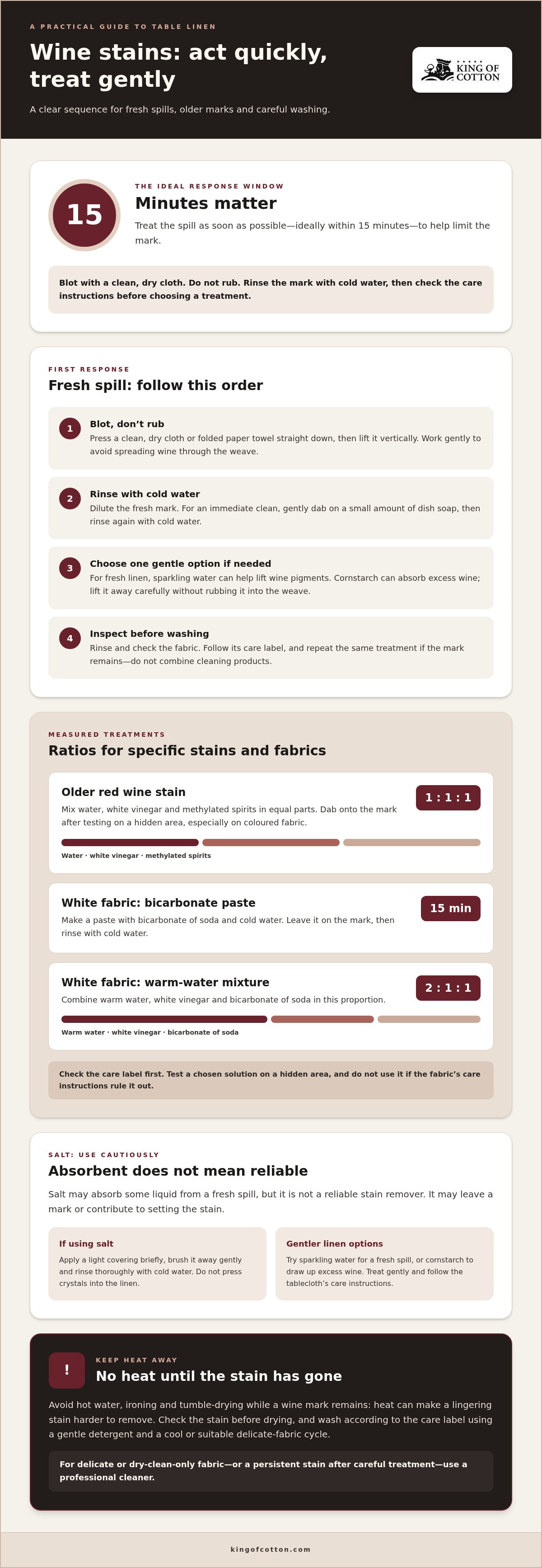
A red wine spill doesn’t have to spoil a carefully set table. Whether you have styled your tablescape with pieces from Table Terrain or are using classic family linens, the essentials of how to remove wine stains from a tablecloth are to act promptly, blot with a clean, dry cloth rather than rub, then rinse the mark with cold water. Treat it as soon as possible, ideally within 15 minutes, before washing according to the tablecloth’s care instructions.
It’s tempting to reach for salt or a strong stain treatment straight away, but the right approach depends on the fabric, its colour and whether the wine is fresh. A gentle first response can limit the spread without putting delicate fibres under unnecessary stress.
Here, you’ll learn how to remove wine stains from a tablecloth, whether the spill is fresh or dried, and whether salt is worth trying. We’ll also cover when hydrogen peroxide or oxygen bleach may suit a tablecloth, why heat can make a lingering mark harder to remove, and how to wash the fabric carefully. This helps you choose a measured method that suits your table linen.
Key Takeaways
- Act promptly, ideally within 15 minutes, and blot the spill with a clean, dry cloth rather than rubbing it.
- Rinse the mark with cold water and check the tablecloth’s care instructions before applying a treatment.
- Salt may absorb fresh wine, but it can also leave a mark; learn when sparkling water or cornstarch may be a gentler option for linen.
- For an older stain, a carefully measured vinegar-and-methylated-spirits mixture may help, but test coloured fabric in a hidden area first.
- Find out how to approach hydrogen peroxide and oxygen bleach with care, and why heat should wait until the stain has gone.
How to remove a wine stain from a tablecloth?
Act promptly: blot the spill with a clean, dry cloth, then rinse the mark with cold water. Treat the stain before washing, and follow the tablecloth’s care instructions to protect the fabric.
For a visual demonstration of a gentle approach to red wine spills, watch this video:
Work through these steps in order. Avoid hot water, ironing and tumble-drying until the stain has disappeared, as heat can set any remaining marks.
-
Test the treatment first
Test your chosen solution on a hidden part of the tablecloth, especially if it’s coloured. Check for colour transfer or changes to the material before treating the visible stain. Read the care label, then wash as instructed; a suitable delicate-fabric cycle helps limit unnecessary wear.
-
Treat older stains and white fabrics
For an older red wine stain, mix water, white vinegar and methylated spirits in equal parts, then dab the mixture onto the mark. Test it on a hidden area first, and avoid using it if the fabric’s care instructions rule out this treatment. On a white tablecloth, try a paste of bicarbonate of soda and cold water; leave it for 15 minutes, then rinse with cold water. For white fabric, warm water, white vinegar and bicarbonate can also be combined in a 2:1:1 ratio.
-
Repeat treatment for persistent stains
After rinsing, inspect the fabric before washing or applying heat. If the mark remains, repeat the same treatment and rinse again rather than combining cleaning products. An older stain may need pre-soaking or a gentle stain remover used according to its manufacturer’s instructions. Stop if the colour changes or the fibres appear affected.
-
Wash the tablecloth at the right temperature
Wash the treated tablecloth according to its care label, using a gentle detergent and a cool or suitable delicate-fabric cycle. Avoid high heat while a wine mark remains, as it may make it harder to remove. Check the stain before drying. Don’t tumble-dry or iron the tablecloth until the mark has gone. Take delicate or dry-clean-only fabric to a professional cleaner, as you should if careful treatment leaves a persistent stain; for ongoing household help with fabric and home maintenance, services such as Art of Cleaning can assist with regular cleaning routines.
Is salt really effective against wine stains?
Salt can absorb some liquid from a fresh spill, but it isn’t a reliable stain remover. For linen, sparkling water and cornstarch are practical options, provided you treat the fabric gently.
- Start with cold water and dish soap. Rinse the fresh mark with cold water to dilute the wine, then gently dab a small amount of dish soap onto the stained area. Rinse again with cold water before trying another method. It’s sensible to avoid hot water while treating the stain and use a gentler approach instead.
This first response is especially useful when the spill has just happened. Work from the outside of the mark towards the centre to avoid spreading wine across clean linen. Use a clean cloth for each dab, and don’t rub hard, as that can push coloured liquid further into the weave.
- If it’s close to hand, try sparkling water on fresh linen. Pour a little onto the mark, then gently dab with a clean cloth to help lift wine pigments. Use only enough to dampen the stained area rather than soaking the whole tablecloth. Rinse with cold water, then inspect the fabric before deciding whether it needs further treatment.
Sparkling water is a convenient first-aid option at a meal or away from home. It doesn’t replace proper laundering and works best while the wine is fresh. Keep the cloth beneath the stain dry, or move it as it absorbs liquid, to prevent wine transferring through to another layer.
- Use salt cautiously rather than treating it as a guaranteed fix. A light covering can absorb some liquid from a fresh spill. Leave it briefly, then brush it away gently and rinse with cold water. Salt may leave a mark or contribute to setting the stain, so don’t press crystals into the linen or leave them in place for long.
Conflicting advice makes salt less reliable than prompt rinsing. If salt leaves residue, rinse it thoroughly before washing; don’t pour hot water over it. If a fresh stain remains, return to cold water and mild dish soap instead of adding more salt or heat.
- Cornstarch is a gentler absorbent option for linen. Sprinkle it over the fresh mark to draw up excess wine, then lift it away carefully without rubbing it into the weave. Rinse with cold sparkling or plain water, and wash by hand with neutral soap and warm water. Follow the tablecloth’s care instructions.
Choose a method to suit the situation: cold water and dish soap for immediate cleaning, sparkling water for an on-the-spot response, and cornstarch to absorb excess wine. If you use salt, keep the treatment brief and rinse it away. Avoid hot water until the mark has disappeared.
Blotting wine without rubbing
For a red wine spill, blotting removes excess liquid and limits how far the colour travels through the tablecloth. Use a clean, absorbent cloth and gentle pressure. Rubbing can push wine deeper into the fibres and spread the mark across the weave.
- Lift any pooled wine from the tablecloth before treating the stain. Use the edge of a spoon to collect it, moving carefully towards the centre of the spill. Don’t scrape or press the spoon into the fabric. This removes some of the liquid before blotting and helps prevent a larger patch.
Keep the spoon clean as you work. If red wine has run towards a seam or hem, collect it gently there instead of wiping across the tablecloth. Wiping can carry pigment from the wet centre onto previously clean fibres.
- Place a clean, dry cloth or folded paper towel over the stain, then press straight down. Hold briefly and lift vertically to absorb wine without dragging it sideways. Move to a dry section after each press. A saturated patch can transfer red wine back onto the tablecloth.
Work from the outer edge towards the centre. For a broad spill, use separate clean areas around its perimeter before blotting the middle. This keeps each movement contained and reduces the risk of enlarging the mark.
- Blot from both sides if wine has passed through the fabric. Lift the tablecloth carefully and place a fresh absorbent cloth underneath the stained area. Press another clean cloth on top, then lift both without sliding them. The lower layer catches wine moving through the weave instead of letting it mark the surface below.
Change the cloth beneath the stain whenever it becomes damp or coloured, as a wet backing cloth can no longer absorb effectively. On a fine linen weave, use lighter pressure to avoid stretching or distorting the fibres as you lift the tablecloth.
- Continue blotting until a fresh cloth picks up little or no wine. Don’t scrub at a remaining pink shadow, as this can disturb the fibres and spread residue. Once you’ve removed excess liquid, choose a treatment suited to the tablecloth’s fabric and colour, and follow its care instructions.
If you’re away from home, keep blotting with clean napkins until you can treat the tablecloth properly. Don’t sprinkle cleaning powder over pooled wine; absorb the liquid first. For a dinner spill, steady pressure and frequent cloth changes are more useful than hurried wiping.
Hydrogen peroxide and oxygen bleach
Hydrogen peroxide and oxygen bleach may suit some washable tablecloths, but not every fabric or colour. Check the care label and product instructions before using either.
- Read the tablecloth’s care label before choosing a bleaching treatment. If it says not to bleach, avoid hydrogen peroxide and oxygen bleach. Linen needs particular care because chemical bleach can damage its fibres. Bleach can also yellow or weaken white tablecloths, and white fabric isn’t automatically suitable for bleaching.
Check the product’s fabric restrictions too. Oxygen bleach labelled for washable, colourfast fabric differs from chlorine bleach, but the tablecloth’s care label takes priority. Don’t assume a product described as colour-safe suits every dyed cloth or delicate weave.
- Test hydrogen peroxide on a hidden seam before treating a visible wine mark. Apply a small amount and follow the label directions, then check for colour change or damage. If the colour transfers or the test area changes, rinse it and don’t use peroxide on the stain. Never mix cleaning products.
For a suitable white, washable tablecloth, apply peroxide only as directed on the packaging. Keep the treatment on the stain, then rinse thoroughly before washing. Don’t leave liquid treatment on the fabric longer than instructed, as extended contact can affect the fibres or colour.
- Use oxygen bleach only if both the tablecloth care label and product instructions allow it. Measure and dilute the product exactly as directed; don’t increase the amount to tackle a stubborn red wine mark. Use it as a pre-treatment or soak only if the label permits this for the fabric.
Coloured cotton, linen and delicate finishes can react differently to bleaching agents. Test an inconspicuous area first, then inspect it in good light after rinsing. If the cloth’s colour or texture changes, stop and rinse the area thoroughly.
- Use ordinary laundry detergent after treating the stain. Follow the tablecloth and detergent directions, and choose a gentle cycle suited to the fabric. Don’t add chlorine bleach unless both labels explicitly allow it. Avoid combining bleach with vinegar, ammonia or other cleaners.
Before drying, examine the stained area while the cloth is still damp. If a red or pink trace remains, repeat a fabric-safe treatment instead of applying heat. Avoid ironing or tumble-drying until the mark has disappeared, as heat can set residual wine pigments into the fibres.
Removing wine stains from tablecloths
Match the treatment to the tablecloth’s fabric, colour and stain age. A washable cotton cloth, delicate linen weave and coated table covering each need different care.
- Check the care label before applying water or stain treatment. Identify whether the tablecloth is cotton, linen, delicate or coated, then follow its washing instructions. For a coated tablecloth, wipe the spill with a damp cloth rather than soaking it. This helps prevent moisture reaching the backing or affecting the finish.
For coloured linen, test a cleaning solution on a hidden area first. A white tablecloth may tolerate a different treatment, but bleach can yellow it or damage its fibres. Let the test area dry before checking for colour changes.
- Treat fresh red wine promptly, as its pigments can penetrate tablecloth fibres. Blot up excess liquid, then rinse the stained area with cold water. Don’t rub the weave or pour hot water over the mark. If the spill covers a large area, work on one section at a time to keep the treatment controlled.
White wine can also leave a halo, so treat the spill with water and soap rather than letting it dry. Although red and white wine differ in visibility, both are easier to treat before laundering.
- Choose a pre-treatment suited to the fabric if a mark remains after rinsing. On a washable tablecloth, use a suitable stain remover according to its manufacturer’s instructions. For a white tablecloth, bicarbonate may be an option; rinse thoroughly before washing. Don’t use chemical bleach on linen, as it can damage the natural fibres.
Let the treatment act only as directed. Mixing products or applying several solutions together can make rinsing harder and expose the fabric to unnecessary chemicals.
- Wash the tablecloth according to its care label, using a gentle detergent and a suitable cycle. Avoid high temperatures, even if the fabric seems robust. Check the stain before drying, as heat from a tumble dryer or iron can set any remaining wine mark.
If the mark remains, repeat the fabric-safe treatment before washing again. Air-dry linen and inspect it in good light; a faint pink trace may be easier to see once the cloth is dry.
- Treat an older stain differently from a fresh spill. Dried wine may need pre-soaking or repeated gentle treatment before washing. Avoid aggressive scrubbing, which can roughen the tablecloth without removing pigment lodged in the fibres.
After each treatment, rinse and inspect the same area before trying another method. This makes it easier to see whether the stain is fading and prevents residue from one product interfering with the next.
King of Cotton: Bed Linen
King of Cotton offers bed linen for readers who want to bring the same care they give their table setting to the bedroom. After treating a wine-stained tablecloth, you might also be considering a refresh of your home linens. Explore bed linen for a considered bedroom update, or browse towels, bathrobes and gowns, and duvets and pillows for everyday comfort.
The stain-care guidance above helps you choose an approach based on your tablecloth’s fabric and care instructions. For a separate bedroom or bathroom update, explore the relevant ranges and choose home textiles to suit your needs. Visit kingofcotton.com to discover the collection.
Make thoughtful choices for your home linens
Knowing how to remove wine stains from a tablecloth can prompt a wider look at the fabrics you use at home. Different textiles need different care, so keep care labels handy and choose cleaning methods to suit each item. To refresh other rooms, explore King of Cotton’s bed linen, towels, and bathrobes and gowns for comfort in everyday routines.
If you’d like to discuss tablecloth care, contact King of Cotton for tablecloth advice. You can also explore home textiles that complement your space and priorities. A considered approach to fabric care helps you enjoy the linens you already have, while choosing new pieces with greater confidence.
Frequently Asked Questions
Can I use bleach on white tablecloths?
Avoid bleach on a white tablecloth unless its care label and the product instructions both permit it. Bleach may yellow white fabric or damage its fibres, particularly linen. White colour alone doesn’t make every bleaching product suitable. For a washable cloth, use a fabric-safe stain treatment and detergent, then inspect the mark before drying.
Is bicarbonate useful?
Yes, bicarbonate of soda can help treat a red wine mark on white fabric. Mix it with warm water, white vinegar and bicarbonate in a 2:1:1 ratio, then apply the mixture to the stain. For a fresh mark, a bicarbonate paste can sit for 15 minutes before you rinse with cold water. Test coloured fabric discreetly first.
Red wine stain or white wine stain: what's the difference?
Red wine usually leaves a more visible mark because its pigments can penetrate the fibres. White wine may be less noticeable, but it can still leave a halo as it dries. Treat either spill promptly. For example, if white wine lands on a pale tablecloth, use water and soap rather than waiting for a ring to appear.
What if the stain is old?
An old wine mark usually needs more than a quick rinse, so pre-treat it before laundering. For an older red stain, dab a mixture of equal parts water, white vinegar and methylated spirits onto the fabric after testing a hidden area. Rinse and follow the care label. If the tablecloth is delicate or dry-clean-only, avoid experimenting with liquid treatments at home.
What should you do immediately after spilling red wine on a tablecloth?
Remove pooled wine with a spoon, then press a clean, dry cloth onto the spill to absorb excess liquid. Don’t wipe across the fabric, as this can spread the coloured area. Once you’ve lifted the excess, rinse the mark with cold water if the care label permits. Keep the tablecloth away from heat while preparing a treatment.
How do you remove fresh red wine stains from a tablecloth step by step?
First, blot excess wine without rubbing. Next, rinse the affected area with cold water, then apply a fabric-suitable pre-treatment. Bicarbonate paste may suit white washable fabric; test coloured linen on a hidden area first. Rinse away the treatment, wash according to the care label, and inspect the mark before drying or ironing.
How do you remove dried or set-in wine stains from a tablecloth?
For dried wine, pre-soak the tablecloth if its care label allows, then use a gentle stain remover according to its instructions. After a discreet test, dab an older red stain with equal parts water, white vinegar and methylated spirits. Rinse between treatments, and don’t tumble-dry or iron the cloth while any trace remains.
Which household products work best on wine stains: salt, bicarbonate of soda, washing-up liquid or white wine?
Washing-up liquid and cold water are a practical first response to a fresh spill. Bicarbonate of soda may help on white fabric, while salt is less dependable because it can leave a mark or set the stain. White wine isn’t a reliable stain treatment. Use any product only if it suits the fabric and its care label.