

Feather vs memory foam pillow: which suits your sleep position
The softest-feeling pillow isn’t automatically the best for your sleeping position. Choosing a feather vs memory foam pillow depends on the support you need: memory foam contours to your head and neck and tends to hold its shape, while feather filling is soft, mouldable and breathable. Side and back sleepers may prefer memory foam’s steadier support; stomach sleepers often need a softer, lower pillow that can be shaped to suit.
Both fillings can make a comfortable place to rest, but their construction changes how they feel night after night. Feathers shift inside the pillow, so you can plump and reshape them. Memory foam responds to pressure and body heat, creating a closer, more consistent contour.
This guide compares comfort, support, durability, care and suitability for different sleeping positions and sensitivities. You’ll also learn what to look for in the filling and casing, and how those details affect a pillow’s feel. By the end, you can weigh the trade-offs and choose the option that better suits the way you sleep.
Key Takeaways
- Match pillow height and firmness to your sleep position to help keep your head and neck comfortably aligned.
- Choose between a responsive, shape-holding feel and a softer filling you can mould by hand.
- Factor in upkeep: feather pillows need regular plumping, while memory foam generally needs less reshaping.
- Look beyond the filling: the casing and construction affect how the pillow feels and performs.
- If you’re sensitive to natural fillings, consider how each material’s characteristics fit your needs.
Which is best feather or memory foam?
Memory foam contours to the head and neck and usually holds its shape, while feather filling is mouldable and breathable. When comparing a feather vs memory foam pillow, start with the support and feel you prefer, then consider care and sensitivities.
Memory foam support and pressure relief
Memory foam responds to body heat and weight, contouring around the head and neck rather than shifting freely inside the casing. This close fit distributes weight and can ease pressure on joints. Memory foam can offer a more structured feel, though comfort varies by sleeper. Its shape tends to stay steadier through the night than feather filling.
Feather pillow support, breathability and care
Feather pillows contain natural duck or goose feathers that compress and mould when shaped by hand. Their filling allows airflow, so they often feel cooler and lighter than memory foam. That softness requires upkeep: plump the pillow regularly to redistribute the feathers, and follow its care label. Some feather pillows need professional cleaning; wash only as directed and dry completely before use.
Softness versus structured support
Choose feather filling if you like a pillow that yields beneath your head and can be reshaped for comfort. Choose memory foam if you prefer a defined contour that responds to pressure and keeps its form. Neither feel suits everyone. When deciding between a feather vs memory foam pillow, compare how each supports your head and neck rather than judging softness alone.
Support for neck and shoulder discomfort
If neck or shoulder discomfort affects your rest, notice whether your pillow keeps your head level with your spine. Memory foam’s contour can provide a stable surface, while feather filling lets you adjust the pillow’s height and shape. A pillow that’s too high or too flat may feel uncomfortable, whatever its filling. Focus on a position that feels comfortable, not on promises of pain relief.
| Option | Feel and support | Breathability | Care |
|---|---|---|---|
| Memory foam | Contoured, steady support | May retain heat | Usually needs surface care |
| Feather | Soft, mouldable support | Airy, lighter feel | Plump regularly; follow label |
| Microfibre | Soft, often less structured | Varies by construction | Often machine washable; may become lumpy |
Microfibre can be easy to machine wash and quick to dry, but it may lose its shape and become lumpy over time. In the UK, pillow prices vary by filling, casing and construction, so compare those details instead of assuming one material always costs more.
Feathers are natural materials, but ethical sourcing depends on how the feathers and down are obtained. Look for clear sourcing and animal-welfare information, and distinguish feather content from down in product descriptions.
Choose the balance of support, feel and care that suits your sleep routine.
Pillow choice by sleeping position
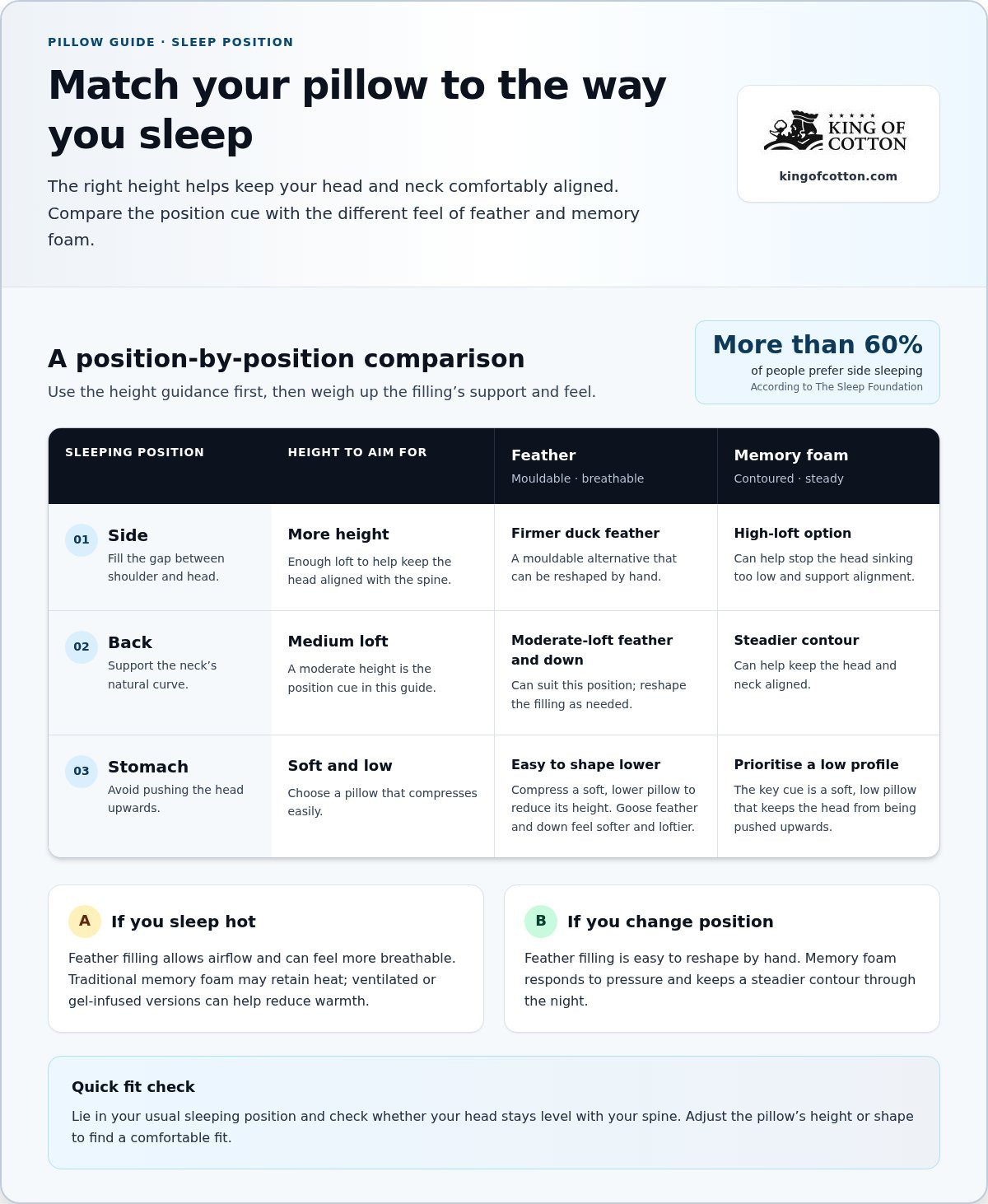
Side sleepers generally need more height, back sleepers a medium loft, and stomach sleepers a soft, low pillow. Feather filling is easier to mould and often cooler, while memory foam offers a steadier contour but may retain heat.
The best fit depends on your sleeping position, shoulder width, preferred firmness and whether you sleep hot.
Memory foam support for side sleepers
Side sleepers need enough pillow height to fill the gap between their shoulder and head. A high-loft memory foam pillow can help keep the head from sinking too low and support alignment with the spine. Its shape responds to pressure, unlike loose filling that can shift. Traditional foam may feel warm, so ventilated or gel-infused versions can help reduce heat.
Feather pillow suitability by sleeping position
Feather pillows can be reshaped to suit a changing position during the night. Duck feather pillows provide a firmer surface often suited to back and side sleepers; goose feather and down pillows feel softer and loftier, which may suit front sleepers. For stomach sleeping, compress a lower, softer pillow to reduce its height. More than 60% of people prefer sleeping on their side, according to The Sleep Foundation.
Feather and memory foam for different sleepers
Memory foam can help side and back sleepers keep their head and neck aligned, while feather filling lets sleepers adjust the pillow by hand. The trade-off is feel: foam holds its shape, whereas feathers may settle and need reshaping. For hot sleepers, feather filling’s natural airflow can feel more breathable than traditional memory foam.
Use these position cues to narrow your choice:
- Side: Choose enough height to bridge the shoulder-to-head gap. Memory foam offers a steady contour; firmer duck feather provides a mouldable alternative.
- Back: Try a medium-loft pillow to support the neck’s natural curve. Moderate-loft feather and down can also suit this position.
- Stomach: Choose a soft, low-loft pillow that compresses easily, keeping the head from being pushed upwards.
Sleeping hot can affect your decision. Feather filling allows airflow, while traditional memory foam tends to retain heat. Ventilated or gel-infused foam can help reduce warmth. Memory foam is also naturally resistant to dust mites and allergens, which some sensitive sleepers may value; breathable filling alone doesn’t determine allergy suitability.
Test the fit by lying in your usual position. Check whether your head stays level with your spine, then adjust the pillow’s height or shape. If you change positions often, a mouldable feather pillow is easy to reshape; if you want consistent contouring, memory foam keeps a steadier form. Explore pillow options for your bedroom with these sleep-position cues in mind.
Feather pillow durability and compression
Feather and memory foam pillows age differently: feather filling can compress and shift, while foam tends to retain its shape. Good-quality feather pillows can last 10 to 15 years with careful maintenance. Memory foam pillows typically last 3-4 years, although the filling, use and care all influence how long a pillow remains comfortable.
Feather filling: loft, compression and care
Each night, body weight compresses feathers and can move them away from areas that need support. Plump and reshape the pillow morning and evening to redistribute the filling and restore loft. Side sleepers may notice compression sooner if they rely on one spot for steady height. Regular airing also helps keep the filling fresh.
Wash feather pillows only when necessary, using a very gentle machine cycle if the care label allows. Dry them completely before use, since lingering moisture can encourage clumping. Some pillows need professional cleaning, so follow the label rather than assuming every feather filling can go in a washing machine. A warm-air tumble-dryer cycle for 10 minutes can help revive a feather pillow, where its care instructions permit.
Memory foam: shape retention and upkeep
Memory foam usually needs less reshaping because it maintains its form over time. Traditional foam pillows typically hold up for a maximum of 3 years, while the typical lifespan for a memory foam pillow is 3-4 years. These figures describe different guidance, not a guarantee for every pillow: material quality and nightly use affect wear.
Many memory foam pillows can’t be machine washed like traditional filled pillows. Use a pillow protector to reduce the need to clean the foam itself, and follow the care label for the cover. A protector is also practical if you want a simpler cleaning routine without repeatedly washing the pillow’s core.
Care, durability and replacement signs
Compare your pillow’s loft and support over time, not just its age. For feather filling, check whether plumping restores the height or whether the pillow remains flat. For foam, notice whether it returns to shape after pressure or has developed lasting dips. These simple checks can reveal when nightly support has changed.
- Feather: Plump regularly, air out, and follow the care label for washing and drying.
- Memory foam: Protect the core from soiling and clean according to its instructions.
- Both: Replace a pillow when it no longer supports your preferred sleeping position comfortably.
For temperature regulation, feather filling allows airflow, while memory foam can retain more heat. Neither material is automatically hypoallergenic. Memory foam is naturally resistant to dust mites and allergens, but that doesn’t make every foam pillow suitable for every sensitivity. When comparing long-term durability, match care, loft retention and cleaning needs to your preferences.
Allergies and sensitivity to natural fillings
For sensitive sleepers, the filling matters, but so do dust, bedding care and temperature. Compare how feather and memory foam suit your sensitivities and cleaning routine.
Feather pillow allergies and dust
Feather pillows contain natural duck or goose feathers, which may not suit someone sensitive to natural fillings. Feather dust or dander can also collect in the pillow, so vacuum it once a month. Follow the care label, as washing methods vary. A soft, breathable feel may appeal to some sleepers, but it doesn’t remove these allergen considerations.
Memory foam allergy resistance
Memory foam is naturally resistant to dust mites and allergens, making it a simpler option for people sensitive to natural fillings. This may be useful if feather dust is a concern. It doesn’t mean every memory foam pillow is hypoallergenic or suits every sensitivity. Consider the pillow’s cover and care instructions as well as the foam, especially if you react to particular materials.
Sensitivity to natural pillow fillings
If natural fillings trigger sensitivity, compare a feather pillow with memory foam before choosing. Feather offers a softer, mouldable feel, while foam contours more closely to the head and neck. These differences affect comfort and temperature as well as filling preference. Consider whether a softer surface changes your sleeping position or creates strain, then choose the filling that best suits your needs.
Keep bedding clean whichever filling you choose. With a memory foam pillow, wash and dry surrounding bedding at 60 degrees, and wash bedding weekly. This helps remove dust mites and dead skin from around the pillow. Follow the care labels on sheets and pillow covers, since their washing instructions may differ from the pillow’s own requirements.
Plan cleaning separately for the pillow core and its cover. Many memory foam pillows can’t be machine washed like traditional filled pillows, so a removable, washable cover can make routine care easier. Feather pillows need different attention: vacuum them once a month, air them regularly and wash only when necessary, following the care label. Dry washed feather filling completely before use.
Temperature can also affect how comfortable an allergy-conscious choice feels. Feather pillows naturally allow airflow and often feel cooler, while traditional memory foam can retain heat. If warmth makes you restless, consider ventilation as well as sensitivity. If you prefer memory foam’s closer support, ventilated or gel-infused options can help reduce heat. Prioritise the material and care routine that address your specific concerns.
- For natural-filling sensitivity: Consider memory foam’s resistance to dust mites and allergens.
- For feather filling: Vacuum monthly, air regularly and follow the care label.
- For either pillow: Keep surrounding bedding clean and follow its washing instructions.
Allergies, softness and temperature all affect the decision. Compare these factors together rather than assuming one filling suits everyone.
Feather and memory foam pillow construction
The filling’s structure shapes how a pillow responds to weight, holds its form and supports alignment. Compare the feather casing as carefully as the filling, because construction changes the feel.
Feather pillow construction
A feather pillow contains loose natural duck or goose feathers inside a fabric casing. The filling can shift under pressure, allowing you to move it by hand and adjust the pillow’s shape. The casing matters: if it isn’t robust enough, low-quality feathers can feel spiky. A quality feather pillow therefore depends on both the filling and the barrier between the feathers and your bedding.
Memory foam pillow construction
Memory foam uses a shaped foam structure rather than loose filling. It responds to body heat and weight, contouring around the head and neck under pressure. That construction gives a more consistent surface than feathers that move within the casing. Memory foam with a density of 60kg is firmer, offering a more structured feel for sleepers who prefer less give.
Look beyond the outer fabric to the pillow’s design. In a feather pillow, the filling has room to redistribute, so you can mould it into a higher or flatter shape. The casing contains the filling and affects whether you can feel the feather ends. In a foam pillow, the core provides the main structure, so its shape and firmness influence how the pillow responds.
To assess alignment, consider how each construction behaves beneath your head. A side sleeper may need enough height to fill the space between shoulder and head. Feather filling can be shifted to add height in one area, but compression may change that shape overnight. Memory foam responds directly to pressure and tends to retain a steadier contour, though its firmer feel may not suit someone who prefers softness.
Use these construction checks when comparing pillows:
- Feather filling: Feel for an even distribution, then gently press and reshape it by hand.
- Casing: Inspect the fabric and seams, especially where feather ends might press against the cover.
- Foam core: Compare its contour and firmness, including whether a firmer structure feels comfortable beneath your head.
Construction also affects care. Feather filling needs regular plumping to redistribute it, while memory foam usually maintains its shape with less reshaping. Many foam pillows can’t be machine washed like traditional filled pillows, so a protector can help shield the core. Always follow the care instructions for the pillow and its cover.
Choose the structure that matches your preferred feel and support needs. Explore bedroom pillows to compare options for your bed.
King of Cotton: Bed Linen
King of Cotton offers Duvets & Pillows and Bed Linen, helping you build a considered bedroom around your pillow choice. Once you’ve settled on feather or memory foam, bedding can complete the feel of your sleep space, while a duvet adds another layer of comfort.
Explore the range of bedroom essentials to consider how pillows and bed linen work together. King of Cotton also offers Towels and Bathrobes & Gowns for a coordinated bathroom experience.
For a more comfortable bedroom, choose a pillow filling that suits your sleeping position and preferences, then pair it with bedding that feels right to you. Visit kingofcotton.com to explore King of Cotton’s home collections.
Make your next sleep choice with confidence
Choosing a feather vs memory foam pillow is a personal decision shaped by how you like your pillow to feel and the way you sleep. Before settling on one, consider your usual bedtime routine: the position you fall asleep in, whether you tend to move, and the level of softness that feels comfortable. These preferences can turn a broad comparison into a choice that feels considered and distinctly yours.
Once you’ve chosen your pillow, consider the wider atmosphere of your bedroom. Bed linen can shape the feel of the bed, while fresh towels and a bathrobe create a quieter transition into the evening. King of Cotton offers all three, adding a refined touch to everyday home comforts.
For a considered next step, ask King of Cotton about pillows and explore options for your bedroom. Choose the feel that suits your nightly routine, then enjoy making your sleep space your own.
Frequently Asked Questions
What makes a good pillow?
A good pillow suits your body, usual sleeping position and preferred care routine. Check whether its height lets your head rest comfortably, then consider how the filling responds when you lie down. For example, someone who changes position may value a pillow that can be reshaped. A washable cover can also simplify routine care, particularly if you prefer to keep bedding fresh with regular laundering.
Which is better for your sleep position?
The best choice depends on the space between your head and mattress when you lie in your usual position. Side sleepers need enough height to fill the shoulder gap; stomach sleepers generally need less loft. Comparing a feather vs memory foam pillow can help you weigh adjustability against a steady contour. Try the pillow in your normal position and notice whether your head tips or feels well supported.
What are the differences between feather and memory foam pillows?
Feather pillows contain loose natural filling, while memory foam has a solid, pressure-responsive structure. This distinction affects how you handle each one: feather filling can be shifted or plumped, whereas foam keeps a more consistent shape. Their cleaning needs differ too, as many foam cores aren’t machine washable. Read the care label before washing, especially if the pillow has a removable cover.
Which pillow is more comfortable for side, back and stomach sleepers?
Comfort varies with your build and the height that keeps your head relaxed. Side sleepers often need greater loft than stomach sleepers, while back sleepers commonly prefer a middle ground. If you move between positions, notice whether your pillow remains comfortable after you turn. Mouldable filling can be adjusted by hand, while a shaped foam core provides a more consistent surface.
Which is better for neck pain and spinal alignment: feather or memory foam?
Either filling can feel comfortable if its height supports a neutral head position, but neither guarantees relief from neck pain. Memory foam follows the contours of your head and neck; feather filling lets you adjust the shape. If pain persists or affects daily activities, seek advice from a qualified health professional. A pillow is a comfort choice, not a substitute for assessment or treatment.
How do feather and memory foam pillows compare in firmness and support?
Memory foam generally feels more structured, and its response to pressure creates a closer contour. Feather filling feels more yielding and can be compressed or reshaped. If you’re comparing firmness in a shop, press the pillow and then lie on it; hand pressure alone won’t show how it supports your head. The right balance depends on whether you prefer a stable surface or adjustable softness.
Which pillow sleeps cooler and is better for people who overheat?
Feather filling is often airier, while traditional memory foam can retain more warmth. If you tend to overheat, consider ventilation as well as filling: a breathable pillowcase and lighter bedding may change how warm the sleep surface feels. Some memory foam designs use ventilation or gel infusion to reduce heat. Your bedroom temperature and personal comfort both influence the result.
Are feather or memory foam pillows suitable for people with allergies or asthma?
Memory foam is naturally resistant to dust mites and allergens, which may make it a simpler option for people sensitive to natural fillings. Feather pillows can collect feather dust or dander, so regular care matters. Vacuum feather pillows monthly and keep pillowcases and surrounding bedding clean. Asthma triggers vary, so consider your known sensitivities and the pillow’s care instructions when choosing.