

Managing Linen Inventory in a Small Hotel Without Waste
A linen shortage is often a lifecycle problem before it becomes a purchasing problem. Managing linen inventory in a small hotel starts with a clear PAR level. Hotels commonly maintain three PAR: one set in use, one in the laundry and one in storage. This gives housekeeping a working supply while clean linen moves through the wash cycle.
Maintaining that balance takes more than counting what is on the shelves. Track how occupancy, laundry turnaround, storage and wear affect the stock available for each room, and watch for items going missing or nearing the end of their useful life.
This guide explains how to track linen, coordinate housekeeping and laundry, plan stock checks around demand, and manage items from first use through replacement. It also covers how to spot conditions that can lead to urgent orders, so purchasing decisions can account for guest comfort and avoid unnecessary waste.
Key Takeaways
- Match linen levels to occupancy and laundry turnaround, then review critical stock daily to catch shortages early.
- Label storage by linen type, size and use, with weekly stock reviews and a full monthly count to make discrepancies easier to trace.
- Track actual usage for 4-6 weeks to establish a clearer baseline for forecasting and purchasing.
- Rotate older linen into use first, and regularly separate items that need mending, downgrading or replacement.
- Understand how linen quality and care affect its useful life, so replacement decisions can be planned rather than rushed.
Coordinating inventory with housekeeping and laundry providers
Coordinate room changes, laundry collections and clean-stock returns so housekeeping can prepare rooms without over-ordering. Coordinate with laundry providers on wash-water conditions and keep towels separate from sheets to support consistent linen care.
Setting Par Levels
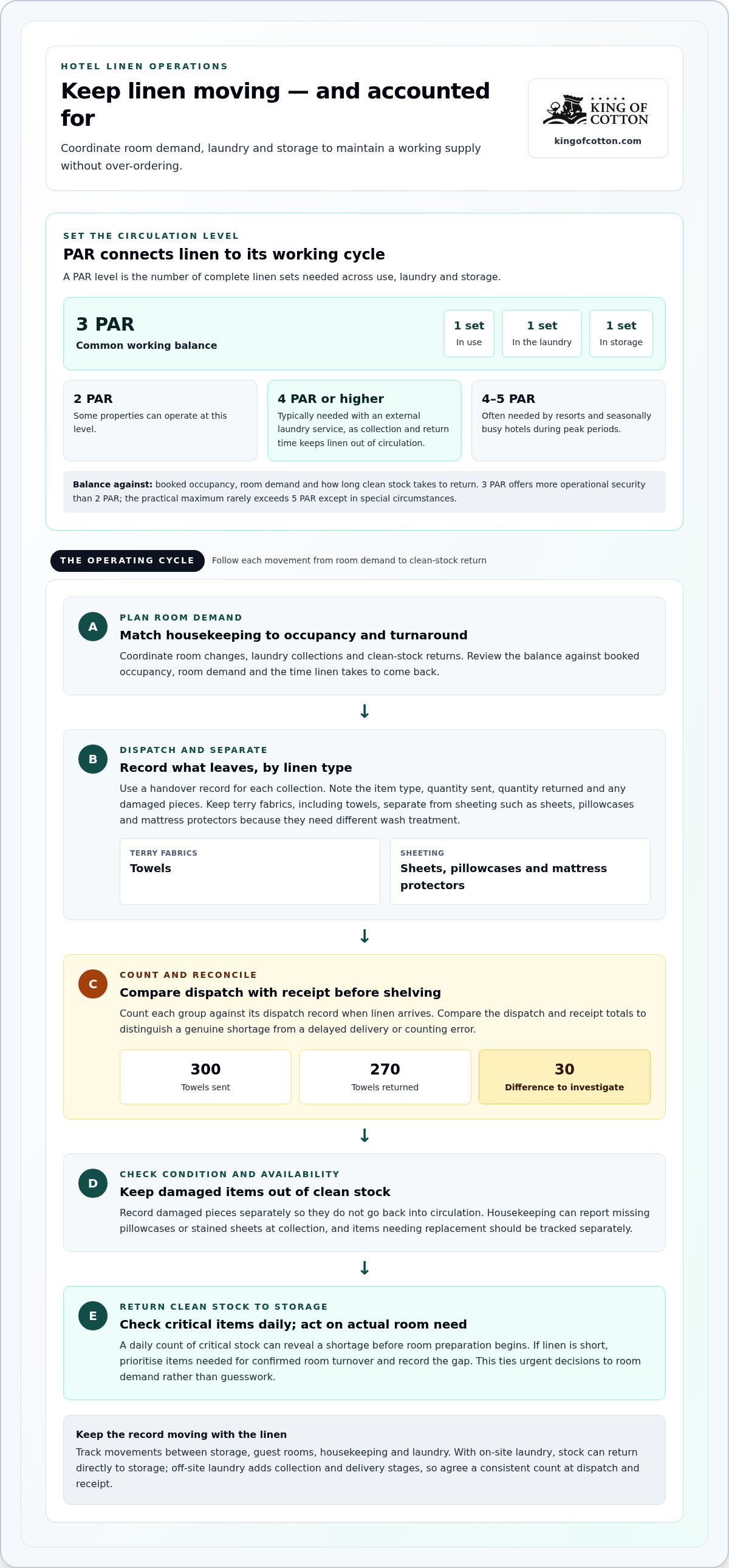
A PAR level is the number of complete linen sets needed to keep rooms supplied across use, laundry and storage. Hotels commonly maintain 3 PAR: one set in use, one in the laundry and one stored. A property using an external laundry service typically needs 4-par or higher, because collection and return time keeps linen out of circulation. Occupancy and turnaround time should guide the level.
Some properties can operate at 2-par, while 3-par provides better operational security. The maximum practical level rarely exceeds 5-par except in special circumstances. Resort properties and hotels with strong seasonal changes often need 4-5 inventory levels during peak periods. Review the balance against booked occupancy, room demand and the time clean stock takes to return.
Tracking Linen Through Operations
Operational tracking records each linen movement between storage, guest rooms, housekeeping and laundry. Count critical stock daily, and reconcile laundry dispatches against returned items. For example, if housekeeping sends 300 towels and receives 270 back, record the 30-towel difference for investigation. This distinguishes a genuine shortage from a delayed delivery or counting error.
Use a simple handover record for each collection: item type, quantity sent, quantity returned and any damaged pieces. Housekeeping can log room use and report missing pillowcases or stained sheets at collection. Record items needing replacement separately so they do not go back into clean stock. A clear record helps staff trace losses to a stage in the linen cycle.
On-site laundry can return stock directly to storage, while off-site laundry adds collection and delivery stages. For external providers, agree a consistent count at dispatch and receipt, then compare both records before shelving clean linen. A longer turnaround means more stock remains unavailable, which is why external laundry commonly calls for 4-par or higher inventory.
Coordinate housekeeping’s room schedule with laundry collections, especially during peak occupancy. A daily check of critical items can reveal a shortage of towels or sheets before room preparation begins. If linen is short, prioritise items needed for confirmed room turnover and record the gap. This ties urgent decisions to actual room demand rather than guesswork.
Keep terry fabrics, including towels, separate from sheeting such as sheets, pillowcases and mattress protectors, because they need different wash treatment. Ask the laundry provider to keep these categories separate through processing and return. When linen arrives, count each group against its dispatch record before putting clean stock back into circulation.
Labelling linens for identification and stock tracking
Clear labels connect each linen item to its type, size and storage location. Consistent records make weekly stock reviews and monthly counts easier to reconcile.
Identifying Linen with Labels
A linen label is an identifier that distinguishes items and directs staff to their correct storage place. Use a consistent code for category, size and location, such as “bath towel, large, linen cupboard”. Mark shelves and containers with matching descriptions, so housekeeping can return clean stock correctly. This reduces mis-shelving and makes stock levels easier to compare across hospitality shifts.
Keep labels easy to recognise during sorting. Separate categories such as towels, sheets and pillowcases, then group different sizes within each category. If the hotel has several linen cupboards, include the cupboard or floor name on the location label. Staff can find the right item without opening every shelf or mixing sizes during room preparation.
Digital Tools and Stock Thresholds
A digital stock record logs quantities by item type, location and condition. Set a reorder threshold for each category based on actual use, occupancy and replenishment time. When recorded stock reaches that point, the responsible person can review expected room demand and outstanding laundry before placing an order. A spreadsheet can track these details; dedicated software can organise the same information.
Update the record after receipts, laundry returns and removals for damage. Log the date and person making each change so discrepancies have a traceable history. Avoid setting one threshold for every item: towels and pillowcases may move at different rates. Category-specific thresholds make shortages easier to spot before they affect room readiness.
Choose a stock system that reflects how much linen must remain available during use, washing and storage. A four-par system is an option; a three-par system can also be assessed against the hotel’s own operation. For scale, a 100-room hotel using three-par would have 300 complete sets of room linen in rotation. That illustration helps managers relate the system to room numbers, rather than treating par as an abstract label.
Count stock weekly and compare each physical total with the record. A sample check might find 450 bath towels against expected stock of 500. Log the 50-towel variance, then compare cupboard counts, recent laundry records and damaged-item removals. Complete a full inventory count monthly to identify repeated gaps. This approach can significantly improve visibility and reduces the chance that a counting error is mistaken for a purchasing need.
Record losses and damage separately from usable stock. Note whether an item is stained, torn, missing or removed for replacement, then update its status instead of leaving it in the available total. Set buffer stock according to occupancy changes and laundry turnaround: slower returns or fuller bookings may require more reserve. Review the buffer after each monthly count so it reflects operating conditions rather than an arbitrary figure.
Benefits of an organised linen management system
An organised system turns linen records into decisions about purchasing, storage and daily room operations. Measurement and forecasting can reduce hotel operational costs by up to 7% annually, by helping managers align stock with demand instead of relying on assumptions.
The first benefit is visibility. A current record separates clean, in-use, soiled, damaged and retired linen, showing what is genuinely available. A shelf count alone, for example, can overstate supply if it includes items already allocated to rooms. Recording each status gives housekeeping and managers a more accurate picture before planning room turns.
Forecasting also helps determine whether stock reflects the hotel’s occupancy pattern. A property averaging 64% occupancy needs different inventory levels from one operating at 85% or higher. When demand rises, managers can compare expected room use with available clean linen and laundry turnaround. When demand falls, the same comparison can reveal stock sitting unused in storage.
Better organisation improves efficiency across housekeeping. Assigning each linen type a defined location reduces time spent searching, returning items to the wrong shelf or counting stock twice. A clear layout also makes shortages easier to identify during room preparation. Staff can report an unavailable item by category, helping managers address the actual gap rather than reorder broadly.
Accurate records make purchasing more deliberate. Separate replacement needs from routine replenishment, then use issue and return patterns to identify which categories wear out fastest. If bed sheets are regularly removed for damage while other stock remains serviceable, managers can focus replacement planning on that category. This avoids treating every discrepancy as a reason to buy more of everything.
Organised records can also reveal waste. Track damaged items by condition and cause, then review whether recurring problems relate to handling, storage or laundry processing. For example, repeated damage to pillowcases should prompt a review of how they move through operations. Recording the reason for removal gives the next review a specific issue to investigate.
A reliable stock picture also supports measured decisions when demand changes. Before adjusting purchasing plans, managers can compare bookings with linen in circulation and stock awaiting return. This helps distinguish a temporary timing gap from a lasting increase in requirements. It also clarifies storage needs, since surplus can be identified by category instead of hidden in an overall total.
Emergency linen orders and replacement costs
There is no single UK cost for hotel linen, laundry and replacement. The total depends on linen specifications, order quantities, laundry arrangements and how often items need replacing.
An emergency order usually follows a shortage that threatens room turnover. Before buying, compare confirmed bookings with clean stock, linen awaiting return and items removed from use. This distinguishes an urgent gap from a delayed laundry delivery or a stock-record error, and keeps purchasing focused on what guests need next.
Urgent purchasing can cost more than planned purchasing, so prevention matters. Use the weekly stock review to flag categories nearing their reorder thresholds. Then consider upcoming occupancy and laundry turnaround before placing a planned order. The aim is to allow enough time for routine replenishment, rather than waiting until housekeeping cannot prepare rooms to the hotel’s standards.
When a shortage appears, establish the cause before choosing a response. Check the latest stock count, delivery records and damage log. If clean sheets are delayed, confirm what remains in storage and which rooms need preparation. If items are damaged, separate them from usable stock and record the category and quantity to replace. These checks prevent ordering linen that is still available.
Keep emergency decisions proportionate to the shortfall. Match the required item type and size to the affected rooms, then record the purchase separately from planned replenishment. If only pillowcases are short, for example, a broad order covering unrelated categories may add stock without efficiently solving the immediate problem. A clear record also explains the urgency during the next budget review.
Plan replacements using condition and usage records, not appearance alone. Remove linen that no longer meets presentation standards, and note whether it was damaged, stained or simply worn. Compare removals with stock levels for the same category. If sheets are repeatedly retired while other linen remains serviceable, future purchasing can focus on the recurring need rather than replacing everything at once.
Guest satisfaction depends on rooms being supplied with clean, presentable linen at turnover. Set a clear escalation route: housekeeping reports a shortage, the stock lead checks available and returning items, and the manager approves a targeted response. Record the decision and reason in the inventory log. This creates a useful trail for the next review and helps prevent repeat emergencies.
After an urgent order, review what caused the gap and whether planned stock levels should change. Compare actual demand with laundry returns and recorded losses. If the shortfall came from a one-off delay, do not treat it as a permanent increase. If demand has shifted, adjust purchasing plans to keep sufficient linen available without building unnecessary surplus.
A UK budget should account for the linen selected, order size, laundry arrangements and replacement frequency. There is no single total.
Hotel linen lifecycle management
Set a replacement schedule from actual use, condition and laundering history. Track linen use for 4-6 weeks to establish reliable averages, then budget by category and review the schedule as wear becomes visible.
For room turnover, launder sheets and used towels before issuing them to another guest. During a stay, follow the hotel’s housekeeping schedule and respond to guest requests.
Choose linen types and sizes to suit the beds, pillows and guest requirements in each room. Track sheets, pillowcases and towels separately so counts and replacement decisions reflect how each item is used.
A lifecycle record follows each item from clean stock through guest-room use, laundering, inspection and retirement. This makes it easier to distinguish normal wear from damage caused by handling or processing. Include the item type, condition and reason for removal: a damaged sheet and a worn towel need different responses.
Rotate stock consistently. Place newer linen beneath older items, so existing stock is used first. After laundering, allow cotton linen to rest for at least 24 hours before reuse. Commercial laundering removes moisture from cotton fibres and can temporarily weaken them by up to 20%, making time between cycles useful for the fabric.
Care affects how long sheets and towels remain presentable. Excessive chlorine can yellow and weaken both, increasing replacement needs. Keep terry towels separate from sheeting during washing because they require different wash treatment. Inspect items after laundering and record recurring marks, thinning or damage before returning them to storage.
Replacement timing depends on quality and condition, not a single calendar date. Hotels replace linen every six months or every year, depending on its quality. Audit items regularly for wear and tear, and rotate out anything needing mending or replacement. Add checks during peak seasons, when heavier use can change stock condition more quickly.
Some linen can move to a secondary role before retirement. After 6 months to 1 year of guest-room use, downgrade suitable pieces for staff rooms. Downgraded Grade B linen can serve there for up to two additional years. Keep this stock separate from guest-room linen, with its own condition record and clear storage location.
Manage mattress protectors and pillows separately from sheets and towels. They’re often held at 1.25-par because they aren’t replaced after every guest stay. Record their condition during room checks, then use those findings to plan replacement rather than applying the sheet cycle to every item.
The useful measure is not simply how long linen has been owned. Link each replacement decision to usage, laundering, condition and intended role. This gives managers a clearer view of the lifecycle, supports a consistent guest experience and helps replacement budgets reflect actual wear.
King of Cotton: Bed Linen
King of Cotton supplies high-quality cotton bed linen for hotels refreshing or standardising guest-room stock. A considered replacement can create a consistent feel across rooms. Matching linen to bed sizes also keeps purchasing aligned with operational needs.
Explore the bed linen collection when planning a new order or reviewing existing stock. King of Cotton also supplies towels, bathrobes and gowns, and duvets and pillows, allowing hotels to consider related guest-room essentials alongside linen.
Choose the items that fit your rooms and replacement priorities. Visit King of Cotton to explore the range or get in touch.
Make your next linen decision with confidence
Treat each purchasing decision as part of the guest-room experience. Consider how the feel and presentation of your textiles support the atmosphere you want guests to remember, alongside the practical demands of daily use. A disciplined approach to managing linen inventory in a small hotel helps you make these choices with a clearer understanding of what your rooms need.
King of Cotton supplies bed linen, towels, bathrobes and gowns for hotel settings. These products can create a considered, cohesive impression across bedrooms and bathrooms, while keeping your selection focused on the items your property uses.
When you’re ready to explore options for your hotel, contact King of Cotton about hotel linen. Take the next step towards a guest experience shaped by comfort, care and thoughtful details.
Frequently Asked Questions
How to Master Linen Management for Small Businesses?
Build a routine around room demand, linen condition and clear staff responsibilities. For managing linen inventory in a small hotel, assign someone to record issues, returns and removals, then compare those records with housekeeping needs. Review unusual variances before ordering. A shortage in one room category, for example, may reflect a delayed laundry return rather than a lasting increase in demand.
What Exactly is Linen Management for hotels?
Hotel linen management coordinates purchasing, storage, use, laundering, inspection and replacement. It connects housekeeping requirements with the stock available to prepare rooms. A useful record distinguishes clean items from used, damaged or retired pieces, helping managers make decisions based on usable stock rather than treating everything physically on site as ready for guests.
What is Par Level in Hospitality?
A PAR level is the quantity of an item a hospitality operation plans to keep available for its needs. For linen, the calculation considers room setup, use, laundering and return timing. Apply it by item category rather than combining sheets, pillowcases and towels into one total. Each category has a different role and may move through operations at a different pace.
What is a Normal Par Level in Hotel Laundry?
Three PAR is a common hotel linen arrangement, with linen distributed across use, laundry and storage. A hotel using an external laundry service typically needs 4-par or higher because stock spends longer away from the property. The suitable level depends on occupancy and return timing. Review it when service arrangements change, since a different collection or delivery pattern affects available clean stock.
What’s the Minimum and Maximum Par Level?
Some properties can operate at 2-par, while 3-par offers better operational security. The maximum practical linen level rarely exceeds 5-par except in special circumstances. These figures are guides, not a fixed rule for every item or hotel. Consider laundry turnaround, seasonal demand and usable storage before setting a level; otherwise, a high target can leave excess linen occupying valuable space.
Where Does the Term PAR Come From?
In hotel linen planning, PAR refers to the planned stock quantity needed to support operations. Its practical value is the target it sets, rather than serving as a separate inventory method. Staff can compare the PAR figure with usable stock and operational requirements, then decide whether a gap calls for investigation, redistribution or replenishment.
Why is it Critical for Hotels?
A PAR target helps managers avoid two operational problems: too little clean linen for room preparation and more stock than the hotel can use efficiently. It also gives housekeeping and purchasing a shared reference for reporting shortages. Compare the target with usable stock and upcoming room demand to spot pressure before it affects room readiness.
How much linen should a small hotel keep per bed and room?
For ordinary room linen, use three complete sets per room as a common starting point, then adjust for occupancy and laundry turnaround. External laundry commonly calls for 4-par or higher. Calculate each bed’s requirements from its actual bedding arrangement, counting sheets and pillowcases by type. Mattress protectors and pillows are often managed separately at 1.25-par because they aren’t replaced after every stay.