

Cooling Pillows for Night Sweats: The 2026 Luxury Guide to Restorative Sleep
You wake up at 2 AM with damp hair and a pillow that feels like a heat trap, realizing the "cool side" vanished hours ago. It's incredibly frustrating when your rest is interrupted by the "heat soak" effect, where technical fabrics fail to maintain their initial chill. You deserve a sleep environment that mirrors the serenity of a five-star hotel suite, not one that leaves you fatigued by sunrise. Finding the best cooling pillows for night sweats requires moving beyond marketing gimmicks to embrace a dual-action approach of active heat dissipation and passive moisture-wicking luxury fibers.
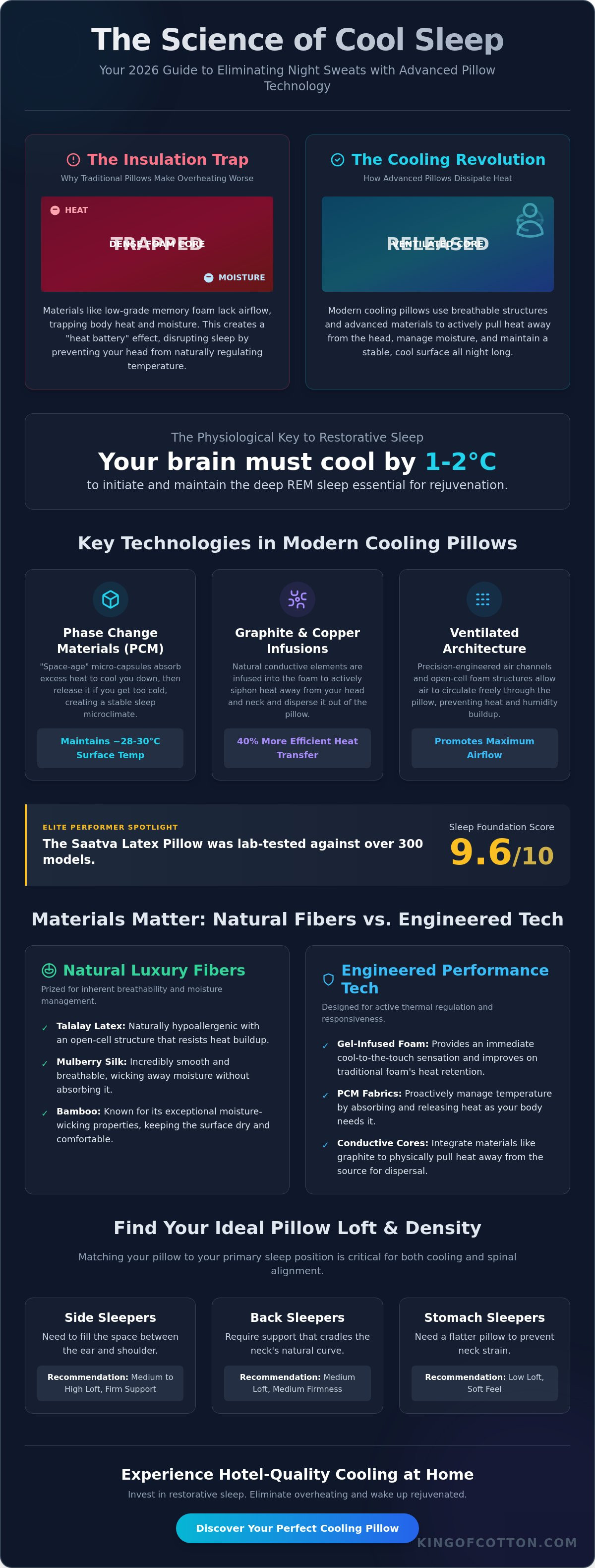
We understand that restorative sleep is the foundation of a refined lifestyle. In this 2026 guide, you'll discover how to eliminate nocturnal overheating using advanced materials like Talalay latex and mulberry silk. We'll examine elite performers like the Saatva Latex Pillow, which earned a 9.6/10 test lab score from the Sleep Foundation after rigorous evaluations of over 300 different models. You'll learn how to select a pillow that offers both technical excellence and the indulgent comfort expected from the world's finest homes, ensuring you wake up feeling refreshed and rejuvenated every morning.
Key Takeaways
- Understand why traditional foam creates an "insulation trap" and how to properly dissipate heat through your head's natural radiator.
- Discover the technical differences between Phase Change Materials and gel-infused foam for sustained, all-night temperature control.
- Evaluate the performance of natural fibers like silk and bamboo when selecting the best cooling pillows for night sweats.
- Identify the ideal pillow loft and material density based on your primary sleep position and the severity of your overheating.
- Learn how professional hospitality standards from the world's finest hotels ensure your luxury bedding remains durable and effective.
Understanding the Science of Night Sweats and Pillow Heat
Your head acts as the body's primary radiator during sleep, accounting for a significant portion of heat dissipation required to regulate your internal clock. While the head represents only about 7% to 10% of your total body surface area, its dense network of blood vessels makes it incredibly efficient at shedding warmth. Understanding the Science of Night Sweats is the first step in reclaiming your rest. When this natural cooling process is obstructed by poor bedding, your core temperature remains elevated, which prevents you from entering the deeper, more restorative stages of the sleep cycle.
To better understand how modern technology addresses these thermal challenges, watch this helpful video overview of leading sleep solutions:
There's a critical distinction between occasional "hot sleeping" and chronic night sweats. While a warm room might cause temporary discomfort, night sweats often involve intense perspiration that soaks through fabrics, regardless of the ambient temperature. Traditional pillows often exacerbate this by creating an "Insulation Trap." Materials like standard down or solid, low-grade memory foam are designed to retain heat. They lack the structural breathability to move air away from the skin, forcing your body to work harder to cool down. High-performance cooling pillows for night sweats solve this by focusing on the pillow core's thermal regulation rather than just a temporary "cool touch" surface treatment.
Why Traditional Pillows Make Night Sweats Worse
Dense materials like basic memory foam lack an open-cell structure, meaning they have virtually no airflow. When you perspire, moisture becomes trapped within the fibers or foam pores, leading to a damp and humid surface that clings to your skin. In the world of sleep science, "thermal mass" is defined as a material’s capacity to absorb and store heat energy. Traditional foam has a high thermal mass, which means it acts like a heat battery, soaking up your body warmth and radiating it back toward your face all night long. This constant feedback loop of heat and moisture is what leads to that exhausted, "damp hair" feeling in the morning.
The Physiological Need for a Cool Head
Your brain must experience a drop in temperature of approximately 1 to 2 degrees Celsius to initiate deep REM sleep and maintain it throughout the night. A technically advanced cooling pillow facilitates this drop by drawing heat away from the skull and dispersing it into the air. By maintaining a stable, lower temperature, these pillows essentially trick the brain into staying in deeper sleep stages for longer periods. Beyond the physiological benefits, the psychological impact of a "fresh" surface is immense. Waking up to a dry, crisp pillow provides a sense of serene confidence and rejuvenation that is often missing for those struggling with overheating.
Key Technologies in Modern Cooling Pillows
Modern sleep technology has evolved far beyond simple fans and open windows. Today’s cooling pillows for night sweats utilize advanced materials originally developed for aerospace and high-performance athletics. These innovations ensure that the "cool side of the pillow" isn't just a fleeting moment but a consistent, all-night experience. By integrating these technical solutions, you can transform your bedroom into a sanctuary of restorative rest that rivals the world's most exclusive hotels.
Phase Change Materials (PCM) represent the pinnacle of this evolution. These "space-age" fabrics contain micro-encapsulated waxes that absorb excess heat when your skin temperature rises and release it if you become too cold. This creates a stable microclimate, maintaining a consistent surface temperature of approximately 28 to 30 degrees Celsius. To enhance this effect, luxury bedding now incorporates conductive fills like graphite or copper. These elements possess high thermal conductivity, siphoning heat away from the head and neck 40% more efficiently than standard polyurethane foam.
While gel-infused memory foam provides immediate pressure relief and a cool initial touch, its performance depends on the pillow's physical architecture. Open-cell structures are essential for long-term comfort. Unlike traditional dense foam, open-cell foam features interconnected pores that act as a ventilation system. This structural design allows air to circulate freely, preventing the "heat soak" effect where a pillow becomes uncomfortably warm after two or three hours of use.
Active vs. Passive Cooling Methods
Active cooling refers to materials like PCM that react dynamically to your body heat. Passive cooling involves structural design and material selection, such as breathable mesh borders or natural fibers that prevent heat from building up in the first place. If you are managing the medical causes of night sweats, a hybrid approach is your best strategy. You need active technology to drop your temperature quickly and passive airflow to ensure that moisture is wicked away before it can cause discomfort.
The Importance of Breathable Covers
A sophisticated cooling core is only as effective as the material surrounding it. Synthetic, non-breathable covers act as a thermal barrier, neutralizing the benefits of expensive cooling technology. High-thread-count Egyptian cotton or sateen weaves are the gold standard for moisture management. These natural fibers pull perspiration away from the skin, allowing it to evaporate through the fabric. To complete your haven of elegance, pairing your pillow with the right luxury bed linen is a necessary step for any discerning sleeper. If you're ready to upgrade your entire sleep environment, explore our full range of premium sleep solutions designed with over 25 years of hospitality expertise.
Natural vs. Synthetic: Which Material Wins for Hot Sleepers?
While mass-market retailers often claim that chemical gels are the only solution for overheating, seasoned sleep experts know that natural fibers offer a more sophisticated form of thermal regulation. The best cooling pillows for night sweats don't just feel cold for five minutes; they manage moisture and airflow throughout the entire eight-hour rest period. Choosing between natural and synthetic materials depends on whether you value immediate temperature drops or sustained, dry comfort. Comfort is rarely accidental.
Natural fibers like silk and bamboo possess inherent properties that repel heat. Silk, for instance, contains 18 amino acids that help maintain skin hydration while allowing excess warmth to escape. Bamboo-derived viscose is equally impressive, offering a cross-section filled with micro-holes that improve ventilation by approximately 20% compared to standard polyester. However, the most effective modern solution often involves a hybrid approach: a technically advanced core paired with a luxurious natural exterior.
The Case for Egyptian Cotton
Long-staple Egyptian cotton remains the gold standard for those who experience frequent night sweats. Because the fibers are longer and finer than standard cotton, they can be woven into a fabric that is exceptionally strong yet incredibly breathable. This material excels at the "wicking" process, where capillary action draws moisture away from the skin and moves it to the fabric's surface for rapid evaporation. Investing in high-quality Egyptian cotton bedding ensures that your pillow stays dry rather than becoming a damp, heavy weight that disrupts your sleep cycle.
Synthetic Innovations in Hospitality
In the professional hospitality sector, durability and hygiene are just as vital as comfort. As "Suppliers to the Finest Homes & Hotels in the World," we've seen how specialized synthetic clusters, such as Smartfil, have revolutionized the industry. These high-performance synthetics are engineered to mimic the loft and breathability of natural down without the heat-trapping downsides of solid foam. Unlike cheap retail gel pads that lose their efficacy after a few months, hotel-quality synthetics maintain their structure and cooling properties for years.
Maintenance is another critical factor for those managing night sweats. Synthetic pillows are often easier to launder at high temperatures, which is essential for removing the salt and oils left behind by perspiration. This ensures your sleep environment remains a haven of elegance and hygiene, night after night. For a complete solution, consider exploring our full range of premium pillows and duvets designed for lasting restorative sleep.
How to Choose the Right Cooling Pillow for Your Sleep Style
Selecting the ideal cooling pillows for night sweats is a bespoke process that balances personal comfort with technical performance. A pillow that works for a back sleeper might be completely ineffective for someone who sleeps on their side. To find your perfect match, you should follow a structured selection process that prioritizes both spinal alignment and thermal regulation. After 25 years of supplying the world's finest hotels, we've identified five essential steps to guide your choice.
- Step 1: Identify your position. Side, back, and front sleepers have vastly different support requirements.
- Step 2: Assess sweat severity. Do you experience occasional warmth or chronic, heavy night sweats? Frequent sufferers require active Phase Change Materials rather than just breathable fibers.
- Step 3: Choose your loft. Ensure the height of the pillow keeps your neck in a neutral position.
- Step 4: Select your mechanism. Decide if you prefer the "instant chill" of cold-touch fabrics or the steady, passive airflow of natural materials.
- Step 5: Verify washability. For those managing night sweats, a pillow with a removable, machine-washable cover is non-negotiable for maintaining hygiene.
Recommendations by Sleeping Position
Side sleepers generally require a higher loft to fill the gap between the ear and the shoulder. However, many high-loft pillows are excessively dense, which restricts airflow and traps heat against the face. You should look for structured support that incorporates ventilation channels or open-cell foam. Back and front sleepers need a much slimmer profile to prevent neck strain. For these positions, surface breathability is the priority, as a thinner pillow has less "thermal mass" to store heat. When selecting your new bedding, consult our UK Bed Size Guide to ensure your pillow dimensions complement your mattress perfectly.
The Total Cooling Environment
A cooling pillow is most effective when it’s part of a complete sleep system. Even the most advanced cooling pillows for night sweats can’t overcome the heat trapped by a heavy, non-breathable duvet. Your choice of top bedding is critical, so we recommend reading our guide on How to Choose the Perfect Duvet to find a weight that encourages airflow. Additionally, a high-quality mattress protector made from natural fibers can act as a secondary moisture-wicking layer. You can explore our full range of cooling accessories in our bedroom collections to create a truly temperate sanctuary. Browse our comprehensive collection of luxury pillows to find your bespoke sleep solution today.
The King of Cotton Standard: Hotel-Quality Cooling at Home
At King of Cotton, we believe that the quality of your sleep dictates the quality of your day. For more than 25 years, we've served as "Suppliers to the Finest Homes & Hotels in the World," providing the foundational comfort required for a five-star rest. Translating this professional hospitality expertise into your own bedroom means moving beyond standard retail expectations. When we design cooling pillows for night sweats, we prioritize the same durability and thermal efficiency demanded by the world's most exclusive resorts. This ensures your investment in restorative sleep remains effective for years, not just weeks.
Our philosophy centers on the marriage of traditional luxury materials and modern technical innovation. We're committed to using high-GSM cotton and specialized fills that stand the test of time. While a typical high-street pillow might flatten within months, our hotel-grade solutions maintain their loft and breathability through hundreds of sleep cycles. This longevity is essential for hot sleepers, as a pillow that retains its structure also retains its ability to circulate air and dissipate heat. Choosing the right bedding isn't just about comfort; it's a significant investment in your long-term health and daily wellbeing.
Craftsmanship and Material Integrity
The distinction between "retail grade" and "hotel grade" lies in the integrity of the materials. We utilize premium Egyptian cotton for our pillow shells, ensuring a smooth, crisp surface that facilitates moisture wicking. Combined with our specialized hospitality fills, these pillows offer a level of temperature regulation that synthetic mass-market alternatives simply cannot match. For those who value a tactile experience before making a decision, we invite you to visit our London store. Feeling the weight and texture of our fine linens in person provides a serene confidence in the quality of your purchase.
Creating Your Personal Haven
Transforming your bedroom into a haven of elegance requires a holistic approach to sleep. View your nightly rest as a rejuvenating ritual rather than a necessity. To maximize the effectiveness of your cooling pillow, pair it with the correct thread count sheets. A 300 to 400 thread count percale weave is often ideal for hot sleepers, as it allows for maximum airflow compared to denser, higher thread count sateen options. By curating every layer of your bed, you create a stable microclimate that prevents the "heat soak" effect from ever occurring. When you're ready to elevate your sleep experience, explore our full pillows and duvets collection to find the ultimate companion for a cool, restorative night.
Reclaim Your Rest with Hotel-Style Luxury
Restorative sleep is no longer a luxury; it's a necessity for a refined lifestyle. You've discovered that the most effective cooling pillows for night sweats combine active heat-absorbing technology with the passive wicking power of long-staple Egyptian cotton. By matching your pillow's loft to your specific sleeping position and addressing the "insulation trap" of traditional materials, you can finally end the cycle of disrupted nights. Comfort is a deliberate choice.
As specialists with more than 25 years of expertise and a brand rated Excellent on Trustpilot, King of Cotton remains the trusted supplier to the world's finest 5-star hotels. We bring that same uncompromising standard of elegance and technical performance directly to your bedroom. It's time to invest in your long-term wellbeing and experience the serene confidence of a temperate sleep environment. Explore our Hotel-Quality Cooling Pillows & Bedding today to begin your journey toward better rest. You deserve to wake up feeling truly rejuvenated every single morning.
Frequently Asked Questions
Do cooling pillows actually help with night sweats?
Yes, high-performance cooling pillows for night sweats significantly reduce sleep disruptions by maintaining a stable microclimate around the head. While they don't cure the underlying medical causes, they prevent the secondary "heat soak" effect that often wakes you up. By siphoning away excess warmth, these pillows help your brain reach the lower temperature needed for deep REM sleep stages.
How long do cooling pillows stay cold during the night?
The duration of the cooling effect depends on the specific technology used, but Phase Change Materials typically provide active regulation for up to 8 hours. Passive cooling methods, such as open-cell foam and breathable natural fibers, don't "run out" of cooling power. Instead, they work continuously by allowing heat to escape through ventilation channels throughout the entire night.
Can I put a regular pillowcase on a cooling pillow?
You can use a regular pillowcase, but choosing a thick or synthetic fabric will likely neutralize the pillow's technical benefits. A heavy polyester case acts as a thermal barrier, trapping heat against your skin. To ensure your cooling pillows for night sweats perform as intended, always pair them with a highly breathable, natural fiber case such as fine Egyptian cotton.
How do I wash a cooling pillow to maintain its properties?
Most premium cooling pillows feature a removable, machine-washable cover that should be cleaned at least once every 14 days to remove salt and oils. You should always check the care label before attempting to wash the inner core. Many technical fills require gentle, low-temperature cycles to preserve their structural integrity and moisture-wicking capabilities over years of use.
What is the best material for a pillowcase if I have night sweats?
A 300 to 400 thread count Egyptian cotton percale or a high-quality mulberry silk is the best choice for managing perspiration. These materials are prized for their superior moisture-wicking properties and smooth texture. Unlike dense sateen weaves, a crisp percale allows for 25% more airflow, which is essential for keeping the surface of your pillow dry and fresh.
Are gel cooling pillows better than breathable cotton pillows?
Neither is objectively superior; instead, they serve different sensory preferences and cooling needs. Gel provides an immediate "cold-to-the-touch" sensation that is helpful for falling asleep quickly. However, breathable cotton and natural fibers excel at long-term moisture management. For the most effective relief, look for a hybrid solution that incorporates both active gel elements and a breathable natural exterior.
Is memory foam bad for people who get hot at night?
Traditional, high-density memory foam is generally unsuitable for hot sleepers because it lacks an open-cell structure to dissipate heat. However, modern "hotel-grade" foams are engineered with ventilation holes and gel infusions to counteract this issue. If you prefer the pressure relief of foam, ensure you select a model specifically designed with an open-cell architecture to prevent overheating.
How often should I replace my cooling pillow?
You should replace a high-quality cooling pillow approximately every 24 to 36 months to ensure it retains its supportive and thermal properties. Over time, even the finest materials can accumulate allergens or lose their structural loft. Regular replacement ensures you continue to receive the five-star support and temperature regulation required for truly restorative, uninterrupted sleep.