

The Ultimate Guide to Cotton Bed Sheets: Choosing 5-Star Hotel Quality for Your Home
That 1,000-thread-count label on your bedding might actually be the reason your sleep feels stifled and scratchy. It's a common misconception that a higher number always equals better quality, but many manufacturers use multi-ply yarns to artificially inflate these figures. You deserve cotton bed sheets that offer genuine luxury rather than clever marketing. We understand the frustration of investing over £100 in a set only to find it bobbling after three washes or struggling to fit a deep modern mattress.
You've likely felt the difference in a 5-star suite and wondered why your home linens don't compare. This guide will help you master the art of selecting professional-grade linens by deconstructing thread counts and material weaves. We'll show you how to choose between the crisp breathability of Percale and the silky drape of Sateen so your bed actually improves with age. Drawing on our 25 years of experience supplying the world's most prestigious hotels, we're sharing the secrets to creating a permanent haven of elegance in your own bedroom.
Key Takeaways
- Discover why 100% long-staple cotton is the undisputed gold standard for breathability and achieving a smooth, five-star finish.
- Learn to navigate marketing myths by understanding how thread count and yarn construction actually affect the quality of your cotton bed sheets.
- Master the distinction between crisp Percale and silky Sateen weaves to identify which texture best suits your personal sleep preference.
- Uncover professional hospitality secrets for achieving a flawless fit on deep mattresses and the functional luxury of hotel-style layering.
- Extend the lifespan of your investment with expert laundering techniques designed to prevent "grey-ing" and maintain pristine softness.
The Science of Cotton Bed Sheets: Why Material is the Gold Standard
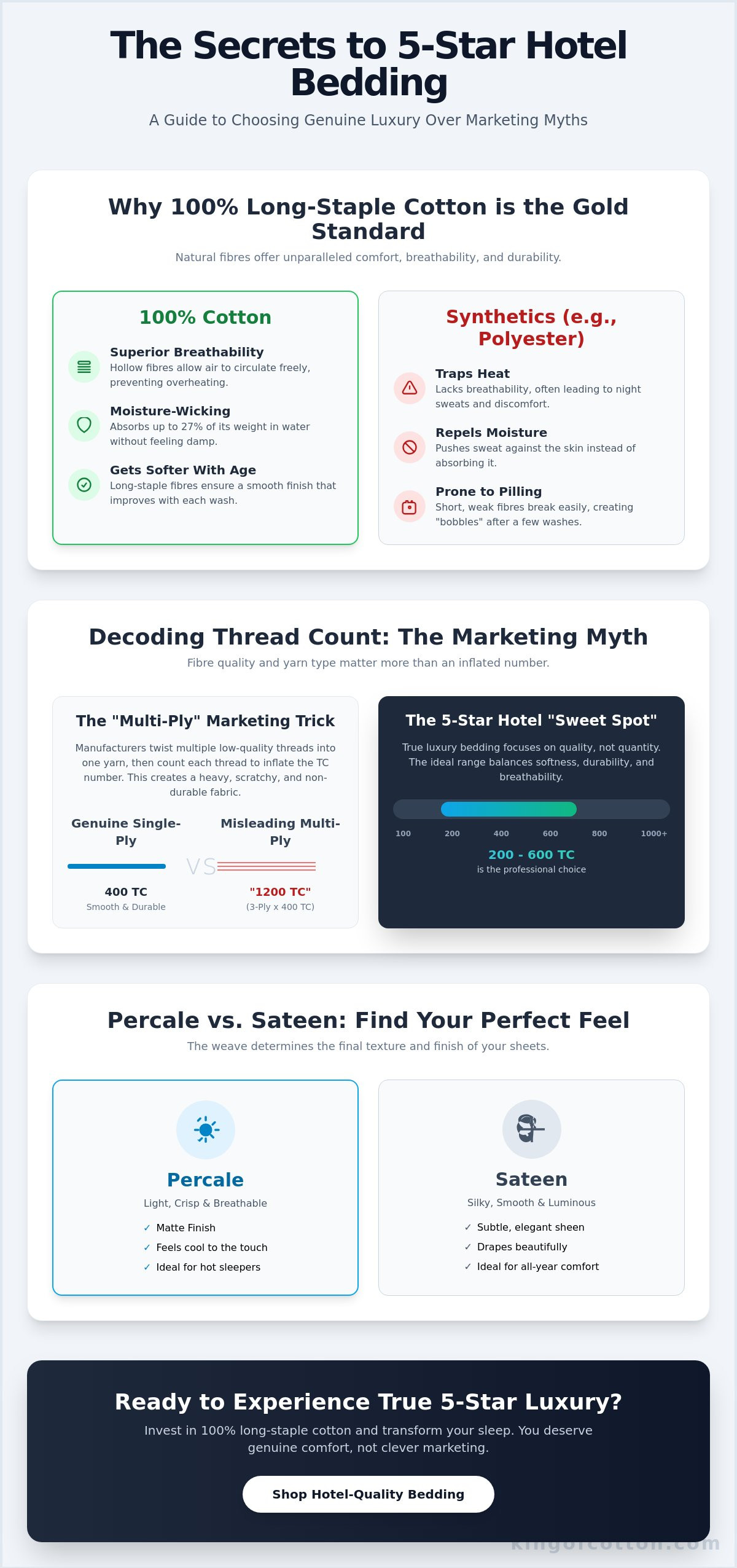
100% cotton remains the undisputed leader in luxury bedding due to its natural breathability and thermoregulation. It isn't just a traditional choice. The physical structure of the cotton plant's seed hair creates a hollow fibre that excels at managing body heat. At King of Cotton, our philosophy focuses on sourcing only the finest raw materials to provide a rejuvenating sleep experience similar to a 5-star hotel. Exploring bed sheet history and materials shows that despite modern synthetic innovations, natural cotton is still the benchmark for comfort and hygiene in professional hospitality.
The performance of cotton bed sheets depends heavily on the moisture-wicking properties of the plant. Cotton can absorb up to 27% of its own weight in water without feeling damp. This makes it significantly superior to polyester alternatives that trap sweat against the skin, leading to a restless night's sleep.
To better understand how cotton compares to other popular materials, watch this helpful video:
Breathability and Temperature Control
Cotton fibres allow air to circulate freely, preventing the trapped heat that often leads to night sweats. This makes it a versatile four-season fabric. It keeps you cool during a humid UK summer and provides essential insulation during the winter months. For those weighing up their options, this expert comparison of cotton vs polyester details why natural fibres are the healthier choice for skin sensitivity and consistent temperature control.
Durability: The Investment Value of Quality Cotton
Investing in quality cotton ensures your bed linen will actually improve with age. While synthetic fabrics often thin out or pill after a dozen washes, premium cotton bed sheets become more supple and soft over time. The secret lies in using long-staple fibres. These longer strands create a smoother yarn with fewer exposed ends, which prevents the pilling or "bobbling" common in cheaper, short-staple sets. Staple length is the primary indicator of a sheet’s lifespan. By selecting long-staple varieties, you're investing in a product that maintains its integrity for years, offering much better value than frequent replacements of low-grade alternatives.
Decoding Thread Count: Moving Beyond the Marketing Myths
For decades, consumers have been led to believe that a higher thread count automatically guarantees a more luxurious experience. This isn't strictly true. Thread count simply measures the number of horizontal and vertical threads woven into one square inch of fabric. While it's a useful metric, it's often manipulated by manufacturers looking to charge a premium for lower-quality cotton bed sheets.
The most common trick involves "multi-ply" yarns. Instead of using one strong, long-staple cotton fibre, manufacturers twist two or three inferior threads together. They then count each individual strand in that twist toward the final total. A "1200 thread count" sheet is frequently just 400 threads of 3-ply yarn. These sets feel heavier, trap heat, and lack the durability of genuine luxury linens. For a truly refined feel, you should always look for "single-ply" labels. This ensures the fabric remains breathable and smooth against your skin.
What Thread Count Actually Means
Thread count is a measure of density, but density doesn't always mean comfort. High-quality single-ply yarns allow for a tighter, more precise weave without making the fabric stiff. If a brand advertises a thread count above 600, it's almost certainly using multi-ply construction. This often leads to pilling and a scratchy feel after just a few washes. Expert suppliers with over 25 years of experience know that the quality of the raw cotton matters far more than the mathematical total of the threads.
The 400 Thread Count Sweet Spot
Most 5-star hotels across the UK opt for a thread count between 200 and 600. This range provides the perfect balance of weight and breathability. A 200TC Percale weave offers a crisp, cool finish that's ideal for those who get warm at night. In contrast, a 400TC Sateen weave provides a silkier, more lustrous drape that feels incredibly indulgent.
The 400TC level is widely considered the "sweet spot" for luxury. It’s dense enough to feel substantial but light enough to allow for excellent airflow. You can explore the luxury bedding collections to find the specific weave that suits your sleeping style. Here is what you can expect from different levels:
- 200 Thread Count: Typically a Percale weave. It's cool, crisp, and exceptionally durable.
- 300 Thread Count: A slightly softer feel, often found in boutique hotels.
- 400 Thread Count: The standard for high-end luxury. It offers a smooth, buttery texture.
- 600 Thread Count: A denser, heavier fabric that provides a very formal, structured look to the bed.
Choosing the right cotton bed sheets isn't about chasing the highest number. It's about finding the weave and ply that offers lasting comfort and that signature hotel-style elegance.
Origins and Weaves: Percale, Sateen, and Egyptian Excellence
The way your cotton bed sheets are woven changes everything about your sleep experience. It isn't just about the thread count; it's about the architecture of the fabric itself. The weave determines how the material breathes, how it drapes over your body, and how long it stays in pristine condition. Understanding these technical differences helps you recreate that precise five-star hotel feeling in your own home.
Percale vs. Sateen: Which is Right for You?
Percale follows a traditional one-over, one-under pattern. This creates a tight, flat structure that feels like a freshly pressed, crisp white shirt. It's the classic choice for high-end hospitality because it stays cool and resists pilling. If you're a hot sleeper, percale's superior breathability is essential for a restful night.
Sateen uses a four-over, one-under weave. This technique exposes more of the yarn's surface, resulting in a silky drape and a subtle, elegant lustre. It's naturally heavier than percale and offers a cosy, cocoon-like sensation. It's the ideal choice for those who want a touch of opulence and warmth in their bedroom.
| Feature | Percale | Sateen |
|---|---|---|
| Breathability | High (Cooling) | Medium (Insulating) |
| Feel | Crisp, Matte | Silky, Smooth |
| Appearance | Clean, Casual | Lustrous, Drapey |
The Truth About Egyptian Cotton
The Nile River Valley offers a unique climate with high humidity and nutrient-rich soil. This environment allows cotton plants to grow extra-long staple (ELS) fibres. These fibres are significantly stronger and finer than standard cotton, allowing for a much smoother yarn. While many brands claim the name, true excellence lies in specific Giza varieties. Giza 45 is the most exclusive, representing less than 0.5% of total Egyptian cotton production. It's hand-picked to ensure the fibres remain unbroken and uniform. You can learn more about why Egyptian Cotton Bedding is worth the investment in our detailed guide.
Before these fabrics reach your bed, they often undergo mercerisation. This finishing process increases the fibre's surface area, which improves dye uptake and adds a permanent silk-like sheen. It also makes the fabric stronger, ensuring your luxurious bed linen maintains its integrity after dozens of washes. This attention to detail is why professional laundries and elite hotels prefer mercerised cotton bed sheets for their durability and refined finish.
The Professional Setup: Sizing, Depth, and Layering Secrets
Even the finest cotton bed sheets will feel lackluster if they don't stay firmly in place. Most standard retail sheets are designed for mattresses with a 20cm depth, yet modern luxury mattresses often exceed 30cm. When you add a quilted topper or a protector, a standard sheet simply won't reach the underside of the mattress. This leads to the frustrating "corner pop" in the middle of the night. Achieving a 5-star look requires understanding the geometry of your bed and choosing linens that account for every extra centimetre of cushioning.
Fitted vs. Flat Sheets: The Hospitality Approach
Hotels almost exclusively use a flat sheet between the sleeper and the duvet. This isn't just tradition; it's a hygiene masterstroke. A flat sheet acts as a barrier, absorbing perspiration and skin oils. It's much easier to launder a flat sheet at high temperatures than a bulky duvet cover, which helps your bedding last longer. If you're curious about the mechanics, read this expert guide to using a top sheet. To get that crisp finish, master the "hospital corner." Lay the sheet flat, tuck the end under the mattress, then pull the side up to create a 45-degree angle before tucking the remainder. It creates a tension that keeps the surface smooth all night long.
Sizing for Success: UK Standards
UK bed dimensions are distinct from European or American sizes. A UK King is 150cm x 200cm, while a Super King measures 180cm x 200cm. You'll find specific measurements for every variation in the UK Bed Size Guide. Beyond width and length, depth is the critical variable. For mattresses with integrated pillow-tops or separate toppers, you'll need extra deep fitted sheets. These typically feature a 40cm box depth. This extra fabric ensures your cotton bed sheets remain taut and wrinkle-free, even on the plushest setups.
- Measure your mattress depth including any toppers; add 5cm for a secure tuck.
- Check the "box depth" on product descriptions; 30cm is standard, 40cm is extra deep.
- Use a flat sheet to reduce duvet cover wash cycles by 50% for better fabric longevity.
- Look for elastication around the entire edge of fitted sheets, not just the corners, for a more stable fit.
Investing in the right dimensions prevents the fabric from over-stretching, which can weaken the fibres over time. When your sheets fit perfectly, the bed looks tailored and the sleep experience is uninterrupted by shifting fabric.
Shop our professional-grade bed linen collection
Caring for Luxury Cotton: Maintaining the 5-Star Experience
Owning premium cotton bed sheets is an investment in your daily well-being. To ensure they remain as soft and inviting as the day you unboxed them, you need a maintenance routine that respects the integrity of the natural fibres. Luxury hotels achieve that consistent crispness through specific laundering protocols that you can easily replicate at home. Proper care doesn't just keep your linens looking beautiful; it extends the life of the fabric by years.
The Perfect Wash Cycle
Temperature control is vital for balancing cleanliness and cloth longevity. While a 40°C wash is sufficient for regular refreshing, 60°C is the professional benchmark for eliminating allergens and skin oils that cause "grey-ing" over time. Avoid harsh biological detergents that contain heavy chemical bleaches, as these can eventually break down the delicate structure of high-thread-count cotton. Liquid detergents are generally preferred over powders because they dissolve more completely in the wash.
You should also be wary of fabric softeners. While they promise extra comfort, they often leave a waxy residue that clogs the cotton's natural pores, reducing its breathability. "To maintain the pristine white of hotel linen, always separate whites from colours and avoid over-loading the drum." Giving your cotton bed sheets plenty of space to move ensures a thorough rinse and prevents the abrasive friction that leads to pilling.
Drying and Ironing for Crispness
Air drying on a line is the most gentle method for your luxury linens. It preserves the tensile strength of the cotton and provides a natural freshness that machines can't replicate. If you prefer a softer feel, a 10-minute tumble dry on a low heat setting will "fluff" the fibres effectively. Never use high heat settings, as extreme temperatures make cotton brittle and are the primary cause of shrinking in natural textiles.
To achieve that sharp, professional finish without spending hours at the ironing board, use the damp-ironing method. Press your sheets while they are still roughly 10% to 15% damp. The heat from the iron turns the remaining moisture into steam, smoothing out deep creases instantly and leaving that signature smooth surface found in high-end suites. It's a simple change that makes a massive difference in the final texture of the bed.
As specialists with more than 25 years of experience supplying the world's most prestigious establishments, King of Cotton understands that quality linens are a lifelong commitment. We provide the same professional-grade materials used by five-star boutiques to ensure your bedroom remains a sanctuary of elegance. Explore our full range of bedroom products to complete your sanctuary and enjoy the ultimate sleep experience every night.
Elevate Your Sleep to Five-Star Standards
Investing in premium bedding is about more than just aesthetics; it's about the science of restorative rest. You've learned that the true secret to hotel-quality comfort lies in the material's origin and the precision of the weave rather than inflated thread count figures. By choosing long-staple fibres and mastering professional layering techniques, you can recreate a sanctuary that rivals the world's most prestigious suites.
King of Cotton has spent over 25 years perfecting the art of fine linens. As a trusted supplier to the world’s finest hotels, we bring professional-grade durability and softness directly to your bedroom. Our collections are crafted from the highest grade materials and are currently rated Excellent on Trustpilot by thousands of discerning sleepers across the UK. It's time to stop settling for average linens and start experiencing the tactile luxury of genuine cotton bed sheets.
Shop the Finest Cotton Bed Sheets at King of Cotton
Your journey toward a more refined lifestyle starts with the very first layer. You deserve a sleep environment that feels as exquisite as it looks.
Frequently Asked Questions
What is the best thread count for cotton bed sheets?
The ideal thread count for high-quality cotton bed sheets typically ranges between 200 and 600. While many believe higher numbers signify better quality, 5-star hotels frequently opt for a 300-thread count percale because it offers the perfect balance of breathability and durability. Anything above 800 often involves multi-ply yarns that can trap heat and feel unnecessarily heavy during the night.
Is Egyptian cotton really better than regular cotton?
Yes, Egyptian cotton is superior because the Nile River Valley's climate produces extra-long staple fibres. These longer fibres, often reaching 32mm or more, create a smoother and stronger yarn than standard cotton. This results in a fabric that's exceptionally soft, resists pilling, and lasts for decades rather than years. It's why we've specialised in fine Egyptian cotton for over 25 years.
What is the difference between Percale and Sateen sheets?
The primary difference lies in the weave structure of the fabric. Percale uses a "one over, one under" weave that feels crisp, cool, and matte, much like a freshly laundered shirt. Sateen uses a "four over, one under" pattern, which exposes more thread surface to create a silky sheen and a warmer feel. Choose percale if you're a hot sleeper and sateen if you prefer a heavier, lustrous drape.
How often should I wash my cotton bed sheets?
You should wash your cotton bed sheets every seven days to maintain optimal hygiene and fabric integrity. Weekly laundering removes the 1.5 grams of skin cells and sweat the average person sheds each night. For the best results, use a gentle detergent at 40 degrees Celsius. This temperature effectively kills bacteria without damaging the delicate natural fibres of your premium linens.
Do cotton sheets shrink after the first wash?
Natural cotton sheets typically shrink by 3% to 5% during their first encounter with warm water and heat. Premium manufacturers account for this 5% margin by cutting their linens slightly larger than the mattress dimensions. To minimise excessive shrinkage, avoid high-heat drying cycles. Instead, tumble dry on a low setting or line dry your linens to preserve the original fit and feel.
What size fitted sheet do I need for a deep mattress?
You need a fitted sheet with a pocket depth at least 5cm to 10cm deeper than your mattress height. If your mattress is 30cm thick, a 40cm deep pocket ensures the corners won't pop off during the night. In the UK, "Extra Deep" sheets usually cater to mattresses up to 46cm, providing ample room for thick toppers or integrated pillow-tops.
Why do my cotton sheets feel scratchy?
Scratchiness usually occurs because of short-staple fibres or built-up detergent residue. Low-grade cotton features "ends" that poke out of the weave and irritate the skin. If your sheets were soft but turned rough, hard water minerals or using too much laundry powder might be the cause. Adding 125ml of white vinegar to the rinse cycle can help dissolve these deposits and restore softness.
Can I use bleach on my white cotton bed sheets?
You should avoid using chlorine bleach on white cotton bed sheets as it can permanently yellow the fabric and weaken the fibres. Chlorine reacts with body proteins and sweat, often making stains more visible. Instead, use an oxygen-based whitener or a scoop of sodium percarbonate. These alternatives brighten the fabric safely, maintaining the 5-star hotel brightness without compromising the cotton's lifespan.