

The Flat Sheet vs Fitted Sheet Debate: An Expert Guide to Luxury Bedding
The secret to a five-star hotel bed isn't just the thread count; it's the strategic layer you're likely tempted to skip. While the flat sheet vs fitted sheet debate often centers on the convenience of elastic corners versus the perceived chore of hospital folds, professional hospitality standards prove that both serve distinct, essential roles in bed hygiene. You've likely felt the frustration of a fitted sheet popping off at midnight or the struggle of folding linens for storage. These common grievances shouldn't stand in the way of your relaxation or the refined lifestyle you deserve.
We understand that you value enduring quality over fleeting trends. Since research from the National Bed Federation indicates that 66% of consumers purchase new sheets alongside a new bed, making the right choice for your heritage linens is essential. This guide will help you master the functional and aesthetic differences between these layers to recreate a sophisticated sleep experience at home. You'll gain the confidence to invest in high-quality Egyptian cotton that offers superior longevity and a crisp, tailored look. We'll explore how professional layering techniques can transform your bedroom into a sanctuary of serene confidence and indulgence.
Key Takeaways
- Identify the structural differences between contoured fitted sheets and versatile flat sheets to select the ideal foundation for your mattress depth.
- Discover the "Triple Sheeting" method used by five-star hotels to create a hygienic, breathable sleep environment while simplifying bed maintenance.
- Learn how a premium top sheet serves as a protective barrier for your duvets and pillows, significantly extending the lifespan of your luxury bedding.
- Resolve the flat sheet vs fitted sheet debate by mastering professional layering techniques that achieve a crisp, hospital-corner aesthetic.
- Understand why prioritizing heritage materials like Egyptian cotton and percale is more critical for your comfort than the sheet style alone.
Understanding the Fundamentals: What Defines the Flat vs Fitted Sheet Debate?
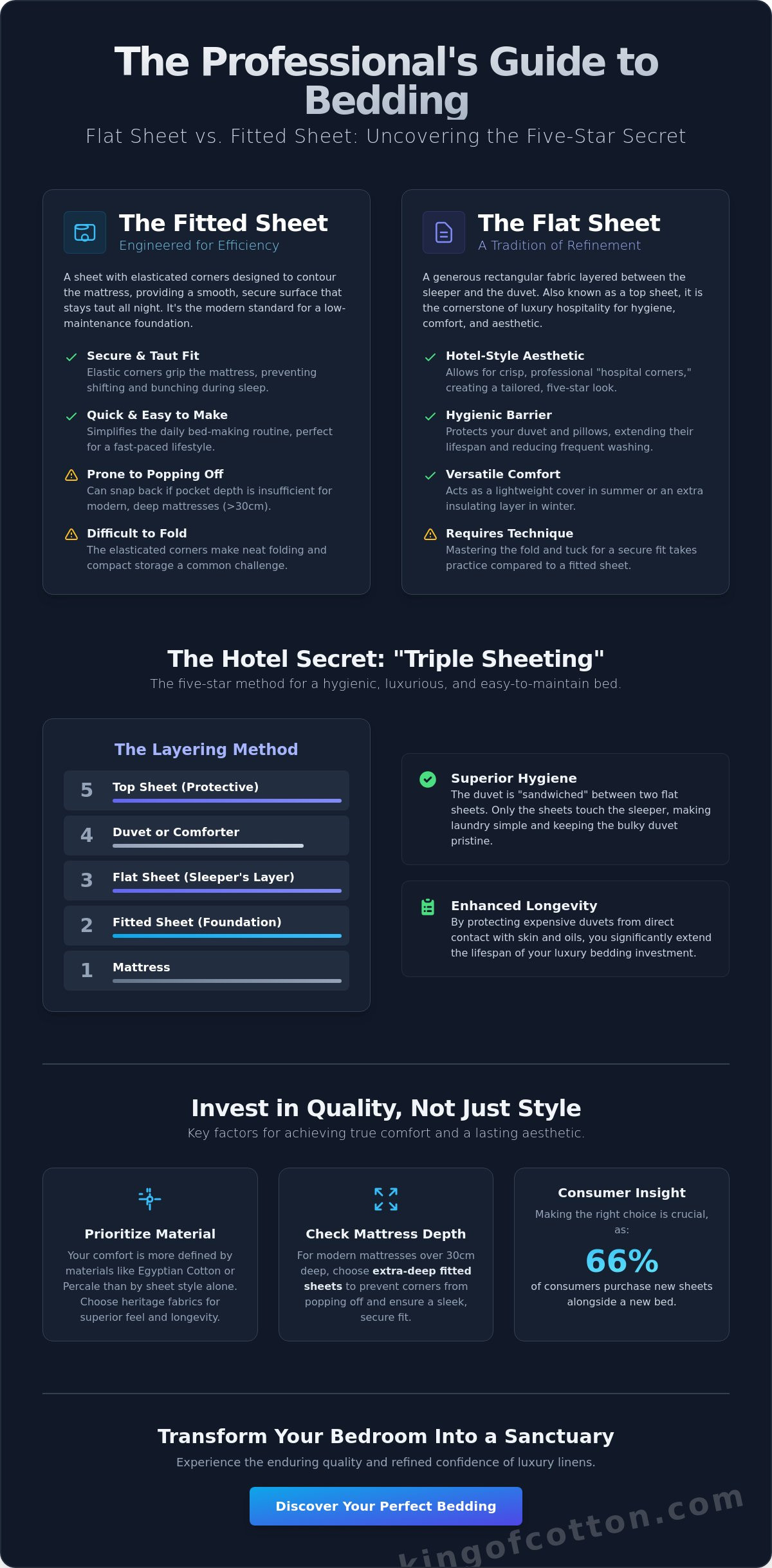
Achieving a masterfully dressed bed starts with understanding the specific roles of your foundational layers. A fitted sheet is technically engineered for a precise, secure fit, utilizing elasticated corners that contour the mattress surface to prevent shifting. In contrast, the flat sheet, often referred to as a top sheet, is a generous rectangular piece of fabric designed for layering between the sleeper and the duvet. The History of bed sheets reveals that while the flat version was once the only option, the introduction of elasticated corners transformed how we approach bed-making in the modern era.
The flat sheet vs fitted sheet debate isn't merely about folding techniques; it represents a choice between modern efficiency and timeless elegance. In the UK, the market remains traditionally split. Many homeowners prioritize the speed and stay-put nature of a fitted sheet. Others insist on the refinement of a flat sheet to achieve that coveted crisp finish found in professional hospitality. This choice often dictates the entire aesthetic and tactile experience of your bedroom sanctuary.
To better understand how these choices impact your sleep environment, watch this helpful video exploring the common dilemma:
The Evolution of the Fitted Sheet
The fitted sheet gained prominence as a functional staple, offering a smooth sleeping surface that remains taut throughout the night. As mattress technology evolved to include deep memory foam and thick pillow-top layers, manufacturers adapted fitted sheet designs with deeper pockets and reinforced elastic. This shift made them a standard in British households. They provide a reliable, low-maintenance foundation for everyday comfort, especially for those who prefer a minimalist bed-making routine. Today, they are considered a fundamental component of any high-quality bed linen collection.
The Flat Sheet: A Tradition of Refinement
Flat sheets maintain a strong presence in luxury hospitality and discerning homes because they represent a classic European aesthetic. They offer unparalleled versatility, acting as a lightweight cover during warm summer nights or an extra insulating layer in winter. Beyond the visual appeal of "hospital corners," these sheets provide a tactile sensation of luxury that a duvet alone cannot replicate. The flat sheet is the essential hygiene barrier between the sleeper and the duvet. By incorporating this layer, you ensure that your heavier bedding remains pristine for longer periods, mirroring the exacting standards of the world's most prestigious hotels.
The Practical Merits: Comparing Convenience, Fit, and Aesthetic
The practical side of the flat sheet vs fitted sheet debate often reveals itself during the Sunday morning chore of bed-making. While both serve as a protective layer, their performance depends heavily on the architecture of your mattress. Modern luxury mattresses frequently feature deep pillow-tops or thick layers of cooling foam, reaching depths of 30cm or more. Standard linens often fail to accommodate these dimensions. This is where the "popping corner" frustration begins. A fitted sheet with insufficient pocket depth will inevitably snap back, disrupting your sleep and ruining the bed's aesthetic.
Choosing extra deep fitted sheets is the only way to ensure a secure, sleek fit for these contemporary designs. Beyond the fit, the visual impact differs significantly between the two styles. A flat sheet allows for the crisp, immaculate finish of "hospital corners," creating a tailored look that feels both traditional and intentional. Laundering also presents a clear divide. Flat sheets are a joy to iron and fold into perfect rectangles; fitted sheets often end up as a tangled, bulky mass in the linen cupboard.
Fitted Sheets: The Modern Standard
Fitted sheets are designed for the discerning individual who values speed and a minimalist appearance. They provide a smooth foundation that remains taut, making them ideal for restless sleepers who move throughout the night.
- Pros: Rapid bed-making; stays securely in place; offers a sleek, modern look.
- Cons: Elastic loses tension and degrades over time; notoriously difficult to fold; requires precise mattress measurements to avoid slippage.
Flat Sheets: The Versatile Alternative
Flat sheets offer a level of adaptability that elasticated options cannot match. Because they lack mechanical parts like elastic, they are often the preferred choice for hotel bedding standards where high-temperature laundering is required for professional hygiene.
- Pros: Universal sizing fits various mattress depths; significantly longer lifespan; multi-functional as a lightweight summer cover.
- Cons: Requires a specific folding technique for a professional finish; can become untucked if not secured properly.
The absence of elastic makes flat sheets more resilient to the intense heat of professional pressing. This durability ensures your investment maintains its integrity for years, even with frequent washing. If you seek a balance of both worlds, explore our premium bed linen collection to find the perfect weight and weave for your bedroom sanctuary.
The Hotel Secret: Why Luxury Hospitality Almost Exclusively Uses Flat Sheets
Step into any five-star suite globally and you'll notice a distinct absence of elasticated corners. The flat sheet vs fitted sheet debate is effectively settled in the world of high-end hospitality through a technique known as "Triple Sheeting." This method involves layering three flat sheets around a thin duvet or blanket. It creates an immaculate, sanitary seal that guests find deeply reassuring. By using a top sheet as a barrier, hotels ensure that the heavier duvet or blanket remains pristine, eliminating the need for the arduous task of laundering duvet covers after every single stay. This operational efficiency is why prestigious establishments prioritize flat linens over their fitted counterparts.
Beyond hygiene, there's a logistical mastery at play. Hotels simplify their inventory by utilizing large flat sheets that can be expertly tucked around various mattress sizes. This standardization ensures a consistent, high-quality finish across every room. According to the Flat Sheet vs. Fitted Sheet debate, the choice often comes down to the tactile sensation of the fabric against the skin. In a professional setting, that sensation is carefully curated to evoke feelings of serenity and indulgence.
The Durability Factor in Hospitality
Professional laundries rely on industrial pressing and ironing to maintain the signature crispness of luxury bedding. Flat sheets are perfectly suited for this process because they lack the elastic and gathered seams that can cause uneven wear or snagging in high-heat rollers. The choice of weave is also critical. Hotels typically favor Percale for its cool, matte finish and unrivaled durability, though Sateen is often selected for its silky, lustrous drape in more traditional suites. King of Cotton has spent years as a trusted provider to prestigious residential and commercial sectors, supplying these exact professional standards to the finest hotels worldwide.
Recreating the 5-Star Feel at Home
You don't need a professional housekeeping team to enjoy this level of refinement. Start by laying your flat sheet face down so the decorative hem is visible when folded back. Ensure a generous overhang on all sides; this is the secret to achieving a perfect hospital corner. Once the sheet is tucked tightly at the base, pull the sides taut and secure them under the mattress. A high-quality Egyptian cotton sheet improves thermoregulation by allowing air to circulate freely through the long-staple fibers. This simple addition to your bed-making routine transforms your bedroom into a sanctuary of professional-grade comfort and sophisticated style.
Longevity and Hygiene: The Hidden Benefits of the Top Sheet
Beyond the aesthetic appeal of hospital corners, the flat sheet vs fitted sheet debate touches on a critical aspect of home maintenance: hygiene. In professional hospitality, the top sheet serves as a primary hygiene barrier. It captures body oils, perspiration, and skin cells that would otherwise migrate directly into your duvet or expensive quilt. Washing a flat sheet is a simple, frequent task. Laundering a heavy duvet or a delicate quilt is a significant undertaking that often leads to fiber degradation over time. By using a top sheet, you effectively shield your most expensive bedding components from the elements of sleep.
Longevity is another area where the flat sheet proves its superiority. Every fitted sheet eventually suffers from "elastic fatigue." The constant tension required to grip the mattress corners, combined with the heat of drying cycles, causes the elastic to become brittle and lose its snap. This is often why the bottom sheet is the first item in a set to fail. A flat sheet, devoid of mechanical parts, maintains its structural integrity for decades. It's a testament to the enduring quality of heritage linens that a simple rectangle of fabric outlasts its more complex counterparts.
Protecting Your Investment
A high-quality top sheet acts as a preventative measure against the "yellowing" often seen on white duvet covers and pillows. This discoloration is caused by the accumulation of organic matter that penetrates the fabric over time. Replacing a single flat sheet is a minor expense compared to the cost of a full duvet set or a bespoke quilt. It's a strategic choice for those who invest in luxury bed linen collections. This small addition preserves the pristine appearance of your bedroom sanctuary while ensuring your investment remains as indulgent as the day you purchased it.
Seasonal Bedding Adjustments
Thermoregulation is a vital benefit of the flat sheet that often gets overlooked. During UK heatwaves, a heavy duvet becomes unbearable. A crisp, 400-thread-count flat sheet provides just enough weight to feel secure without trapping excessive heat. In winter, layering a flat sheet under your duvet creates a pocket of insulating air. This trapped air acts as a natural thermal buffer, keeping you warmer without the need for a higher tog rating. When choosing your linens, consider the GSM (grams per square meter) and weave. A lighter percale is ideal for summer cooling, while a denser sateen offers a cocoon-like warmth for colder months.
Mastering these layers allows you to tailor your sleep environment to the exact requirements of the season. To explore our full range of professional-grade linens, browse our luxury bedroom essentials today.
Elevating Your Sleep: How to Choose the Perfect Linen for Your Bedroom
While the structural choice between layers is a central theme in the flat sheet vs fitted sheet debate, the ultimate quality of your sleep depends on the material touching your skin. Material choice often dictates the restorative power of your rest more than the sheet's shape. Egyptian Cotton remains the gold standard, prized for its long-staple fibers that create a smoother, stronger yarn. Within this category, you must choose between the crisp, cool touch of Percale or the silky, indulgent drape of Sateen. Percale is the hallmark of traditional hotel luxury, while Sateen offers a subtle sheen and heavier weight for those who seek maximum comfort.
Precision in sizing is non-negotiable. Since industry data from the National Bed Federation shows that 66% of consumers purchase new sheets alongside a new bed, ensuring you have the correct measurements for your mattress is the essential first step to a successful upgrade. A fitted sheet must encompass the entire mattress profile without straining the elastic; a flat sheet requires enough overhang to remain secure. Mixing and matching provides the most sophisticated solution. By using a fitted sheet as your base and a flat sheet as your top layer, you combine modern convenience with professional hygiene standards. This hybrid method ensures your bed remains tidy while providing the protective barrier discussed in earlier sections.
The King of Cotton Collection
Our Egyptian cotton bedding represents the pinnacle of textile craftsmanship. We provide a diverse range of thread counts to suit every preference, from the breathable 200-thread-count percale to the opulent 1000-thread-count sateen. Higher thread counts offer a denser, more substantial feel, while lower counts emphasize airflow. Every premium range in our collection includes both flat and fitted options. This variety allows you to curate a bespoke bedding set that meets your specific needs without compromising on quality or style. We bring the same standards found in prestigious global hotels directly to your domestic bedroom.
Final Verdict: Do You Need Both?
The most effective way to resolve the flat sheet vs fitted sheet debate is to adopt a hybrid approach. This setup utilizes a fitted sheet for its stay-put reliability and a flat sheet for its superior hygiene and aesthetic appeal. It is the ultimate configuration for a crisp, hotel-quality bed at home. We invite you to explore the full range of bed linen to discover the materials that resonate with your lifestyle. For those who value a tactile experience before purchasing, visit our King of Cotton stores to feel the exceptional quality of our professional-grade linens firsthand. Investing in the right foundation is the first step toward a more refined and restful lifestyle.
Master Your Sleep Environment
The flat sheet vs fitted sheet debate ultimately finds its resolution in the pursuit of a refined, professional finish. You now understand that while the fitted sheet provides a secure foundation, the flat sheet serves as the indispensable hygiene barrier that preserves your most valuable bedding. By adopting the hybrid layering technique used in five-star suites globally, you can achieve a crisp, tailored aesthetic without sacrificing the convenience of a modern fitted base. This approach ensures your bedroom remains a sanctuary of cleanliness and sophisticated style.
True luxury is defined by the integrity of the materials you choose. As premium Egyptian Cotton specialists with over 30 years of industry expertise, we ensure every thread meets the exacting standards expected by the world’s finest hotels. Whether you prefer the matte coolness of percale or the lustrous warmth of sateen, your selection reflects a commitment to quality that transcends fleeting trends. It's an investment in your well-being and the longevity of your home sanctuary.
Upgrade your bedroom with hotel-quality bed linen and experience the serene confidence of a masterfully dressed bed. It is time to transform your nightly rest into a curated experience of comfort and elegance. We look forward to helping you create the perfect sleep environment.
Frequently Asked Questions
Is it better to sleep with a flat sheet or just a duvet?
Sleeping with a flat sheet is superior for hygiene and temperature regulation. It creates a breathable barrier that captures skin cells and oils, keeping the heavier duvet clean. This layer also provides a lightweight cover during warmer months, allowing you to stay cool without sacrificing the comfort of a bed cover. It's an accessible upgrade that mirrors the standards of professional hospitality.
Why do some people call a flat sheet a "top sheet"?
The terms are used interchangeably because of the sheet's placement in a traditional bedding stack. It is positioned on top of the sleeper but beneath the duvet or quilt. This "top" position defines its primary role as a protective layer, separating your body from the more substantial bedding that is more difficult to launder. It represents a tradition of refinement and meticulous bed-making.
How do I stop my fitted sheet from coming off the mattress?
Ensure you are using a sheet with a pocket depth that matches your mattress, including any toppers. Standard sheets often fail on modern deep mattresses, leading to the corners popping off. Selecting extra-deep fitted sheets with high-quality elasticated edges provides the secure, taut foundation necessary for a restorative and undisturbed night's sleep. This simple adjustment eliminates a common frustration and preserves the bed's sleek aesthetic.
Do hotels use flat sheets instead of fitted sheets?
Most luxury hotels exclusively use flat sheets to maintain high hygiene standards and operational efficiency. Flat sheets withstand industrial pressing better than elasticated versions and simplify inventory management. By using the "Triple Sheeting" method, hospitality experts create a crisp, sanitary environment that feels consistently premium for every guest. This practice is a cornerstone of international standards of excellence in high-end accommodation.
How often should you wash a flat sheet versus a duvet cover?
You should wash your flat sheet every week, as it is in direct contact with your skin. Because this layer protects the duvet, you can extend the time between washing your duvet cover to once every month. This routine preserves the delicate fibers of your more expensive bedding while maintaining a fresh sleep environment. It's a practical way to protect your investment in high-quality Egyptian cotton linens.
Can I use a flat sheet as a bottom sheet?
You can certainly use a flat sheet as a bottom layer by mastering the "hospital corner" technique. This was the standard method before fitted sheets became popular and remains a favorite in prestigious hotels. It offers a smooth, custom fit that doesn't rely on elastic, which can degrade or lose tension over time. This approach provides a level of durability and versatility that modern staples can't match.
What is the best thread count for a flat vs fitted sheet debate?
A thread count between 300 and 400 is often considered the "sweet spot" in the flat sheet vs fitted sheet debate for luxury bedding. This range offers an ideal balance of durability, breathability, and softness. While higher thread counts provide a denser, more indulgent feel, the quality of the long-staple Egyptian cotton is ultimately more important than the numerical count alone.
Are flat sheets more hygienic than fitted sheets?
Flat sheets are more hygienic because they act as a secondary barrier for your duvet and pillows. They are easier to wash at higher temperatures and iron thoroughly, which helps eliminate bacteria and allergens more effectively. Incorporating a top sheet into your routine ensures that every layer of your bed remains pristine and inviting, reflecting the serene confidence of a professional hospitality environment.