

Silk vs Cotton Pillowcase for Hair: Which Should You Choose?
A silk pillowcase isn’t an instant fix for frizz or breakage. If you’re weighing up silk vs cotton pillowcase for hair, the difference may come down to how each fabric feels against your hair, how much moisture it absorbs and what suits your nightly routine.
It’s understandable to be sceptical of bold hair-care claims. Silk’s smoother surface may create less friction, while cotton can feel crisp, cool and familiar. Neither fabric works in isolation: your hair, how much you move in your sleep and how you care for it all matter.
This guide compares silk and cotton pillowcases in practical terms, including friction, moisture, comfort and care. You’ll find ways to compare the fabrics, decide which might suit your preferences and make a simple trial without expecting guaranteed results.
Key Takeaways
- For silk vs cotton pillowcase for hair, there’s no universal winner. Consider your hair’s needs, preferred feel and bedtime habits.
- Compare how each fabric feels and handles moisture, bearing in mind that weave, quality and condition can affect the experience.
- Use hair-type guidance as a starting point, then notice how your hair responds rather than expecting a guaranteed result.
- Choose a pillowcase you’re comfortable caring for, and keep it clean and well maintained as part of your wider routine.
- Silk may appeal for its smooth feel, while cotton offers familiar bedding comfort. The right choice is the one that fits your routine.
Silk vs cotton pillowcase for hair: what is the real difference?
Silk or cotton may suit your hair, but the difference isn’t simply the fibre. The fabric’s construction and condition, your hair’s needs and how you move or care for it overnight can all affect your experience. A pillowcase is one part of your routine, not a guaranteed route to smoother hair.
Silk is a natural protein fibre produced by silkworms; cotton is a plant-based cellulose fibre harvested from cotton plants. That difference in origin influences each material’s character, but the finished fabric’s weave and surface also shape how it feels against your hair.
For a closer look at how pillowcases may interact with hair and skin overnight, watch this video from dermatologist Dr Dray:
What people mean by silk and cotton pillowcases
Fibre content tells you what a pillowcase is made from; weave and finish describe how those fibres are arranged and how the surface feels. Check the product label or specification to confirm the composition, particularly if a fabric name or finish is prominent. A smooth feel alone doesn’t prove that a pillowcase is silk.
Satin, for example, isn’t a fibre. It describes a weave that can be made using different fibres, including silk or synthetic materials. For a foundational explanation of silk as a natural protein fibre, see the material’s fibre structure and origins. To compare like with like, check both the stated fibre content and the construction.
Why pillowcase fabric may affect hair overnight
As you turn your head during sleep, your hair moves across the pillowcase. Repeated contact and movement can create friction, which may contribute to tangling or roughness at the hair surface. The amount of friction can vary with the fabric’s weave, finish and condition, as well as your hair and sleeping habits.
That makes fabric a reasonable detail to consider, not a treatment. A pillowcase can’t diagnose or address hair loss or a scalp condition, and changing fabric alone can’t guarantee a particular result. When choosing between a silk vs cotton pillowcase for hair, start by checking what the case is made from, then consider how its feel and care requirements fit your routine.
How silk and cotton may affect friction, moisture and hair feel
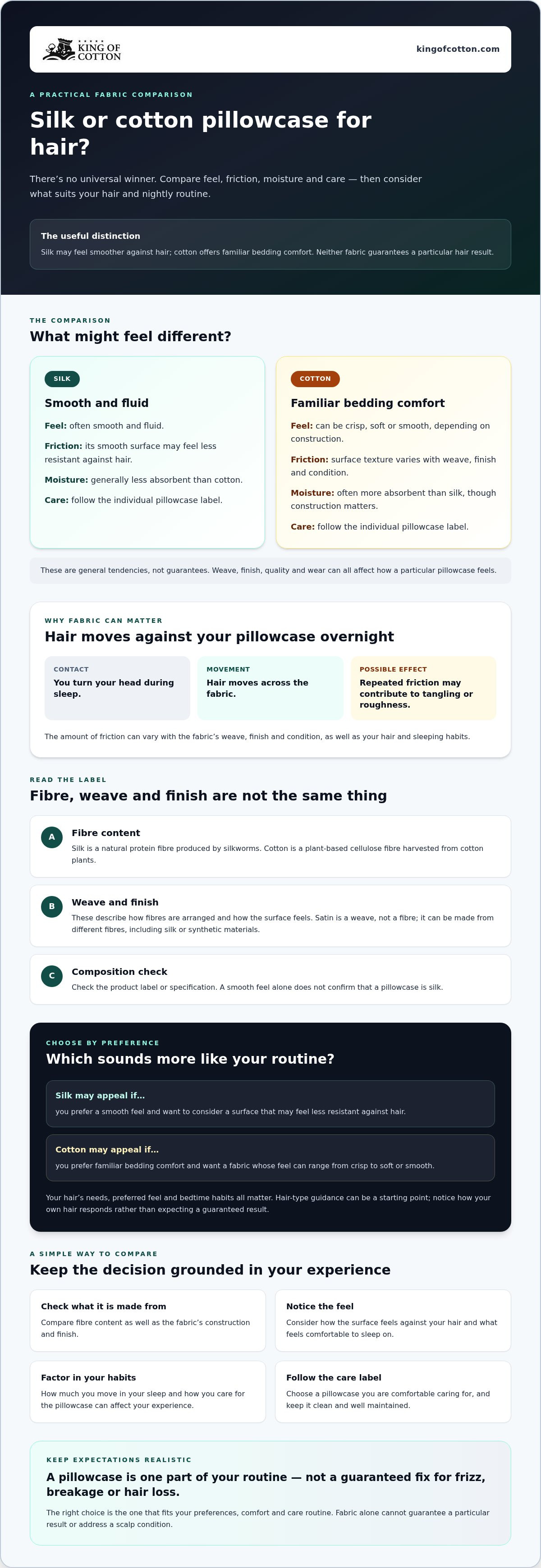
Silk is often chosen for its smooth surface, which may allow hair to move across the pillowcase with less resistance. Cotton offers a familiar bedding feel, but its surface can range from crisp to smooth. These are general tendencies, not guarantees: weave, finish, fabric quality and wear all affect how a particular pillowcase feels.
Use the comparison as a guide to what you might notice, rather than as a promise about hair outcomes. Friction is one possible influence on tangling and surface roughness. Moisture handling and personal comfort can also shape your experience.
| Consideration | Silk | Cotton |
|---|---|---|
| Feel | Often smooth and fluid | Can feel crisp, soft or smooth, depending on construction |
| Friction | A smooth surface may feel less resistant against hair | Surface texture varies with weave, finish and condition |
| Moisture | Generally less absorbent than cotton | Often more absorbent, though fabric construction matters |
| Care | Follow the individual garment label | Follow the individual garment label |
Silk pillowcases: smooth feel, with realistic expectations
A smooth silk surface is one reason people consider it for their hair. It may feel as though hair glides more easily as you shift during sleep, but that sensation alone can’t predict whether you’ll wake with less frizz or fewer tangles. Your hair, the product’s quality and construction, and your bedtime routine all influence the experience. Check the specific pillowcase label for care instructions rather than assuming all silk can be washed in the same way.
Cotton pillowcases: familiar comfort and fabric variation
Cotton is a familiar choice for bedding, with a breathable feel. Its surface isn’t uniform: weave and finish can make one cotton case feel crisp and another smoother and softer. Cotton is generally more absorbent than silk, but don’t assume every case will affect your hair in the same way. A well-made, well-maintained cotton pillowcase may suit your comfort and care preferences. You can explore cotton bed linen when considering this familiar bedding option.
Pillowcase benefits vary and aren’t guaranteed. Treat fabric as one consideration alongside hair condition, sleep habits and overall care. Choose the surface and upkeep that feel right for your routine.
Silk vs cotton pillowcase: which suits your hair and sleeping habits?
There isn’t one right answer for every head of hair. Start with what you notice after a night’s sleep: does your hair tangle, feel rough or seem unchanged? For the silk vs cotton pillowcase for hair decision, treat hair type as a starting point, then weigh your own experience, preferred feel and the care you’re happy to give the fabric.
Choosing for curly, coily, fine or easily tangled hair
If you have curly or coily hair, or find that fine hair tangles easily, pay attention to where and when knots or roughness appear. A smoother-feeling surface may be worth trying if you suspect overnight movement contributes, but hair texture alone can’t tell you which pillowcase will suit you best. People with similar hair can have different experiences.
Change one thing at a time. For example, try a different pillowcase while keeping your usual bedtime hair routine steady, then notice whether your hair feels or looks different in the morning. A pillowcase isn’t a treatment for hair or scalp problems. Seek professional advice about persistent breakage, scalp irritation or sudden changes in your hair.
Choosing for comfort, care and everyday practicality
Your comfort matters as much as your hair. Think about whether you prefer a cool, crisp surface or a smoother feel, and whether the fabric feels comfortable at your usual sleeping temperature. Check the individual care label before choosing. If the washing or drying instructions don’t fit your normal routine, weigh that up too.
Cotton may appeal if you value familiar bedding comfort and want pillowcases to coordinate with the rest of your bed linen. Weave and finish influence its feel, so consider the fabric description rather than relying on the word “cotton” alone. Browse the cotton bed linen collection as one option when looking for bedding to suit your preferences.
Make your decision in this order:
- Notice your pattern: consider whether tangling or friction seems to be a concern for you.
- Choose the feel: decide which surface feels most comfortable for sleeping.
- Check the care: make sure the label’s washing and drying guidance suits your routine.
- Assess your experience: keep other habits steady while you see how the pillowcase works for you.
This gives you a more personal basis for choosing than hair-type labels alone. Comfort, care preferences and how your hair responds can guide your decision without assuming either fabric will produce a particular result.
How to get a smoother morning, whichever pillowcase you choose
A pillowcase is only one part of an overnight hair routine. Keep it clean and in good condition, choose comfortable sleep habits and notice how your hair responds. These steps can help you make a more informed choice without expecting a fabric to transform your hair on its own.
A simple pillowcase trial without overpromising
Try one change at a time. Keep your usual hair products and bedtime habits as consistent as practical while you test a different pillowcase. That makes it easier to notice whether anything changes, rather than trying to attribute the result to several new habits at once.
Pay attention to everyday details: morning tangles, how your hair feels, whether you slept comfortably and whether the care instructions fit your routine. There’s no need to expect a dramatic difference. If a fabric causes discomfort or irritation, stop using it and choose an option that feels comfortable.
- Start with your needs: note what you’d like to improve, such as overnight tangling or the feel of your bedding.
- Choose a fabric: select a pillowcase that suits your preferred surface and care routine.
- Keep other habits steady: avoid changing several hair products or sleep habits at the same time.
- Review your experience: consider comfort, tangles and upkeep, not just whether your hair looks different.
Care habits that support comfortable bedding
Read the care label for the specific pillowcase and follow its washing, drying and ironing instructions. Requirements can differ, so don’t assume that silk and cotton, or even two pillowcases made from the same fibre, should be treated alike. Change your pillowcase regularly in line with your personal hygiene and laundering habits, and replace it if it becomes uncomfortable or difficult to keep in good condition.
Your hair’s position and bedtime styling matter too. If it suits your hair and feels comfortable, a loose protective style may help keep it contained overnight. Avoid tight styles or accessories that pull on your hair, and don’t persist with a routine that causes discomfort.
For a broader look at fabric choices and bedding details, explore the luxury bed linen guide. It’s a useful next step as you decide which materials and care considerations fit your bedroom routine.
Choosing your pillowcase: make fabric work for your routine
The best choice is the one that feels comfortable, fits your care habits and works with your bedding. Silk may appeal if you favour a smooth surface, while cotton offers familiar bedding comfort and a variety of surface feels. Neither material guarantees less frizz, breakage or tangling, so treat the silk vs cotton pillowcase for hair decision as a personal preference rather than a promised hair result.
A quick decision checklist before you buy
Before choosing, identify what matters most. Is it the feel against your skin, managing overnight tangles, straightforward care or coordinating with bedding you already own? A clear priority makes it easier to compare options without being swayed by broad claims.
- Check the composition: look for the stated fibre content, rather than relying on the product name alone.
- Consider construction: weave and finish can affect the surface feel of either material.
- Read the care details: check washing, drying and ironing instructions against your regular routine.
- Choose for everyday comfort: favour a pillowcase you’ll enjoy sleeping on and can maintain with ease.
If cotton feels like the more practical fit, King of Cotton offers cotton bed linen for readers who prefer this familiar bedding material. Review the details of any individual item before choosing, as composition and specifications can vary.
When to look beyond your pillowcase
Ongoing hair breakage can have multiple causes, and bedding may not be the only factor. If breakage persists, or you notice sudden changes or ongoing scalp concerns, speak with a qualified healthcare or hair-care professional. A fabric choice can be one small part of a considered routine, not a substitute for advice about persistent problems.
There’s no need to chase a perfect morning through a pillowcase alone. Choose based on comfort, fabric details and practical care, then pay attention to what suits you. If cotton bedding matches your preferences, explore the bed linen collection.
Choose the pillowcase that feels right for your routine
The silk vs cotton pillowcase for hair choice comes down to more than a fabric’s reputation. Silk may appeal if you prefer a smooth feel, while cotton offers familiar comfort and a range of surface textures. Your hair, sleep habits and willingness to follow care instructions all help determine what suits you best.
Neither material guarantees a particular result. Check fibre content, construction and care details, then consider how your hair and bedding feel in everyday use. A clean, well-maintained pillowcase can support a comfortable routine alongside other gentle habits that work for you.
King of Cotton supplies linen to homes and hospitality businesses, with a range of cotton bed linen for those who favour this classic bedding choice. Explore King of Cotton bed linen and compare the options at your own pace. Choose for comfort and practicality, and feel confident making the choice that fits your nights.
Frequently Asked Questions
Is silk or cotton better for your hair?
Neither silk nor cotton is best for everyone’s hair. Silk may appeal if you prefer a smooth-feeling surface, while cotton offers familiar comfort and a range of textures depending on its weave and finish. Consider whether you wake with tangles, which feel you enjoy sleeping on and what care instructions fit your routine. Your hair’s condition and overnight habits matter too, so choose based on your own experience rather than expecting a guaranteed result.
Can a silk pillowcase prevent hair breakage?
No pillowcase can guarantee that it will prevent breakage. Silk’s smooth surface may feel less resistant against hair as you move during sleep, but any difference depends on the fabric, your hair and your routine. Breakage can have causes beyond bedding, including how hair is styled and handled. If you’re experiencing persistent breakage or sudden changes, speak with a qualified healthcare or hair-care professional rather than relying on a pillowcase alone.
Does cotton absorb moisture from your hair?
Cotton is generally more absorbent than silk, so it may take up more moisture from contact with hair. The amount and any effect you notice can vary with the pillowcase’s construction, finish and condition, as well as your hair and routine. This doesn’t mean cotton will necessarily leave your hair dry. If moisture is a concern, consider your overall hair care and compare how your hair feels after sleeping on different fabrics.
Is satin the same as silk for hair?
No. Satin describes a type of weave, not a fibre, so satin fabric can be made from silk or other fibres, including synthetics. A satin pillowcase isn’t automatically a silk pillowcase. Check the product details for fibre composition, then consider the fabric’s feel and care instructions. A smooth surface may appeal to you, but the name “satin” alone doesn’t confirm its material or promise a particular effect on your hair.
Which pillowcase is best for curly or coily hair?
There’s no single pillowcase that’s best for every person with curly or coily hair. If you often wake with tangles, you might prefer to try a smoother-feeling surface, but your own comfort and results are the best guide. Keep other bedtime habits steady while testing a change, and avoid tight styles or accessories that pull on hair. Persistent breakage or scalp irritation is a reason to seek professional advice.
Can a cotton pillowcase cause frizzy hair?
A cotton pillowcase won’t necessarily cause frizz. Friction from contact and movement may contribute to surface roughness for some people, but the feel depends on the weave, finish and condition of the fabric, as well as your hair and wider routine. If you suspect your pillowcase is a factor, try changing one thing at a time and note how your hair feels in the morning. Results vary, so avoid assuming fabric is the only cause.
How often should you wash a pillowcase for healthy hair?
There isn’t one washing interval that suits everyone. Change and wash your pillowcase regularly in line with your personal hygiene and laundering habits, and consider changing it more often if it becomes soiled or uncomfortable. Follow the care label for washing and drying, since instructions vary between fabrics and products. A clean pillowcase supports a comfortable bedding routine, but washing frequency alone can’t guarantee healthier hair or address ongoing hair concerns.