

Removing Pet Hair from Bedding: The Expert Guide
Your pristine, high-thread-count Egyptian cotton sheets shouldn't have to double as a secondary coat for your favourite four-legged companion. It's a common frustration for discerning homeowners who refuse to choose between the comfort of a pet and the elegance of a meticulously curated bedroom. You've likely noticed how fur seems to weave itself into the very structure of your linens, staying stubbornly attached even after a long cycle in the washing machine. We understand that learning how to remove pet hair from bedding without compromising the delicate integrity of luxury fabrics is essential for maintaining a sophisticated home.
This expert guide reveals the professional techniques used to eliminate persistent fur whilst preserving the soft, indulgent feel of your finest cottons. You'll discover why certain weaves naturally repel pet dander and how to implement a laundry routine that delivers a hair-free, five-star hotel finish every time. We'll explore the science of static, the importance of pre-wash preparation, and the specific tools that keep your sanctuary feeling serene and refined. By the end of this article, you'll have the knowledge to protect your investment and enjoy a restorative night's sleep in a bed that's as clean as it is comfortable.
Key Takeaways
- Understand why natural fibres like Egyptian cotton are superior for resisting the static charge that traps pet hair compared to synthetic alternatives.
- Master the "dry first" rule and professional techniques for how to remove pet hair from bedding before it ever enters the washing machine.
- Learn the 10-minute dryer secret and why avoiding an overloaded drum is essential for complete fur extraction during the laundry cycle.
- Discover why a crisp percale weave is the discerning pet owner's preferred choice for effortless maintenance and long-lasting luxury.
- Implement strategic protection methods, such as using high-quality throws, to preserve the integrity of your primary linens whilst reducing daily cleaning efforts.
The Science of Static: Why Pet Hair Clings to Your Bedding
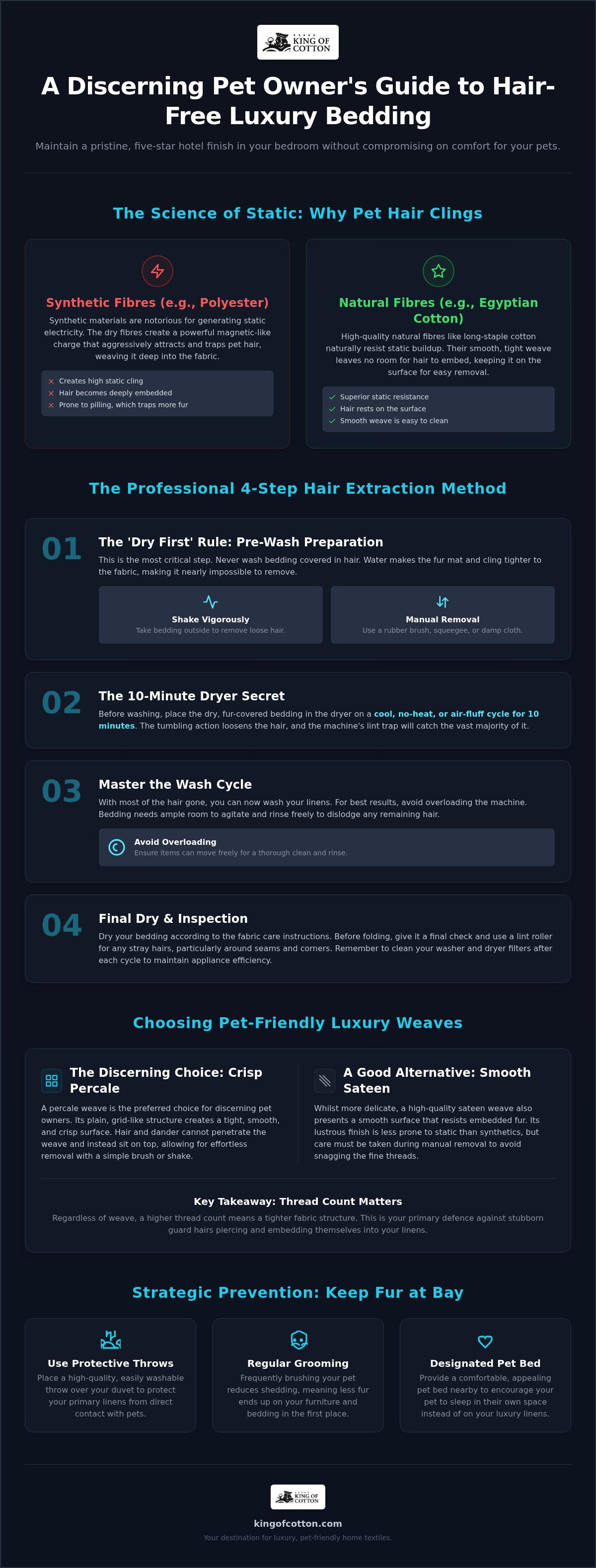
Understanding the molecular attraction between your pet and your pillows is the first step in mastering how to remove pet hair from bedding. Static electricity functions like an invisible magnet, pulling loose fur toward your sheets and locking it into place. This phenomenon, rooted in the science of static electricity, occurs when two different materials rub together, transferring electrons and creating an electrostatic charge. This attraction is particularly aggressive with the soft, downy undercoat of many breeds, which possesses a microscopic "hook" mechanism that latches onto loose fibres.
Synthetic fibres, such as polyester, are notorious for generating this charge. They lack the moisture-wicking properties of natural materials, leading to a dry environment where static thrives. Stiff guard hairs can actually pierce through the gaps in loosely woven fabrics, making extraction nearly impossible once they've anchored themselves. Professional-grade cotton, specifically the varieties found in world-class hotels, is the primary defence against this intrusion. These materials are engineered for durability, ensuring they remain smooth and hair-resistant even after hundreds of wash cycles.
Fabric Composition and Hair Retention
The physical structure of your bed linen determines how deeply fur can penetrate. Lower-quality fabrics often develop "pilling", or tiny surface fuzz, which acts like a hook for pet hair. High-thread-count Egyptian cotton offers a tighter weave that leaves no room for guard hairs to embed. Whilst loose weaves allow hair to weave through the threads, a smooth sateen or crisp percale surface keeps fur on the exterior, where it's easily lifted. This smooth finish is a hallmark of superior craftsmanship, reducing the friction that leads to static buildup.
The Aesthetic and Hygiene Impact on Luxury Bedrooms
A bedroom should be a sanctuary of health and elegance. Beyond the unsightly appearance, trapped pet hair carries dander, oils, and outdoor allergens that can compromise your sleep quality. Maintaining a "hotel-fresh" atmosphere amongst the demands of pet ownership requires a proactive approach to textile care. Regular removal isn't just about aesthetics; it preserves the breathability and longevity of your finest fabrics. High-quality linens are designed to withstand the frequent maintenance required for pet-friendly homes, ensuring your bed remains a refined space for rejuvenation and restorative rest.
Pre-Wash Preparation: Loosening and Lifting Stubborn Fur
Mastering how to remove pet hair from bedding starts long before you reach the laundry room. The most critical mistake is washing heavily furred linens immediately. Water acts as a binding agent, causing loose strands to mat and adhere even more tightly to the fabric. This "Dry First" rule is the cornerstone of professional textile maintenance. By addressing the fur whilst the fibres are dry, you ensure that the hair remains on the surface rather than becoming embedded in the weave during the agitation of a wash cycle.
To begin, take your bedding outdoors and give it a vigorous shake. This simple action removes the loose guard hairs that haven't yet formed a static bond with the cotton. Once back inside, follow this step-by-step manual removal process:
- Lay the bedding flat on a clean, hard surface to maintain tension.
- Use a rubberised tool or a squeegee in long, steady strokes to gather fur into "rolls".
- For duvet covers, a lightly damp microfibre cloth can be effective, though you must be cautious of water spotting on delicate sateen finishes.
- Use a fresh lint roller for the final detail work around the seams and corners.
Professional Tools vs Household Hacks
Whilst sticky lint rollers are convenient for a quick refresh, they often leave a microscopic adhesive residue that can actually attract more fur over time. For large surface areas, a reusable rubber brush is a more sustainable and effective choice. A simple household rubber glove is often the most sophisticated tool for sateen sheets; the natural friction creates a powerful static pull that lifts hair effortlessly. For delicate pillowcases, a velvet-faced lint brush provides a softer touch that won't disrupt the fine threads of high-thread-count cotton.
Safe Handling of Luxury Cotton
Preserving the integrity of long-staple Egyptian cotton requires a gentle hand. Aggressive scrubbing can break the delicate fibres, leading to pilling and a loss of that signature hotel-quality smoothness. Identify fur clusters early; these are dense patches where undercoat hair has begun to knit together. The "gentle lift" technique involves using light, unidirectional strokes with a rubberised surface to roll fur into manageable clusters without abrading the cotton weave. Investing in high-quality bed linen with a smooth, tight weave makes this preparation significantly more efficient, as the hair has fewer opportunities to anchor itself deep within the fabric.
Mastering the Laundry Cycle: The Professional Hair Extraction Method
Once you've completed the manual preparation, the next phase of how to remove pet hair from bedding involves the strategic use of your appliances. The "10-minute dryer trick" is a professional secret often overlooked. Before the bedding touches water, place it in the tumble dryer on a cool or "air fluff" cycle for ten minutes. This mechanical agitation, combined with airflow, shakes loose the stubborn hairs that manual brushing might have missed. The loosened fur is then sucked into the lint trap, preventing it from clogging your washing machine later.
Overloading the washing machine is the primary reason pet hair remains on sheets after a cycle. If the bedding is packed too tightly, there isn't enough water volume or space for the fur to be flushed away from the fabric. To maintain the integrity of luxury bed linen, ensure the drum is only half-full. This allows the water to circulate freely, carrying the hair into the drainage system. Wash your linens at a consistent 40 degrees Celsius; this temperature is effective enough to dissolve body oils and release pet dander without risking the shrinkage or fibre damage that can occur at higher heats.
Adding half a cup of white vinegar to the rinse cycle is a highly effective, natural method for breaking the static bond. Vinegar acts as a mild acid that relaxes the cotton fibres, making them more slippery and less likely to hold onto pet dander. It also serves as a natural softener. This is vital for preserving the supple feel of high-thread-count Egyptian cotton without the waxy buildup of commercial softeners that can actually trap more hair over time.
The Role of the Tumble Dryer
Use wool dryer balls during both the pre-wash fluff and the final drying stage. These balls physically beat the fabric, forcing hair out of the weave and into the path of the exhaust. Whilst dryer sheets can reduce static, they often leave a coating on fine cotton that can diminish breathability and dull the fabric's natural lustre. Rely instead on the mechanical action of dryer balls. You must clean the lint filter after every single cycle to ensure the "hair exit" strategy remains efficient and safe.
Washing Machine Maintenance for Pet Owners
Frequent washing of pet-furred bedding can lead to "fur sludge" in the machine's pump and filter. This damp residue can cause unpleasant odours and eventually redeposit hair onto clean sheets. Run a monthly maintenance wash on a high temperature with a dedicated cleaner to keep the drum pristine. For heavy shedding seasons, always select an "extra rinse" cycle to ensure every last strand is washed away. For more detailed advice on maintaining your investment, consult our guide on how to care for bedding.
Prevention Strategies: Keeping the Fur at Bay
Prevention is the hallmark of a well-managed luxury home. Whilst knowing how to remove pet hair from bedding is essential, reducing the volume of fur that reaches your sheets simplifies your maintenance routine significantly. A multi-layered approach to bedding styling serves as both an aesthetic choice and a practical shield. By implementing small, daily habits, you can preserve the "hotel-fresh" feel of your sanctuary without constant deep cleaning. To complement this refined atmosphere, Rohnson offers expert guidance on choosing modern home essentials, such as compact coffee machines, to complete your morning routine.
A high-quality cotton bedspread or a decorative throw is your primary line of defence. By placing these over your duvet during the day, you catch the majority of shedding before it touches your primary linens. Choosing patterned or slightly darker fabrics for these outer layers can help disguise stray hairs between scheduled washes, maintaining a pristine appearance for guests. Organise your bedroom to encourage your pet to use a dedicated luxury pet bed, ideally placed away from the head of your own bed to minimise hair migration. This strategic layering ensures your finest bed linen remains protected from the direct contact of paws and fur.
Air Quality and Environment
Environmental control plays a surprising role in hair retention. Low humidity levels in the bedroom increase the static charge that makes fur cling to fabric. Maintaining a humidity level around 45 to 50 percent creates an environment where hair is more likely to fall to the floor rather than sticking to your duvet. High-performance air purifiers also assist by capturing airborne dander and fine fur before it settles on your pillows. This is especially important for those with allergies, as it removes the microscopic triggers that often accompany pet hair.
The "Bedtime Grooming" ritual is another effective preventative measure. Spending five minutes brushing your pet before they enter the bedroom removes loose undercoat hairs at the source. Additionally, frequent pillowcase changes, perhaps every two to three days, prevent the accumulation of oils and dander that can trap hair. Regularly vacuuming the mattress and bed frame with a HEPA-filter vacuum ensures that hair doesn't migrate from the floor back onto your linens. These small adjustments to your environment create a cleaner, more restorative space.
Explore our range of durable luxury bed linen to find fabrics that withstand frequent laundering whilst maintaining their exquisite feel.
Choosing Pet-Friendly Luxury: Weaves and Materials
The Percale Advantage
For those sharing their sanctuary with shedding companions, the "cool and crisp" percale weave is often the preferred choice. Percale uses a traditional "one-over, one-under" structure, creating a tight, uniform surface with no significant gaps between threads. This density prevents guard hairs from piercing the fabric and becoming anchored. The signature matte finish of percale isn't just about the aesthetic; it provides a smooth plane that allows fur to be shaken or brushed off with minimal effort. You can explore a curated selection of these pet-friendly luxury bedding options to find the perfect balance of style and practicality.
Whilst sateen offers a beautiful lustre and a silky drape, its longer "float" threads can be more susceptible to snagging from claws. However, a high-thread-count sateen is still significantly better than loosely woven alternatives. The key is the smooth surface, which offers fewer opportunities for hair to find purchase compared to textured or decorative fabrics.
Long-Staple Cotton and Durability
The quality of the raw material is just as vital as the weave. High-thread-count Egyptian cotton is prized for its long-staple fibres, which are spun into exceptionally smooth, strong yarns. Shorter, lower-quality fibres have more "ends" along the length of the thread, creating microscopic friction points that catch and hold pet dander. By contrast, long-staple cotton results in a sleeker surface that repels hair naturally. This material expertise is why professional hospitality providers favour these fabrics for their longevity and ease of care.
Investing in professional-grade cotton also ensures your linens can withstand the frequent laundering required in a pet-friendly home. Inferior fabrics will thin, pill, or lose their shape after a few dozen cycles, whereas hotel-quality cotton maintains its structural integrity and indulgent feel for years. You should generally avoid linen and flannel if your pets shed heavily. Linen's characteristic porous weave is an open invitation for hair to embed itself deeply, whilst the brushed surface of flannel acts as a magnet for static and fur. Choosing a tightly woven, long-staple cotton is the most effective way to ensure your bed remains a five-star retreat.
Reclaim Your Sanctuary of Rest
Living with pets shouldn't mean sacrificing the elegance of your home. By mastering the science of static and the "Dry First" rule, you've gained the professional edge in maintaining a pristine bedroom. You now understand that how to remove pet hair from bedding is a multi-stage process that rewards patience and the right choice of materials. Tightly woven percale and high-thread-count Egyptian cotton don't just feel superior; they act as a natural barrier against stubborn fur and dander.
As trusted suppliers to the world’s finest hotels, we provide expertly crafted Egyptian cotton designed for durability and frequent laundering. These professional-grade linens ensure your home stays elegant whilst accommodating your four-legged friends. Explore our range of durable, hotel-quality bed linen at King of Cotton and experience the difference that professional-grade textiles make to your daily routine. It's a simple path to a cleaner, more refined lifestyle.
Your bed should be a restorative retreat for both you and your companions. With these expert techniques and the right fabrics, you can enjoy a hair-free, five-star sleep every single night. Rest well in the comfort of a truly clean home.
Frequently Asked Questions
Does fabric softener help remove pet hair from bedding?
Commercial fabric softeners often leave a waxy coating on high-quality cotton that can actually trap pet hair and dander. Instead of aiding the release, this residue makes the fur more likely to stick during future use. We recommend using white vinegar in the rinse cycle as a natural alternative. It relaxes the fibres and eliminates the static charge that holds hair in place, ensuring your luxury linens remain soft, breathable, and remarkably clean.
Can pet hair ruin my washing machine or tumble dryer?
Excessive pet hair can certainly compromise your appliances if left unchecked. It often combines with water and detergent to form a thick "fur sludge" that clogs filters and drainage pumps. To prevent this, always follow the "Dry First" rule by removing as much hair as possible before washing. Regularly cleaning your tumble dryer's lint filter and running monthly maintenance cycles on your washing machine will protect your investment and maintain peak performance.
Is it better to wash pet-furred bedding in hot or cold water?
A consistent temperature of 40 degrees Celsius is the professional recommendation for luxury linens. Whilst very hot water can effectively kill allergens, it risks shrinking or weakening the long-staple fibres of Egyptian cotton. Conversely, cold water often fails to dissolve the body oils that act as an adhesive for pet dander. 40 degrees provides the perfect balance, ensuring a thorough clean whilst preserving the structural integrity and indulgent feel of your favourite bedding.
How often should I wash my bedding if my dog sleeps in the bed?
If your pet shares your bed, you should ideally wash your linens once a week. However, for heavy-shedding breeds or those with allergies, changing your sheets every three to four days is a superior standard for hygiene. Between full washes, we suggest changing your pillowcases every two days. This frequent rotation prevents the accumulation of dander and oils that can migrate into your pillows and duvet, maintaining a fresh, hotel-like environment.
What is the best type of lint roller for high-quality cotton sheets?
For high-quality cotton, a reusable rubber brush or a velvet-faced lint brush is significantly better than disposable sticky rollers. Rubber tools create a natural friction that lifts hair without leaving a microscopic adhesive residue on the fabric. This residue from sticky rollers can actually attract more fur over time. A velvet brush is particularly gentle on delicate sateen finishes, ensuring you remove the hair without disrupting the fine threads or the fabric's lustre.
Can I use a vacuum cleaner directly on my duvet cover?
You can use a vacuum cleaner on your duvet cover, provided you use a clean upholstery attachment. It's essential to use a low suction setting to avoid pulling or stretching the weave of the cotton. This method is particularly effective for removing surface hair and dander between deep cleans. Always ensure the attachment is free from debris to prevent transferring dirt from the floor onto your pristine, hotel-quality bed linen.
Does white vinegar actually release pet hair in the wash?
White vinegar is an exceptionally effective tool for breaking the static bond between fur and fabric. By adding half a cup to your rinse cycle, you naturally relax the cotton fibres, making them more slippery and allowing hair to be flushed away. It also acts as a mild deodoriser and softener. This simple addition is a professional secret for how to remove pet hair from bedding whilst avoiding the chemical buildup of traditional softeners.
Which bedding colour is best for hiding pet hair?
The most effective colour for disguising stray hairs is one that closely matches your pet's coat or a sophisticated mid-tone pattern. Neutral greys, taupes, and soft beiges are excellent choices for concealing hair between scheduled washes. Stark white or deep charcoal can often highlight contrasting fur, making it more visible. Selecting a patterned bedspread or a textured throw can also provide an elegant visual distraction whilst protecting your primary linens from direct contact.