

How to Keep White Hotel Bedding White: The Professional Laundry Guide
The crisp, brilliant white of a five-star hotel bed isn't a result of luck; it's a calculated science that most domestic laundry routines simply ignore. You've likely invested in high-thread-count Egyptian cotton only to watch it slowly succumb to a dull, greyish hue or those frustrating yellow sweat stains on your favourite pillowcases. It's disheartening when luxury bedding loses its signature lustre and softness after just a few months of use. Many homeowners struggle with how to keep white hotel bedding white, often turning to harsh chemicals that inadvertently damage the very fibres they're trying to save.
We're here to reveal the professional secrets that allow the world's finest hotels to maintain pristine linens for hundreds of wash cycles. By adopting a reliable, expert-led routine, you can replicate that indulgent, high-end atmosphere in your own bedroom whilst preserving the integrity of your textiles. This guide explores the essential balance of mineral management, the importance of a 60°C sanitisation cycle, and why oxygen-based brighteners are the superior choice over traditional bleach. You'll master the meticulous techniques required to ensure your bed linen remains as radiant as the day it first arrived.
Key Takeaways
- Identify the primary causes of "grey-out" and yellowing, from hard water mineral deposits to the accumulation of natural body oils.
- Master the professional 60°C wash cycle to eliminate 99.9% of bacteria and dust mites whilst ensuring your linens retain their 5-star brilliance.
- Discover the expert secrets of how to keep white hotel bedding white by replacing damaging chlorine bleach with superior oxygen-based whitening agents.
- Learn the finishing touches used by luxury hospitality laundries, including the strategic use of UV light and low-heat drying to maintain fabric softness.
- Understand why high-quality, long-staple Egyptian cotton and the use of bedding protectors are essential for long-term durability and whiteness.
The Science of Whiteness: Why Home Laundry Often Fails to Match Hotel Standards
Achieving that signature hotel luminosity isn't merely a matter of frequency; it's a matter of chemistry. Most domestic laundry routines fail because they treat discolouration as a surface issue rather than a molecular one. Standard 30°C cycles, whilst energy-efficient, are simply insufficient to break down the complex organic proteins found in sweat and skin cells. Over time, these proteins bond with the cotton, leading to a permanent loss of brilliance. Understanding the underlying causes of fabric degradation is the first step in mastering how to keep white hotel bedding white for years to come.
Hard Water and Mineral Buildup in the UK
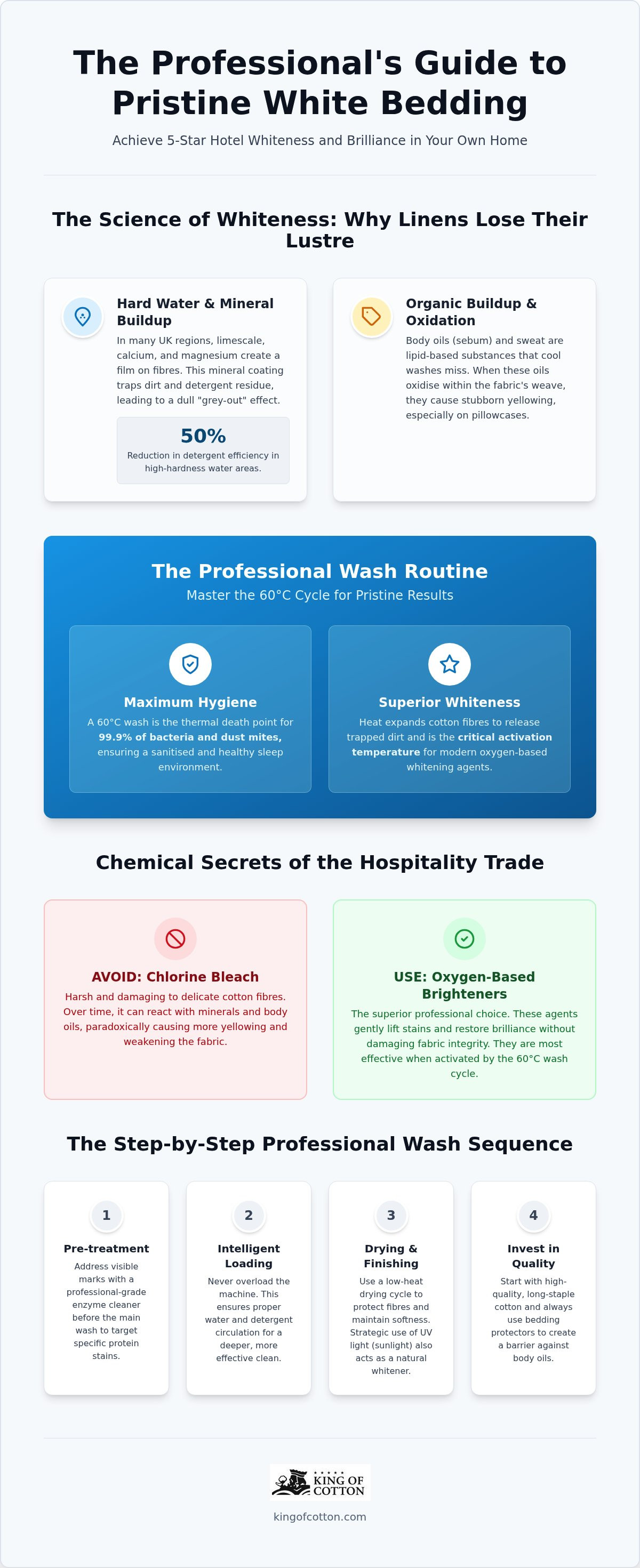
In many regions across the United Kingdom, hard water is the primary culprit behind the dreaded "grey-out" effect. Limescale and dissolved minerals, specifically calcium and magnesium, create a microscopic film that adheres to luxury bed linen. This mineral coating acts as a physical trap for dirt and detergent residue, which gradually dulls the fabric's natural lustre. Chemically, these minerals form a resilient ionic bond with the cellulose fibres of the cotton, making them incredibly difficult to dislodge with standard retail detergents. In British households with high water hardness, detergent efficiency can drop by as much as 50%, as the soap molecules bind to the minerals instead of the dirt rather than cleaning the fabric.
The Role of Organic Buildup
The primary enemies of a pristine white pillowcase are the very things that make sleep so comfortable: our own body oils and skin cells. Sebum and sweat are lipid-based substances that standard detergents often miss during quick, cool washes. When these residual oils are left within the weave, they begin to oxidise. This chemical reaction is what causes the stubborn yellowing that plagues even the most expensive bedding. To truly restore brilliance, you must understand the science of bleaching agents and how they interact with these organic compounds. Professional hospitality standards rely on deep-fibre sanitisation rather than surface cleaning. This process ensures that every trace of organic matter is removed before it has the chance to settle and discolour the fabric. Without this level of care, even the finest long-staple cotton will eventually lose its 5-star appeal, making it vital to follow a professional routine for how to keep white hotel bedding white.
The Professional Wash Routine: Master the 60°C Cycle for Pristine Results
The secret to that crisp, clinical brilliance found in luxury suites lies in the temperature setting of the wash cycle. Whilst many domestic machines suggest cooler settings for energy preservation, the hospitality industry adheres to rigorous professional laundry and sanitation standards that prioritise both hygiene and aesthetic perfection. A 60°C wash is the non-negotiable threshold for professional hospitality hygiene. At this precise temperature, 99.9% of bacteria and dust mites reach their thermal death point, ensuring your sleep environment is as healthy as it is beautiful.
Why Temperature is the Key to Whiteness
While achieving this at home requires careful attention to machine settings, many households opt for a professional wash, dry, and fold service like Washed – Life Before Laundry to ensure their bedding is laundered to these exacting hospitality standards.
Heat serves a dual purpose in the laundry process. Firstly, it facilitates the expansion of cotton fibres. This physical opening of the weave allows water and detergent to penetrate deeper, releasing trapped soils that a 30°C cycle simply cannot reach. Secondly, 60°C is the activation point for modern oxygen-based whiteners. These agents require heat to trigger the chemical reaction that lifts grey tints and yellowing. Mastering this thermal balance is fundamental to how to keep white hotel bedding white without resorting to aggressive, fibre-damaging chemicals.
The Step-by-Step Professional Wash Sequence
Achieving consistent results requires a disciplined approach to every load. Following a structured sequence ensures that your high-quality textiles are treated with the care they deserve.
- Step 1: Pre-treatment. Address visible marks with a professional-grade enzyme cleaner before the main wash. This targets specific proteins before they are set by the heat of the cycle.
- Step 2: Intelligent Loading. Never exceed 80% of your machine's drum capacity. Professional results depend on mechanical agitation; the fabric needs space to tumble and flex to shed dirt effectively.
- Step 3: The Deep Programme. Select a long-cycle programme with an extra rinse. This ensures every trace of detergent and suspended soil is flushed away, preventing the residue buildup that causes stiffness.
Organising your loads is equally vital. Even "light" items can shed microscopic dye particles that dull your whites. To maintain a truly luminous finish, wash your luxury bed linen exclusively with other pure white items. This strict separation is a cornerstone of how to keep white hotel bedding white and ensures your investment remains in pristine condition for years.
Dealing with Yellowing and Greying: Chemical Secrets of the Hospitality Trade
Many homeowners instinctively reach for chlorine bleach when their sheets lose their radiance. This is a critical error. Chlorine is a harsh corrosive that eventually weakens high-thread-count fibres and can actually cause a permanent yellow tint on certain fabric blends. To understand how to keep white hotel bedding white, one must look beyond the supermarket shelf to the chemical secrets used in professional hospitality. The goal is to sanitise what can become a botanical park of bacteria and fungus without compromising the material's structural integrity.
Oxygen Bleach vs Chlorine Bleach
Professional laundries favour oxygen-based whiteners, specifically sodium percarbonate. Unlike chlorine, oxygen bleach releases hydrogen peroxide in water; this gently lifts stains and brightens the fabric without stripping the natural oils from long-staple Egyptian cotton. For heavily discoloured linens, a pre-soak in a warm solution of sodium percarbonate for two hours can work wonders. This method preserves the soft handle and durability of your investment. If you are starting with high-quality materials, as discussed in The Ultimate Guide to Buying Luxury Bed Linen, this gentle approach ensures they remain in service for years rather than months.
Restoring Brightness with Bluing Agents
The perception of pure white is often an optical illusion. Over time, all white fabrics develop a slight yellow cast due to age and repeated washing. Professional hotels counteract this by using laundry bluing. This technique adds a microscopic trace of blue pigment to the wash water, which neutralises the yellow tones on the colour wheel. The result is a cool-toned, brilliant white that appears significantly brighter to the human eye. To apply this correctly, always dilute the bluing agent in cold water before adding it to the final rinse cycle. Never pour it directly onto the fabric, as this can cause blue spotting. When used sparingly, it is a masterstroke in the quest for how to keep white hotel bedding white.
Finally, consider the role of distilled white vinegar. Adding half a cup to the fabric softener compartment helps dissolve any residual mineral buildup from the hard water mentioned in previous sections. It acts as a natural sour to neutralise the pH of the wash. This leaves the fibres exceptionally soft and free from the detergent film that often leads to greying, ensuring your bedding feels as indulgent as it looks.
Drying and Finishing: How to Achieve that Signature Crisp Hotel Lustre
The journey to 5-star perfection doesn't end when the machine pings. Professional laundries know that the drying and finishing stages are where the fabric's luminosity is truly locked in. To understand how to keep white hotel bedding white, you must resist the temptation to use domestic fabric softeners. These products leave a waxy, microscopic film on the cotton that actually attracts dust and oils, leading to the very greyness you're trying to avoid. Instead, focus on physical finishing techniques that restore the material's natural sateen glow and smooth handle.
The Power of Sunlight and UV
Whilst modern technology is impressive, hospitality experts still value the natural bleaching power of the sun. UV rays act as a potent natural sanitiser and a mild bleaching agent that is far gentler than any chemical alternative. Hanging your linens outdoors during the peak UV hours of the day, typically between 11:00 and 15:00, provides the maximum whitening effect. UV exposure creates a photocatalytic reaction that breaks down residual organic pigments, effectively fading stubborn stains that survived the wash. This traditional method remains a professional's favourite for maintaining a brilliant, cool-toned finish.
Ironing for Professional Results
Achieving that crisp, taut surface found in luxury suites requires more than just heat; it requires compression. Ironing isn't merely an aesthetic choice. It physically flattens the cotton fibres, creating a smoother surface that reflects light more effectively. This increased light reflectance is a key secret in how to keep white hotel bedding white, as it hides minor imperfections and enhances the fabric's perceived brightness. For the best results, iron your linens whilst they are approximately 10% damp. This allows the steam to penetrate the weave, making the fibres more pliable and easier to press into a flawless, high-lustre finish.
This attention to detail is what separates a standard bedroom from a sanctuary of comfort. Once you have mastered the art of the perfect finish, ensure your core bedding is equally impressive by reading our guide on How to Choose the Perfect Duvet. To maintain these professional standards at home, it is essential to start with high-GSM textiles that are designed to withstand this level of care.
Experience the difference of hospitality-grade materials by browsing our exclusive luxury bed linen collection today.
Investing in Excellence: Why Hospitality-Grade Cotton Stays Whiter for Longer
The foundation of a radiant bed isn't just the wash cycle; it's the calibre of the textile itself. Most retail bedding fails because it's constructed from short-staple cotton that frays and pills after just a few months. When you're researching how to keep white hotel bedding white, the answer often starts with the raw material. Professional hospitality-grade linens are engineered to withstand the rigours of the 60°C cycle whilst maintaining their structural integrity and brilliant finish. Research indicates that hotel bed linens may be washed daily for up to 700 days, whereas standard home-laundered linens can show significant wear after just 12 cycles.
Superior Fibres for Lasting Brilliance
Long-staple Egyptian cotton is the gold standard for a reason. These longer fibres create a smoother, stronger yarn with fewer ends exposed on the surface. This significantly reduces pilling, which is the primary cause of that dull, greyish look that develops on cheaper bedding. Our luxury bed linen collection features high-GSM (Grams per Square Metre) fabrics with dense weaves that offer several advantages:
- Structural Integrity: Dense weaves resist the thinning that leads to a grey, translucent appearance over time.
- Light Reflectance: Smoother fibres reflect light more effectively, enhancing the perceived whiteness of the fabric.
- Stain Resistance: Tight construction prevents sebum and sweat from penetrating deep into the fibre core.
By investing in professional-grade Percale or Sateen, you're choosing a product designed to remain pristine through hundreds of washes. This provides a far superior long-term investment compared to high-street alternatives that require frequent replacement. To further curate an environment of luxury, exploring high-quality home lifestyle collections at lighthouselocarno.ch can help you maintain a consistent standard of elegance throughout your home.
Even the finest laundry routine can't save a pillow that's been stained from the inside. Professional hotels always use high-quality mattress and pillow protectors to prevent sweat and oils from reaching the core of the bedding. This is a vital step in how to keep white hotel bedding white, as it stops the "core yellowing" that eventually seeps back through to your fresh pillowcases. You can explore the full King of Cotton range to find these essential safeguards for your home sanctuary. For those interested in the deeper industry standards, our Hotel Linen Suppliers: The Definitive Guide offers further insight into why the world's finest establishments trust our textiles for their durability and elegance.
Elevate Your Sleep Sanctuary to Five-Star Perfection
Mastering the art of professional laundering is the definitive answer to how to keep white hotel bedding white and preserve your investment for years. By implementing a disciplined 60°C wash routine and opting for gentle oxygen-based brighteners over harsh chlorine, you'll maintain that elusive, brilliant luminosity. The foundation of a pristine bed always starts with the quality of the material; high-GSM, long-staple Egyptian cotton is specifically designed to resist the greying and pilling that often plagues standard retail linens.
For over 25 years, King of Cotton has been a trusted supplier to the world's most prestigious hotels, providing expertly crafted textiles that are engineered for durability and lasting whiteness. We invite you to bring this same level of uncompromising excellence into your own home. It's time to experience the serene confidence of a truly luxurious sleep environment every night. Upgrade your home to 5-star standards with our Egyptian Cotton Bed Linen collection and discover the enduring brilliance of hospitality-grade quality.
Frequently Asked Questions
Why do my white sheets turn yellow even after washing?
Yellowing is primarily caused by the oxidation of residual body oils and sweat that haven't been fully removed during the wash. Standard detergents used at cool temperatures often leave these organic proteins trapped within the cotton weave. Over time, these lipids react with the air and turn yellow. To prevent this, ensure you use a deep-cleaning cycle at 60°C, which is the industry standard for effectively breaking down sebum and skin cells.
Is it safe to use bleach on high-thread-count Egyptian cotton?
Traditional chlorine bleach should be avoided on high-thread-count Egyptian cotton as it eventually weakens the delicate fibres and causes permanent yellowing. Instead, professional laundries use oxygen-based bleaches like sodium percarbonate. This gentler alternative lifts stains and restores brilliance without compromising the structural integrity of your luxury bed linen. It's the most effective method for anyone wondering how to keep white hotel bedding white without causing long-term damage.
What is the best temperature to wash white hotel bedding?
The optimal temperature for washing white hotel-grade bedding is 60°C. This specific heat level is essential for reaching the thermal death point of 99.9% of dust mites and bacteria. Beyond hygiene, 60°C is the necessary threshold to activate oxygen-based whitening agents and expand cotton fibres for a thorough release of trapped dirt. Washing at lower temperatures often leaves a microscopic residue that leads to a dull, greyish appearance.
How often should I wash my white bed linen to keep it bright?
You should wash your white bed linen once a week to prevent the accumulation of body oils and skin cells. Frequent laundering prevents these organic materials from oxidising and creating stubborn yellow stains that are difficult to remove. In a professional hospitality environment, linens are changed even more frequently to maintain their crisp, pristine look. Regular maintenance is a key secret in how to keep white hotel bedding white and fresh.
Can I use fabric softener on my white hotel-style sheets?
You should avoid using traditional fabric softeners on high-quality white cotton sheets. These products contain silicone-based chemicals that leave a waxy film on the fabric surface. This residue actually attracts dust and oils, which eventually leads to a grey, dingy hue. For a softer handle without the buildup, add half a cup of distilled white vinegar to your final rinse cycle to neutralise detergent pH and dissolve mineral deposits naturally.
How do I remove stubborn yellow sweat stains from pillowcases?
To remove stubborn yellow stains, pre-soak the affected pillowcases in a warm solution of oxygen bleach for at least two hours before washing at 60°C. This process breaks down the organic proteins responsible for the discolouration. To prevent these marks from returning, we recommend using high-quality pillow protectors. These essential layers act as a barrier, stopping sweat and oils from reaching the core of your bedding and causing permanent damage.
Does hard water make white bedding look grey?
Hard water is a major contributor to bedding looking grey and dull, especially in many regions across the UK. Dissolved minerals like calcium and magnesium bond to the cotton fibres, creating a microscopic layer that traps detergent residue and dirt. This mineral buildup prevents the fabric from reflecting light correctly, resulting in a dingy appearance. Using a natural acid like white vinegar in the rinse cycle helps to dissolve these stubborn deposits.
Is it better to tumble dry or line dry white cotton bedding?
Line drying is the professional's favourite method because UV light acts as a natural bleaching agent and sanitiser for white cotton. Sunlight helps to fade organic stains and provides a crispness that is difficult to replicate. If you prefer the softness of a tumble dryer, use a low-heat setting to prevent the fibres from becoming brittle. Always remove the linen whilst it's slightly damp to ensure a smooth, high-lustre finish during the ironing process.